Denver Hail Storm Slams Metro and DIA
Severe storms brought hail to downtown Denver and forced ground delays and stops at Denver International Airport on Monday afternoon.

Severe storms dumped hail on Denver and forced ground delays at Denver International Airport.
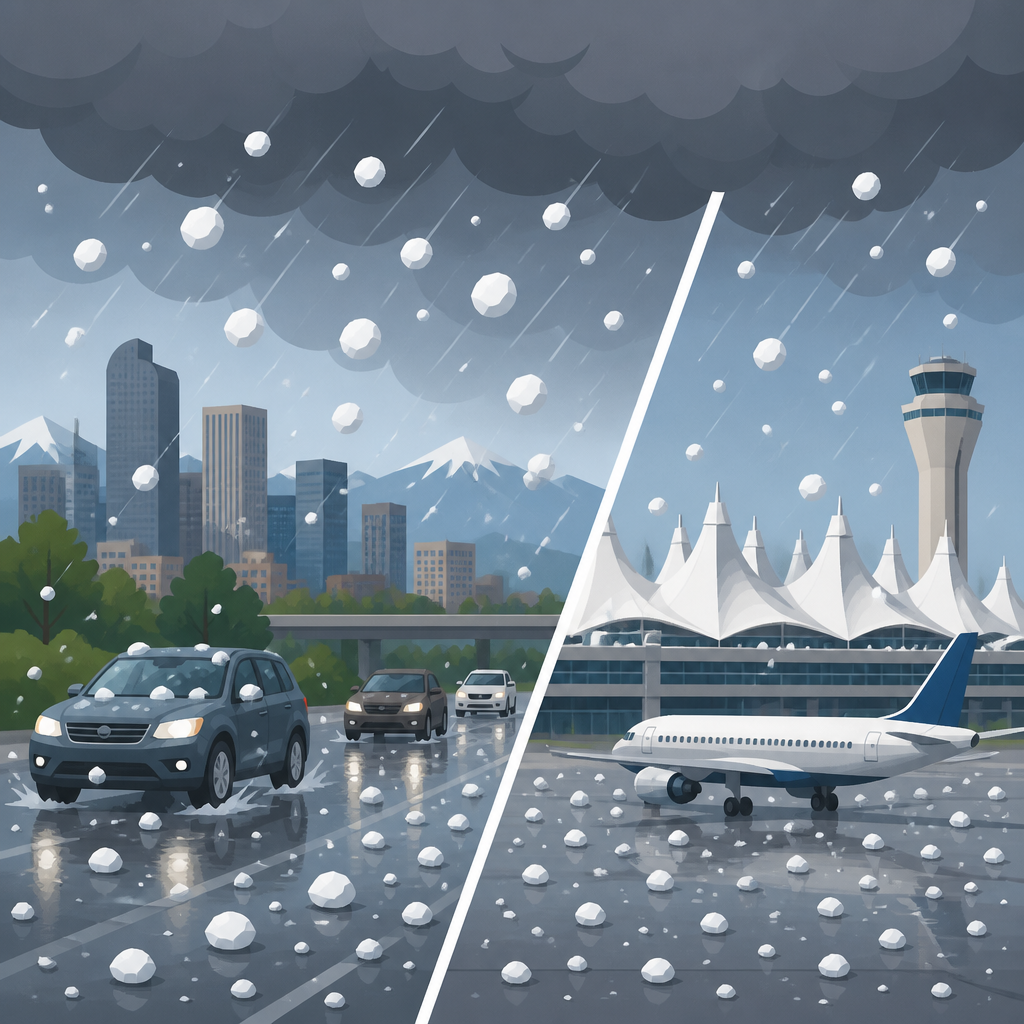
Denver got hit hard Monday afternoon. CBS Colorado reported hail in downtown Denver, hailstones up to 2 inches across in some spots, and FAA ground stops and delays at Denver International Airport as the storm line pushed northeast.
The weather system also brought heavy rain, strong winds, and several funnel clouds across the metro area. For commuters and travelers, the timing was ugly: hail and flooding rain hit while flights were already being slowed at one of the country’s busiest airports.
| Event | Detail |
|---|---|
| Date | June 1, 2026 |
| Hail size | Quarter to ping-pong-ball size; 1 to 2 inches in places |
| Airport impact | Ground stop at 1:20 p.m.; expired by 3:15 p.m. |
| Weather impacts | Flooding rain, strong winds, funnel clouds |
What hit Denver Monday afternoon
Get the latest AI news in your inbox
Weekly picks of model releases, tools, and deep dives — no spam, unsubscribe anytime.
No spam. Unsubscribe at any time.
The storm line moved across the Denver metro with enough force to drop hail in downtown and surrounding neighborhoods, while drivers on I-70 pulled under overpasses to avoid the worst of it. CBS Colorado said the hail ranged from quarter size to ping-pong-ball size, with some stones reaching 1 to 2 inches in diameter.

That size matters. Quarter-size hail can dent cars and shred soft surfaces, while 1-inch-plus hail starts to become a real property risk. In a city with lots of exposed parking, glass, and traffic, even a short burst can create a long cleanup.
- Downtown Denver saw hail during the afternoon storm
- I-70 traffic slowed as drivers stopped under bridges
- Some hailstones reached 1 to 2 inches in diameter
- Heavy rain and strong winds hit alongside the hail
Why the airport got slowed down
At 1:20 p.m., the thunderstorm was moving northeast toward DEN operations, and the FAA issued a ground stop. That meant departing and arriving flights were held until conditions improved. The stop expired by 3:15 p.m., then a ground delay took over into the evening.
Airports do this because hail, lightning, and intense rain can make ramp work unsafe and reduce visibility fast. At a large hub like Denver, one storm cell can ripple through the schedule for hours after the worst weather passes.
“The ground stop expired by 3:15 p.m. and a ground delay was then set to be in effect into the evening hours.”
That FAA timing tells you the storm was not a quick nuisance. It was strong enough to interrupt the airport’s flow for most of the afternoon, which usually means missed connections, late inbound aircraft, and crews scrambling to reset the schedule.
How unusual was this storm line?
Colorado gets severe weather in spring, but this system packed several hazards at once: hail, flooding rain, damaging wind, and funnel clouds. CBS Colorado reported funnel cloud sightings near Lakewood, Parker, Castle Pines, Chatfield, and the Bennett area, which shows how wide the storm band stretched across the metro.
That mix is what makes Front Range storms so disruptive. Hail can hit one part of town, while another neighborhood gets street flooding or wind damage. For anyone tracking weather here, the real story is often less about one storm and more about how many problems it creates in a single hour.
- Funnel clouds were reported near Lakewood
- Additional sightings came from Parker and Castle Pines
- Chatfield and the Bennett area also saw funnel clouds
- The storm brought hail, rain, and wind together
What drivers and travelers should expect next
For drivers, the safest move during a hail burst is still to get off the road when possible and avoid stopping in active lanes. For travelers, airport delays can linger well after the weather clears, especially when multiple flights miss their original windows.
If Denver keeps seeing these quick-hitting spring storms, the practical takeaway is simple: check radar before driving I-70, and check your airline app before heading to DIA. A 20-minute storm can still cost you an evening.
For more local weather coverage, see our Denver severe weather guide. If you track airport disruptions, watch how quickly FAA ground stops are turning into longer ground delays this season.
// Related Articles
- [IND]
6 bullpen notes for fantasy managers
- [IND]
Why dynamic leverage schedules are a sane risk control, not a trader …
- [IND]
4 hail risks for Colorado on Monday
- [IND]
5 storm timing cues for Denver this week
- [IND]
Denver hailstorm turns roads into a damage checklist
- [IND]
A.J. Brown Trade Talks Tilt Toward Eagles