Devin pricing in June 2026: plans, limits, tradeoffs
Devin starts at $20 and scales to a $500 Team plan, with enterprise pricing reserved for custom deals.

Devin starts at $20, with Team at $500 and Enterprise on custom terms.
Devin is now being sold like a serious engineering tool, not a novelty: a $20 pay-as-you-go Core plan, a $500 Team plan, and a custom Enterprise tier. That pricing tells you a lot about where Devin is aiming in 2026, and it is not hobbyist experimentation.
SaaSworthy’s June 17, 2026 listing gives Devin an 89% SW Score and shows how the product is being positioned for software teams that want AI help on real work such as bug fixes, refactors, migrations, and backend chores.
| Plan | Price | What you get | Limits |
|---|---|---|---|
| Core | $20.00 | Autonomous Task Completion, Devin IDE, Ask Devin, Devin Wiki, learns over time | Unlimited users, up to 10 concurrent sessions, pay-as-you-go |
| Team | $500.00 per month | Core features plus Devin API access, early feature releases, research previews | Unlimited concurrent sessions, 250 Acus included monthly |
| Enterprise | Custom | Enterprise access, custom Devins, VPC deployment, SAML/OIDC SSO, admin controls | Centralized billing, usage analytics, account team |
What Devin is actually selling
Get the latest AI news in your inbox
Weekly picks of model releases, tools, and deep dives — no spam, unsubscribe anytime.
No spam. Unsubscribe at any time.
Devin is an AI software engineering platform from Cognition that tries to handle the parts of engineering work teams usually hand to a junior developer or a very patient senior one. The product description on SaaSworthy says it can plan, code, debug, test, refactor, and deploy, while also handling task breakdown and feedback loops.

That matters because Devin is not marketed as a chat app for code suggestions. It is pitched as an autonomous software engineer that can work inside an editor, shell, and browser, while also integrating with Slack, Linear, and Jira.
- Feature work: implementation, migrations, and integrations
- Maintenance work: bug fixes, refactoring, documentation updates
- Ops-heavy work: CI/CD automation, ETL development, backend changes
That combination explains why pricing is split the way it is. The Core plan is cheap enough for experimentation, but the Team and Enterprise tiers are clearly built for organizations that want Devin in a workflow, not just in a demo.
How the pricing tiers differ
The Core plan starts at $20 and is pay-as-you-go. SaaSworthy says it includes unlimited users, up to 10 concurrent Devin sessions, auto-reload settings for on-demand consumption, and no monthly commitment. For a small team, that is a low-friction way to test whether the tool can actually take work off engineers’ plates.
The Team plan jumps to $500 per month and adds Devin API access, early feature releases, research previews, and monthly support. It also removes the concurrent-session cap and includes 250 Acus each month, which makes it more suitable for teams that expect steady usage rather than sporadic trials.
“The future of software is not about writing more code; it’s about writing less code and shipping more.” — Scott Wu, Cognition co-founder and CEO
That quote from Scott Wu captures the business logic behind Devin’s pricing. If the product really reduces the amount of routine coding, then the cost model has to follow usage and team scale, not seat count alone.
The Enterprise tier is where Devin gets serious about security and governance. The listing includes VPC deployment, SAML/OIDC single sign-on, centralized admin controls, teamspace isolation, centralized billing, and usage analytics across multiple Devin organizations.
- Core: $20, unlimited users, 10 concurrent sessions
- Team: $500/month, unlimited concurrent sessions, 250 Acus included
- Enterprise: custom pricing, VPC, SSO, admin controls
What the score and feature mix suggest
SaaSworthy gives Devin an 89% SW Score, with feature score at 60%, momentum at 60%, and popularity at 70%. Those numbers do not make Devin the most mature product in the category, but they do show a tool with real attention and a growing footprint.
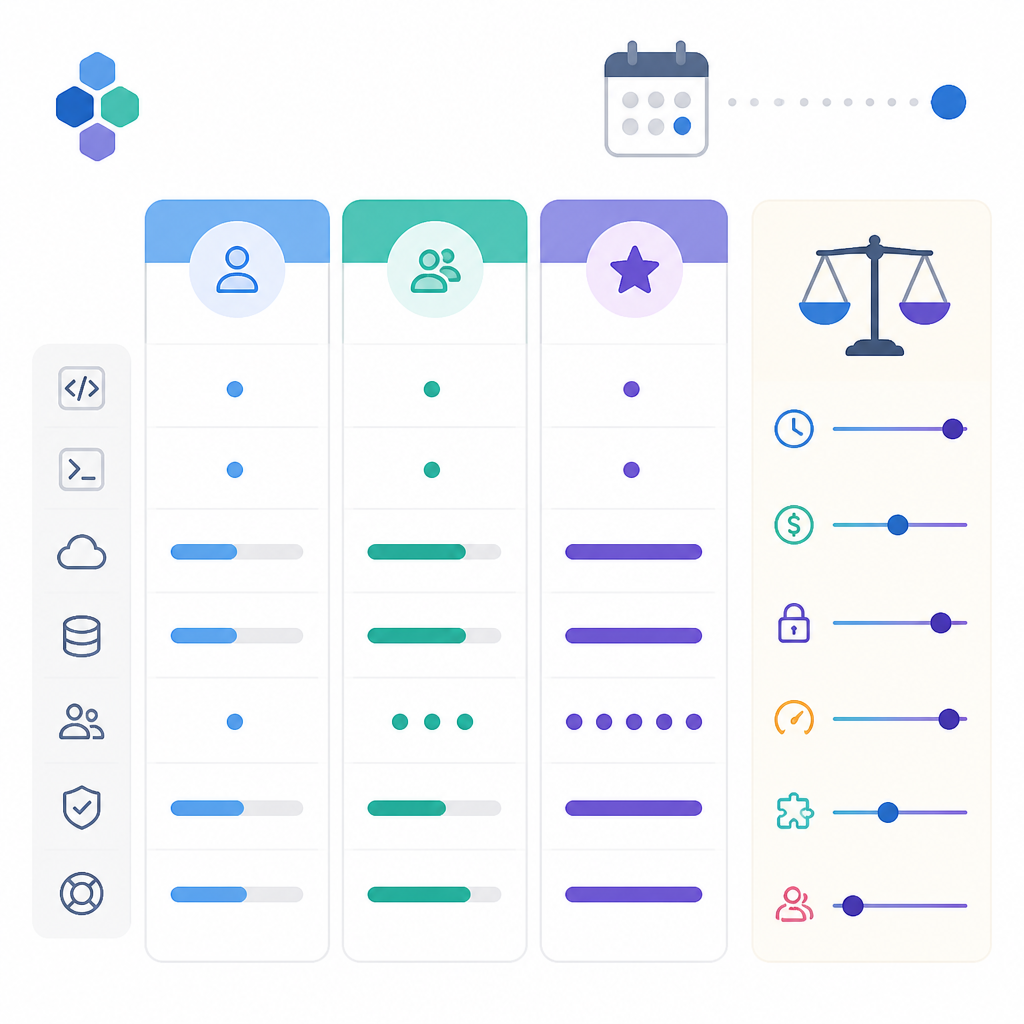
There is also a useful clue in the platform support data: Devin is browser-based, supports all organization sizes, and lists online as its only support mode. That means the product is still centered on cloud delivery rather than local installs or deep infrastructure customization.
For comparison, alternatives on the same page include Swarmia, LinearB, FlowiseAI, and Allstacks. That mix tells you Devin is sitting in a crowded space where delivery analytics, engineering intelligence, and AI-assisted work are starting to overlap.
One more detail matters: SaaSworthy says the pricing data was last updated on August 20, 2025, and may differ from the vendor’s live pricing. So the headline numbers are useful, but buyers should still verify directly with Devin before budgeting.
Who should pay attention to Devin
If you run a small team and want to see whether an AI agent can handle repetitive engineering tasks, the $20 Core plan is the obvious starting point. If your team wants API access, previews, and support, the $500 Team tier is the more realistic purchase.
Enterprise buyers should care less about the sticker price and more about the controls. VPC deployment, SSO, centralized billing, and team isolation are the details that decide whether a tool can survive security review and procurement.
That is the real story behind Devin in June 2026: the product is moving from “interesting AI coder” to “budget line item for engineering operations.”
What happens next
The next question is whether Devin can prove it saves enough engineering time to justify the jump from $20 trials to $500 team deployments and custom enterprise deals. If Cognition keeps improving task completion while keeping the workflow simple, the product could become a standard experiment for backend-heavy teams and platform groups.
For now, the smarter move is to test it on one ugly but contained task: a migration, a flaky CI issue, or a backlog of small fixes. That will tell you more than any score badge ever will.
// Related Articles
- [MODEL]
Opus 5 lets you cut cost without losing quality
- [MODEL]
OpenAI Cuts GPT-5.6 Prices as AI Bills Climb
- [MODEL]
Opus 5 proves premium AI is becoming a commodity
- [MODEL]
OpenAI Gives Scientists Free GPT-5.6 Access
- [MODEL]
Google ships Gemini 3.6 Flash and 3.5 Lite
- [MODEL]
Kimi K3 Is Forcing Silicon Valley to Pick Sides