Docker made containers the default, and that was a mistake
Docker won because it made containers easy, but it also normalized brittle deployment habits.

2013 made containers mainstream, but Docker also normalized brittle deployment habits.
Docker turned containerization from a kernel feature into a product teams could ship with, and that changed software delivery faster than almost any infrastructure tool of the last decade. It was released in 2013, built on Linux namespaces and cgroups, and quickly spread from dotCloud’s internal project to a default layer in modern development workflows. That success is real. It is also the reason many teams now confuse packaging with platform design.
Docker won by removing friction, not by solving operations
Get the latest AI news in your inbox
Weekly picks of model releases, tools, and deep dives — no spam, unsubscribe anytime.
No spam. Unsubscribe at any time.
Docker’s first great achievement was convenience. Before it, containers were a specialist topic tied to Linux internals, LXC, and hand-built deployment scripts. Docker made the workflow legible: write a Dockerfile, build an image, run a container, push to a registry. That simplicity is why the tool spread from early adopters to Red Hat, Microsoft, IBM, and AWS partnerships in a short span.
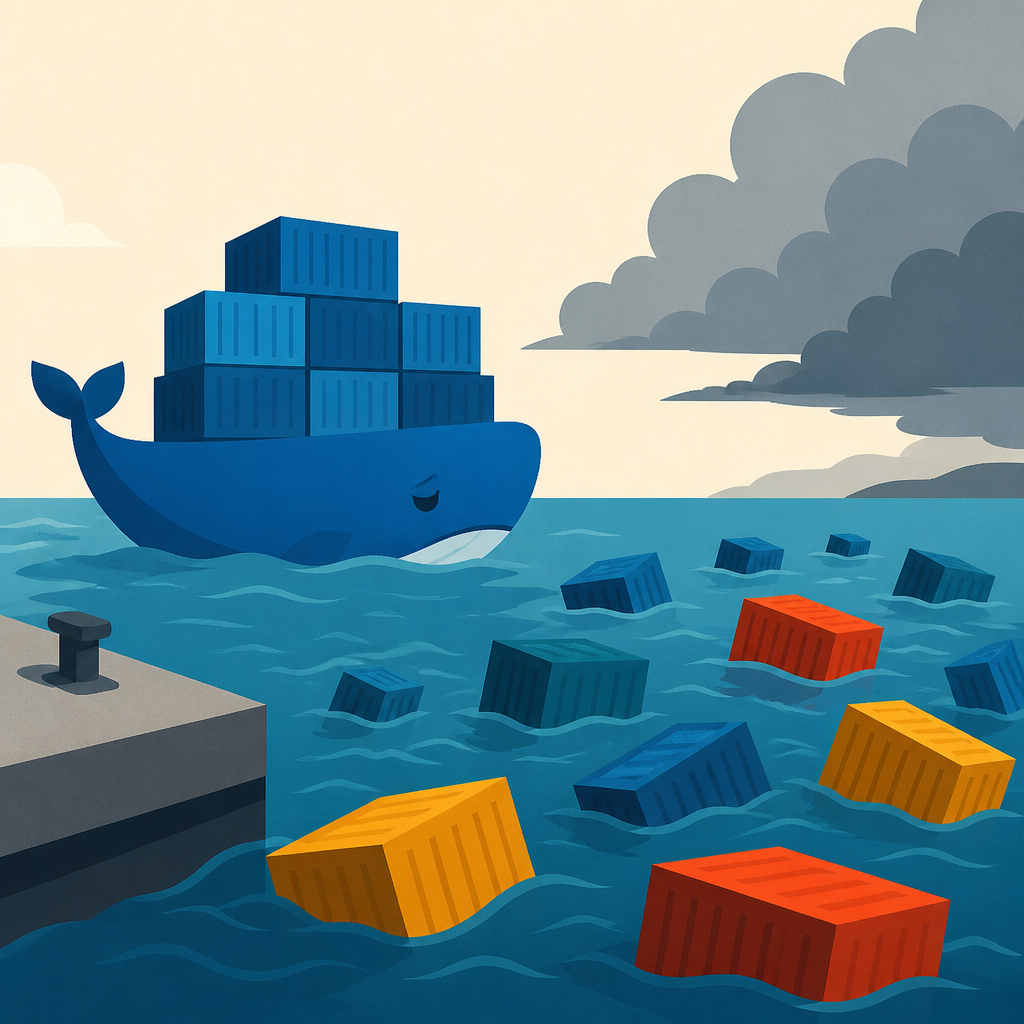
But convenience is not the same as operational maturity. A container image is a snapshot of assumptions, not a guarantee of correctness. Teams often treat Docker images as if they were self-contained software artifacts, then discover that runtime configuration, kernel behavior, storage drivers, and network policy still decide whether the service works. Docker did not erase deployment complexity. It hid it behind a cleaner interface.
Docker made environments repeatable, then encouraged dependency sprawl
The strongest case for Docker is reproducibility. A developer on macOS, a CI job in Linux, and a production host can all run the same image, which removes a huge class of “works on my machine” failures. In practice, that has been a real productivity gain for teams shipping services across mixed environments, especially once Docker Desktop and Windows support widened access beyond Linux-only shops.
Yet the same packaging model also makes it easy to stuff every dependency into the image and call the result portable. That leads to oversized images, duplicated runtimes, and release pipelines that rebuild everything for every change. The problem is not the container format itself. The problem is that Docker made it effortless to postpone architectural discipline. Teams can ship faster while accumulating technical debt in the form of opaque layers, pinning drift, and undocumented runtime behavior.
Docker normalized the wrong unit of deployment for many teams
Docker’s most important cultural effect was not technical. It taught product teams to think in containers first, services second, and systems last. Once that mindset takes hold, every component becomes a separate image, every process becomes a separate container, and every local setup becomes a miniature cluster. That pattern is powerful when you already have strong platform engineering. It is wasteful when you do not.
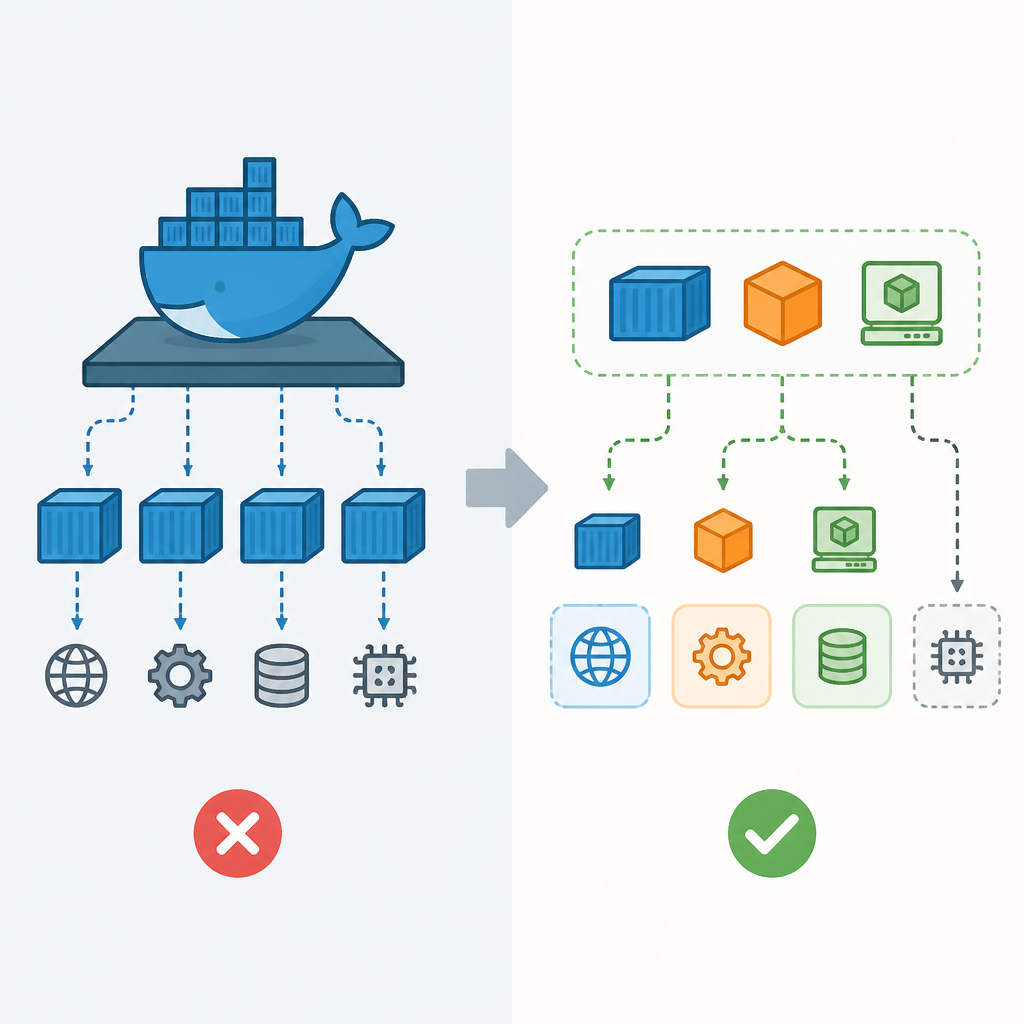
Look at the common team topology today: eight containers per host was already a typical use case in one 2018 analysis, and a quarter of organizations analyzed were running 18 or more per host. That density is not free. It increases the surface area for observability, secrets management, image scanning, and network policy. Docker made it normal to distribute responsibility across many small runtime units, but most organizations still lack the tooling maturity to manage that fragmentation cleanly.
The counter-argument
Docker defenders are right about one thing: the tool democratized a capability that used to belong to specialists. It lowered the barrier to shipping reproducible software, it accelerated CI/CD adoption, and it gave the industry a shared vocabulary around images, registries, and immutable artifacts. That standardization mattered. Without Docker, the container ecosystem would have stayed fragmented for longer, and cloud-native workflows would have matured more slowly.
They are also right that Docker itself is not the root cause of bad architecture. Teams can misuse any deployment primitive. A company that ships monoliths badly will still ship microservices badly. The container is not the villain; the absence of platform discipline is.
That rebuttal misses the practical reality: tools shape defaults, and Docker’s defaults pushed teams toward packaging over design. It made the easy path look like the correct path. I accept that Docker was a net positive for the industry, but I reject the idea that its popularity was purely beneficial. It created a generation of teams that can containerize anything before they can explain why it should be containerized.
What to do with this
If you are an engineer or platform owner, use Docker as a build and distribution layer, not as a substitute for architecture. Keep images small, define clear runtime contracts, avoid baking secrets into layers, and treat orchestration, observability, and policy as first-class concerns. The right question is not “Can we Dockerize it?” The right question is “What failure modes does this container hide, and who owns them?”
// Related Articles
- [IND]
HP’s OpenAI Deal Meets a Cheap Stock Debate
- [IND]
Booz Allen and OpenAI push frontier AI into defense
- [IND]
Anthropic’s Claude Skills define the new agent toolkit
- [IND]
Claude Fable 5 Should Be Judged by Safety, Not Hype
- [IND]
Trump lifting GPT-5.6 limits is a bad way to govern frontier AI
- [IND]
TeraWulf lands Anthropic lease and sells Abernathy stake