DOW's Agent Network is the right move for military AI
The War Department's Agent Network is a necessary step toward usable military AI, not a gimmick.

The War Department's Agent Network is a necessary step toward usable military AI.
The War Department should build Agent Network, because military AI fails when it stays trapped in demos and succeeds when it becomes a coordinated system for decisions, targeting, and battle management. The release is sparse, but the signal is clear: this is the department’s second pace-setting project in its AI acceleration strategy, which means it is meant to move beyond isolated models and into operational workflows. That is the right direction for a force that needs faster sensing, faster synthesis, and faster action under pressure.
Agentic systems beat standalone models in real operations
Get the latest AI news in your inbox
Weekly picks of model releases, tools, and deep dives — no spam, unsubscribe anytime.
No spam. Unsubscribe at any time.
Single AI tools are useful, but they do not solve the core military problem: no one wants one model that guesses, they want a network that coordinates. In battle management, the value comes from chaining tasks across sensors, analysts, commanders, and weapons systems. An agent network is built for that. It can route information, assign subtasks, and preserve context across steps, which is exactly what a modern command environment needs.
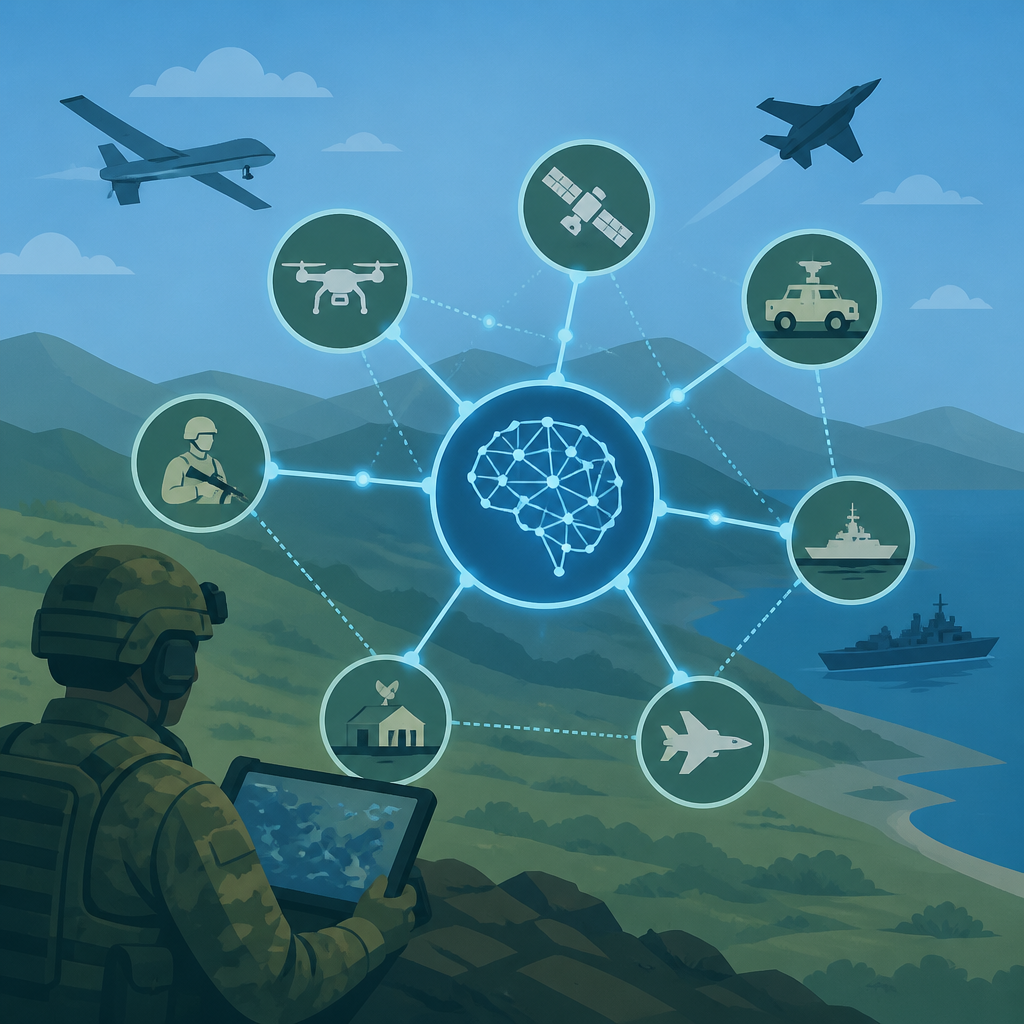
We already know the cost of disconnected automation. In defense workflows, one system often flags a target, another system validates it, and a human has to stitch together the picture under time pressure. That creates delay, duplication, and avoidable error. A networked agent approach reduces that friction by treating the workflow as a whole instead of a pile of separate tools. That is a structural improvement, not a cosmetic one.
Military AI needs orchestration, not just smarter models
The biggest mistake in AI strategy is assuming model quality alone produces mission value. It does not. A brilliant model that cannot hand off work, call tools, or coordinate with other systems stays stuck at the edge of operations. Agent Network matters because it implies orchestration as a first-class capability. That is the layer that turns prediction into action.
Look at any large-scale enterprise deployment and the pattern is the same: the winning systems are the ones that connect data, rules, approvals, and execution. Defense is even less forgiving than business software. If an analyst has to manually reconcile multiple feeds, the system is too slow. If a commander cannot trust the provenance of a recommendation, the system is unusable. Agentic orchestration solves both problems by making the workflow explicit and auditable.
The counter-argument
The strongest objection is that agent networks increase complexity in a domain where complexity already kills. Military systems need reliability, not a swarm of semi-autonomous components. Critics will also say that the more steps an AI system takes, the more opportunities there are for hallucination, cyber compromise, or accidental escalation. On top of that, any AI-assisted targeting system raises obvious concerns about accountability and lawful use of force.
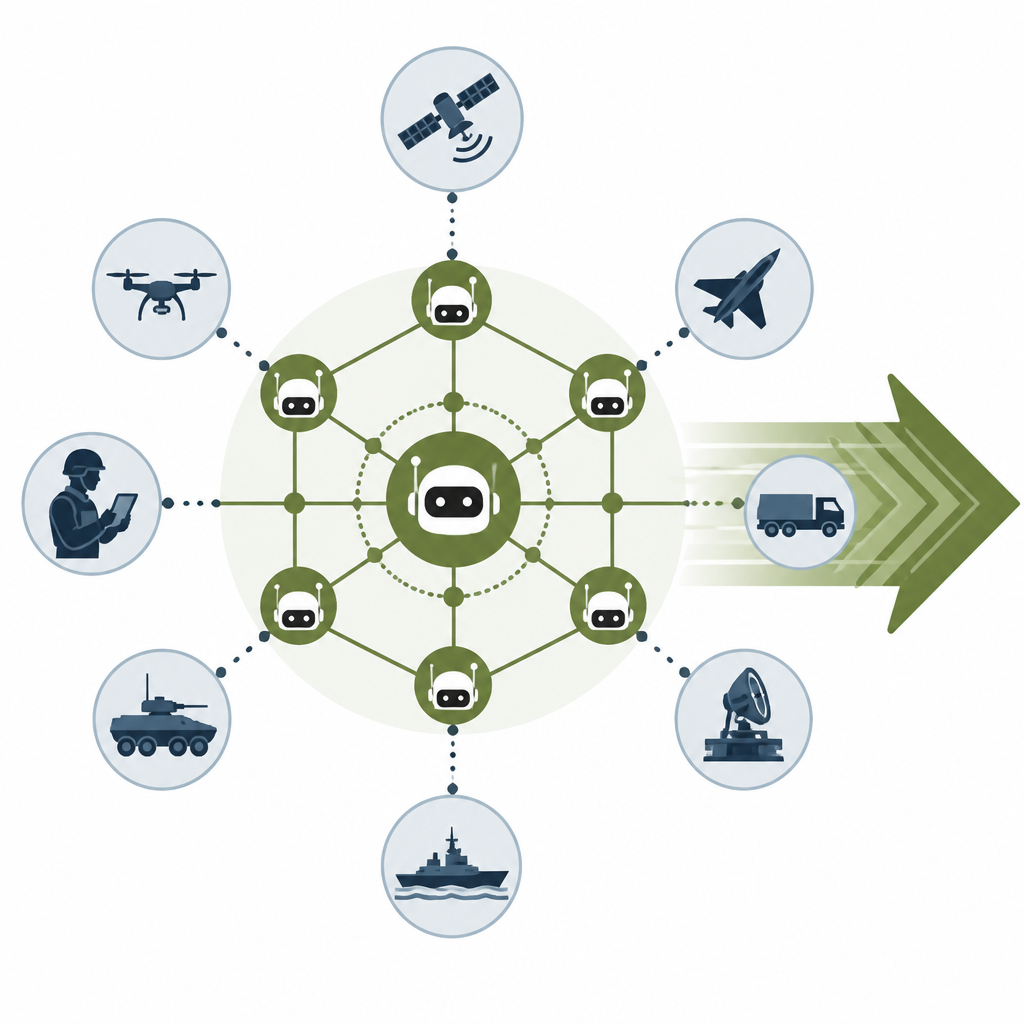
That concern is serious, and it sets a hard boundary: Agent Network is only defensible if it is tightly constrained, heavily logged, and human-supervised at the points that matter. But that is not a reason to reject the project. It is a reason to design it properly. The alternative is not safety, it is slower and less visible decision-making built from disconnected tools. That is worse, not better, because it hides risk instead of managing it.
What to do with this
If you are an engineer, build for orchestration, traceability, and fail-safe handoffs before you build for autonomy. If you are a PM, measure mission speed, operator trust, and auditability, not just model accuracy. If you are a founder, stop pitching a single agent as the product and start selling the system that makes agents useful in regulated, high-stakes environments. Agent Network points to the future: AI that earns its place by fitting into real operations, not by dazzling in isolation.
// Related Articles
- [AGENT]
ChatGPT now remembers your Mac work history
- [AGENT]
Grok Bot turns browser chores into cloud work
- [AGENT]
Agent Plugins 1.0.0 turns skills into folders
- [AGENT]
FaithEyes lets you train tool-faithful vision agents
- [AGENT]
Connect Qwen 3.8 Max to CLI Agents
- [AGENT]
Fine-tune a small LLM for legal labeling