Entire’s agent Git network fixes AI code trust
4 ways Entire’s Git network for agents could narrow AI code risk, with WebAssembly isolation and verification built in.

How does Entire’s Git network for agents make AI code safer?
Entire is building a Git-style network for agents that adds verification and isolation to AI code.
| Item | What it adds | Why it matters |
|---|---|---|
| Git-style agent network | Versioned, trackable actions | Makes agent work easier to audit |
| WebAssembly runtime | Sandboxed execution | Reduces exposure from untrusted code |
| Verification layer | Checks before merge or use | Helps catch bad outputs earlier |
| Agent collaboration model | Shared execution and review flow | Fits multi-agent development |
1. Git-style network for agent work
Get the latest AI news in your inbox
Weekly picks of model releases, tools, and deep dives — no spam, unsubscribe anytime.
No spam. Unsubscribe at any time.
Entire is pitching a system that treats agent activity more like source control than a black box. Instead of letting an AI agent act on code with no durable record, the network keeps its work in a format that can be tracked, reviewed, and compared.
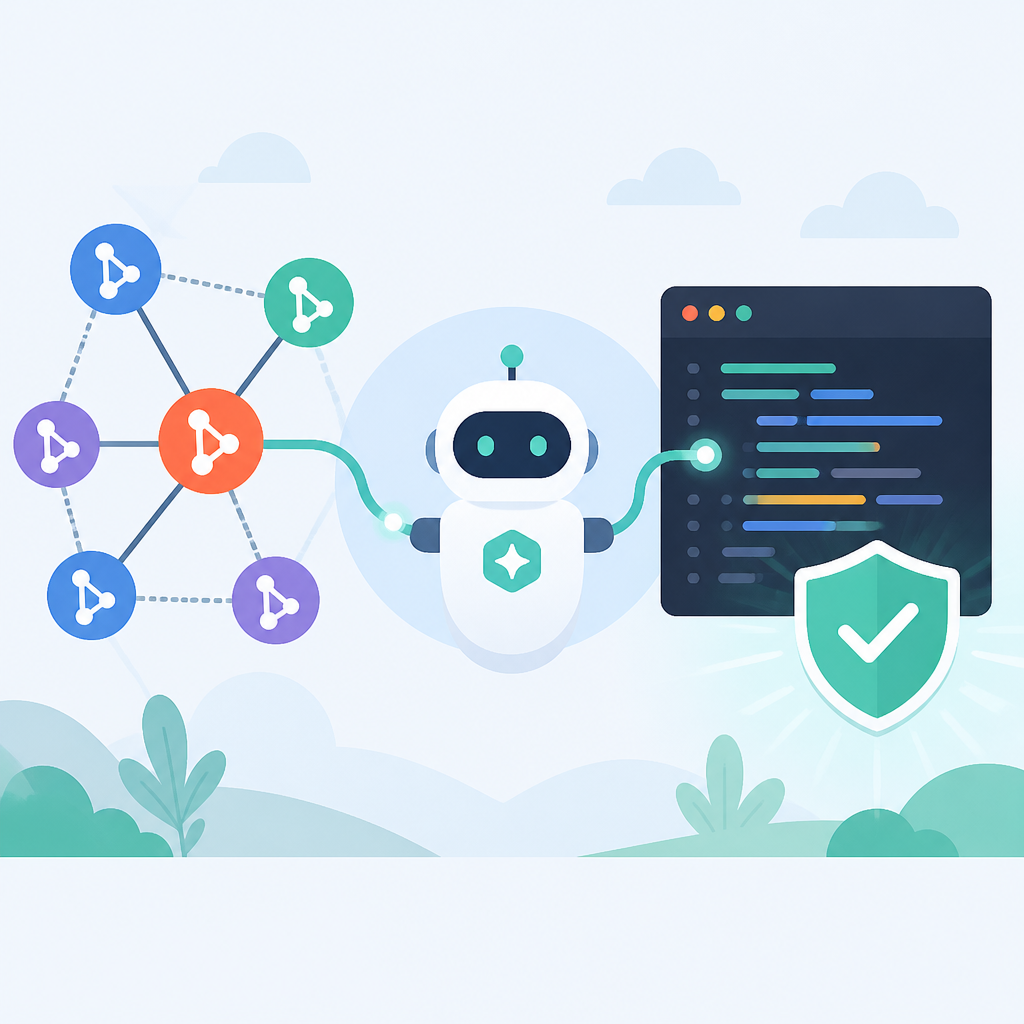
That matters because agentic development is moving from chat to execution. Once an agent can edit files, run commands, or call services, teams need a way to answer basic questions: what changed, who changed it, and whether the change was safe.
- Tracks agent actions as discrete events
- Supports review and replay of work
- Fits code-centric team workflows
2. WebAssembly runtime isolation
The article points to WebAssembly as a way to contain the most dangerous part of agentic systems: running code that may not be trusted. A WebAssembly sandbox can limit what an agent’s code can touch, which is especially useful when the agent is generating or executing code on the fly.
This is the security angle that makes the story more than a workflow pitch. If an agent can run code, then the runtime becomes part of the security boundary. WebAssembly gives vendors and platform teams a cleaner control point than letting the agent loose in a full host environment.
- Limits access to host resources
- Creates a tighter execution boundary
- Can be used for agent-generated code and tools
3. Verification before action
Entire’s approach also centers on verification. The New Stack frames agentic development as a process that depends on checking outputs before they are trusted, which is a direct response to the error-prone nature of LLM-driven code generation.
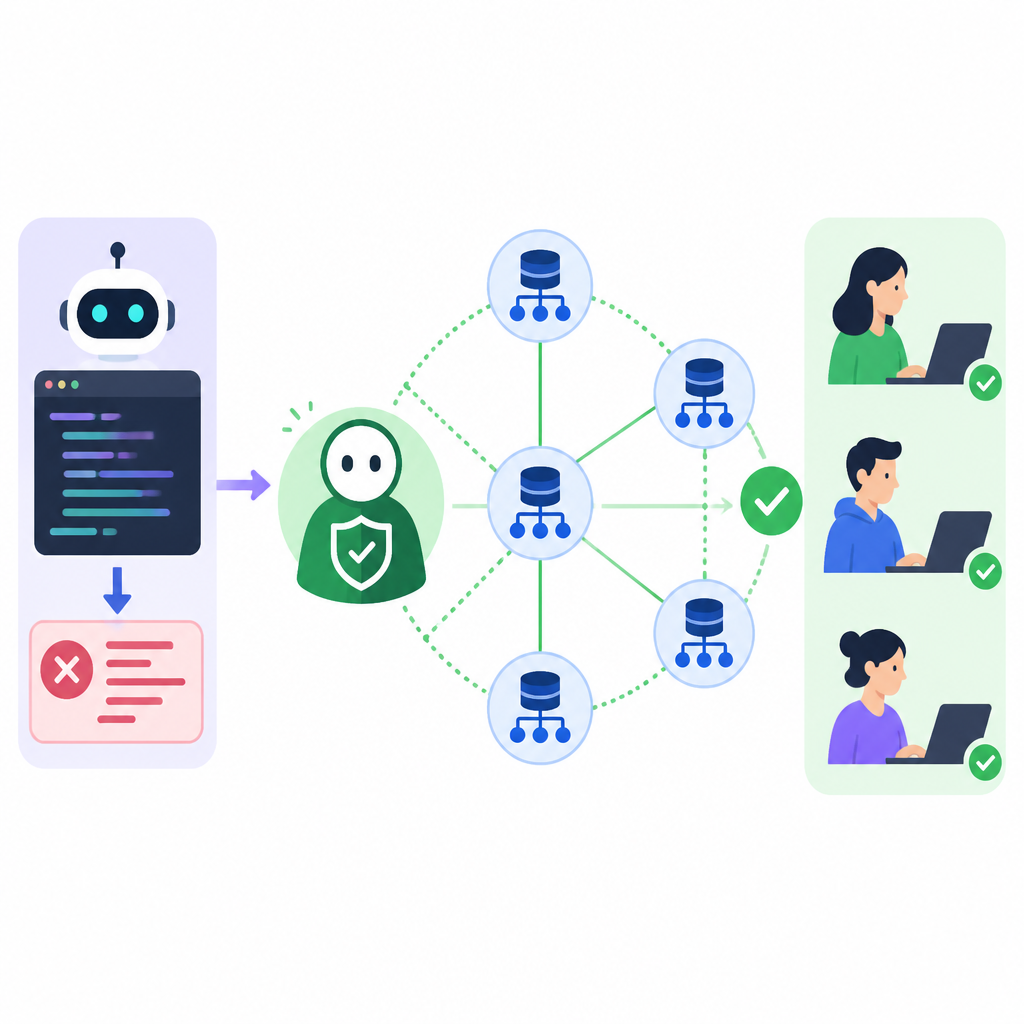
In practice, that means the system is not just about running agents faster. It is about making sure the result can be examined, validated, and rejected when needed. For teams already dealing with code review, tests, and CI, that is a familiar shape, even if the actor is now an agent.
agent_output -> verify -> approve -> execute4. A model for multi-agent development
The broader idea is that agents should not work as isolated helpers. A Git network implies coordination: multiple agents, shared state, and a common record of what happened. That is useful when one agent drafts code, another tests it, and a third checks policy or security rules.
That kind of setup could appeal to platform teams that want AI assistance without giving up control. It also lines up with the industry’s shift toward agentic workflows, where the real issue is not whether an agent can write code, but whether the system around it can govern that code.
- Supports agent-to-agent handoffs
- Creates a shared audit trail
- Works better for teams than for solo experimentation
5. Why the security gap matters now
The article’s core claim is simple: AI agents become much riskier once they can execute code, and most current setups do not contain that risk well enough. The piece argues that WebAssembly could close that gap by making execution safer without blocking agent productivity.
That is why Entire’s pitch matters beyond one startup. It reflects a larger shift in AI infrastructure, where the question is no longer only what the model can say, but what the agent can safely do in production systems.
- Execution is the new risk surface
- Sandboxing is becoming a default requirement
- Auditability is now part of AI infrastructure
How to decide
If you are building agentic tools for software teams, Entire’s model is most relevant when you need audit trails, controlled execution, and a way to review agent output before it touches production. It is less about flashy model features and more about governance.
If your priority is pure model quality, this is not the main story. If your priority is letting agents run code without turning your runtime into a security gamble, the Git-plus-WebAssembly approach is the one to watch.
// Related Articles
- [IND]
OpenAI's gov partnerships turn access into policy
- [IND]
Kubernetes sets rules for AI-assisted maintainership
- [IND]
BYOA is the only path for vibe coding apps
- [IND]
AI models are eating the software stack, and app-layer companies are …
- [IND]
This ML project index covers every skill level
- [IND]
OpenAI’s 54% token-efficiency gain is the real AI coding battleground