BYOA is the only path for vibe coding apps
Anthropic’s pricing shift shows vibe coding apps can’t rely on one model vendor for cost or growth.

Vibe coding apps now depend on BYOA because model pricing and access sit with a few vendors.
LLM app economics are getting squeezed by a small group of model makers, and Anthropic is the clearest example. In April 2026, its enterprise plan moved from fixed pricing to usage-based dynamic pricing, and heavy users could see bills rise by 2x or even 3x.
That matters because the app layer lives on thin margins. When one vendor can change the price of tokens, the quality of the model, and the terms of access at the same time, product teams lose control over both cost and growth.
| Signal | What changed | Why it matters |
|---|---|---|
| Anthropic enterprise pricing | Fixed price to dynamic usage pricing in April 2026 | Heavy users face large cost swings |
| Enterprise model spend share | About 12% in 2023 to about 40% | A few vendors now capture a much larger share |
| Heavy-user cost impact | 2x to 3x higher bills | BYOA becomes a cost-control strategy |
Why BYOA is becoming the default
Get the latest AI news in your inbox
Weekly picks of model releases, tools, and deep dives — no spam, unsubscribe anytime.
No spam. Unsubscribe at any time.
BYOA, or bring your own API key, gives users direct access to the model accounts they already pay for. For a vibe coding product, that changes the business from reselling tokens to building workflow software around them.

This is a practical response to vendor concentration. If a product only supports one provider, it inherits that provider’s price changes, rate limits, outages, and policy shifts. If it supports user-owned keys, the product can keep shipping while the underlying model mix changes.
OpenAI, Anthropic, and Google Gemini all compete on model quality, but the app maker does not control any of them. BYOA turns that dependency into a user choice instead of a vendor lock-in problem.
- Users pay for model usage directly
- The app avoids token resale margins
- Pricing changes hurt less because the bill is already the user’s
- Support for multiple providers becomes easier to justify
The cost pressure is real, not theoretical
The pricing shift is important because enterprise AI spend is already concentrating fast. The article says Anthropic’s share of enterprise large-model spending rose from 12% in 2023 to about 40% today. That is a huge jump in a short period, and it shows how quickly one provider can become a default choice.
“The current wave of AI is built on a few frontier models, and Anthropic is becoming an increasingly important part of that stack.”
For vibe coding products, that concentration is dangerous. A startup can spend months polishing an editor, agent, or app builder, then watch margins disappear when the model bill changes. The product may still grow, but growth now comes with a bigger tax attached.
That is why BYOA is more than a billing trick. It is a way to keep the product alive when API economics move against the vendor.
What BYOA changes in product design
BYOA changes the product from a closed consumption layer into a control panel for model use. That means better routing, clearer usage visibility, and less financial risk for the company running the app.
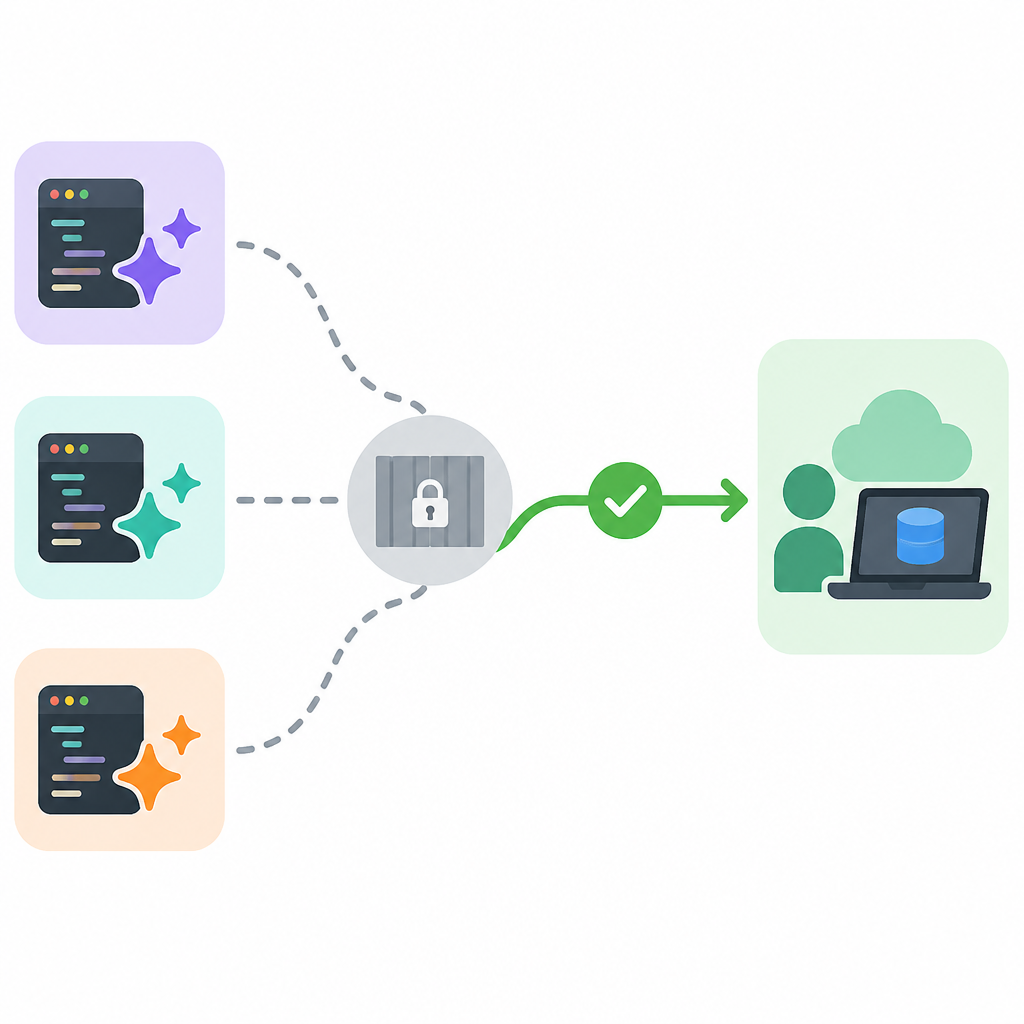
It also changes onboarding. Instead of promising “all-you-can-eat AI,” the product asks users to connect their own provider account. That is a harder sell at first, but it is often a cleaner one for power users who already know how much they spend.
Compared with the old model, BYOA shifts the economics in a few concrete ways:
- Vendor risk drops because the company is not prepaying for every token
- Gross margin improves because the app is no longer fronting inference costs
- Power users get more control over which model handles each task
- Multi-model support becomes a product feature, not a cost burden
This also fits the direction of modern developer tools. Products like Cursor, Claude Code, and OpenAI Codex all point toward a world where the model is one input, not the whole product.
What the numbers say about the market
The numbers in the source point in one direction: model vendors are gaining more pricing power, while app makers are getting less room to absorb shocks. When dynamic pricing can double or triple a heavy user’s bill, a startup that bundles inference into its own price has a problem.
That is especially true in vibe coding, where the user experience depends on frequent model calls. These products often look simple on the surface, but they can burn through tokens quickly during code generation, debugging, refactoring, and agent loops.
- Anthropic’s enterprise spend share: 12% in 2023
- Anthropic’s enterprise spend share today: about 40%
- Heavy-user bill increase under dynamic pricing: 2x to 3x
- Model vendors controlling the stack: a small handful, not dozens
Those figures explain why BYOA is becoming the default answer for many AI app builders. It is the only way to keep the product’s economics from being tied too tightly to one vendor’s pricing page.
BYOA is the business model, not a workaround
Some teams still treat BYOA like a temporary escape hatch. That view is getting harder to defend. If a product depends on expensive frontier models, user-owned keys may be the only structure that keeps margins predictable.
The deeper lesson is simple: in AI apps, control over the model bill is control over the business. If you do not own the inference cost, you do not fully own the product economics.
For vibe coding tools, the next move is obvious. Support multiple providers, make BYOA easy, and give users clear cost visibility from day one. The products that do this will keep room to grow when the next pricing change hits.
// Related Articles
- [IND]
OpenAI's gov partnerships turn access into policy
- [IND]
Kubernetes sets rules for AI-assisted maintainership
- [IND]
AI models are eating the software stack, and app-layer companies are …
- [IND]
This ML project index covers every skill level
- [IND]
Entire’s agent Git network fixes AI code trust
- [IND]
OpenAI’s 54% token-efficiency gain is the real AI coding battleground