OpenAI’s 54% token-efficiency gain is the real AI coding battleground
OpenAI’s new model makes token efficiency the metric that will decide agentic coding winners.

54% token efficiency makes agentic coding a cost war, not a benchmark war.
OpenAI’s GPT-5.6 Sol matters because a 54% gain in token efficiency turns agentic coding from a raw capability race into a unit-economics race.
Token efficiency is now the product, not a footnote
Get the latest AI news in your inbox
Weekly picks of model releases, tools, and deep dives — no spam, unsubscribe anytime.
No spam. Unsubscribe at any time.
For years, model launches were sold on broad intelligence claims: better reasoning, stronger coding, larger context windows. Altman’s pitch is narrower and more useful. He is saying the model is “as good or better” than competitors while using 54% fewer tokens on agentic coding tasks. That is a direct attack on the biggest hidden cost in AI software: the amount of model output required to finish work. If an agent can write the same code, make the same edits, and resolve the same bugs with half the token burn, the buyer does not care about leaderboard theater. The buyer cares about margin.
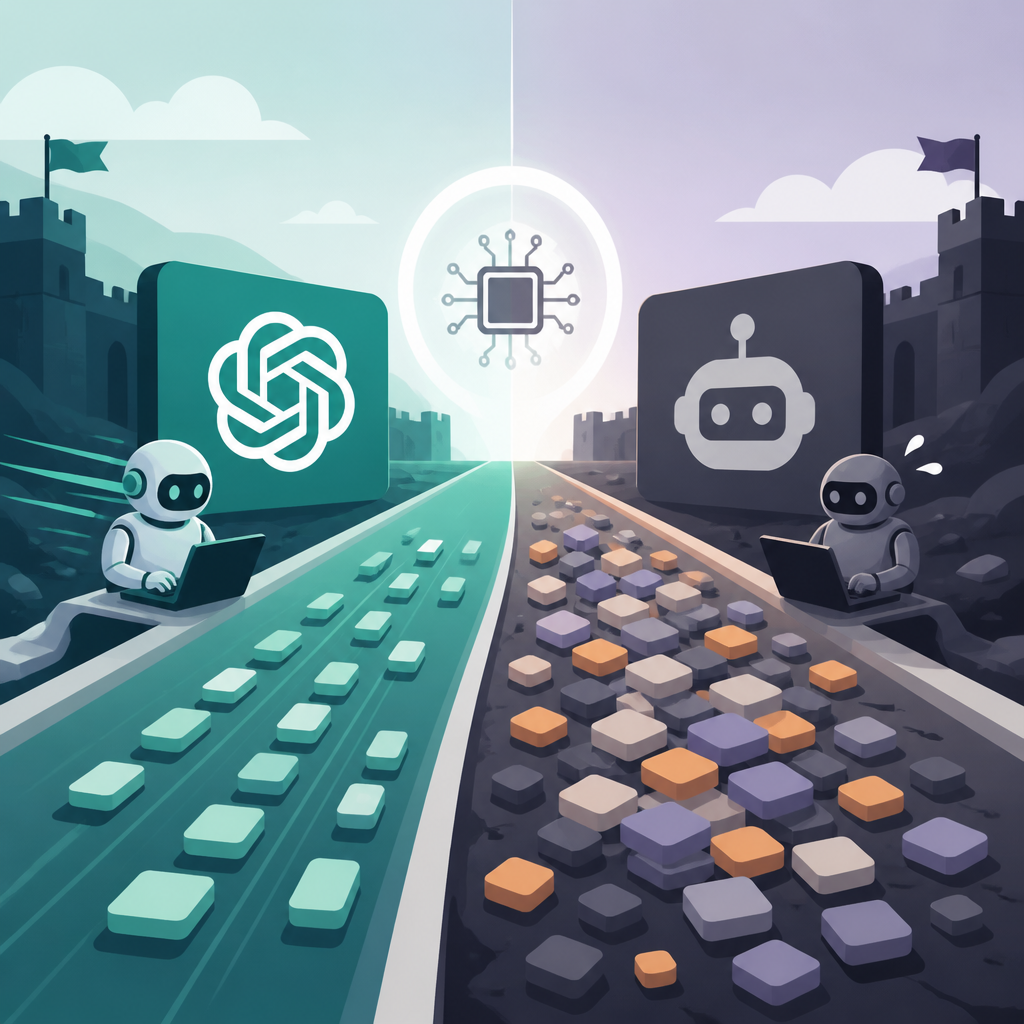
This is especially important in coding workflows because agentic systems are iterative by nature. They plan, inspect, retry, and repair. Every extra turn costs tokens, which means every inefficiency compounds. A model that trims token use by more than half can shift a product from “cool demo” to “deployable at scale.” That is why Altman framed the launch around enterprise spend. He knows the real competition is not just Anthropic, Google, Meta, or xAI. It is the finance team asking why a coding assistant’s bill keeps climbing faster than the value it creates.
Enterprises will reward cheaper output faster than smarter branding
The clearest evidence is already in the market language around AI pricing. Executives across the industry are warning that token costs are too high and must come down. Palo Alto Networks CEO Nikesh Arora has argued that AI pricing needs to fall dramatically as token costs rise. That is not a niche complaint. It is a signal that enterprise adoption is running into a hard constraint: useful AI has to fit inside software budgets, not just research budgets. OpenAI’s efficiency claim speaks directly to that pressure. If Sol can deliver similar results with less compute, it gives procurement teams a reason to expand usage instead of rationing it.
There is also a strategic layer here. Coding is the wedge where AI proves value fastest because the return is measurable in shipped features, fewer tickets, and faster incident response. A model that is cheaper per successful task can be embedded deeper into developer tools, CI systems, and internal copilots. That makes it more defensible than a model that merely wins a benchmark by spending more tokens to think harder. In enterprise software, the best model is often the one that disappears into the workflow and lowers the cost of every action. OpenAI is clearly chasing that outcome.
Safety and regulation are becoming part of the launch calculus
The government angle in this story is not a side note. OpenAI said the initial launch was limited to a small group of trusted partners at the request of the U.S. government, and Altman said the company worked with Commerce Secretary Howard Lutnick, Treasury Secretary Scott Bessent, and National Cyber Director Sean Cairncross on approval. That tells you the industry has moved past the era when model releases were just product decisions. Powerful agentic systems now trigger review, testing, and negotiation. The model is not only judged on performance. It is judged on whether regulators believe the company can control it.
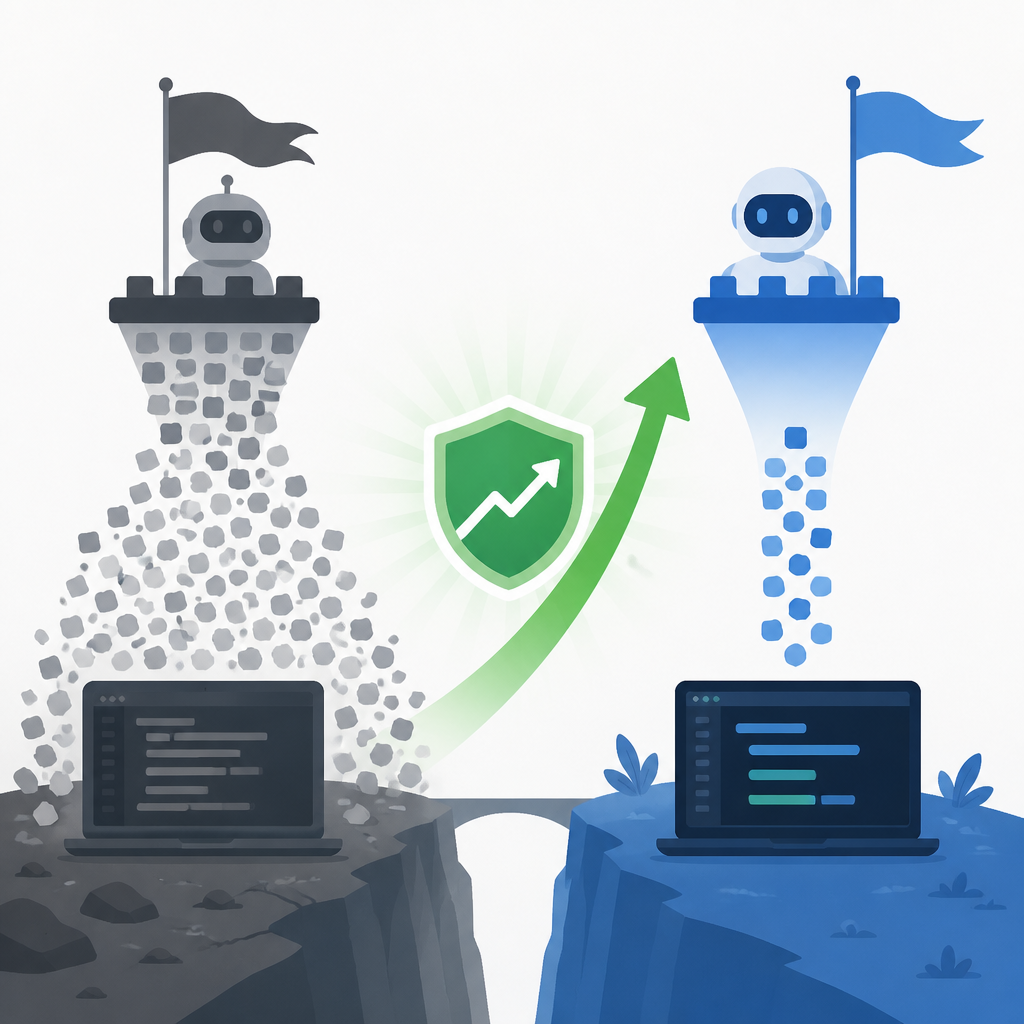
That matters because agentic coding is a high-trust use case. These systems do not just answer questions; they take actions, modify code, and potentially propagate errors at machine speed. A 54% efficiency gain is attractive, but it also raises the stakes if the model is deployed recklessly. OpenAI’s “collaborative back and forth” with the government is a sign that broad access depends on proving safety claims, not merely promising them. In practice, that means the companies that can document evaluation, containment, and rollback will ship faster than those that rely on marketing language.
The counter-argument
The strongest objection is that token efficiency is not the same as intelligence. A model can be cheaper because it is more constrained, more optimized, or more selective in when it speaks. That does not guarantee it is the best coding assistant in real-world use. Some developers want deeper reasoning, broader context handling, and fewer silent failures, even if the token bill is higher. On that view, the market will still choose the most capable model, not the most efficient one.
There is also a vendor lock-in concern. If OpenAI frames efficiency as the headline metric, buyers may end up optimizing for its own pricing and infrastructure assumptions instead of independent productivity gains. A company can boast about token savings while still charging enough to preserve margins. In that case, the efficiency story helps the vendor more than the customer.
That critique is fair, but it misses the direction the market is already moving. Enterprises do not buy abstract intelligence; they buy outcomes at acceptable cost. If a model is truly “as good or better” while cutting token use by 54%, that is not a cosmetic improvement. It is a material operating advantage. And if the model is cheaper but less reliable, the market will reject it quickly in production. Efficiency only wins when it survives contact with real workflows, which is exactly why OpenAI is emphasizing agentic coding rather than general-purpose hype.
What to do with this
If you are an engineer, benchmark models on task completion per dollar, not just accuracy or vibe. If you are a PM, measure agentic coding on total workflow cost, failure rate, and time saved per shipped change. If you are a founder, treat token efficiency as a core product feature, because the next wave of AI winners will be the ones that make powerful automation affordable enough to run every day.
// Related Articles
- [IND]
OpenAI's gov partnerships turn access into policy
- [IND]
Kubernetes sets rules for AI-assisted maintainership
- [IND]
BYOA is the only path for vibe coding apps
- [IND]
AI models are eating the software stack, and app-layer companies are …
- [IND]
This ML project index covers every skill level
- [IND]
Entire’s agent Git network fixes AI code trust