Spark 4.2 turns AI search into SQL
I break down Spark 4.2’s vector search, streaming, and Python upgrades into a copyable AI-serving pattern.

Spark 4.2 lets you fold vector search and AI serving into one SQL engine.
I've been using Spark long enough to stop getting impressed by the usual upgrade notes. Faster joins, nicer APIs, another round of Python polish. Fine. But this one hit a nerve, because I keep seeing the same mess in real systems: one engine for events, another for feature prep, a separate vector database for retrieval, and then a pile of glue code holding the whole thing together like duct tape on a leaking pipe.
That setup works until it doesn't. Latency gets weird. Governance gets split across tools. Teams argue about where embeddings live, who owns freshness, and why the “simple” AI feature now needs three services and a dashboard nobody trusts. So when I read The New Stack’s piece on Spark 4.2 and AI workloads, I didn't read it as a product announcement. I read it as a very practical attempt to collapse a bunch of awkward infrastructure into one place.
The interesting part isn't that Spark suddenly does everything. It doesn't. The interesting part is that it starts acting like the boring center of gravity for AI serving: ingest data, compute features, store vectors, query them, and keep the whole thing governable. That's the kind of shift that changes architecture decisions, not just benchmark slides.
Source anchor: The New Stack article is the trigger here, and I’m also cross-checking against the upstream Apache Spark project and its docs because the practical details matter more than the headline.
The vector database you were planning might be the redundant part
Get the latest AI news in your inbox
Weekly picks of model releases, tools, and deep dives — no spam, unsubscribe anytime.
No spam. Unsubscribe at any time.
“Spark 4.2 has a feature that could retire your vector database.”
What this actually means is not “delete Pinecone tomorrow.” It means Spark is pushing into the part of the stack where people usually reach for a dedicated vector store by default. If Spark can index, store, and query embeddings well enough for your workload, then the separate vector database stops being a requirement and becomes a choice.

I’ve seen this decision go sideways in both directions. One team bought a vector DB because it sounded cleaner, then spent months syncing data from Postgres, Kafka, and Spark jobs into it. Another team tried to cram retrieval into a general-purpose database and ended up with slow queries and miserable tuning. The real question is not “is a vector DB good?” It’s “where is the source of truth, and how many copies of the same data do I want to maintain?”
The New Stack’s framing matters because it points to a consolidation story. Spark already sits near ETL, batch analytics, and streaming. If it can also handle vector retrieval, then the retrieval layer can live closer to the data pipeline instead of becoming a separate island.
How I’d apply this: if your embeddings are already generated in Spark, or your feature pipeline is already in Spark, start by mapping the retrieval path. Ask whether the vector store is doing anything unique beyond similarity search. If the answer is “not much,” you’ve got a candidate for simplification. If the answer is “low-latency ANN at massive scale with operational guarantees,” keep the specialized store and stop pretending otherwise.
- Keep the vector DB if it owns a hard latency SLA you can’t miss.
- Consider Spark-first retrieval if the embeddings are pipeline-native and freshness matters more than microseconds.
- Watch the duplication tax: every extra store means extra sync, extra drift, extra failure modes.
Spark is trying to be the serving layer, not just the prep layer
The old mental model is simple: Spark prepares data, another system serves it. That split made sense when Spark was mostly batch processing and “serving” meant a web app hitting a database. AI workloads have blurred that line. A lot of inference-adjacent work is really data engineering with a search step bolted on.
What Spark 4.2 is nudging toward is a serving architecture where the engine that builds the data also answers the query. That’s a big deal because it reduces handoffs. Fewer handoffs usually means fewer stale copies, fewer sync jobs, and fewer late-night incidents where someone discovers the retrieval index is six hours behind the source table.
I ran into this exact problem on a recommendation system years ago. We had one pipeline to build features, another to ship them, and a third service that did nearest-neighbor lookup. Every time the product team asked for a “small” change, I had to check three codebases and two deployment schedules. The architecture looked clean in diagrams. In practice, it was a coordination tax machine.
That’s why this Spark direction is interesting. It makes the serving layer less like a separate product and more like a query capability. If you can express retrieval in the same engine that already understands tables, streams, and Python logic, you remove a lot of glue.
How to apply it: draw your current AI request path from ingestion to response. Count the transitions between systems. Then mark which of those transitions exist only because your stack was assembled in layers over time. Those are the ones Spark can potentially absorb.
- Ingest once, not three times.
- Keep embeddings and feature derivation close together.
- Prefer one operational control plane when the workload is still evolving.
Governed metrics are the part people skip, then regret
The headline usually goes to vector search, but I’m more interested in the governance angle. The source summary mentions governed metrics, and that’s the kind of thing teams ignore until the first audit, the first billing dispute, or the first model incident where nobody can explain why the numbers changed.
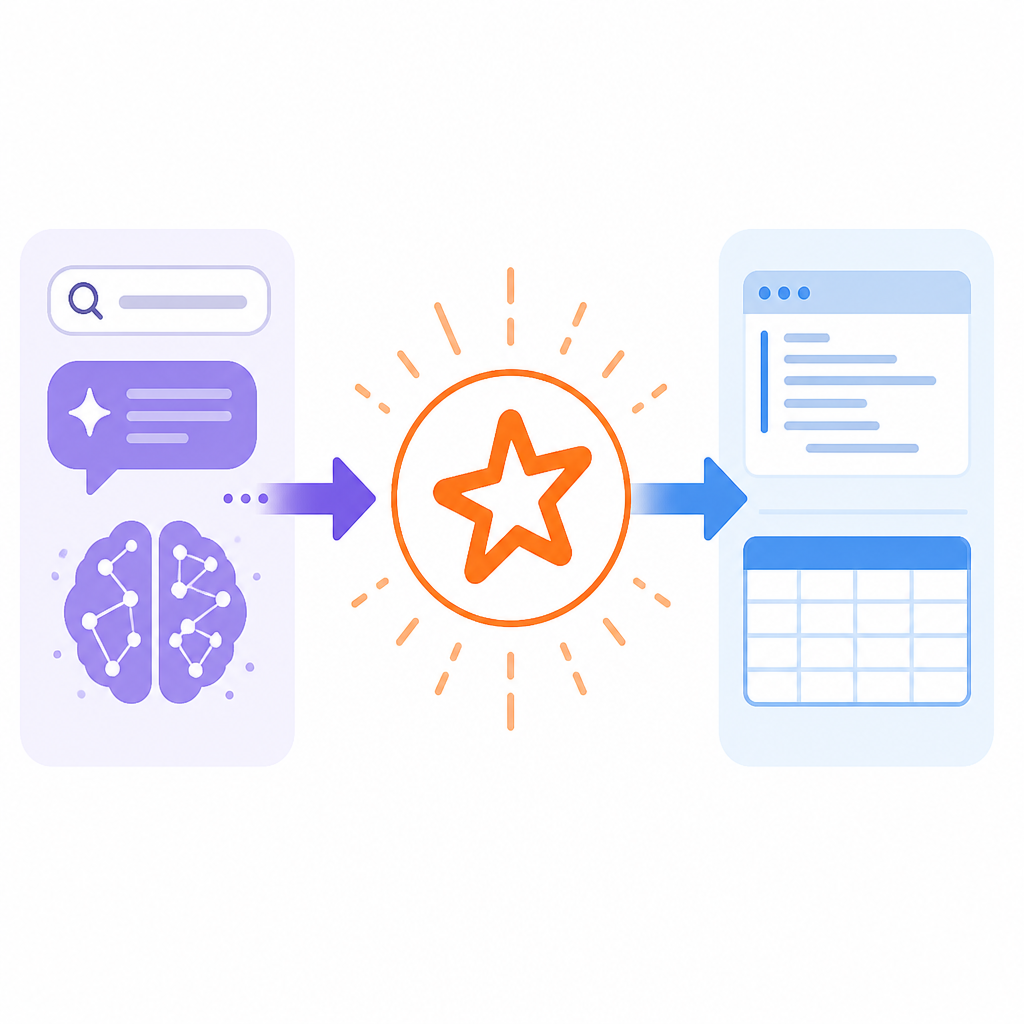
What this actually means is that Spark 4.2 is trying to make metric definitions more controlled and more repeatable. That sounds boring. It is boring. It is also exactly the sort of boring that saves you from shipping a dashboard where training, offline evaluation, and production monitoring all calculate “accuracy” differently.
I’ve watched teams get burned because the metric lived in a notebook, then a BI tool, then a custom service nobody wanted to own. Once the AI system starts influencing product behavior, metric drift becomes a governance problem, not just a data science annoyance.
If Spark can keep metrics inside the same engine that processes the data, you get a cleaner chain of custody. That matters for regulated environments, but it also matters for normal teams that are tired of arguing over whose number is right.
How to apply it: make a list of every KPI, model metric, and retrieval quality metric your team uses. For each one, answer three questions: where is it defined, where is it computed, and who owns it. If those answers point to three different systems, you’ve already found a problem Spark-style governance could help reduce.
Streaming upgrades are what make this architecture believable
Vector search alone is not enough. If your data is stale, your retrieval is stale. If your events are lagging, your features are lagging. That’s why the streaming improvements matter as much as the search story.
The New Stack piece points to streaming upgrades in Spark 4.2, and that’s the part that makes the whole AI-serving pitch believable. Real-time or near-real-time AI systems live or die on freshness. If the engine can process streams and feed retrieval in one place, then the retrieval layer is not some frozen index updated by cron jobs and hope.
I’ve had to debug too many pipelines where the stream processor was healthy, the indexer was healthy, and the product was still wrong because the handoff between them was slow. Nobody wants to discover that their “real-time” feature is actually 45 minutes behind because one queue backed up on a Tuesday.
Streaming also changes how you think about embeddings. If the source data changes continuously, then the embedding pipeline needs to keep up without turning into a monster. Spark is making the case that the same engine can do that orchestration instead of handing the job off to a separate stack.
How to apply it: identify any AI feature that depends on freshness. Recommendations, fraud, search, content ranking, support routing, all of it. Then ask whether the current architecture is batch-first with a streaming patch on top. If yes, you’re probably carrying a design that was already outdated before the model shipped.
Python support is the part that lowers the adoption barrier
Deep Python support sounds like a minor note until you’ve watched a team refuse to adopt a platform because the ergonomics were awful. Java and Scala can be fine for platform teams. They are often a hard sell for data scientists and ML engineers who live in Python notebooks and want to stay there.
What this actually means is that Spark 4.2 is trying to meet people where they already work. That matters because a technically elegant system that nobody wants to touch is still a failed system. I’ve seen great infrastructure lose to mediocre tooling simply because the mediocre tooling let people move faster.
Python support is also what makes the AI story easier to operationalize. If the same code path can stay close to existing Python workflows, the jump from prototype to production gets less painful. Less painful does not mean painless, by the way. It just means the migration doesn’t feel like a second job.
How to apply it: if your current AI stack has a split brain between Python experimentation and JVM production, measure the cost of that split. How many wrappers, adapters, and reimplementations exist only because the runtime boundary is inconvenient? If the answer makes you wince, the Python angle in Spark 4.2 is worth a serious look.
This is really about reducing the number of systems you babysit
Here’s the part I keep coming back to: the value of Spark 4.2 is not that it adds another shiny feature. It’s that it offers a way to remove systems. And in practice, removing systems is usually where the money is.
Every extra store, index, or service adds operational overhead. You patch it. You monitor it. You back it up. You explain it in incident reviews. You teach new hires why it exists. If Spark can absorb enough of the AI serving path, then the architecture gets easier to reason about and cheaper to keep alive.
That doesn’t mean Spark should replace every specialized tool. I’m not interested in that kind of lazy absolutism. Some workloads absolutely need dedicated vector infrastructure, and some teams will be better off keeping retrieval separate. But the default assumption is changing. The burden is now on the separate system to justify itself.
How to apply it: do a stack audit. List the systems involved in one AI feature and tag each one as source, transform, store, retrieve, or serve. Any component that exists only because another component couldn’t do the job should be questioned hard. That’s where consolidation wins start.
The template you can copy
# Spark 4.2 AI-serving architecture template

## Goal
Use Spark as the main pipeline for ingestion, feature prep, embeddings, retrieval, and governed metrics.

## When to use this
- Your embeddings are already produced in Spark or Python jobs near Spark
- You want fresher retrieval with fewer sync jobs
- You want one operational path for batch, streaming, and AI serving
- You want metric definitions governed in one place

## Keep a separate vector database if
- You need a strict low-latency SLA Spark cannot meet
- You need a specialized ANN feature Spark does not provide in your environment
- Your retrieval workload is isolated and already stable

## Architecture shape
1. Ingest source data into Spark
2. Clean and normalize records
3. Generate embeddings
4. Store embeddings in Spark-accessible tables or indexes
5. Query similar items from Spark
6. Compute governed metrics in Spark
7. Feed results to the app or model service

## Decision checklist
- Is Spark already the source of truth for the data?
- Are embeddings updated in the same pipeline as the source records?
- Do we have duplicate copies of the same retrieval data elsewhere?
- Can we define retrieval and quality metrics once, in code?
- Is freshness more important than sub-millisecond retrieval latency?

## Migration plan
### Phase 1: Map
Document every system in the current AI request path.

### Phase 2: Collapse
Move embedding generation and metric computation closer to Spark.

### Phase 3: Test
Run a side-by-side retrieval check against the current vector store.

### Phase 4: Cut over
Switch only the workloads that meet latency and quality targets.

## Practical guardrails
- Keep a rollback path to the existing vector store
- Measure freshness, recall, and query latency separately
- Don’t mix experimental metrics with production metrics
- Treat Python ergonomics as a first-class requirement

## Copyable evaluation note
If Spark 4.2 can own ingestion, embeddings, retrieval, and governed metrics for this workload, we remove one dedicated system and one sync path from the stack.
That template is intentionally conservative. I’d rather have you remove one system cleanly than try to win a platform purity contest and end up with a mess. Start small, prove the path, then decide whether Spark really can replace the vector layer.
Source attribution: This breakdown is based on The New Stack’s article at https://thenewstack.io/spark-4-2-ai-workloads/. My commentary is original, but the Spark 4.2 feature framing comes from that source and from the Apache Spark project at https://spark.apache.org/.
// Related Articles
- [TOOLS]
OpenAI's HF breach story turns into a security template
- [TOOLS]
SAP Design System adds AI and cross-platform UI kits
- [TOOLS]
ChatGPT Health turns general chat into a health layer
- [TOOLS]
Microsoft adds AMD chips to Azure AI and HPC
- [TOOLS]
Kimi K3 vs GLM-5.2: a one-endpoint test
- [TOOLS]
Gemini Live camera turns seeing into help