Jalapeño turns OpenAI into a chip designer
OpenAI and Broadcom’s Jalapeño shows how to turn a model company into a custom silicon builder.

OpenAI and Broadcom’s Jalapeño shows how to turn a model company into a custom silicon builder.
I've been watching OpenAI talk about compute for a while now, and honestly, the story kept feeling half-finished. They’d ship a model, then immediately talk about bottlenecks, then go shopping for more GPUs, then hint at some grander plan to “build the full stack.” Fine. But that still leaves the annoying part unsolved: if you’re burning through inference at scale, buying off-the-shelf accelerators forever starts to look like renting your own ceiling. That’s the part that kept bugging me.
So when OpenAI and Broadcom finally put a name on their first chip together — Jalapeño — it clicked. This isn’t just “we made a faster chip.” It’s OpenAI saying, out loud, that the company wants to own more of the stack that turns model demand into product delivery. That’s a very different posture from “we train models and hope supply catches up.” It also tells me they’re tired of being boxed in by whatever Nvidia, AWS, AMD, or anyone else can ship on someone else’s schedule. I’ve seen enough infrastructure teams to know that once a company starts talking this way, it’s usually because the spreadsheet has become a problem, not the keynote.
And yes, the chip name is ridiculous. But the move is not.
Source anchor: I’m breaking this down from CNBC’s report by Kif Leswing, which quotes OpenAI president Greg Brockman and Broadcom CEO Hock Tan on the rollout, timing, and why OpenAI wants more control over inference compute.
This is not about training hype, it’s about serving users
Get the latest AI news in your inbox
Weekly picks of model releases, tools, and deep dives — no spam, unsubscribe anytime.
No spam. Unsubscribe at any time.
“The chips will be made by Broadcom and used by OpenAI for inference, the compute-intensive process of serving its AI models to users in ChatGPT and other applications.”
What this actually means is OpenAI is optimizing for the part of AI that pays the bills and hurts the most: inference. Training gets the headlines, but inference is where the product lives. Every chat response, every agent step, every generated artifact, every “try again” click burns compute. That cost never stops. If you’re OpenAI, you don’t just want bigger models. You want cheaper, more predictable, more controllable serving.
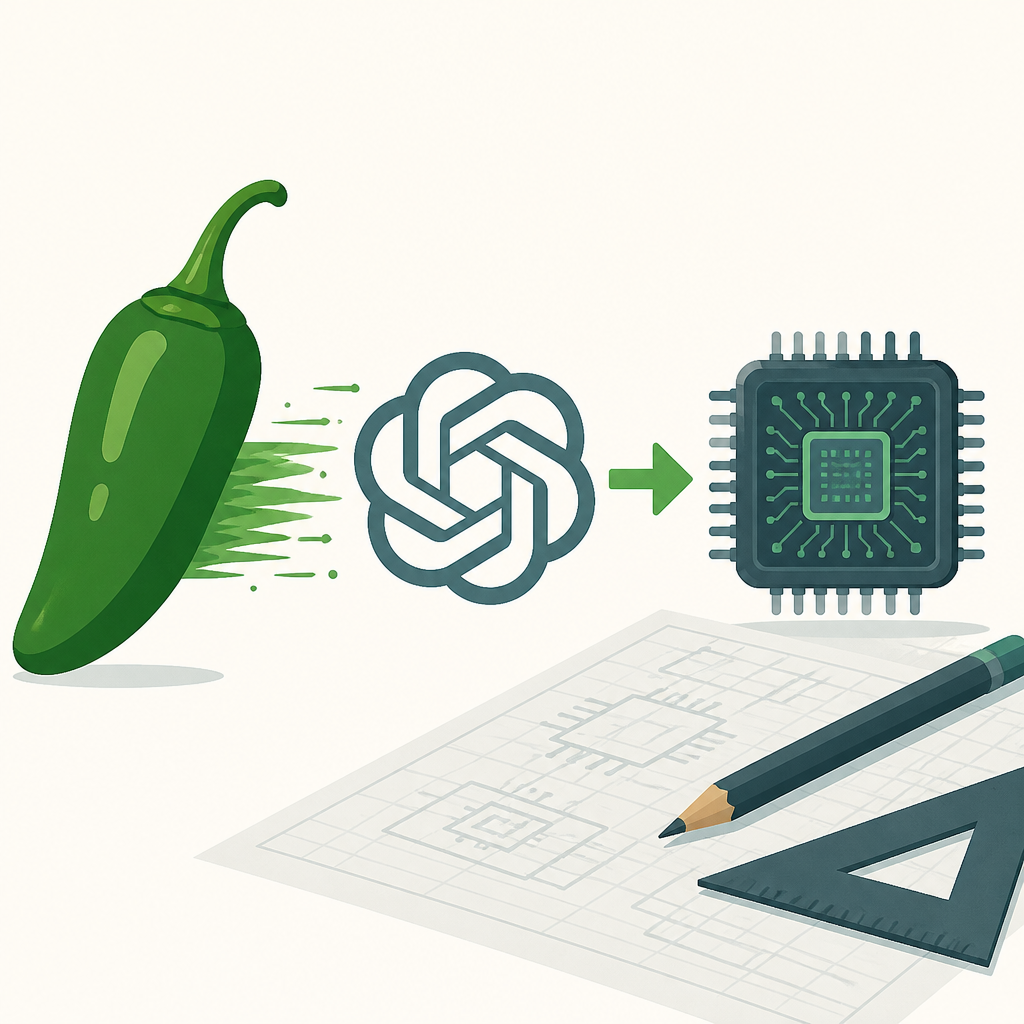
I’ve run into this exact trap in smaller systems. A team gets obsessed with model quality, then six months later they realize the real pain is latency, throughput, and cost per request. The model is good. The bill is ugly. Jalapeño reads like OpenAI finally admitting that the serving layer is where the leverage actually is.
Broadcom’s role matters here too. They’re not pretending this is a hobby project. Broadcom already sells the kind of custom silicon plumbing that hyperscalers like because it fits specific workloads instead of trying to be everything to everyone. If you want a primer on the company’s silicon business, the Broadcom company page is the boring official starting point, and that boringness is kind of the point.
How to apply it: if you’re building AI products, stop measuring only model quality. Track inference cost per 1,000 requests, median latency, p95 latency, memory pressure, and how often you’re paying for general-purpose compute when the workload is mostly repetitive. If the same workload keeps repeating, it’s a candidate for specialization.
- Separate training economics from serving economics.
- Find the most repeated inference path in your product.
- Ask whether general-purpose hardware is doing unnecessary work.
OpenAI is trying to own more than prompts and weights
“Jalapeño is a major step in OpenAI’s plan to ‘build the full stack behind its models and products,’ according to the press release.”
That line is the real tell. “Full stack” gets thrown around too casually, but here it means OpenAI wants control over more than the model API. It wants the silicon, the system design, the deployment path, and the product experience to line up under one roof. That’s the same instinct that pushed other giant tech companies into custom chips years ago. Once your software becomes infrastructure, you start designing hardware around it instead of hoping the market gives you a perfect fit.
I’ve seen this pattern before in cloud teams. First you rent. Then you optimize. Then you realize the vendor’s generic answer is good enough until it isn’t. At some point the workload gets weird enough, hot enough, or expensive enough that “good enough” turns into “why are we still paying for this?” OpenAI seems to be at that point, except on a scale that makes my little infrastructure headaches look like pocket lint.
If you want the official framing from the source side, OpenAI’s own site has the company-level language around products and systems at openai.com. For the hardware side of the partnership, Broadcom’s custom silicon business is the relevant backdrop, not some abstract AI buzzword soup.
How to apply it: if you run an AI product team, map your stack from model selection to serving path to infra contracts. Then ask one blunt question: where am I accepting someone else’s defaults because I haven’t done the math? Sometimes the answer is “everywhere.” That’s when you know the stack is leaking money and control.
- Inventory the systems you depend on but don’t control.
- List the places where vendor defaults shape product behavior.
- Decide whether the bottleneck is code, hardware, or procurement.
Nine months is the part that should make operators nervous
“OpenAI President Greg Brockman told CNBC’s David Faber on Wednesday that the chips were designed from end to end in nine months with help from the company’s AI models.”
This is the line that made me sit up. Nine months from end to end is fast enough to be impressive and terrifying in equal measure. If the reporting is accurate, it means OpenAI is using its own models to accelerate chip design, which is exactly the kind of recursive software-meets-hardware loop that changes what “iteration speed” means.
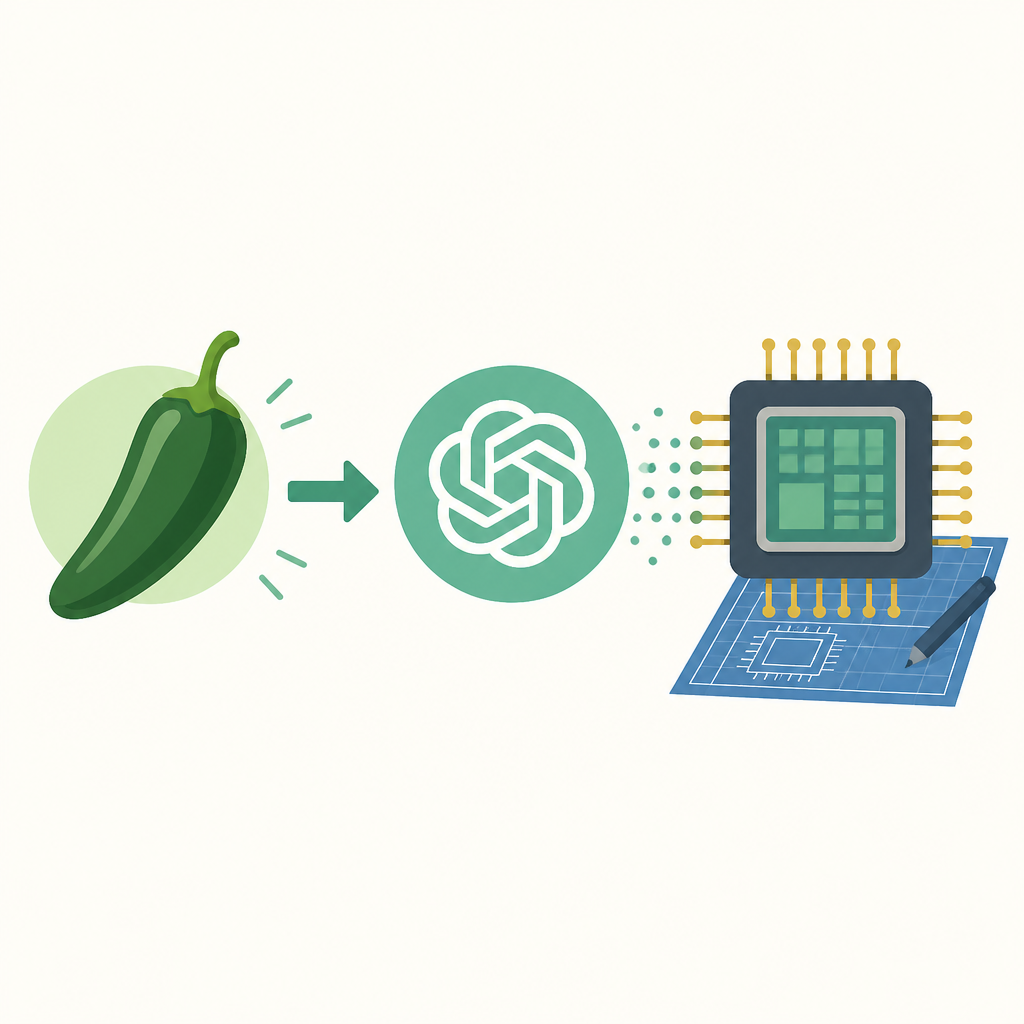
What this actually means is not that AI magically designed a chip by itself. It means the company used its own models to compress parts of the design cycle. That’s a very practical kind of advantage. Shorter design cycles mean faster validation, faster correction, and less time staring at a draft that’s already stale. In hardware, that is a huge deal because time is not just time. Time is money, supply chain, and lost product window.
I ran into a smaller version of this when teams I worked with used automation to reduce the boring parts of system design reviews. The point wasn’t “the tool replaces the engineer.” The point was “the engineer gets to spend more time on the hard decisions instead of formatting the deck.” Same idea here, just with silicon instead of slide decks.
If you want a reference point for the broader custom-chip trend, Nvidia’s role in AI compute is the obvious comparison. Nvidia’s official site is nvidia.com. I’m not saying OpenAI is replacing Nvidia. I am saying OpenAI is trying to reduce how much it has to wait on anyone else.
How to apply it: look for the parts of your own engineering process that are slow because they are manual, not because they are inherently hard. Use models, scripts, and automation to compress review loops. In hardware terms, that might be simulation and design assistance. In software terms, it’s test generation, config drafting, and deployment scaffolding.
Compute scarcity is the business model hiding in plain sight
“Brockman told CNBC that OpenAI ‘cannot get compute fast enough,’ and Broadcom CEO Hock Tan backed up that take, saying compute demand from the company’s six customers is ‘simply insatiable.’”
That’s the whole game right there. Not enough compute. Not enough supply. Demand that keeps outrunning whatever gets built next. Once you hear that kind of language from both sides of the deal, you stop reading this as a tech novelty and start reading it as capacity management.
OpenAI has already been buying from a lot of places. The article says it has deals with Amazon Web Services, AMD, and Cerebras, alongside heavy dependence on Nvidia. That’s not indecision. That’s a company trying to assemble enough supply from multiple vendors because one vendor is never going to be enough when demand is exploding this hard.
I’ve been in enough platform discussions to know what this looks like internally. A team starts with one primary vendor. Then the usage spikes. Then procurement gets involved. Then the architecture gets multi-vendor whether anyone likes it or not. By the time you’re juggling suppliers, you’re no longer “choosing the best tool.” You’re managing scarcity.
How to apply it: if your AI workload depends on one compute source, build a second path before you need it. Not because redundancy is fashionable, but because supply constraints change your roadmap. The moment your product schedule depends on one vendor’s allocation, your roadmap is no longer fully yours.
- Identify single points of failure in your compute stack.
- Build alternate paths for critical workloads.
- Model what happens if capacity slips by one quarter.
ASICs are less flexible, and that’s the point
“The chip with Broadcom is an ASIC, which industry experts say is less flexible than Nvidia’s GPU, but is also less expensive and can be designed for specific AI tasks.”
That tradeoff is the entire reason custom silicon exists. You give up flexibility to get efficiency. You stop asking hardware to be a universal answer and instead make it very good at a narrow job. That’s boring in the best possible way.
What this actually means is OpenAI is betting that some of its inference workload is stable enough to deserve dedicated silicon. If your workload has enough repetition, a specialized chip can lower cost and improve throughput. If your workload changes every week, custom silicon becomes a trap. So the move says something about OpenAI’s confidence in the shape of its serving demand.
I’ve seen teams make the wrong version of this decision. They customize too early, then spend a year maintaining a beautiful machine that no longer matches the product. The trick is not “customize everything.” The trick is “customize the part that has stopped changing.” OpenAI is probably betting that inference at its scale has crossed that line.
If you want to understand the hardware category better, Broadcom has a straightforward overview of its semiconductor business at broadcom.com/products. And if you want the GPU side of the comparison, again, Nvidia is the reference point because that is the dominant general-purpose AI accelerator everyone keeps measuring against.
How to apply it: before you even think about custom hardware, ask three questions. Is the workload repetitive? Is the performance target stable? Is the cost of general-purpose hardware now bigger than the cost of specialization? If the answer is yes three times, you’ve got a real candidate.
The rollout timeline says this is still early, not magic
“A physical sample of the new chip will be delivered to OpenAI on Wednesday. The companies said they’re aiming for initial deployment of the Jalapeño chips by the end of 2026, ‘expanding in the years ahead.’”
This is where I think it’s easy to overread the announcement. A sample is not mass deployment. Initial deployment by the end of 2026 is not “we solved compute.” It’s “we have a path, and now the slow part begins.” The article also says Broadcom’s Hock Tan expects small prototype development in late 2026, ramping in 2027, and going “full tilt” in the first half of 2028. That’s a long runway.
What this actually means is the chip is strategically important, but operationally it is still in the awkward phase where press release excitement outruns production reality. That’s normal. Hardware takes time. Packaging, validation, integration, deployment, and failure analysis do not care about your launch blog post.
I like this detail because it keeps the story honest. It’s not “here’s a chip, problem solved.” It’s “here’s the first step in a multi-year capacity plan.” That’s a much more believable way to think about infrastructure at this scale.
How to apply it: if you’re planning any custom infra move, write down the real timeline, not the optimistic one. Include sampling, testing, integration, rollout, and fallback. If you can’t name those phases, you’re not designing a system. You’re daydreaming.
The template you can copy
# Custom AI silicon decision memo template

## 1) What problem are we solving?
- Workload:
- Current bottleneck:
- Why off-the-shelf hardware is no longer enough:

## 2) What gets better with specialization?
- Cost per request:
- Latency:
- Throughput:
- Power efficiency:
- Operational control:

## 3) What stays flexible?
- Model families still changing fast:
- Serving paths that must remain general-purpose:
- Fallback infrastructure if custom hardware slips:

## 4) Build-vs-buy decision
- Vendor options:
- Estimated time to sample:
- Estimated time to production:
- Integration risk:
- Exit plan if the workload shifts:

## 5) Timeline
- Design start:
- First simulation / prototype:
- Sample delivery:
- Limited rollout:
- Production ramp:

## 6) Success criteria
- Measurable cost reduction:
- Latency target:
- Reliability target:
- Capacity target:
- Decision gate for expanding deployment:

## 7) One blunt question
If we had to support 2x demand next quarter, would this hardware plan help or trap us?
That’s the version I’d actually use in a team meeting. It forces the ugly questions onto the page instead of hiding them inside “strategic alignment” nonsense.
Source attribution: I wrote this breakdown from CNBC’s article at https://www.cnbc.com/2026/06/24/openai-and-broadcom-reveal-jalapeno-first-ai-chip-in-partnership.html. The analysis, framing, and template are mine; the facts and quoted lines come from CNBC’s reporting.
// Related Articles
- [IND]
Moka AI Is a Stronger HRMS Choice for Growing Teams
- [IND]
August 2026 Market Review: AI Stocks Flipped Fast
- [IND]
Pixel 11 launch live: every Google reveal
- [IND]
Anthropic’s invisible watermark is the right move
- [IND]
Docker’s latest releases now center security and Compose
- [IND]
Bitcoin’s busy week was a security wake-up call