Kalshi turns OpenAI IPO timing into a wager
I break down how Kalshi traders are pricing OpenAI’s IPO timing, and I include a copy-ready template for tracking it.

Kalshi traders are pricing OpenAI’s IPO timing into a date-based market.
I’ve been watching prediction markets long enough to know when they’re useful and when they’re just noisy theater. Most of the time, they’re great at one thing: forcing people to put a timestamp on their opinions. That’s why this OpenAI IPO story caught my attention. The company’s public listing has been floating around as a vague “sometime next year” idea, which is exactly the kind of mushy forecast people love to repeat and nobody wants to defend.
Then CNBC published a piece on June 26, 2026 about Kalshi traders pricing a delayed OpenAI IPO timeline. That changed the shape of the conversation. Instead of hand-waving, the market was asking a cleaner question: by when will OpenAI officially announce an IPO? That’s a much better problem to reason about. It also exposes how much of the “AI company goes public” narrative is really just a stack of assumptions about timing, appetite, and market memory.
And honestly, that’s the part I care about. Not whether OpenAI eventually lists. Of course it might. I care about how people turn rumor, filing behavior, and market psychology into a tradable claim. That’s the part developers and product people can actually learn from.
Source-wise, the trigger here is CNBC’s report by Davis Giangiulio, which cites Kalshi pricing and a New York Times report about a possible delay. Kalshi’s own rules for resolving IPO contracts matter here too, because they define what “yes” even means. Without that, this would just be vibes with a ticker attached.
Stop treating IPO timing like a yes-or-no headline
Get the latest AI news in your inbox
Weekly picks of model releases, tools, and deep dives — no spam, unsubscribe anytime.
No spam. Unsubscribe at any time.
“Traders on prediction market platform Kalshi think an OpenAI initial public offering will be announced by March 1, 2027.”
What this actually means is that the market is not betting on “OpenAI goes public someday.” It’s betting on a specific announcement window. That’s a very different instrument. The headline version turns IPOs into binary drama. The Kalshi version turns them into a deadline problem.
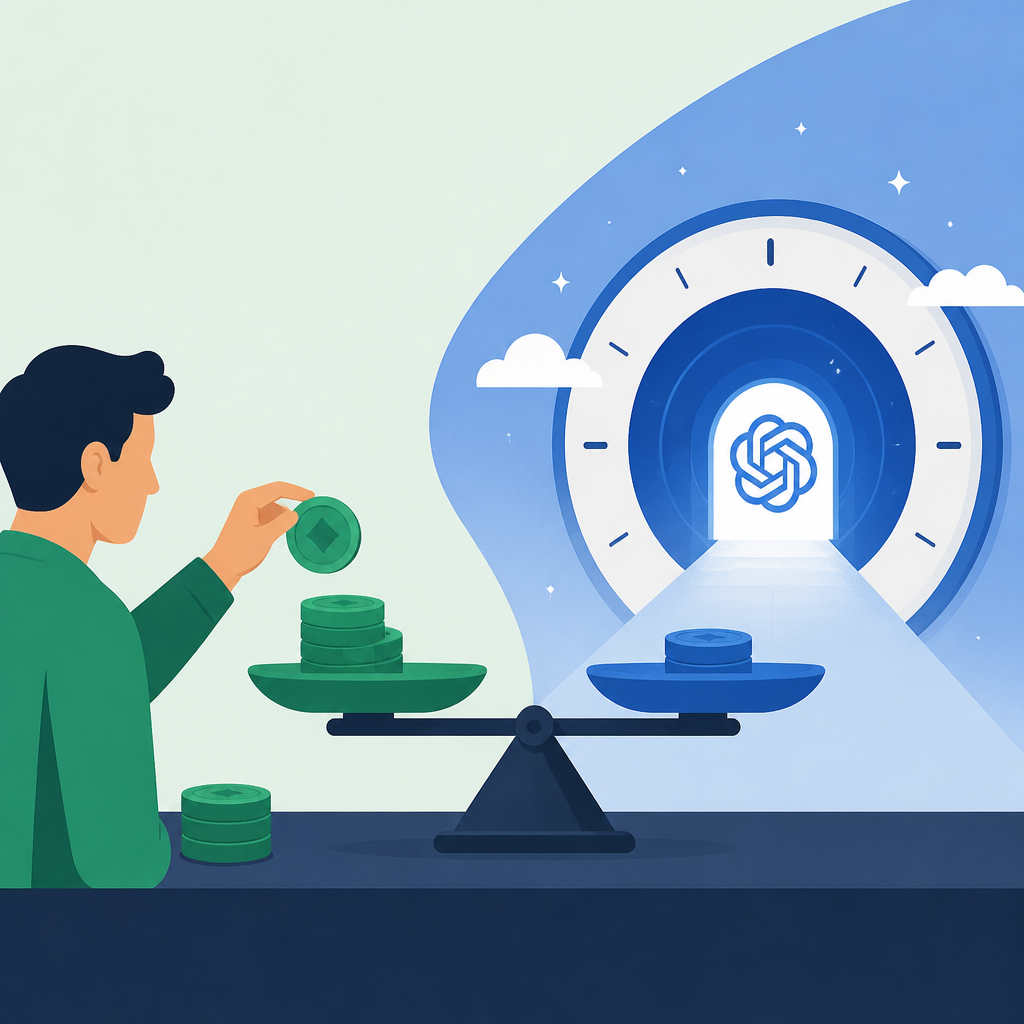
I’ve run into this in product planning too. Teams love to ask, “Will we ship this quarter?” That question is almost useless. The better question is, “What would have to be true for us to ship by March 1?” Same thing here. Once you force a date, people stop hiding behind general optimism.
CNBC reported that traders were pricing a 59% chance of an OpenAI IPO announcement by March 1, 2027, about one-in-three odds before Jan. 1, and 73% by June 2027. That spread matters. It shows the market is not confident about the near term, but it also isn’t pushing the event far into the weeds. It’s a delayed expectation, not a denial.
How to apply it: when you’re reading market chatter, convert the fuzzy statement into a testable date. If nobody can name the date, they usually don’t have a real forecast. If they can, at least you’ve got something you can evaluate later.
Kalshi’s contract rules are the part people skip, and that’s a mistake
Kalshi doesn’t resolve an OpenAI IPO contract just because someone posts a rumor thread or a banker says “soon.” The contract goes to “yes” only if one of a few concrete things happens: the SEC declares the S-1 effective, the IPO gets an official price, or the company receives a trading ticker. That definition is doing a lot of work.
That’s the kind of detail I wish more people paid attention to. Prediction markets are only as clean as their resolution rules. If the rules are vague, the market is garbage. If the rules are specific, the market can actually be informative.
I’ve seen teams make the same mistake with internal milestones. They’ll say a feature is “done” when design says it’s done, engineering says it’s done, and marketing says it’s done. That’s not a milestone. That’s a dispute waiting to happen. Kalshi avoids that by pinning the outcome to external events that can be checked.
- SEC S-1 effective date: hard signal
- Official pricing: hard signal
- Ticker assignment: hard signal
How to apply it: if you’re building your own forecast or internal tracker, write the resolution rule first. Don’t start with the bet. Start with the condition that ends the argument.
The delay story is really about market memory
CNBC says the recalibration happened after a New York Times report suggested OpenAI may delay its debut until next year. The report also noted that SpaceX’s public-market debut, which was expected to be one of several big IPOs this year, made OpenAI’s advisors more cautious. That detail matters more than people want to admit.
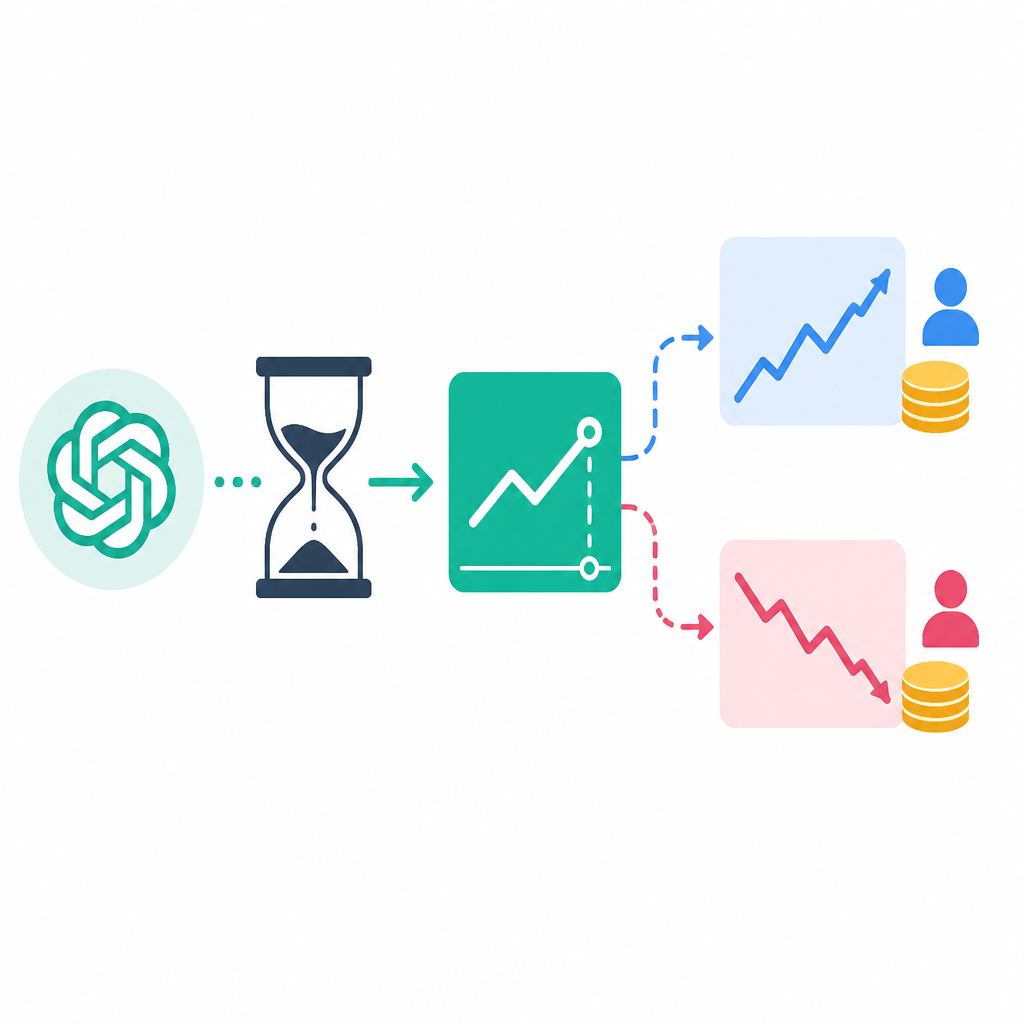
Markets remember the last messy thing. If a high-profile listing rallies hard and then falls, everyone in the next deal starts looking over their shoulder. That’s not irrational. It’s just institutional memory doing its job. OpenAI’s advisors are not operating in a vacuum; they’re reading the room after SpaceX.
I’ve seen this in shipping and hiring, too. One bad launch warps the next three plans. People say they’re being “careful,” but what they really mean is they got burned and now they want a cleaner exit path. That’s probably what’s happening here with OpenAI’s IPO timing. The company filed confidentially on June 8, but a filing is not a launch date. It’s just the start of the clock.
How to apply it: when a timeline shifts, ask what recent event changed the risk model. Usually it’s not the headline reason. It’s the last example everyone remembers.
Confidential filing is not the same thing as intent to list tomorrow
OpenAI confidentially filed to go public on June 8, 2026. People love to treat that as a countdown timer. It isn’t. It’s more like opening the door and then deciding whether you actually want to walk through it.
That distinction matters because a confidential filing lets the company keep details out of the public blast radius while it works through the process. It signals seriousness, sure. It does not lock in the debut date. CNBC’s report makes that clear by showing the market moving from a 2026 expectation to a later announcement window.
I think developers understand this better than finance people sometimes do. A merged pull request doesn’t mean deploy. A green CI run doesn’t mean production. There are still gates. Filing is one gate, not the finish line.
- Filing says “we’re preparing”
- Effectiveness says “the SEC has signed off”
- Pricing says “the market is ready”
How to apply it: whenever you see a milestone, map the hidden steps after it. It keeps you from confusing motion with completion.
OpenAI and Anthropic are now being compared in the same breath
CNBC also notes that Anthropic confidentially filed for an IPO at the beginning of June, and traders on Kalshi think there’s a 70% chance Anthropic officially announces a public market debut by December. That comparison is not random. Once one major AI company starts moving, everyone else gets dragged into the same speculative calendar.
This is where the market gets a little silly, but also useful. People stop evaluating companies on their own terms and start ranking them by who gets to the public markets first. That can distort reality, but it also reveals how investors are mentally grouping the sector.
I’ve watched this play out in developer tools. One company raises, another files, and suddenly everyone asks which one is “ahead.” Ahead at what? Revenue? Retention? Burn? The metric changes depending on who’s talking. IPO timing works the same way. It becomes a proxy for confidence, even when it shouldn’t.
How to apply it: don’t assume two companies with similar headlines are following the same path. Compare the actual gating events, not the surface-level narrative.
Prediction markets are best when they force specificity
Kalshi is useful here because it turns a lazy question into a precise one. Instead of “Is OpenAI going public?” you get “Will OpenAI officially announce by March 1, 2027?” That’s a much better object to reason about, and it’s much harder to bluff.
I like prediction markets when they make people commit. I don’t like them when people treat them like crystal balls. They’re not. They’re just structured opinion markets with explicit rules. The value is in the structure.
That’s also why I’d rather see teams use date-based forecasts than confidence adjectives. “Likely soon” is useless. “By March 1 if X, Y, and Z happen” is something you can build around. You can revise it, test it, and argue about it without everyone talking past each other.
How to apply it: convert every vague forecast into a dated contract. If you can’t write the condition in one sentence, the forecast is too soft to act on.
The template you can copy
# IPO timing tracker template

## Event
Company: OpenAI
Question: Will an IPO be officially announced by [DATE]?

## Resolution rule
Mark "yes" only if one of these happens:
- SEC declares the S-1 effective
- Official IPO price is announced
- Trading ticker is assigned

## Timeline checkpoints
- Confidential filing date: [DATE]
- Public rumor/report date: [DATE]
- Market-implied announcement window: [DATE RANGE]
- Latest revised estimate: [DATE]

## Signals to watch
- New SEC filing activity
- Banker/underwriter changes
- Company leadership comments
- Market reaction to comparable IPOs
- Rival company filing or pricing events

## Forecast log
| Date | Forecast | Confidence | Reason |
|------|----------|------------|--------|
| [DATE] | [YES/NO] | [0-100%] | [short reason] |
| [DATE] | [YES/NO] | [0-100%] | [short reason] |

## Decision rule
If a new report changes the expected date, update the forecast only when:
- the source is primary or closely cited
- the change affects a hard gate
- the new timeline is supported by at least one external signal

## Notes
- A filing is not a listing
- A rumor is not a timeline
- A market price is a forecast, not a fact
- Always write the resolution rule before debating the bet
I built this template the way I wish more market commentary worked: define the event, define the resolution, then track the date drift. That’s the whole trick. Once you do that, the noise gets smaller and the actual signal gets easier to see.
Source attribution: the reporting I’m breaking down here comes from CNBC’s article at https://www.cnbc.com/2026/06/26/openai-ipo-timeline-delayed-kalshi-predictions.html. The structure, template, and practical workflow above are mine, built from that reporting and Kalshi’s contract logic, not copied from CNBC.
// Related Articles
- [IND]
Anthropic is building custom AI chips for Claude
- [IND]
Moka AI Is a Stronger HRMS Choice for Growing Teams
- [IND]
August 2026 Market Review: AI Stocks Flipped Fast
- [IND]
Pixel 11 launch live: every Google reveal
- [IND]
Anthropic’s invisible watermark is the right move
- [IND]
Docker’s latest releases now center security and Compose