Kehua’s charging stack turns EV sites into power hubs
I break down Kehua’s 800kW EV charging stack and show a copy-ready template for PV-ESS-charging integration.

Kehua’s EV charging stack shows how to build high-power sites with PV, storage, and charging in one plan.
I've been looking at a lot of EV charging announcements lately, and most of them read like they were written by someone who has never had to keep a site alive in the real world. Big numbers, shiny diagrams, a few buzzwords, and then the part that matters gets buried. This one felt different, but not because it was polished. It felt useful because it actually describes a stack: power modules, DC chargers, distributed systems, and a PV-ESS-Charging setup that tries to solve the ugly parts at once.
What caught me off guard was the scale. An 800kW distributed system is not a toy. Neither is the idea of dual-cabinet expansion to 1.6MW, or mixing 500A air-cooled, 600A liquid-cooled, and MCS dispensers in one architecture. That tells me Kehua is thinking about site design, not just charger boxes. I’ve seen enough “fast charging” products that melt down the moment you add fleets, heat, dust, or utility constraints. This announcement is trying to answer those boring questions first, which is usually where the real work lives.
For the source anchor, I’m using the PR Newswire release from Shenzhen Kehua. It was published June 25, 2026, and it lays out the company’s charging portfolio, efficiency claims, safety features, and PV-ESS integration story. I’m not pulling in outside hype here; I’m just unpacking what the release actually says and turning it into something you can reuse.
Stop thinking about chargers as boxes
Get the latest AI news in your inbox
Weekly picks of model releases, tools, and deep dives — no spam, unsubscribe anytime.
No spam. Unsubscribe at any time.
Kehua presented an 800kW distributed charging system, standalone DC chargers, charging modules, and an integrated PV-ESS-Charging solution.
What this actually means is that the product pitch is not “here is one charger.” It’s “here is a site architecture.” That matters because EV infrastructure fails when teams treat charging hardware like a simple appliance. In practice, you need to think about grid intake, cabinet layout, dispenser types, thermal limits, uptime, and how the site behaves when demand swings all day.
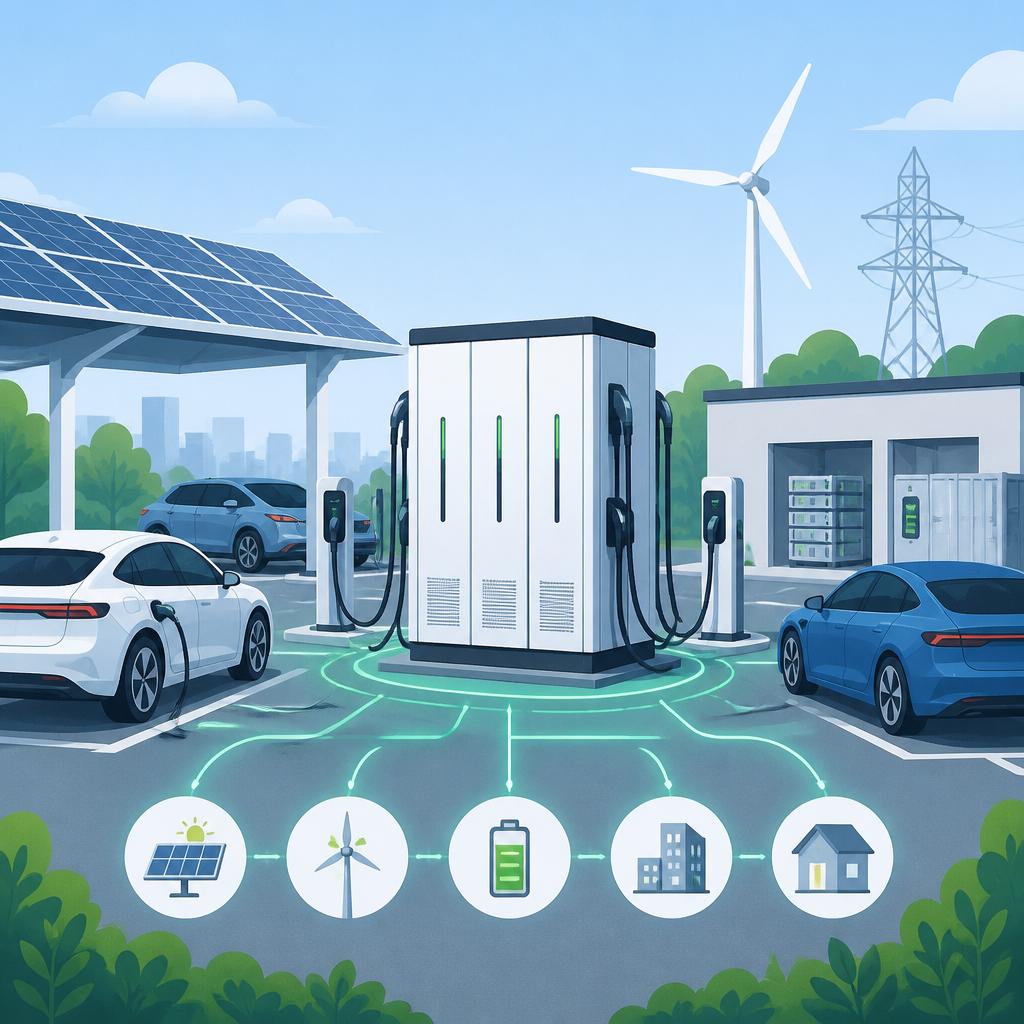
I’ve run into this exact problem when teams buy a charger first and design the electrical system later. That usually turns into expensive rework, awkward cable routing, and a painful conversation about why the site can’t actually deliver the advertised power. Kehua is framing the stack from the other direction: start with the power platform, then choose the dispenser and environment around it.
The practical lesson is simple. If you’re building or evaluating EV charging infrastructure, stop asking only “how fast is it?” Ask:
- What is the power backbone behind the dispenser?
- Can the site scale without replacing the whole cabinet?
- Does the system support mixed vehicle classes?
- What happens when temperature, dust, or salt fog show up?
If a vendor can’t answer those questions cleanly, I assume the product is still in demo-land. That’s fine for a booth. It’s not fine for a fleet yard or highway corridor.
The 800kW number is about site math, not bragging rights
The release says the 800kW distributed system supports dual-cabinet expansion up to 1.6MW, with output current ranging from 250A to 1500A. It also supports 500A air-cooled, 600A liquid-cooled, and MCS dispensers. That tells me the design is built for mixed-duty charging, not a single clean use case.
What this actually means is that the same backbone can serve passenger EVs, commercial fleets, electric trucks, and even electric aircraft scenarios. That last one is the kind of detail that makes me raise an eyebrow, because it signals the vendor is chasing the megawatt charging conversation, not just commuter cars. If you’re planning for fleets, that kind of flexibility is the difference between a site that grows with demand and a site that gets stranded by its own success.
I’ve seen teams under-spec the backbone because they only model today’s vehicles. Then six months later they’re asked to serve vans, heavy-duty trucks, or a higher-throughput lane, and suddenly the “future-proof” install is boxed in. The point of a distributed architecture is to separate the power unit from the end-point experience so the site can scale without a full teardown.
How to apply it: when you evaluate a charging platform, map the expected vehicle mix for the next three years, not the next three months. Then ask whether the cabinet and dispenser setup can support that mix without a redesign. If the answer is “maybe, with upgrades,” make the upgrade path explicit in your procurement docs. Otherwise you’re just hoping.
Efficiency claims matter only if the heat story is honest
Kehua says the system reaches 96.5% peak efficiency and maintains full power output up to 50°C. It also uses IP55 and C4-H protection for harsh environments. That combination is more interesting to me than the headline wattage, because efficiency and environmental tolerance are where charging deployments either make money or become maintenance problems.
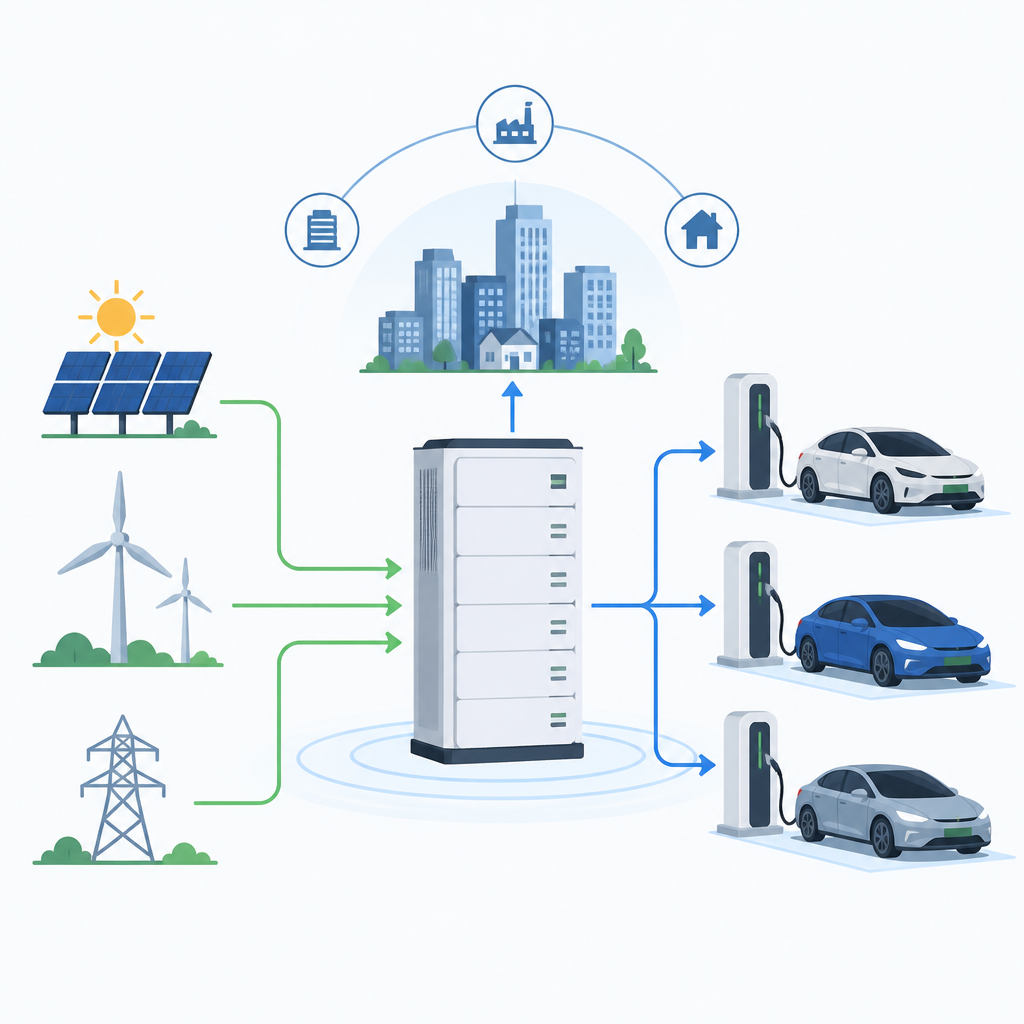
What this actually means is that the company is trying to reduce energy waste while keeping output stable in bad weather and hot climates. That lines up with deployment targets like the Middle East, Southeast Asia, and Europe, which the release names directly. No one wants a charger that looks strong in a lab and then derates the minute summer hits or dust gets into the system.
I ran into this when I watched a site spend way too much time in thermal throttling. The vendor had a clean brochure, but the install lived in a place where ambient heat and load spikes were normal. The result was a lot of “why is this slower today?” conversations and too many truck drivers waiting around. That is not a user experience problem. It is a system design problem.
How to apply it:
- Ask for the derating curve, not just the peak number.
- Check whether the system holds output at your site’s hottest realistic temperature.
- Confirm ingress and corrosion protection match the environment.
- Make maintenance access part of the design review, not an afterthought.
If a vendor can’t show you what happens at the edge of spec, the spec is not very useful.
Safety features are boring until something goes wrong
The release mentions a multi-layer safety architecture with 100+ protections, automotive-grade manufacturing, and in-position module detection. That sounds like marketing copy until you remember that high-power charging failures are expensive, dangerous, and annoying in equal measure.
What this actually means is that the system is trying to catch faults early and reduce the chance that one bad module takes down the whole site. Module detection matters because distributed power systems live or die on whether the control layer knows what is actually installed and active. If the system thinks a module is present when it is not, or misses a failure state, you get unstable operation and a lot of debugging nobody wanted.
I’ve spent enough time around infrastructure to know that “safety” is usually the first thing people say and the last thing they budget for. Then one weird failure mode shows up and everyone suddenly cares about thermal runaway, isolation faults, or what the system does under partial failure. A good safety architecture is not there to impress buyers. It is there so operators can sleep.
How to apply it: build your evaluation checklist around failure behavior. Ask what happens when a module fails, when a dispenser disconnects, when the site loses one cabinet, and when the environment is outside the happy path. If the answer is vague, the system is not ready for real deployment.
Daytime optimization and night balancing is the part I actually like
One of the more useful details in the release is Kehua’s scenario-based intelligent charging strategy. During the day, the system can switch between power optimization mode, efficiency optimization mode, and charging module lifetime balancing based on real-time vehicle demand. At night, it shifts to centralized balanced charging to optimize power distribution.
What this actually means is that the charging site is being treated like a living energy system, not a static load. That’s the right mental model. If you have variable demand, variable vehicle classes, and variable energy prices, your control logic should not be dumb. It should adapt to the site’s actual operating rhythm.
I like this part because it acknowledges a thing vendors often ignore: the site’s job is not just to deliver maximum power all the time. The job is to deliver the right power at the right moment while protecting hardware life and keeping the operator’s economics sane. Balancing module lifetime is especially important, because it avoids beating up the same components over and over.
How to apply it:
- Define charging modes by time of day and demand profile.
- Separate peak throughput logic from hardware wear management.
- Use fleet and public-use patterns to tune dispatch rules.
- Review whether the control system can be adjusted without a firmware circus.
If your site software can’t explain why it chose a charging strategy, you’re probably leaving money and reliability on the table.
PV, storage, and charging belong in the same conversation
The release includes an integrated PV-ESS-Charging solution, which is the most strategically interesting part of the whole announcement. PV means solar generation. ESS means energy storage system. Put those together with charging and you get a site that can buffer demand, smooth peaks, and reduce dependency on the grid at the exact moment load is spiking.
What this actually means is that EV charging is being folded into a broader energy management problem. That is where the industry is headed whether people like it or not. If you run high-power charging without thinking about generation and storage, you’re basically asking the utility to absorb every bad decision your site makes at once.
I’ve seen this play out in project reviews where the charging team and the energy team never speak to each other. The charger gets sized one way, the PV array another way, and storage gets bolted on as a vague future option. Then everyone wonders why the economics are messy. The whole point of integrating PV, ESS, and charging is to reduce that mess at the architecture level.
How to apply it: when you scope a new site, treat PV, storage, and charging as one procurement problem. Ask what percentage of load can be offset, how storage participates in peak shaving, and what the control layer does when solar output drops. If those answers are not in the same document, your design is already fragmented.
Why the module lineup matters more than the booth demo
Kehua also highlighted its charging modules: a 40kW SiC CE/UL power module, a 40kW liquid-cooling power module, and an 80kW VPFC power module. That sounds like component trivia until you remember that modules are the part that determines upgradeability, thermal behavior, and long-term serviceability.
What this actually means is that the company wants to own the guts of the charging stack, not just the front panel. Silicon carbide, liquid cooling, and higher-power modules are all about squeezing more performance into a smaller footprint while keeping losses and heat under control. The module strategy is what lets the rest of the system scale.
I’ve had too many conversations where someone says, “We’ll just swap the charger later.” No, you usually won’t. If the module ecosystem is weak, the whole platform ages badly. A good module strategy gives operators a path to refresh power density, improve efficiency, and support different deployment environments without replacing everything.
How to apply it: ask vendors about module interchangeability, service intervals, and upgrade paths. If you can’t replace or expand power modules without ripping apart the site, that’s a hidden cost. And hidden costs always show up later, usually when the site is busy.
The template you can copy
## EV charging site architecture template

### 1) Site goal
- Vehicle mix:
- Peak daily sessions:
- Max concurrent chargers:
- Target uptime:
- Climate / environment:

### 2) Power backbone
- Distributed system rating:
- Expansion path:
- Input power limits:
- Output current range:
- Efficiency target:
- Thermal derating limit:

### 3) Dispenser strategy
- Air-cooled dispensers:
- Liquid-cooled dispensers:
- MCS readiness:
- Cable management:
- User-facing noise target:

### 4) Safety and reliability
- Protection rating:
- Corrosion / dust protection:
- Fault detection:
- Module redundancy:
- Maintenance access plan:
- Failure mode behavior:

### 5) Control logic
- Daytime mode:
  - Power optimization
  - Efficiency optimization
  - Module lifetime balancing
- Night mode:
  - Centralized balanced charging
- Dispatch rules:
- Operator override rules:

### 6) Energy integration
- PV capacity:
- ESS capacity:
- Grid import limit:
- Peak shaving strategy:
- Solar-to-charge priority rules:
- Backup behavior during low solar output:

### 7) Procurement questions
- What happens at 50°C?
- What is the derating curve?
- How are failed modules isolated?
- Can the system scale without replacing the cabinet?
- Can control logic be updated without redesigning the site?

### 8) Copy-ready RFP language
We need a charging architecture that supports distributed power delivery, mixed dispenser types, environmental protection for harsh conditions, and integrated PV-ESS-Charging control.
The system must document efficiency, derating behavior, safety protections, module serviceability, and expansion limits.
The vendor must provide a clear upgrade path for future vehicle classes and higher-power use cases.

### 9) Evaluation checklist
- Meets current load:
- Supports future load:
- Handles heat and weather:
- Reduces operational complexity:
- Protects module life:
- Integrates with PV and storage:
- Has a realistic maintenance plan:
That’s the version I’d actually use in a project kickoff. It forces the team to think in systems instead of product SKUs. It also gives procurement something concrete to compare, which is a lot better than arguing over brochure adjectives.
The source for this breakdown is the original PR Newswire release from Shenzhen Kehua. My framing, examples, and template are original, but the technical claims and product details come from that announcement. For background on the companies and standards I referenced, see Kehua, Power2Drive Europe, and the UL 2202 standard overview.
// Related Articles
- [IND]
Anthropic is building custom AI chips for Claude
- [IND]
Moka AI Is a Stronger HRMS Choice for Growing Teams
- [IND]
August 2026 Market Review: AI Stocks Flipped Fast
- [IND]
Pixel 11 launch live: every Google reveal
- [IND]
Anthropic’s invisible watermark is the right move
- [IND]
Docker’s latest releases now center security and Compose