kernel.org turns Linux source into one safe hub
I break down how kernel.org centralizes Linux source, hardens access, and survives a breach with Git and 2FA.
kernel.org centralizes Linux source code and access control in one hardened hub.
I’ve been around enough developer infrastructure to know when something feels weirdly overcomplicated. You wire up a repo host, add mirrors, sprinkle in auth, and somehow the whole thing still feels fragile. That’s the part that always annoyed me about “source of truth” systems: people say they’re centralized, but then half the team is pulling from one place, maintainers are pushing to another, and the real trust boundary is buried under process docs nobody reads.
kernel.org is the opposite of that mess, and that’s why I wanted to unpack it. It’s not just a website with Linux files on it. It’s the main distribution point for the Linux kernel source, run by the Linux Kernel Organization, with repositories that keep every version available to everyone. That sounds boring until you realize how much of modern Linux depends on this one boring machine doing the right thing. When I dug into the history, especially the 2011 breach and the later move to mandatory two-factor auth for kernel Git commits, the whole setup started to look less like a static archive and more like a survival system.
If you build tooling, host code, or manage release paths, there’s a lot to steal from this model. Not as a copy-paste clone of kernel.org, but as a way to think about trust, mirrors, and what “distribution point” should actually mean.
I’m using the Wikipedia article on kernel.org as the starting point here, plus the linked primary sources it cites, especially the official kernel.org site and the Linux Foundation coverage of the 2011 incident. Wikipedia gives the high-level shape; the interesting part is how the infrastructure choices hold up under pressure.
It is not the source of truth, and that’s the point
Get the latest AI news in your inbox
Weekly picks of model releases, tools, and deep dives — no spam, unsubscribe anytime.
No spam. Unsubscribe at any time.
“All that makes kernel.org not the primary repository, but rather a distribution point of the kernel sources.”
What this actually means is that kernel.org is designed to distribute trusted source, not to pretend it is the only place truth exists. That distinction matters more than people admit. In a lot of teams, the central server becomes a psychological crutch. Everyone assumes the server is the truth, so they ignore the fact that the real guarantees come from the VCS, signed commits, review flow, and the ability to detect tampering.
Git is doing the heavy lifting here. Linus Torvalds designed it to preserve integrity and make history inspectable. That means if somebody tries to quietly alter kernel source on a hosted server, the damage is harder to hide because the distributed model gives you many copies and many eyes. The repository host is important, but it is not magical. It is a distribution layer with policy on top.
I’ve seen teams get this backward. They build a fancy internal Git server and call it “the source of truth,” then act surprised when access controls, backups, and replication become existential problems. kernel.org’s model is calmer: keep the source widely available, make tampering obvious, and don’t confuse hosting with authority.
How to apply it: if you run code infrastructure, define which layer owns truth and which layer only distributes it. Put verification in the client or in the commit path, not just in the server UI. If you use GitHub, GitLab, or a self-hosted forge, treat the host as a transport and policy endpoint, not the thing you trust blindly.
- Keep the canonical history in Git, not in an admin panel.
- Use signed commits or protected release tags where it matters.
- Document what counts as authoritative: repo, tag, signature, or release artifact.
Mirrors are not a backup plan, they are the plan
kernel.org also hosts mirrors and related projects, including the Linux Documentation Project and CPAN. That tells me the system is built around spread, not hoarding. The point is not “everything lives here forever and only here.” The point is “this place distributes widely, and if one path gets ugly, the ecosystem still has options.”
This is one of those things that sounds obvious until you’ve had to recover from a bad outage. Then it becomes painfully obvious. If your only copy of critical source is behind one interface, one auth system, or one admin team, you do not have resilience. You have a single choke point with better branding.
kernel.org’s mirror mentality is old-school in the best way. It assumes people will need access from different networks, different geographies, and different failure modes. It also assumes the main site can go down and the world should not stop shipping kernel fixes because of that. That’s a sane assumption.
I ran into this pattern when helping teams publish SDKs and release tarballs. The teams that survived outages best were the ones that had multiple distribution paths before they needed them. The ones that waited until after the incident usually ended up improvising under pressure, which is a fancy way of saying they made a mess.
How to apply it: if you publish artifacts, set up mirrors or redundant distribution channels before the first outage. That can mean regional object storage, CDN-backed downloads, mirrored package indexes, or a read-only fallback repo. The point is not fancy architecture. The point is that your users should still be able to fetch code when your favorite server is sulking.
- Separate publishing from editing.
- Keep read paths simpler than write paths.
- Test what happens when the primary host is unavailable.
2FA on commits is a policy, not a checkbox
Since August 2014, kernel.org has required two-factor authentication for commits to hosted Git repositories containing Linux kernel source. The article notes support for both soft tokens and hard tokens. That detail matters because it tells me this was not a “please enable MFA someday” suggestion. It was a policy decision tied to actual commit activity.
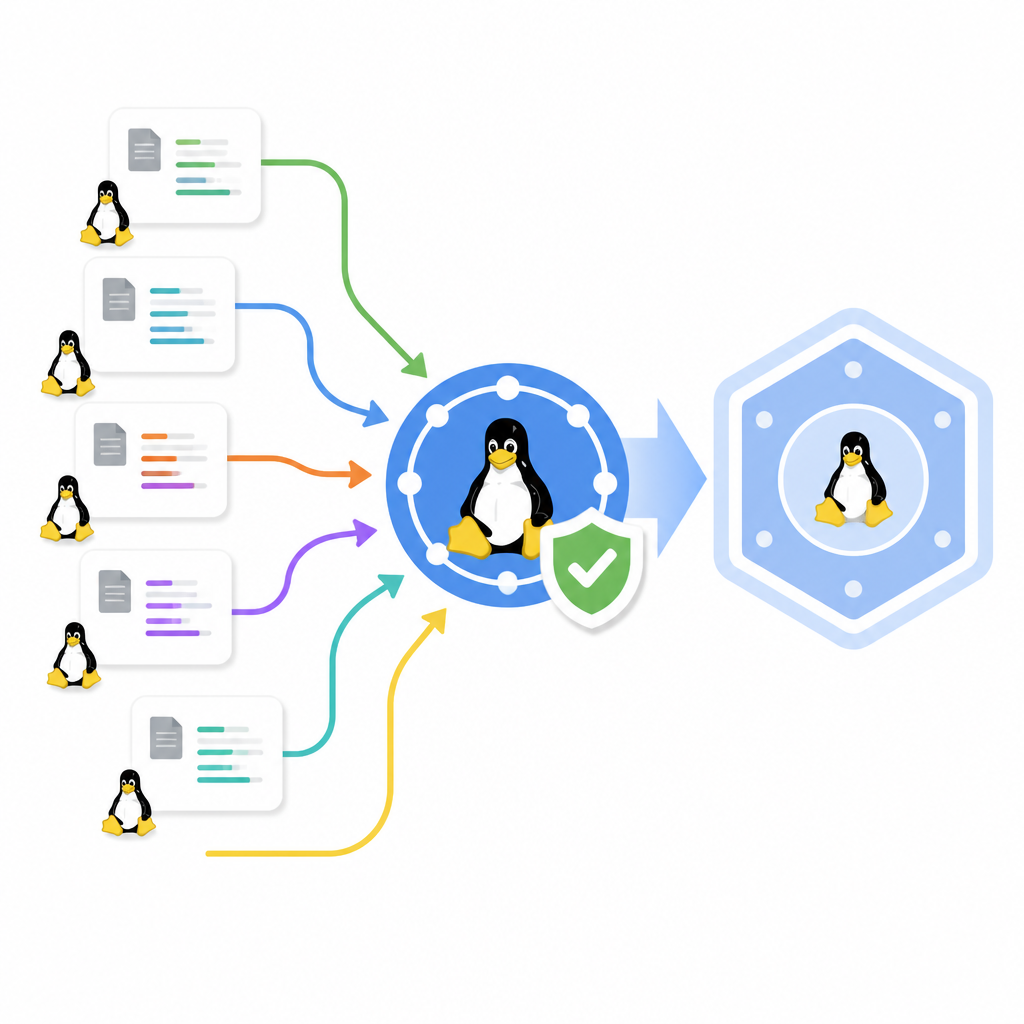
The plain-language version: if you can push code that matters, the system should make it harder for stolen credentials to become a disaster. Not impossible, harder. That is the right target. Security theater usually aims for “perfect.” Real infrastructure aims for “enough friction that the attacker has to work for it.”
I like this because it recognizes that repository access is not just read access. A compromised maintainer account can do real damage, and the blast radius is huge when the codebase is the Linux kernel. Requiring 2FA on commits changes the economics of attack. It does not solve every problem, but it raises the cost of impersonation and account theft.
I’ve had teams push back on MFA because it “slows down contributors.” Sure, it does. So does recovering from a compromised release pipeline. The trick is to put friction where it protects the highest-value actions, not where it annoys everyone equally. kernel.org did not make a philosophical statement here. It made a practical one.
How to apply it: require stronger auth for write access, release tags, and admin actions. Keep recovery paths documented. Support more than one token type if your contributor base is diverse. And don’t bury the policy in a checkbox nobody revisits. Make it part of repo governance.
If you want the surrounding tooling, look at the official kernel.org site, Git’s own docs at git-scm.com, and the Linux Foundation’s coverage of kernel security practices at linuxfoundation.org.
The 2011 breach is the real lesson, not the headline
On 28 August 2011, kernel.org developers found a major security breach. Intruders had root access and had added a trojan to startup scripts. The servers were reinstalled and the attack was investigated. Later reporting tied the incident to broader attacks on Linux Foundation properties, and a Florida resident was arrested years later. That’s the factual trail. The useful part is what the breach revealed about the system.
What this actually means is that even a critical infrastructure project can be compromised, and the response has to assume that the host itself is not trustworthy until rebuilt. That is a hard lesson, and honestly, one a lot of organizations still refuse to learn. They treat compromise like a temporary bug instead of a reason to rebuild trust from the ground up.
The article also points out why the Linux kernel’s distributed model mattered so much here: because the source was widely available and tracked in Git, tampering was easier to detect and revert. That’s the kind of property you want in a public codebase. Not invincibility. Recoverability.
I’ve watched teams freeze after an incident because they had no clean recovery story. They had logs, sure. They had dashboards. What they did not have was a plan for “wipe the machine, restore the repo, verify the history, and move on.” kernel.org had to do that in public, under scrutiny, and the architecture had enough discipline to make that possible.
How to apply it: assume the host can be owned. Keep immutable backups, independent verification, and external copies of critical history. Practice rebuilding from scratch. If your recovery plan requires the same compromised system to prove it is clean, that plan is junk.
Wide availability is a social contract, not just hosting
kernel.org exists for Linux kernel developers and maintainers of various Linux distributions, but the article makes it clear that “all users” can access the repositories. That openness is not accidental. It is part of the operating model of Linux itself. You do not get a healthy open-source ecosystem by hiding the source behind a narrow gate and hoping contributors will be patient.
There’s a subtle but important point here: availability is not only about uptime. It is also about who can see the code, who can mirror it, who can verify it, and who can build on it without asking permission from a central gatekeeper every five minutes. kernel.org supports that by being public infrastructure, not a private clubhouse.
I think a lot of internal platform teams get this wrong when they copy the shape of open source but not the behavior. They make a portal, add approvals, and call it community. But if the system is hard to inspect or impossible to mirror, it is not acting like an open distribution point. It is acting like a bottleneck with a README.
How to apply it: if your project is public, make the source easy to fetch, easy to verify, and easy to mirror. If your project is internal, still borrow the same instinct. Don’t make people depend on one UI path for basic access. Give them artifact URLs, repo mirrors, and documented fallback routes.
- Prefer public, inspectable release paths.
- Make mirrors first-class, not afterthoughts.
- Keep access rules narrow for writes, broad for reads.
What kernel.org teaches about boring infrastructure
I keep coming back to kernel.org because it is not trying to impress anybody. It is infrastructure that has to survive scrutiny, outages, and attackers while serving one of the most important codebases in computing. That kind of system teaches better lessons than flashy platform demos ever do.
The big idea is simple: separate hosting from trust, make distribution wide, protect write paths aggressively, and assume compromise is a recovery problem. That is the whole playbook, and it is a good one. Not glamorous. Just useful.
How to apply it in your own stack: decide what you are actually protecting. Source code? Release artifacts? Maintainer identity? Then build the minimum set of controls that protect those things without turning the whole workflow into sludge. kernel.org shows that you can be public, distributed, and still serious about integrity.
If you want to read the original reference, start with the Wikipedia page for kernel.org and then follow out to the official site and cited Linux Foundation pieces. The article is my starting point here, but the architecture story comes from the way those sources fit together.
The template you can copy
# Public source distribution model

Use this when you want a code host that is public, verifiable, and recoverable.

## 1) Define the trust boundary
- Canonical history lives in Git.
- The hosting service distributes history; it does not define truth.
- Tags/releases must be signed or otherwise verifiable.

## 2) Separate write access from read access
- Reads are public or broadly available.
- Writes require strong authentication.
- Admin actions require a second factor and a separate recovery path.

## 3) Make mirrors part of the design
- Maintain at least one read-only mirror.
- Mirror release artifacts in a second location.
- Test what happens when the primary host is unavailable.

## 4) Assume compromise
- Keep offline or independent backups.
- Rebuild hosts from clean infrastructure instead of patching in place.
- Verify repository integrity after restoration.

## 5) Protect high-value actions
- Require MFA/2FA for commits, pushes, and release publishing.
- Support more than one token type if contributors need it.
- Document account recovery before you need it.

## 6) Publish for verification
- Make source and artifacts easy to fetch.
- Keep download URLs stable.
- Prefer transparent history over hidden admin edits.

## Minimal policy snippet
- Source is public.
- Mirror is read-only.
- Writes require 2FA.
- Releases are signed.
- Recovery requires rebuild + verification.

## Incident response checklist
1. Freeze write access.
2. Rebuild the host from clean infrastructure.
3. Verify repository history against independent copies.
4. Restore mirrors and release endpoints.
5. Rotate credentials and review audit logs.
6. Announce the recovery path and verification status.
That template is mine, but the shape comes from kernel.org’s model: public distribution, mirrored access, strong commit protection, and a recovery story that does not depend on trusting the compromised box.
Source attribution: this breakdown is based on the Wikipedia article on kernel.org and its cited references, especially the official kernel.org site. My commentary, examples, and template are original, but the underlying facts and historical details come from those sources.
// Related Articles
- [TOOLS]
Use Consensus AI for faster literature scouting
- [TOOLS]
15 Perplexity prompts for better research decisions
- [TOOLS]
Mistral AI Models 2026 for Builders
- [TOOLS]
RustRover 2026.2 turns Rust setup into one file
- [TOOLS]
Geekbench 7 setup for realistic CPU and GPU tests
- [TOOLS]
Spark 4.2 turns AI search into SQL