last30days-skill is the best reason to stop trusting search alone
last30days-skill is a stronger research layer than search for AI agents because it ranks live community signal.

last30days-skill gives AI agents live community research across major social and dev platforms.
I think last30days-skill matters because it solves a real product problem: AI agents are usually smart but stale, and this tool makes them current.
The repo’s rise is the clearest proof. It hit 34,700-plus stars and reached #1 on GitHub trending, which is not the kind of reception you get from a gimmick. Builders are not star-voting for novelty alone; they are voting for a workflow that saves time and surfaces information they cannot get from a normal web search or a model’s training data.
It replaces stale search with live community signal
Get the latest AI news in your inbox
Weekly picks of model releases, tools, and deep dives — no spam, unsubscribe anytime.
No spam. Unsubscribe at any time.
Traditional search is built to rank pages, not lived experience. That is fine when you want documentation or evergreen explainers. It fails when you need to know what people are saying this week about a tool, a founder, a release, or a market rumor. last30days-skill is valuable because it pulls Reddit, X, YouTube, HackerNews, Polymarket, GitHub, and more into one pass, then synthesizes the results around engagement instead of SEO.

The example in the article is exactly the right one: run /last30days on a person or topic and you get recent tweets, commits, videos, discussions, and betting odds, all in one brief. That is a different kind of research product. It is not “search better.” It is “replace the stale middle layer between raw platforms and your decision.”
Its real advantage is not access, but ranking
Lots of tools claim internet access. That claim is cheap. The useful part here is that the tool ranks what real people cared about in the last 30 days, then merges overlapping stories across platforms. That matters because one loud Reddit thread, one viral X post, and one GitHub issue often describe the same thing from different angles. A good agent should not hand you three separate fragments; it should hand you one coherent brief.
The v3.3 upgrades make that point stronger. Intelligent pre-search resolves handles and repos before searching, cross-source cluster merging combines duplicate stories, and Best Takes surfaces the sharpest community one-liners. Those are not cosmetic features. They reduce the manual work of deciding what is signal and what is repetition, which is the entire job of research.
The counter-argument
The strongest objection is simple: this is still a patchwork of public platforms, browser sessions, API keys, and scraping. It is not authoritative. A polished brief built from social chatter can still over-index on noise, hype, and whatever the most online people are saying. If you are making a regulated, high-stakes, or deeply technical decision, community signal alone is not enough.
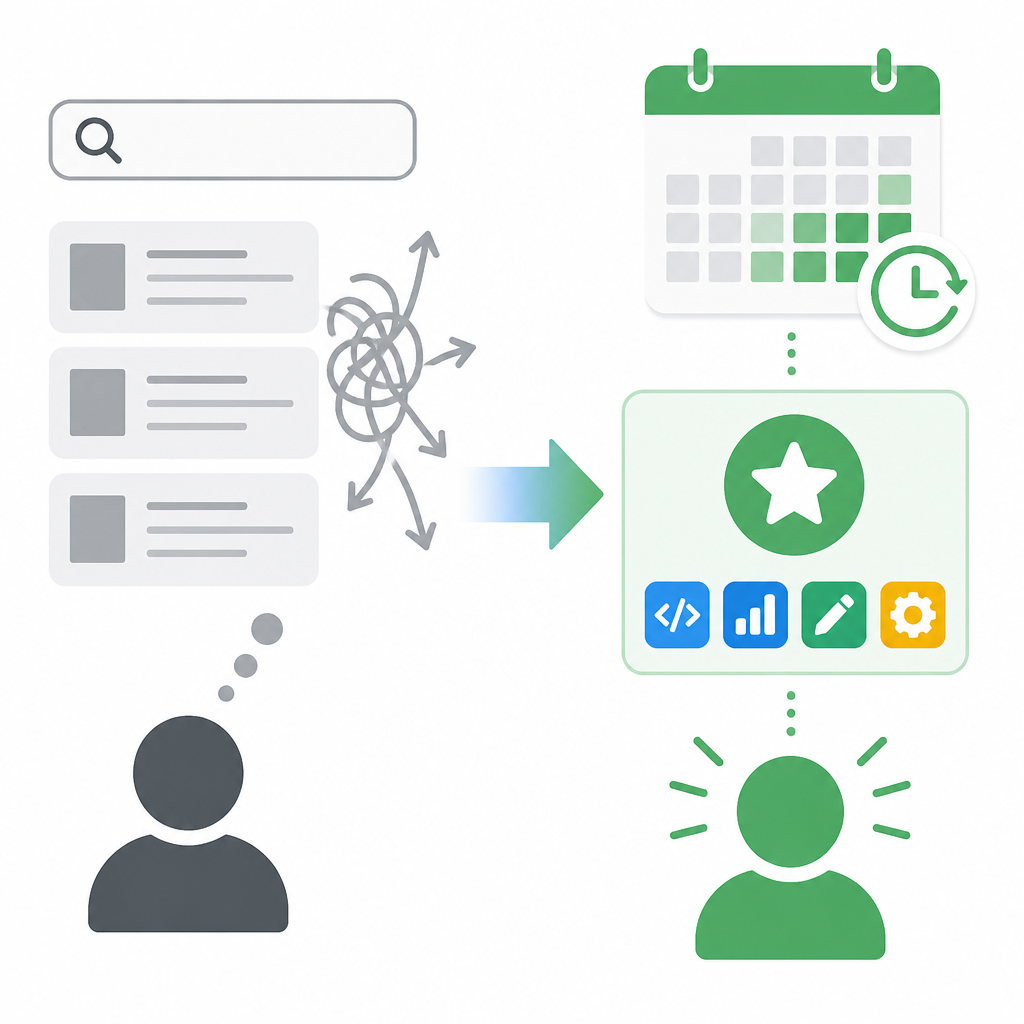
That objection is correct, and it sets the limit. last30days-skill is not a substitute for primary sources, internal telemetry, or domain experts. But that does not weaken the tool’s core value. It defines it. The point is to get from blind to informed fast, then use better sources for confirmation. For product work, competitive tracking, and pre-meeting prep, that is exactly the right order.
What to do with this
If you are an engineer, install it and use it before you start any feature spike or tool comparison. If you are a PM, run it before roadmap reviews, customer calls, and competitor analysis. If you are a founder, use it to check whether the market is actually talking about the problem you think you are solving. The rule is simple: treat last30days-skill as your live reconnaissance layer, then verify the important conclusions elsewhere.
// Related Articles
- [TOOLS]
Use Consensus AI for faster literature scouting
- [TOOLS]
15 Perplexity prompts for better research decisions
- [TOOLS]
Mistral AI Models 2026 for Builders
- [TOOLS]
RustRover 2026.2 turns Rust setup into one file
- [TOOLS]
Geekbench 7 setup for realistic CPU and GPU tests
- [TOOLS]
Spark 4.2 turns AI search into SQL