LATAM Is Already the Best Place to Hire Stablecoin Engineers
LATAM has become the strongest stablecoin engineering hub because real economic pressure forced production-grade fintech work.

LATAM is the strongest stablecoin engineering hub because real economic pressure forced production-grade fintech work.
LATAM is already the best place to hire stablecoin engineers because the region turned dollar-denominated digital money into a survival tool, not a trend.
That matters because the engineering talent pool did not form around speculative trading apps or whiteboard theory. It formed around systems that had to move value for families dealing with inflation, remittances, and weak banking access. In Argentina, USDT and USDC dominate crypto purchasing. In Brazil, more than 90% of crypto flow is stablecoin-related. In Mexico, the US-Mexico corridor moves $61.8 billion in remittances, and stablecoins are taking a growing share. Those are not vanity metrics. They are proof that LATAM engineers have spent years building payment rails that had to work under pressure.
LATAM engineers built for survival, so they built better rails
Get the latest AI news in your inbox
Weekly picks of model releases, tools, and deep dives — no spam, unsubscribe anytime.
No spam. Unsubscribe at any time.
The first reason LATAM stands out is simple: necessity creates sharper engineering. When inflation eats savings, stablecoins stop being a product category and become a practical financial instrument. Argentina is the clearest example. With the peso losing roughly 95% of its value against the dollar over five years and annual inflation peaking above 200% in 2023, users needed a dollar proxy they could hold on a phone. That is why USDT accounted for 50% of crypto purchases and USDC for 22% there, while Bitcoin was only 8%.
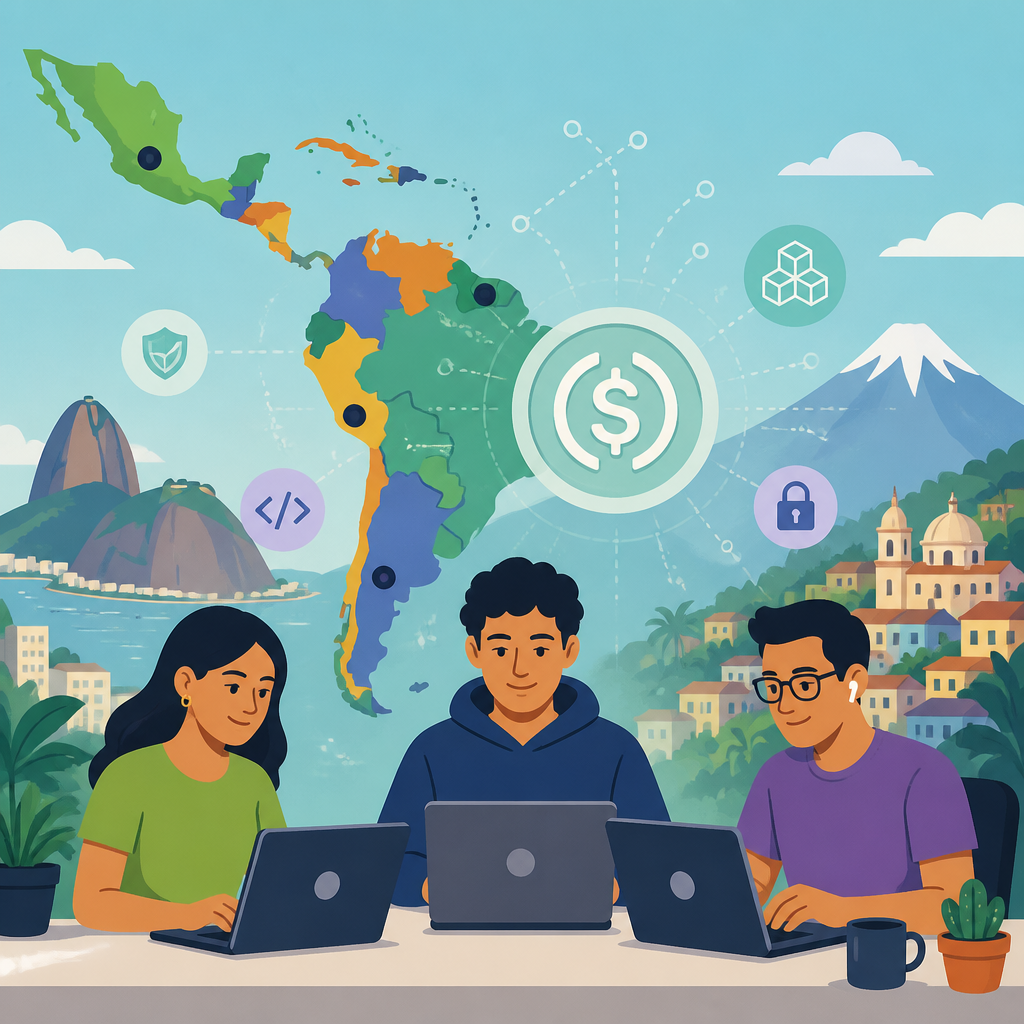
That adoption pattern forced companies to build real infrastructure, not just interfaces. If a user is storing their rent money in stablecoins, then custody, recovery, settlement, and reconciliation are not back-office details. They are the product. Engineers in that environment learn how to design wallet systems, handle failures without losing funds, and support 24/7 transaction reliability. That is a much harder school than building for users who can tolerate delays or reversals.
Remittance corridors produced production-grade payment engineers
The second reason is remittances. Latin America and the Caribbean received a record $174 billion in remittances in 2025, and the US-Mexico corridor alone handled $61.8 billion. Traditional rails charge 4-7% and settle in one to three business days. Stablecoins settle in seconds and cost fractions of a cent. That spread is large enough to justify serious infrastructure investment, and it did.
Bitso is the best-known proof point. The company reports more than 9 million users and about $6.5 billion in annual stablecoin-based remittances, which is roughly 10% of all US-Mexico money transfers. Building a system like that requires idempotency controls, onramp and offramp architecture, compliance pipelines, and failure handling across jurisdictions. Engineers who ship that stack are not generalists. They are specialists in cross-border money movement under real operational risk.
Regulation is making the talent more valuable, not less
The third reason is that LATAM’s stablecoin market is converging toward institutional compliance instead of drifting away from it. That is a big deal. Brazil now has a mature oversight framework under Banco Central do Brasil. Mexico’s corridor specialists already live inside regulated payment flows. Colombia is building digital payment infrastructure at scale. Even Argentina, under Milei, is moving toward a more stable policy environment. The region is not becoming less serious about compliance. It is becoming more serious.
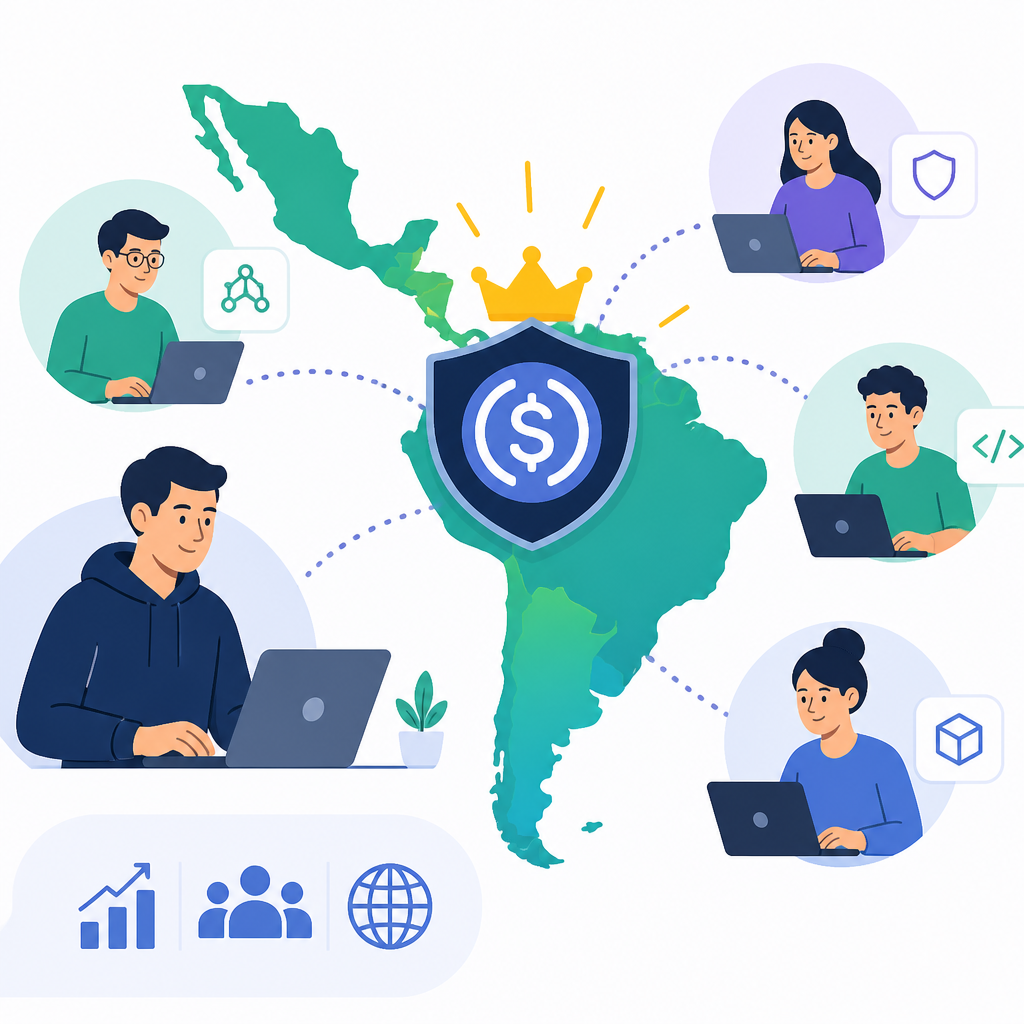
That raises the value of the engineers who already know how to work inside KYC, AML, and Travel Rule requirements. They have built systems for users with thin documentation, non-standard identity, and high-frequency small transactions. They know what it takes to connect stablecoins to local rails like Pix, SPEI, CoDi, and Transferencias 3.0 without breaking compliance or reliability. A market that is moving toward institutional standards does not need fewer of those engineers. It needs more of them.
The counter-argument
The strongest objection is that LATAM is still a regional story, not a global engineering center. The US has deeper capital markets, more mature infrastructure companies, and more experience hiring at scale. Europe has more formal regulatory systems. Asia has larger consumer tech populations. On this view, LATAM may be a useful source of talent, but calling it a hub overstates the case.
That objection gets one thing right: LATAM is not a single monolithic market, and it is not the only place where stablecoin talent exists. But it misses the key point. The best stablecoin engineers are not produced by abstract interest in blockchain. They are produced by repeated exposure to live financial pressure. LATAM has had inflation, remittance demand, and underbanking at scale all at once. That combination forced engineers to solve the exact problems stablecoin companies now need solved. The region is not just participating in the market. It is training the people who know how to build it.
What to do with this
If you are a founder or PM building payments, wallets, remittances, or crypto-fintech infrastructure, hire LATAM engineers for the hardest parts of the stack: custody, onramp/offramp, reconciliation, compliance, and corridor reliability. If you are an engineering leader, screen for production experience with stablecoins, instant payment rails, and regulated financial flows, not just crypto brand names. If you are hiring in the US or Europe, stop treating LATAM as a cost play and start treating it as a source of engineers who already know how to ship financial software that cannot fail.
// Related Articles
- [IND]
Immich Docker Compose setup that avoids common errors
- [IND]
Millions Raised for Zhipu-style Social World Model
- [IND]
Anthropic’s Book Scanning Strategy Could Set a Pattern
- [IND]
Huang’s open-letter playbook for open-weight AI
- [IND]
32 firms back open-weight AI in DC letter
- [IND]
Huang usa il suo primo post su X per difendere l’IA aperta