Learning from Multiple Data Providers
The paper maps when conditional samples from overlapping providers are enough to learn a distribution.

How do you learn a distribution when each data provider only answers restricted conditional queries?
The paper characterizes when restricted conditional samples are enough to learn a distribution.
- Research org: Unspecified in arXiv abstract
- Core data: ~O(n^2/\varepsilon^2)
- Breakthrough: Co-occurrence graph conditions determine learnability
This paper is about a very practical problem hiding behind a clean mathematical model: data is split across multiple sources, and each source only reveals samples conditioned on a subset of the domain. If you are building systems that combine partial, overlapping, or permissioned data streams, the question is not just whether data exists, but whether the structure of the queries makes learning possible at all.
The authors study a finite domain [n] and an unknown distribution p over it. Instead of ordinary i.i.d. samples, the learner can query a fixed family of sets S, and each query returns a sample from the conditional distribution p( cdot | S). That is a much narrower interface than standard sampling, but it matches settings where different providers expose different slices of the same underlying population.
What problem this paper is trying to fix
Get the latest AI news in your inbox
Weekly picks of model releases, tools, and deep dives — no spam, unsubscribe anytime.
No spam. Unsubscribe at any time.
The core issue is fragmentation. If the learner can only see conditional samples from restricted sets, then the usual intuition behind distribution learning breaks down. Some domain elements may never be observed together, and that changes what can be inferred globally from local evidence.
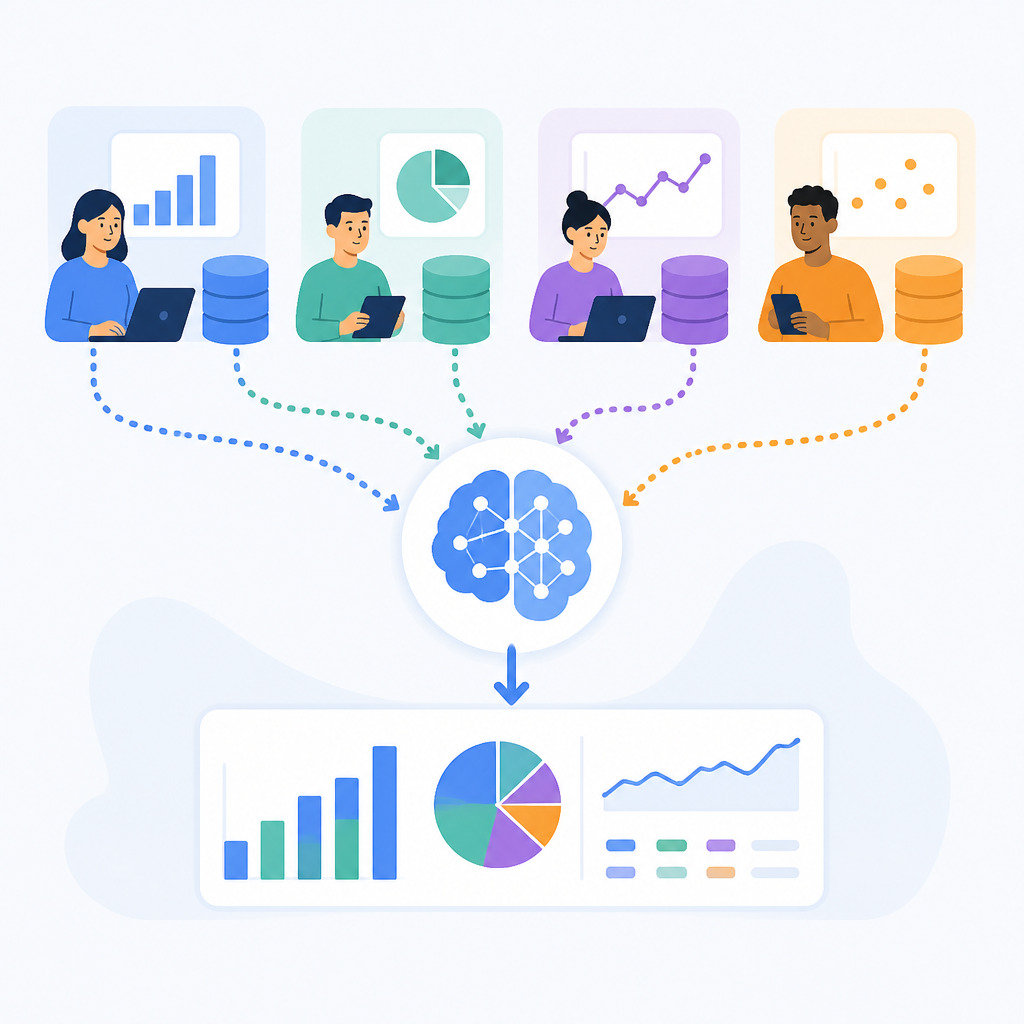
The paper asks a structural question: given a query family \mathscr{S}, what properties of that family determine whether learning is possible, and at what sample complexity? The answer is not just about how many queries you can make. It depends on how those queryable sets overlap.
To capture that overlap, the paper uses a co-occurrence graph. Two domain elements are adjacent if they appear together in some queryable set. This graph becomes the organizing object for the whole analysis, because it encodes which parts of the domain can be related through the available conditional samples.
How the method works in plain English
The paper separates two learning goals: pointwise consistency and PAC learning. Pointwise consistency is the weaker target; PAC learning is the stronger one. In this model, pointwise consistency is achievable when the co-occurrence graph is connected on the target support.
PAC learning needs more structure. The abstract says it is possible when the co-occurrence graph is complete. In other words, every pair of elements must be linked through some queryable set if you want the stronger guarantee.
That distinction matters because it shows that not all overlap is equal. A connected graph can be enough to estimate things locally and consistently, but a complete graph is needed to get the full PAC-style guarantee in this conditional-sampling setting.
The paper also identifies a structural condition called hierarchical comparability as sufficient for nearly linear optimal complexity. Pairwise query families are given as a canonical example of this regime. The takeaway is that the geometry of the query family, not just its size, controls how efficiently learning can happen.
What the paper actually shows
The strongest result is a complete characterization of the sample complexity range for PAC learning under these restricted queries. For every query family with complete co-occurrence graph, the paper gives an upper bound of \widetilde O(n^2/\varepsilon^2), and shows that this is tight in the worst case.
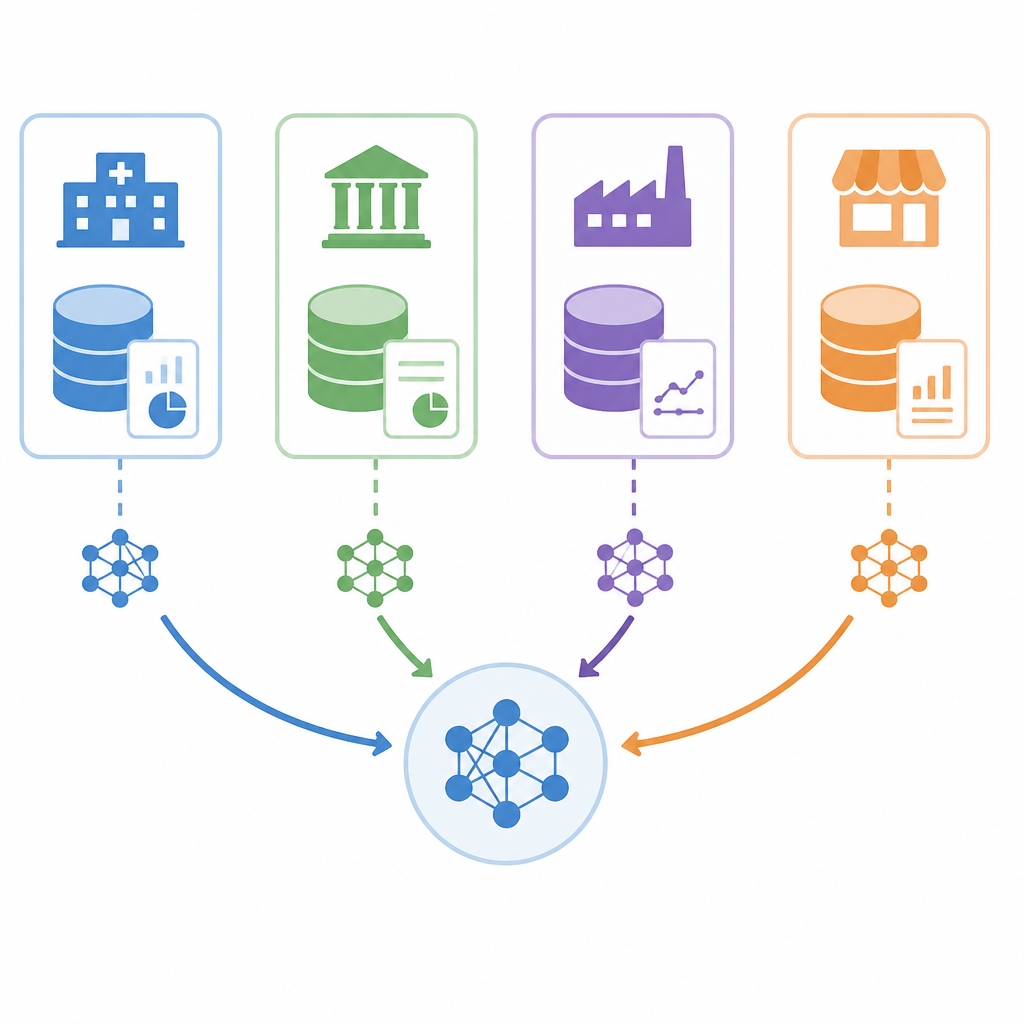
That worst-case quadratic rate is important: it means there is no universal shortcut hidden in the model. Even when the graph condition is strong enough to permit PAC learning, the sample cost can still be large depending on the query family.
At the other end, if [n] itself is queryable, then ordinary sampling becomes available and the bound improves to \Theta(n/\varepsilon^2). The abstract says this cannot be improved further, even if every set is queryable. So in this model, more query access does not automatically beat the linear barrier once plain sampling is already available.
Between those endpoints, the paper shows that the full range of polynomial rates is attainable. For every \alpha \in (1,2), there exists a query family with optimal PAC rate \widetilde \Theta(n^\alpha/\varepsilon^2). That is a strong structural result: the sample complexity can interpolate smoothly between nearly linear and quadratic depending on how the query family is arranged.
One thing the abstract does not provide is benchmark numbers on real datasets or empirical experiments. This is a theory paper, so the results are asymptotic sample-complexity bounds and structural characterizations, not measured system performance.
Why developers should care
If you work on data platforms, federated analytics, privacy-preserving learning, or any system where data access is mediated by overlapping providers, this paper gives a useful mental model. It says the bottleneck may not be model choice or optimizer tuning; it may be the query topology itself.
That matters for interface design. If your application only allows conditional access to subsets of data, then you should care about how those subsets overlap. A connected but sparse overlap pattern may support weaker learning goals, while stronger guarantees can require much denser connectivity.
The co-occurrence graph is also a practical abstraction for reasoning about permissions and coverage. You can think of it as a way to ask whether your data access policy leaves blind spots that make global inference expensive or impossible.
Limits and open questions
The model is stylized, which is both its strength and its limitation. It cleanly isolates the effect of restricted conditional sampling, but it does not try to model every real-world complication in multi-provider data systems.
The abstract also focuses on sample complexity, not on computational cost, implementation overhead, or robustness to noise beyond the sampling model. So while the structural results are sharp, they do not by themselves tell you how to build a production system.
Still, the paper is valuable because it draws a crisp line between access structure and learnability. For engineers, that is often the difference between a pipeline that can be made statistically sound and one that is doomed by its data interface from the start.
In short, the paper shows that when data comes from multiple restricted providers, the shape of the overlap graph determines whether learning is feasible, and how expensive it will be.
Bottom line
If you only remember one thing, make it this: conditional samples are not interchangeable with ordinary samples, and the query family’s overlap structure can force sample complexity anywhere from nearly linear to quadratic.
That is a useful design lesson for anyone building systems around partial data access. The math says the access pattern is part of the learning problem, not just a transport detail.
// Related Articles
- [RSCH]
Certified parallel Sinkhorn speeds up dynamic OT
- [RSCH]
ClinFusion tackles medical MLLMs from the vision side
- [RSCH]
Explainable RL for Air Traffic Control
- [RSCH]
Skill Self-Play lets LLMs co-evolve skills
- [RSCH]
SM4RT brings rigid motion into 4D reconstruction
- [RSCH]
Prompt engineering turns codegen into a repeatable workflow