Low-Power Chinese Chips Are Winning Smart Glasses Before AR Displays …
Low-power domestic SoCs are now the real bottleneck-breaker for smart glasses, not display hardware.

2026 chip platforms are making displayless AI glasses practical by running translation and vision locally.
China’s smart glasses market is being shaped first by low-power chip design, not by flashy display hardware, and that is the right order of priorities. BES6000-class parts from Bestechnic and Allwinner’s V821/V851 RISC-V vision chips are already being paired with audio and camera glasses, where local inference can handle translation and image recognition without leaning on cloud compute. That is the clearest sign of where the category is actually moving: toward lightweight, always-on devices that work at the edge, not toward heavy AR headsets pretending to be glasses.
Low-power SoCs are the real product enabler
Get the latest AI news in your inbox
Weekly picks of model releases, tools, and deep dives — no spam, unsubscribe anytime.
No spam. Unsubscribe at any time.
The first argument is simple: smart glasses only become useful when the chip inside can do enough work without draining the battery. A displayless AI glasses product has a much easier power budget than a full AR device, so the current wave of domestic silicon is attacking the right problem. BES6000, with its heterogeneous A+M architecture, is designed for exactly this kind of split workload, where audio, sensing, and lightweight AI tasks need to run all day.
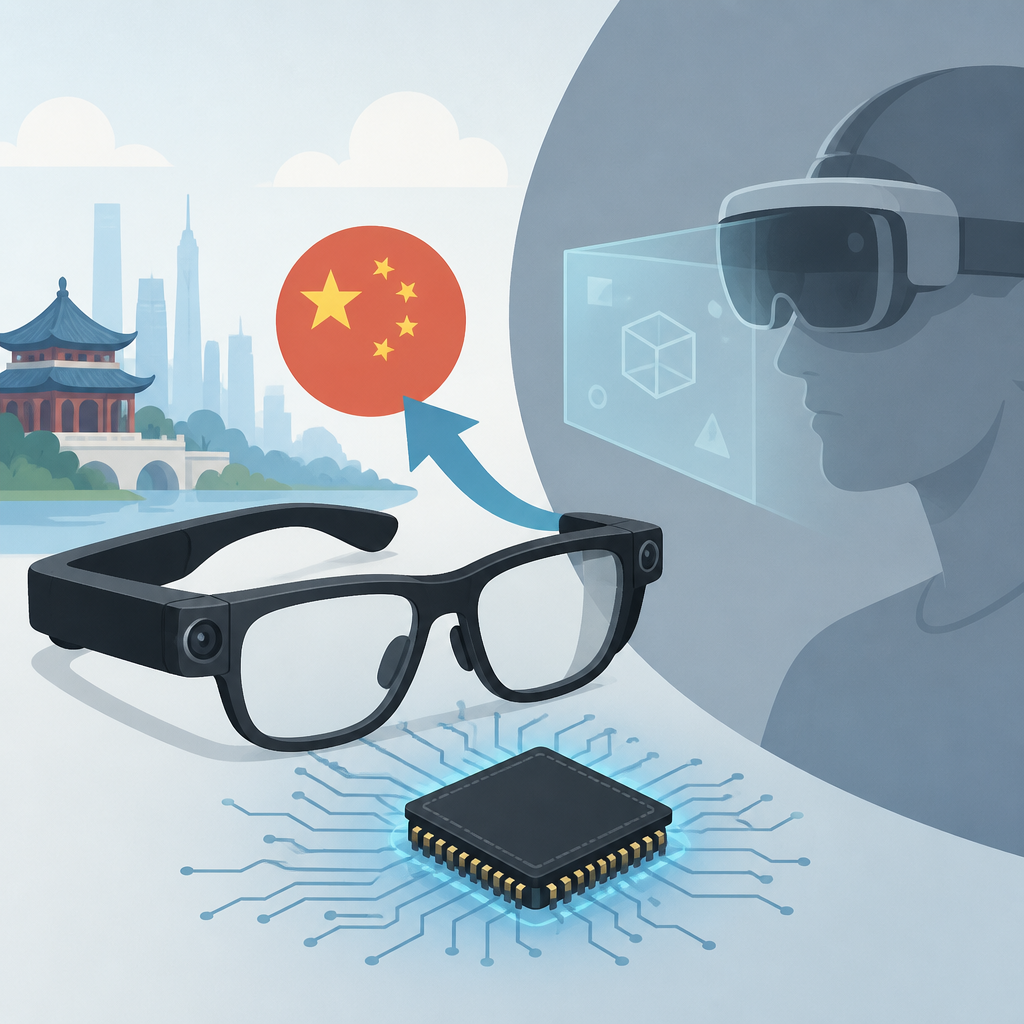
Allwinner’s V821 and V851 chips show the same pattern from another angle. Their dual RISC-V architecture has already reached scale in vision-oriented glasses, and in higher-end configurations, model quantization lets the device run a compact model locally for live translation and object recognition. That matters because it cuts the device’s dependence on the cloud, lowers latency, and makes the product usable in places where connectivity is poor or privacy matters.
Local inference changes the business model
The second argument is that local inference is not just a technical improvement, it changes what smart glasses can be sold as. When translation or visual search happens on-device, the product stops being a thin client for a remote AI service and becomes a self-contained tool. That is a better consumer story and a better industrial story, because the device behaves predictably even when the network does not.
This is already visible in the current deployment pattern. The strongest fit today is audio and camera-based AI glasses, not screen-equipped AR devices. That distinction matters: once a product can do useful work locally, manufacturers can ship simpler hardware, reduce support costs, and avoid the thermal and battery penalties that come with pushing too much computation into a compact frame. In practice, that means the near-term market is being built by chips that make modest glasses good enough, not by chips that promise a futuristic AR experience later.
The counter-argument
The strongest objection is that smart glasses without a display are only a transitional category. Full AR glasses are the long-term prize, and the real moat will come from optics, displays, and spatial computing, not from low-power SoCs. On that view, the current focus on audio and camera glasses risks over-optimizing for a narrow segment while the more valuable product category remains unsolved.
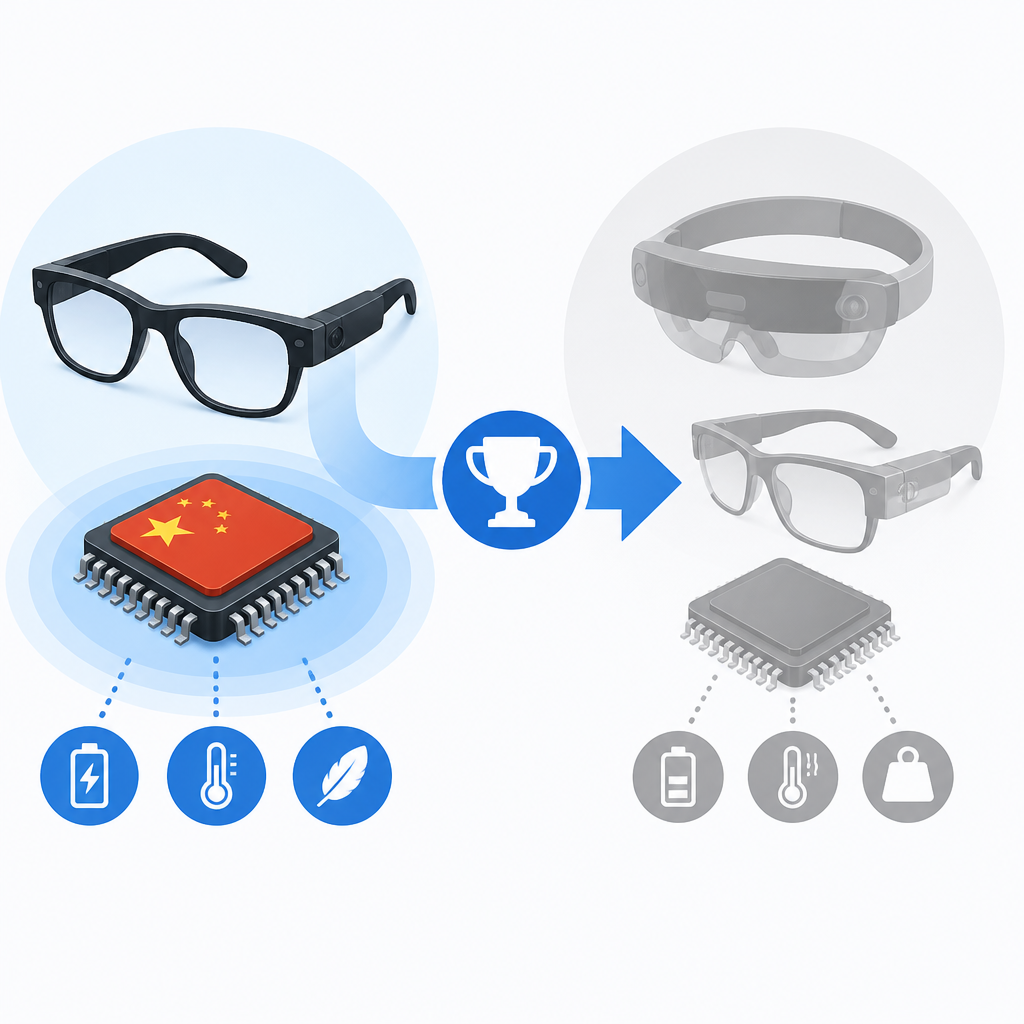
That critique is serious, because it correctly points out that display hardware still sets the ceiling for immersive use cases. A glasses product that cannot present rich visual overlays will never replace a true AR platform. But that does not make the current chip strategy wrong. It simply means the market is climbing in stages, and the first commercially durable stage is the one where battery life, thermals, and local AI actually work. The industry should not wait for perfect AR optics before shipping products people can use now.
What to do with this
If you are an engineer, optimize for power and model size before chasing feature lists. If you are a PM, position the product around tasks that local inference already does well, such as translation, capture, and recognition. If you are a founder, treat displayless AI glasses as the real near-term business and build your roadmap around chip availability, thermal limits, and on-device AI performance, not around speculative AR promises.
// Related Articles
- [IND]
Mistral's robotics model cuts indoor navigation costs
- [IND]
Mistral missile: France’s short-range air defense workhorse
- [IND]
Apple Reclaims No. 1 by Market Cap as AI Costs Spike
- [IND]
Kimi K3 could pressure the middle tier of AI models
- [IND]
AI Weekly: 2026-07-13 ~ 2026-07-20
- [IND]
$1.7B Bloom Energy deal backs Nebius AI power