MiCA Pushes L2 Competition Into Compliance
MiCA is rerouting stablecoins in Europe, and Robinhood’s Arbitrum choice shows compliance now drives L2 selection.

MiCA is rerouting stablecoins in Europe, and Robinhood’s Arbitrum choice shows compliance now drives L2 selection.
July 1 changed the rules for stablecoins in Europe, and the effects are already visible. MiCA enforcement pushed Tether’s USDT off regulated EU exchange books, while Robinhood picked Arbitrum for its new chain.
| Metric | Figure | Why it matters |
|---|---|---|
| MiCA enforcement date | July 1, 2026 | Triggered the stablecoin routing reset in Europe |
| USDT issuance | $186 billion | Shows how much liquidity was affected |
| EU firms MiCA-authorized | 210 of 1,200+ | Only a small share met the deadline |
| Robinhood customer base | Nearly 28 million | Signals enterprise-scale demand, not hobbyist activity |
| USDC reserves | About $60 billion | Explains why compliant rails gained ground |
MiCA turned stablecoin access into a compliance test
Get the latest AI news in your inbox
Weekly picks of model releases, tools, and deep dives — no spam, unsubscribe anytime.
No spam. Unsubscribe at any time.
The biggest shift is simple: in Europe, stablecoin routing now depends on regulatory status. USDC can move through regulated venues because France’s ACPR authorized it in 2024, while USDT was removed from major EU exchange order books after Tether declined to pursue an Electronic Money Institution license.

That is a major change for market structure. When a token with roughly $186 billion in issuance loses easy access to regulated venues, liquidity does not disappear, but it does get rerouted through approved channels, intermediaries, and products that meet the new rule set.
The numbers show how tight the deadline was. Blockhead cites only 210 of more than 1,200 EU crypto firms as fully converted to MiCA CASP authorization by July 1, which means most operators entered enforcement in a gray zone. That alone tells you how quickly compliance moved from a back-office task to a market filter.
Tether’s own history matters here too. The company has long relied on attestations rather than a full audit from a major accounting firm, and that distinction matters when regulators want deeper proof that reserves, reporting, and controls line up. MiCA asks for more than a balance sheet snapshot.
- USDT was pulled from regulated EU exchange books after MiCA enforcement began.
- USDC kept full access across all 27 EU member states.
- More than 83% of EU crypto firms missed the July 1 authorization mark.
- Stablecoin routing in Europe now depends on licensing, not just liquidity.
Robinhood’s Arbitrum choice is the real signal
The more interesting story for Ethereum scaling is Robinhood’s decision to build Robinhood Chain on Arbitrum Orbit. Robinhood is not a crypto-native startup trying to win internet points. It is a regulated brokerage with nearly 28 million customers across 38 countries, and its infrastructure choice says a lot about what enterprise buyers care about now.
Robinhood’s launch also came with a partner list that reads like a procurement sheet for financial infrastructure. Uniswap is building a dedicated AMM for public liquidity, BitGo is handling custody, Chainlink is providing oracle infrastructure, and Alchemy is on developer tooling.
“We are building on Arbitrum because it gives us the performance, security, and flexibility we need to bring tokenized assets to retail investors,” said Johann Kerbrat, Robinhood Crypto’s general manager, in Robinhood’s launch materials.
That quote matters because it is procurement language, not crypto marketing language. Performance, security, and flexibility are the terms institutions use when they decide whether a chain can sit inside a regulated product stack.
Arbitrum has spent years building that kind of credibility with custodians, settlement providers, and enterprise partners. Robinhood’s move does not prove Arbitrum will win every institutional mandate, but it does show which network is getting chosen when a mainstream financial company wants a production-ready L2.
Base and Optimism still matter, but the sorting criteria changed
Base and Optimism remain serious competitors. Base continues to post strong transaction growth with Coinbase’s regulatory footprint behind it, and Optimism keeps pushing its OP Stack ecosystem and decentralization roadmap. Both have real traction, and both will keep attracting builders.
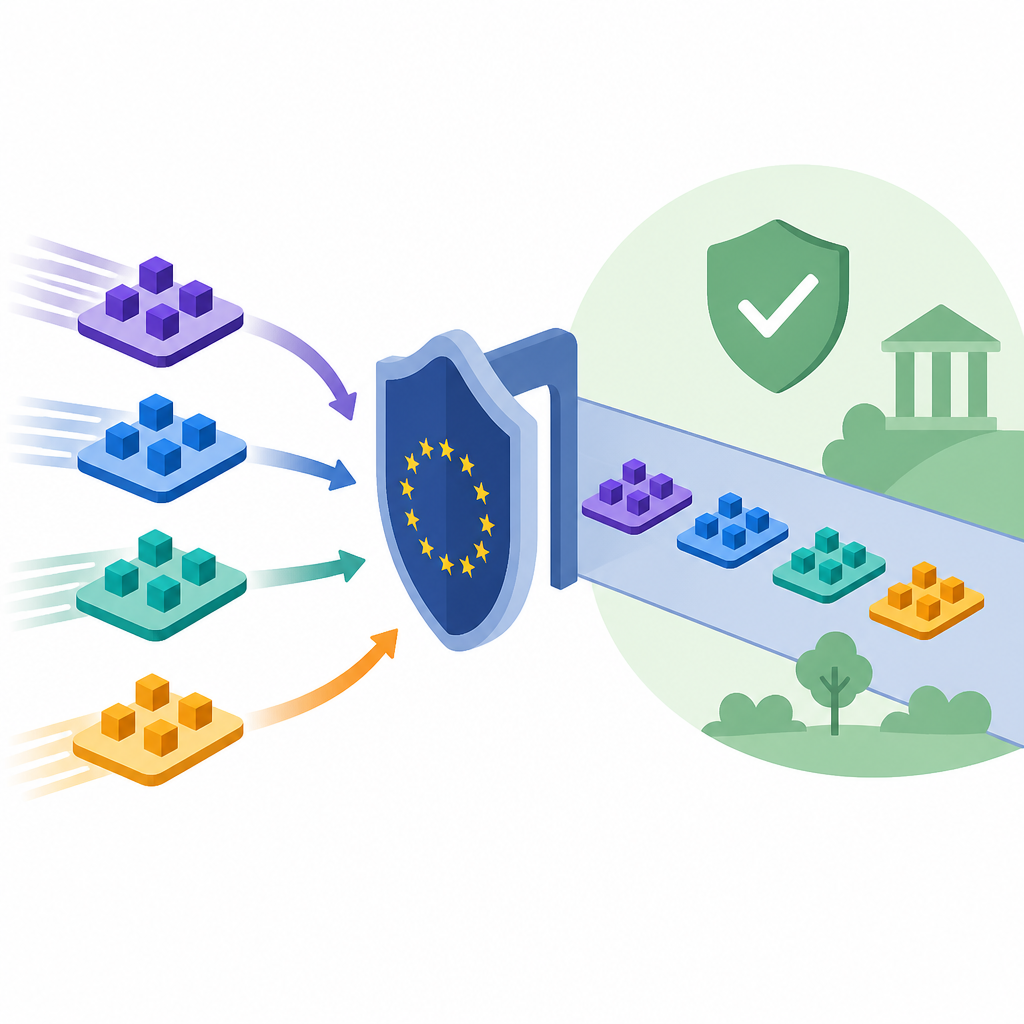
But the question institutional buyers ask has changed. It is no longer only about TPS, fees, or developer mindshare. It is about whether a chain can pass due diligence, fit a compliance program, and plug into custody and settlement workflows without creating legal friction.
That is where Arbitrum’s current position looks stronger. It has a deeper set of enterprise-facing relationships, and Robinhood’s choice makes that visible in a way a token chart never could.
- Base benefits from Coinbase’s regulatory relationships and exchange distribution.
- Optimism has the OP Stack and a broad ecosystem strategy.
- Arbitrum now has a flagship mainstream brokerage deployment.
- Enterprise buyers are sorting L2s by compliance readiness and partner depth.
The next flows will follow the compliance stack
MiCA is only the first filter. The EU’s DORA cybersecurity rules, the travel rule for crypto transfers, and broader reporting requirements will keep tightening the bar for infrastructure providers. That means chains without clear compliance paths will keep losing out on institutional integrations, even if their tech is solid.
The broader market is already headed in that direction. Ethereum mainnet holds about $180 billion in stablecoins, roughly 60% of total supply, and DeFiLlama data puts it at about two-thirds of tokenized real-world assets. Once tokenized stocks, funds, and derivatives start moving at scale, the routing question becomes which L2 can support regulated capital without constant exceptions.
The comparison with listed markets is useful here. The U.S. options market processed more than 15.2 billion contracts in 2025, or about 60 million per trading day. That is the kind of scale that makes infrastructure decisions matter, because even a small percentage shift in routing can send real money to the chains that already cleared procurement.
So the next phase of the L2 race is not about who has the loudest community. It is about who can survive a compliance review from a bank, broker, custodian, or exchange. If Robinhood is the model, the winners will be the chains that can answer regulator questions before the first integration call.
That is the story to watch over the next quarter: which L2s get named in enterprise RFPs, and which ones get left out because their compliance story is still too thin.
// Related Articles
- [IND]
OpenCode vs Cursor: Open-Source CLI vs AI Editor 2026
- [IND]
Rust Adoption Is Moving Into Production
- [IND]
OpenAI’s 5% government stake would reset AI politics
- [IND]
Microsoft launches Frontier Company for AI delivery
- [IND]
Microsoft AI Cloud Partner Program for builders
- [IND]
Ethereum Launches Institution-Focused Nonprofit