OpenAI’s 5% government stake would reset AI politics
5 ways OpenAI’s proposed 5% U.S. stake could reshape AI funding, policy, and pressure on rivals like Anthropic and Google.

What would it mean if the U.S. government owned 5% of OpenAI?
OpenAI has proposed a 5% U.S. government stake to ease political pressure and spread AI gains.
| Item | Stake | Valuation basis | Notable context |
|---|---|---|---|
| OpenAI | 5% | $852 billion | Worth about $42.6 billion |
| U.S. government | 5% | Via sovereign wealth fund | Part of a broader AI ownership plan |
| Anthropic | Not disclosed | Not disclosed | FT said it could face similar terms |
| Not disclosed | Not disclosed | Named as a possible participant | |
| Meta | Not disclosed | Not disclosed | Also named in the reported plan |
1. OpenAI’s 5% proposal
Get the latest AI news in your inbox
Weekly picks of model releases, tools, and deep dives — no spam, unsubscribe anytime.
No spam. Unsubscribe at any time.
OpenAI has reportedly floated giving the U.S. government a 5% stake in the company. Based on its recent $852 billion valuation, that slice would be worth about $42.6 billion.
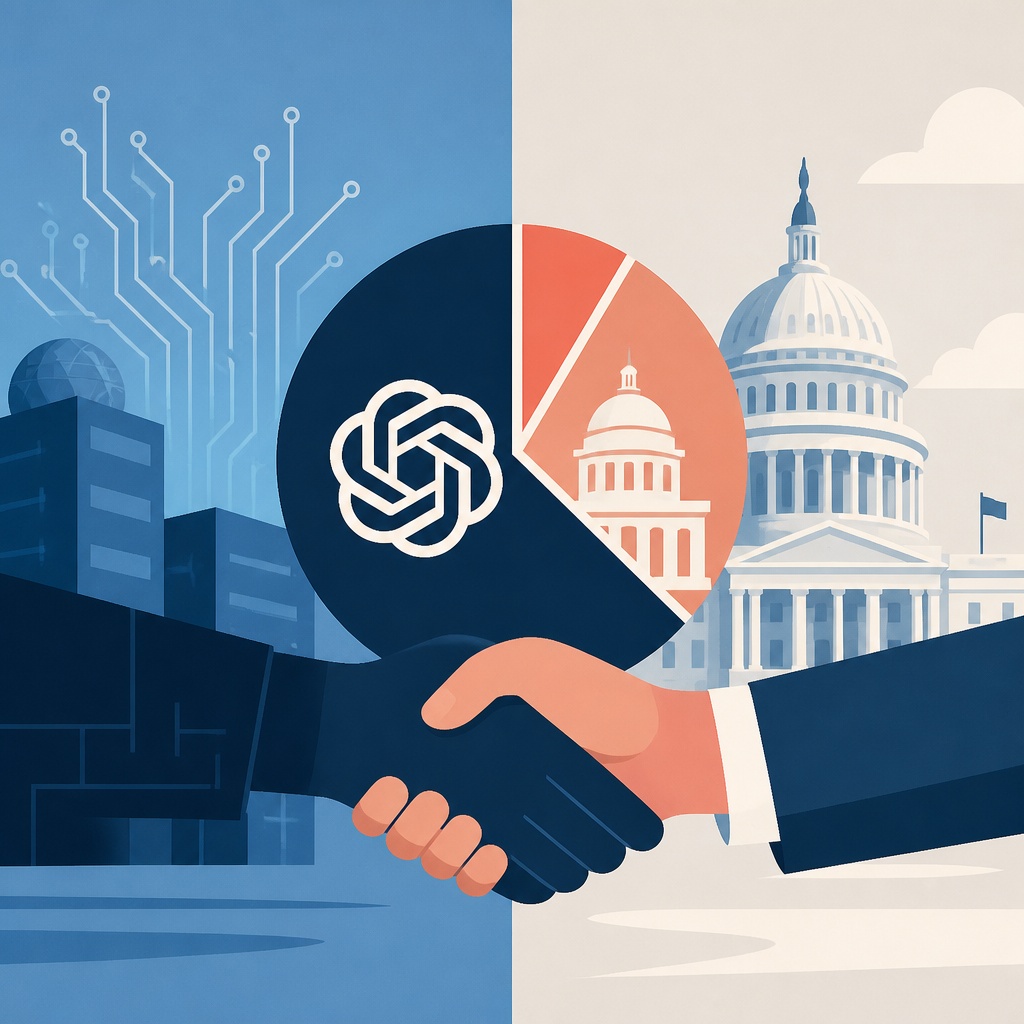
The pitch is meant to answer a political problem as much as a financial one. CEO Sam Altman has argued that if AI creates outsized gains, the public should share in them.
- Reported source: CNBC, citing the Financial Times
- Valuation used: $852 billion
- Implied 5% value: roughly $42.6 billion
2. A broader government stake plan
The reported idea is not limited to OpenAI. The Financial Times said the arrangement could extend to other major U.S. AI developers through a government vehicle, with the state taking similar stakes across the sector.
That would make the policy less about one company and more about a formal public claim on AI growth. In practice, it would create a shared ownership model for the biggest domestic AI labs.
- Companies named in the report: Anthropic, Google, Meta
- Vehicle described: a sovereign wealth fund-style structure
- Goal: give the public direct upside from AI growth
3. Why Washington is pressuring AI firms
The backdrop is rising concern in Washington about cybersecurity risks, model safety, and competition from Chinese open-source systems. Those cheaper models are getting close to leading U.S. offerings in capability, which has sharpened the policy debate.
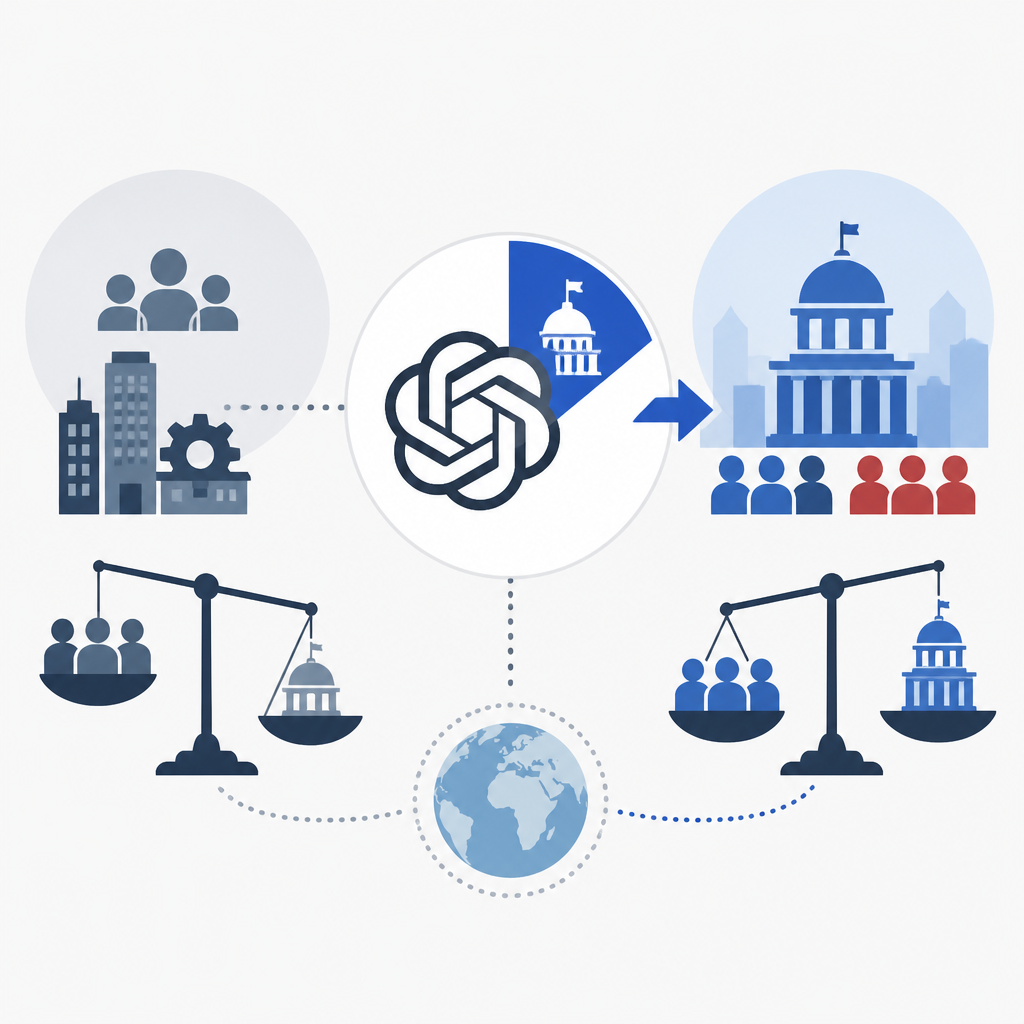
OpenAI’s proposal reads like an attempt to turn scrutiny into partnership. Rather than fight the political mood, the company appears to be offering a financial stake that would align the government’s interests with the sector’s success.
- Policy concerns cited: cybersecurity, safety, export controls
- Competitive pressure cited: cheaper Chinese open-source models
- Recent example: Anthropic restored access to models after resolving safety concerns
4. What this means for OpenAI’s rivals
If the plan moved forward, it could set a new expectation for other AI firms. Companies such as Anthropic, Google, and Meta may face pressure to explain why they should not share similar economics with the government if OpenAI does.
That is where the proposal becomes more than a single-company headline. It could influence how regulators, investors, and competitors think about ownership, access, and the public’s claim on AI profits.
- Potential effect: policy pressure spreads beyond OpenAI
- Possible result: new precedent for AI regulation and ownership
- Investor angle: public-sector ownership could change how markets price political risk
5. The political and historical precedent
The Trump administration has already taken stakes in private companies during the president’s second term, including Intel and other strategic businesses. That makes the OpenAI idea less abstract than it might seem at first glance.
Trump has also described government ownership in AI as “a beautiful thing” and said it would make Americans “partners” in the sector’s growth. In other words, the proposal fits an existing political logic, even if it would be a major step for a top AI company.
- Past examples: Intel, IBM, and some quantum and critical mineral companies
- Intel example: the government obtained a 10% stake after an $8.9 billion investment
- Political framing: AI ownership as public participation in future gains
How to decide
If you are tracking policy, this proposal matters most as a signal that AI ownership is becoming part of Washington’s toolkit. If you follow markets, the main question is whether a public stake would reduce political risk or add a new layer of uncertainty.
If you work in AI, the key issue is precedent. A 5% government stake at OpenAI could become the template for how the U.S. deals with the largest model makers next.
// Related Articles
- [IND]
OpenCode vs Cursor: Open-Source CLI vs AI Editor 2026
- [IND]
Rust Adoption Is Moving Into Production
- [IND]
Microsoft launches Frontier Company for AI delivery
- [IND]
Microsoft AI Cloud Partner Program for builders
- [IND]
MiCA Pushes L2 Competition Into Compliance
- [IND]
Ethereum Launches Institution-Focused Nonprofit