Midjourney’s pro workflow beats hobbyist image tools
5 reasons Midjourney now fits professional image pipelines, from style control to faster text rendering and cleaner asset management.
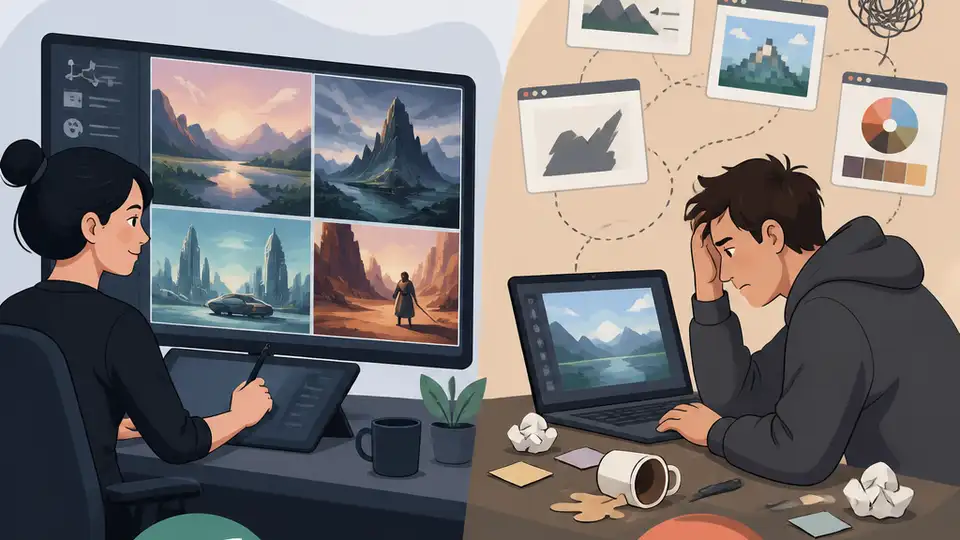
Midjourney now fits professional image pipelines better than most image generators.
Midjourney has moved from a Discord curiosity to a production tool, and the practical proof is in its v7-era gains in text rendering, speed, and consistency. If you want to know why teams are using it for brand work, concept art, and campaign visuals, these 5 points show what changed.
| Item | What it helps with | Best fit |
|---|---|---|
| Midjourney | Style consistency, character continuity, cinematic output | Marketing, concept art, narrative visuals |
| Style reference (--sref) | Brand matching across images | Campaign systems and visual identity |
| Character reference (--cref) | Keeping the same person across shots | Storyboards and recurring characters |
| Style weight (--sw) | Controlling how strongly a reference is applied | Fine-tuned art direction |
| Web interface | Project organization and iteration tracking | Teams managing assets at scale |
1. Midjourney now feels built for production
Get the latest AI news in your inbox
Weekly picks of model releases, tools, and deep dives — no spam, unsubscribe anytime.
No spam. Unsubscribe at any time.
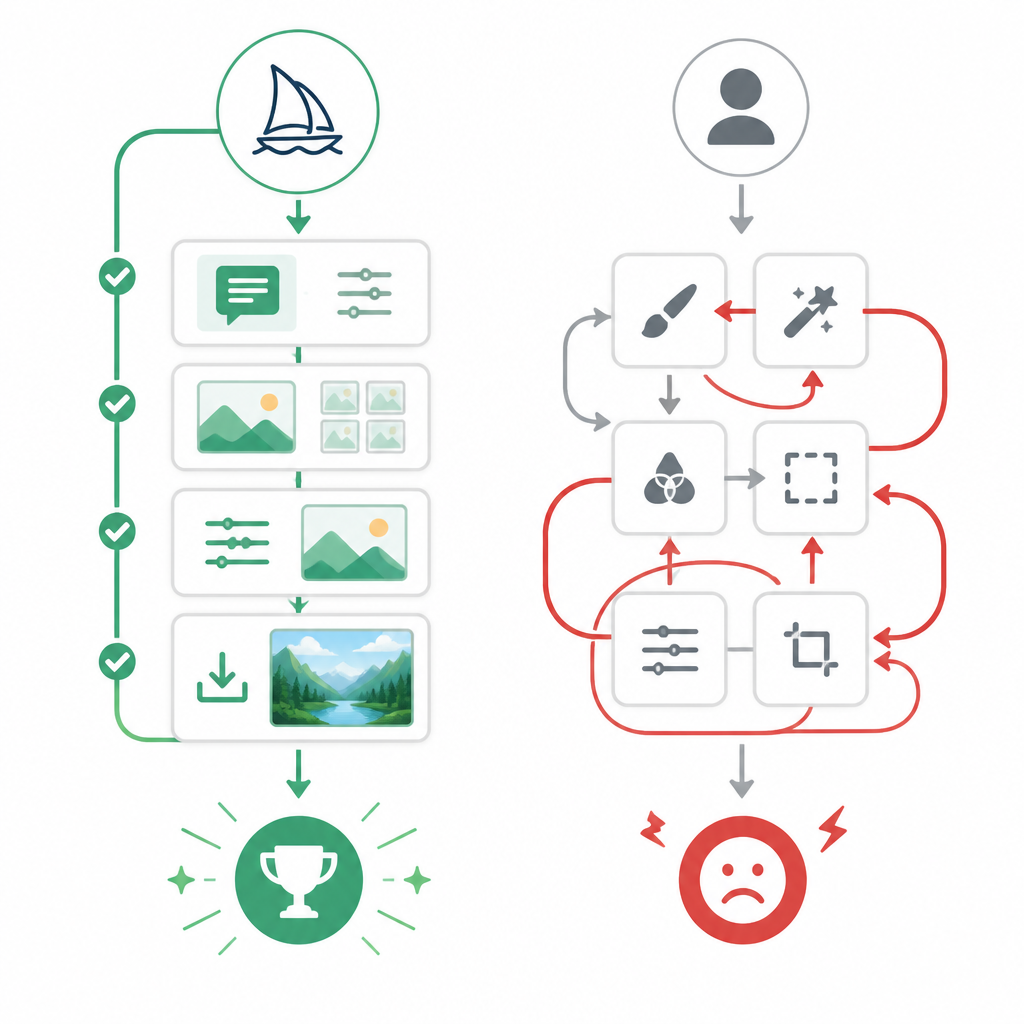
The biggest shift is not visual quality alone. It is the move from a chat-first experience to a web-first workflow that fits how creative teams actually work: organize assets, compare iterations, and keep projects tidy.
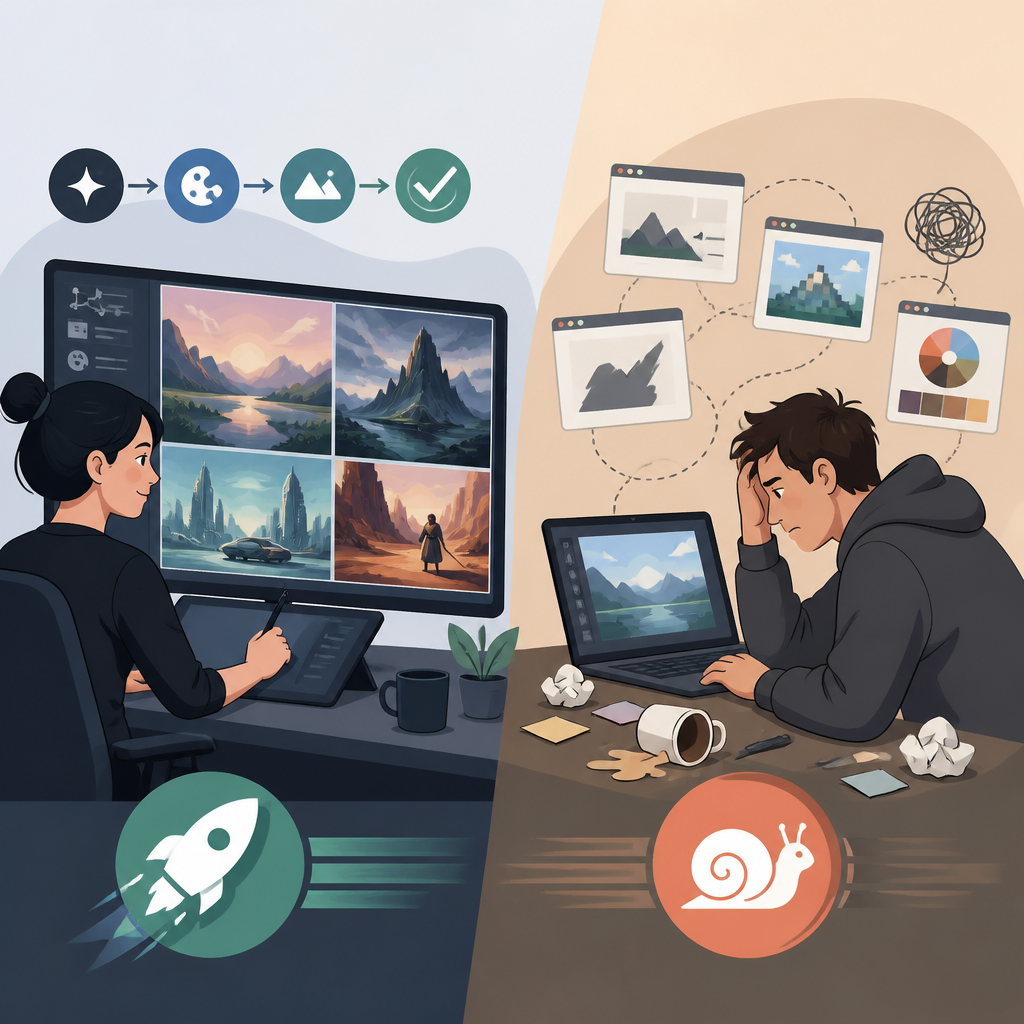
That matters because professional image synthesis is rarely about one perfect output. It is about repeatable output, and Midjourney’s newer interface makes it easier to build that repeatability into day-to-day work.
- Web dashboard for managing projects
- Cleaner iteration tracking than a fast-moving chat feed
- Better fit for teams sharing work in progress
2. Style reference keeps brand visuals aligned
Midjourney’s Midjourney style reference system, using --sref, is one of the clearest reasons it has stayed relevant for professional use. Instead of generating a new visual language every time, teams can anchor output to a reference image and keep a campaign looking coherent.
That is especially useful when a brand needs multiple assets that feel related without looking copied and pasted. The article’s core point is simple: style control is what turns AI art from experimentation into a usable brand tool.
--sreffor matching a visual style--swfor dialing that style up or down- Useful for ads, landing pages, and social creative
3. Character reference solves continuity problems
For narrative work, --cref is the feature that makes Midjourney feel more serious than many rivals. It helps keep a protagonist, spokesperson, or mascot looking like the same person across multiple shots, which is a common failure point in generative image tools.
That continuity matters for storyboards, product explainers, and campaign sequences. If a team has to regenerate a character ten times, the tool has to preserve identity, not just style, and that is where Midjourney’s newer control layer earns attention.
- Character matching across scenes
- Better for storyboards and pitch decks
- Reduces visual drift in multi-image sets
4. Version 7 improves speed and text rendering
Midjourney’s version 7 update is important because it addresses two pain points that held back professional adoption: slow generation and weak text rendering. Faster output means less waiting between iterations, and better text means fewer unusable mockups when words need to appear inside the image.
For marketers and designers, that translates into fewer manual workarounds. When a tool can produce a cleaner draft with legible text, it becomes easier to use it in real production cycles instead of treating it as a sketchpad.
- Faster generation for iterative work
- Improved text rendering for mockups
- More practical for ad concepts and promo visuals
5. The control surface is now good enough for teams
Midjourney’s appeal is not that it removes creative judgment. It is that it gives teams enough control to apply judgment well. The combination of style references, character references, and style weight means art direction can be expressed with more precision than a plain text prompt alone.
That is why the platform feels less like a novelty and more like a working system. It still rewards strong prompting, but it now supports a disciplined workflow where teams can tune output instead of hoping for luck.
Example prompt controls:
--sref [brand image]
--cref [character image]
--sw 250
--ar 16:9
How to decide
Pick Midjourney if you need polished visuals, repeatable style control, and a workflow that can support real creative production. It is the best fit for brand teams, concept artists, and anyone who needs image sets that feel consistent rather than random.
If your priority is simple one-off generation, lighter tools may be enough. If you need continuity, art direction, and better asset management, Midjourney is the stronger choice.
// Related Articles
- [IND]
Google’s Q2 2026 results prove AI spend is now the story
- [IND]
AI regulation in India is now a business risk
- [IND]
Europe should standardise the AI Act through harmonised technical rul…
- [IND]
AMD and Anthropic’s 2GW deal reshapes AI supply
- [IND]
OpenAI’s comeback proves coding now drives the AI race
- [IND]
System design interviews get easier with 5 core ideas