MIPS shows RISC-V AI IP for edge models at CES
MIPS unveiled S8200, a RISC-V AI processor IP block for edge models that targets tens to hundreds of TOPS and 2027 silicon.

MIPS announced S8200, a RISC-V AI processor IP block for edge language models.
At CES 2026, MIPS introduced S8200, a processor IP design aimed at transformer and agentic AI workloads at the edge. The company says the block combines AI engines with RISC-V application cores and scales from tens to hundreds of TOPS through coherent cluster tiling.
The timing matters because edge AI vendors are now trying to push more inference into devices that do not have datacenter power budgets. MIPS also says ForwardEdge ASIC, a Lockheed Martin subsidiary, has already selected the IP for an autonomous-platform chip.
| Fact | Value |
|---|---|
| Product | MIPS S8200 |
| Workload focus | Transformer and agentic language AI |
| Performance range | Tens to hundreds of TOPS |
| Silicon reference platform | First samples in 2027 |
| Customer disclosed | ForwardEdge ASIC |
What MIPS is actually selling
Get the latest AI news in your inbox
Weekly picks of model releases, tools, and deep dives — no spam, unsubscribe anytime.
No spam. Unsubscribe at any time.
MIPS is not shipping a finished chip here. It is selling intellectual property that other companies can license and drop into their own silicon. That matters because the real competition in edge AI is not just about raw speed; it is about who can build a custom part fast enough, keep power under control, and still run modern software stacks.

The company says S8200 pairs tightly coupled AI engines with RISC-V application cores. That mix is meant to handle both vector and matrix workloads, which is a practical way to support the kinds of operations used in neural networks, especially when a design needs to move between control code and heavy math.
Support for PyTorch and TensorFlow is also a strong signal. If a hardware vendor can make model deployment easier for software teams already working in those frameworks, adoption gets much less painful.
- RISC-V cores handle application and control logic.
- AI engines handle vector and matrix math.
- Coherent cluster tiling lets the design scale upward.
- The target market is edge inference, not cloud training.
Why the RISC-V angle matters
RISC-V keeps showing up in places where chip designers want more control over the instruction set and licensing terms. In AI hardware, that appeal is even stronger because vendors want to tune the CPU side around their own accelerators instead of accepting a fixed architecture.
That does not mean RISC-V magically solves the hard parts. Software support, memory behavior, and power efficiency still decide whether a part is useful. But if MIPS can pair its IP with enough tooling to make deployment straightforward, it gets a cleaner path into custom SoCs for automotive, industrial, aerospace, and robotics customers.
“We believe the future of computing is heterogeneous,” said MIPS CEO Sameer Wasson in a 2024 company statement about the Atlas platform. “We are enabling our customers to co-design solutions that are optimized for their specific workloads.”
That quote fits S8200 well, even if it came from an earlier MIPS announcement. The company’s strategy has been consistent: sell building blocks for chips that are tuned to a specific job instead of trying to be a general-purpose silicon vendor.
How it compares with other edge AI options
MIPS did not publish benchmark numbers beyond the TOPS range, so the fair comparison is architectural rather than performance-based. The interesting question is whether S8200 can compete with edge AI parts that come from companies like NVIDIA, Ambarella, and Qualcomm, each of which takes a different route to low-power inference.
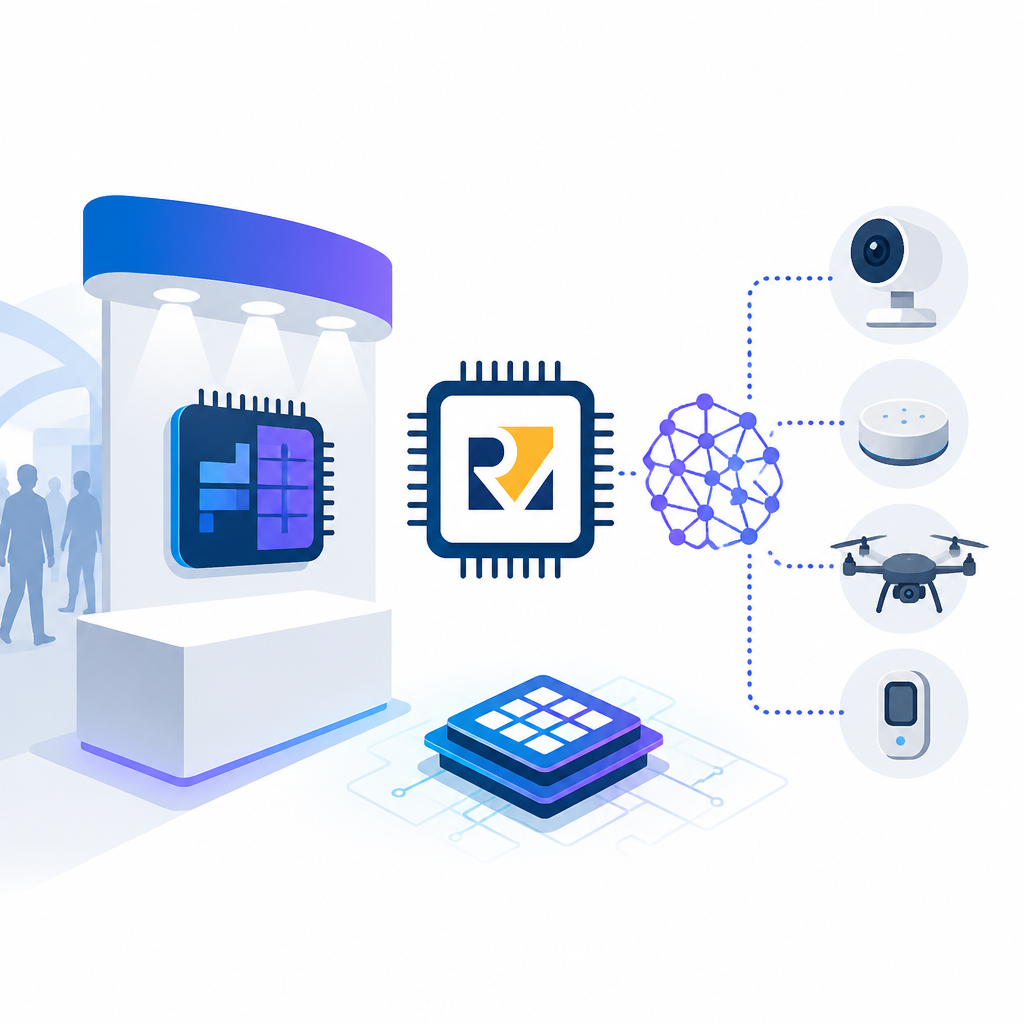
Here is the practical split:
- MIPS S8200: IP for custom chips, with RISC-V cores and AI engines.
- GPU-style edge parts: stronger ecosystem, usually less flexible for custom SoC design.
- Vision-first accelerators: often efficient, but narrower in the kinds of models they run well.
- General-purpose NPUs: easier to integrate, but not always as configurable for niche deployments.
The disclosed customer is also telling. ForwardEdge ASIC is designing for autonomous platforms, which usually means strict power, latency, and reliability targets. Those are the environments where a custom IP block can matter more than a flashy benchmark slide.
MIPS says the first S8200 silicon reference platform is due in 2027. That is a long lead time, but it is normal for IP that has to become a real chip inside someone else’s product roadmap. CES is often full of demos that never leave the show floor; this one at least has a named customer and a date.
What to watch next
The next useful detail will be software. If MIPS releases more information on compiler support, runtime integration, memory architecture, or model conversion tooling, the product will become much easier to judge. Without that, S8200 is still an interesting architecture announcement rather than a proven platform.
The other open question is scale. “Tens to hundreds of TOPS” covers a wide range, and the real value will depend on how much power each performance tier consumes. For edge AI, watts matter as much as TOPS, and sometimes more.
If MIPS can show a reference design that is easy to license, easy to integrate, and ready for real workloads by 2027, it will have a credible story for companies building custom silicon around edge AI. If not, S8200 will be remembered as another CES announcement that sounded good before the hard engineering began.
For now, the takeaway is simple: MIPS is betting that RISC-V plus AI-specific IP is a better fit for edge inference than fixed-function silicon. The next proof point is whether partners can turn that bet into shipping chips.
// Related Articles
- [MODEL]
7 Microsoft AI models aim at OpenAI and Anthropic
- [MODEL]
What We Know About GPT-5.6's Release Date
- [MODEL]
Why Claude Opus 4.8 Is Not the Big Story
- [MODEL]
Devin Booker turned Sedona McDonald’s into a shoe launch
- [MODEL]
Best Open-Source LLMs for 2026: Ranked
- [MODEL]
Llama 3.1 70B: Specs, Benchmarks, Deployment