Mistral targets U.S. banks after Paris summit
Mistral used its Paris summit to pitch American banks, businesses, and developers as it pushes beyond Europe.

Mistral used its Paris summit to pitch American banks, businesses, and developers as it pushes beyond Europe.
France’s biggest AI company just made its ambitions plain. At the Mistral AI Now Summit in Paris on Thursday, the company signaled that its next big market is the U.S., where it wants attention from Wall Street, enterprise buyers, and the developer crowd.
The timing matters. Mistral has become Europe’s flagship AI lab after a rapid rise, and this push comes as American firms still dominate both model development and commercial distribution. The company was founded by engineers who previously worked at Facebook and Google, and that pedigree gives it instant credibility with buyers who care about talent as much as product demos.
| Fact | Detail |
|---|---|
| Company | Mistral |
| Event | AI Now Summit in Paris |
| Publication date | June 2, 2026 |
| Main target market | U.S. banks, businesses, and tech teams |
| Founding background | Built by former Facebook and Google machine learning engineers |
Why Mistral is pushing into the U.S.
Get the latest AI news in your inbox
Weekly picks of model releases, tools, and deep dives — no spam, unsubscribe anytime.
No spam. Unsubscribe at any time.
Mistral’s move is a straightforward business play: if you want to matter in AI, you need customers who spend at scale. European adoption matters, but American banks and large enterprises buy faster, spend more, and often set the tone for the rest of the market.
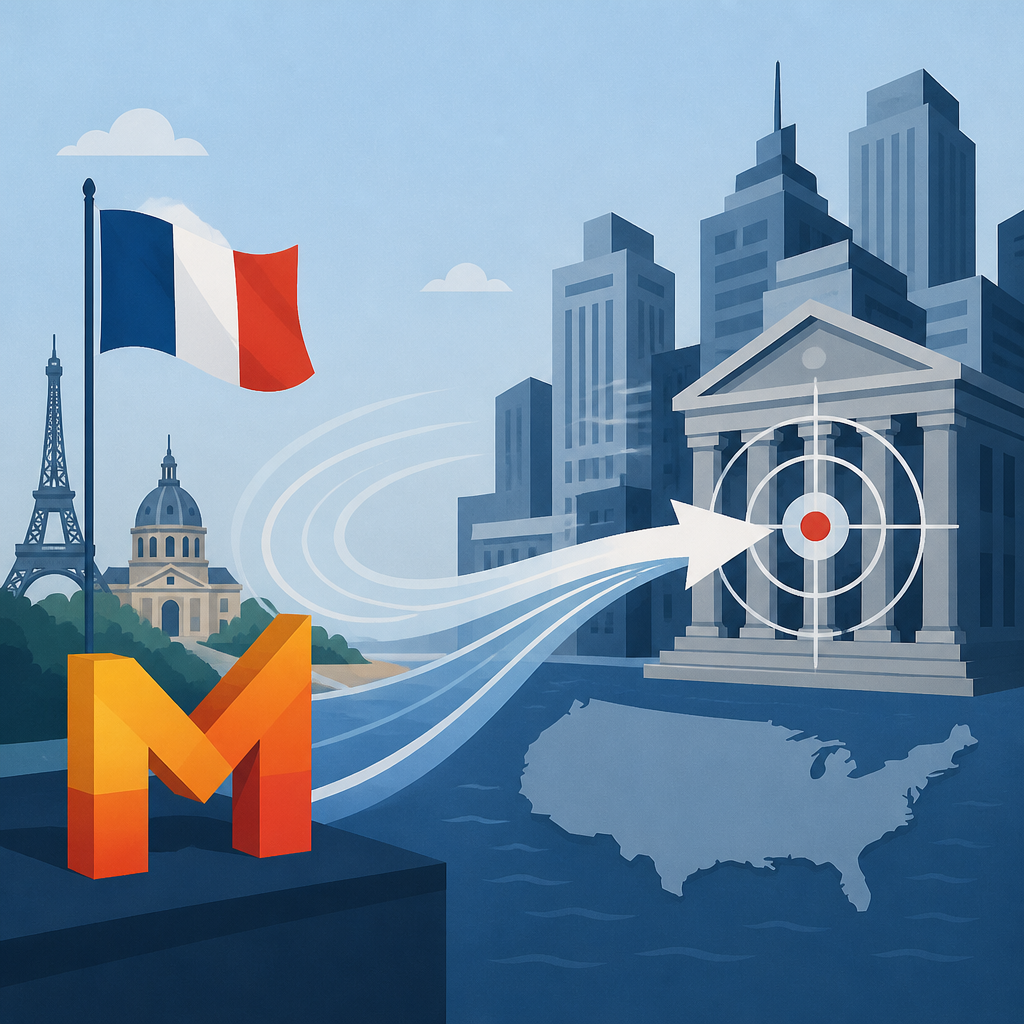
That makes the U.S. a natural target for a company like Mistral. The company has already positioned itself as Europe’s answer to the bigger American labs, and now it is trying to convert technical respect into revenue. The Paris summit was the signal flare.
There is also a branding angle. Mistral’s name comes from the strong Mediterranean wind that blows across southern France, which is a neat fit for a company trying to look distinctly European while selling into a market that usually defaults to American vendors.
- European identity gives Mistral a clear story for buyers worried about data control and vendor concentration.
- U.S. enterprise deals can turn technical credibility into recurring revenue faster than consumer hype.
- Wall Street attention can open the door to larger pilots, bigger contracts, and more press coverage.
The company’s pitch is about trust and speed
Mistral’s appeal is partly technical and partly political. European companies and government buyers have been looking for AI options that feel less dependent on U.S. hyperscalers, and Mistral has been one of the few names that can credibly fill that slot.
The company’s founders matter here too. Engineers who worked at Meta and Google bring the kind of resume that enterprise buyers recognize immediately. That does not guarantee adoption, but it lowers the friction when a CIO or bank tech lead asks whether the team has shipped real systems before.
“We want to be the most trusted AI company in the world,” Mistral CEO Arthur Mensch said in a 2024 interview with the Financial Times.
That quote matters because it frames the company’s strategy better than any marketing slide. Mistral is not trying to win by being loudest. It is trying to win by looking dependable enough for regulated industries and ambitious enough for developers who want alternatives to the usual American names.
How Mistral compares with the U.S. giants
The gap is still real. American labs have deeper distribution, larger cloud ecosystems, and far more default mindshare. But Mistral does have a few things going for it that matter in the enterprise market: a recognizable European identity, a smaller and more focused brand, and a product story that can appeal to buyers who want options outside the usual U.S. stack.
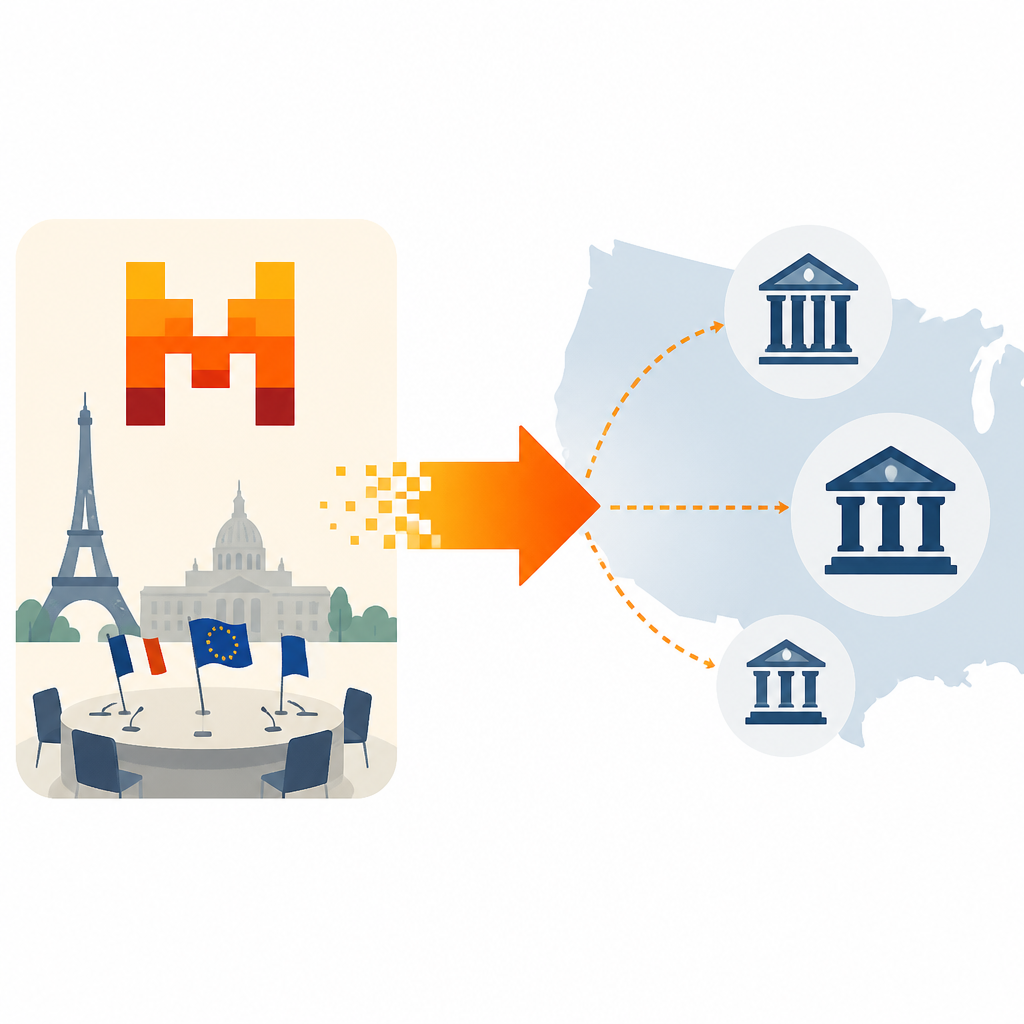
That said, the numbers behind the AI market still favor the U.S. side. OpenAI, Anthropic, and Google all sit inside larger commercial ecosystems with massive customer pipelines. Mistral has to persuade buyers that a smaller lab can still deliver the reliability, model quality, and support that large organizations expect.
- OpenAI has the strongest consumer brand and broad product awareness.
- Anthropic has a strong enterprise story and a heavy focus on safety.
- Mistral is selling itself as the European option with real technical ambition.
- Google Cloud and other hyperscalers still control much of the infrastructure layer that enterprise buyers rely on.
The commercial challenge is simple: Mistral has to turn curiosity into contracts. That means landing pilots with banks, proving performance in production, and showing that its models can sit inside real workflows without creating extra compliance headaches.
What to watch next
If Mistral can win even a modest number of U.S. enterprise customers, it changes the conversation around European AI. It would show that a company built in Paris can compete for serious business in the same market where the biggest American labs usually set the terms.
The more interesting question is whether Mistral can do that without losing the European identity that made it valuable in the first place. My bet: the company will keep courting U.S. banks and tech buyers while using Europe as its credibility anchor. If that works, the next phase is not just more attention, but actual procurement deals and production deployments.
For now, the Paris summit feels like the start of a sales campaign, not the end of one. The real test is whether American buyers treat Mistral as a curiosity or as a vendor they are willing to bet on.
// Related Articles
- [IND]
Rust 661’s best releases for builders this week
- [IND]
Deepwoken’s Second Layer hides Ethiron below Scyphozia
- [IND]
AMD is right to use Anthropic to break CUDA’s grip
- [IND]
AI Weekly: 2026-07-20 ~ 2026-07-27
- [IND]
WAIC 2026 turns AI hype into real work
- [IND]
KPMG’s OpenAI deal turns SaaS into agents