KPMG’s OpenAI deal turns SaaS into agents
KPMG’s OpenAI alliance is a practical playbook for moving enterprise apps from screens and clicks to AI-led workflows.

KPMG’s OpenAI alliance shows how enterprise software shifts from screens to AI-led workflows.
I’ve been watching enterprise software get more bloated for years. New dashboards, new portals, new “experiences,” and somehow the work still ends up in five tabs, three approvals, and a Slack thread nobody wants to own. What’s been off for me isn’t the AI hype. It’s that most teams keep bolting AI onto the top of old software and calling it transformation. The user still has to hunt for the right screen, the right record, the right workflow, and the right person to ask when the system gets stuck. That’s not AI-native. That’s just expensive decoration.
So when I read KPMG’s announcement with KPMG and OpenAI form Strategic Alliance to Advance AI-Native Enterprise Workflows, it clicked for me. KPMG isn’t pitching a chatbot on the side. They’re talking about AI as the system of engagement, with enterprise apps staying the system of record. That’s a much more honest framing. It also explains why so many “AI projects” fail: they never touch the actual flow of work.
Stop treating AI like a feature badge
Get the latest AI news in your inbox
Weekly picks of model releases, tools, and deep dives — no spam, unsubscribe anytime.
No spam. Unsubscribe at any time.
“The alliance is an important milestone in KPMG’s effort to help clients move beyond application-centric experiences toward a new enterprise operating model where AI becomes the system of engagement, and enterprise applications continue to serve as the systems of record.”
What this actually means is simple: the old app is still there, but it stops being the thing people stare at all day. AI becomes the front door. Instead of navigating software first and asking for help second, people ask the AI to get the job done across systems.
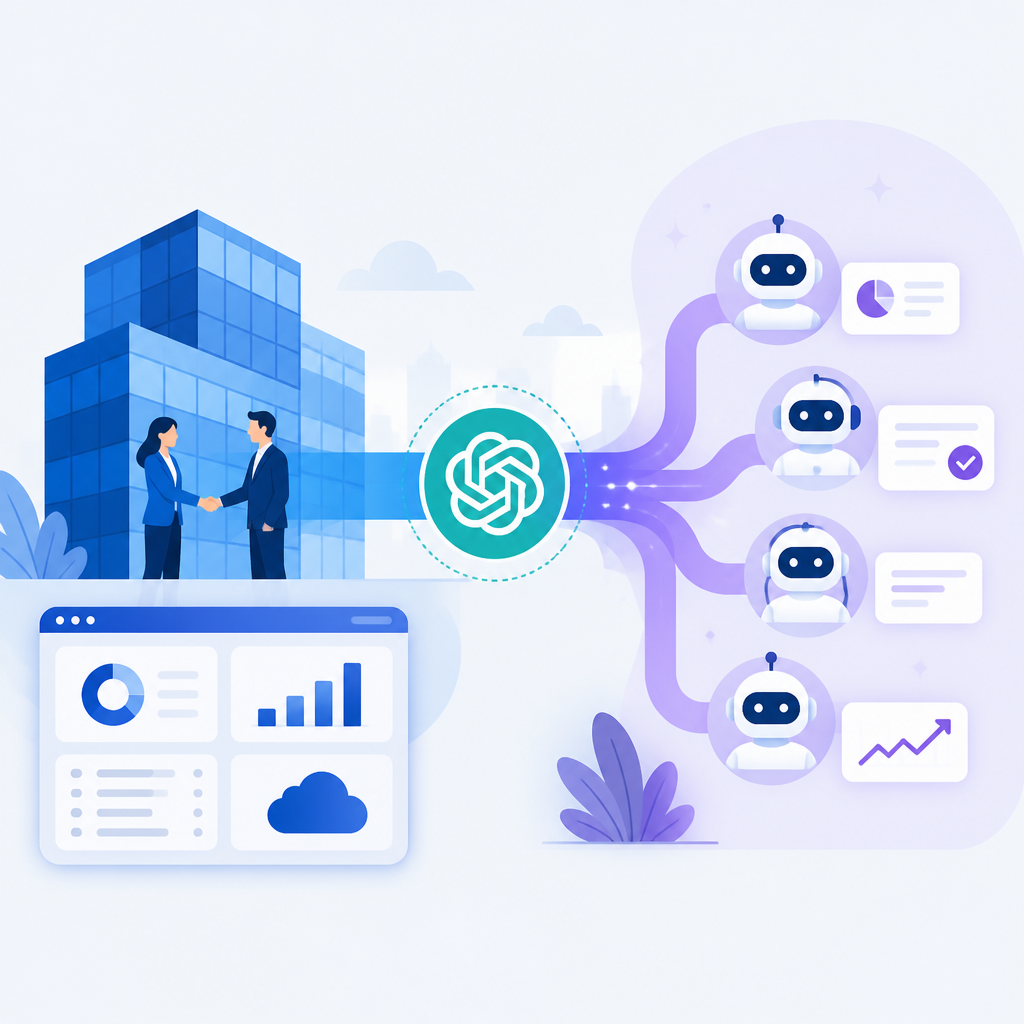
I’ve run into this exact mess in internal tools. Teams spend months polishing the UI, then wonder why adoption is flat. The UI wasn’t the problem. The workflow was. If the work requires users to remember where data lives, which form to fill, and which approval path to follow, the app is already losing.
How to apply it: stop asking, “Where can we add a copilot?” Start asking, “What should the user never have to see again?” Then map the work that can be initiated, routed, checked, and completed by an AI layer sitting above your systems of record.
System of engagement is the part that actually changes behavior
KPMG says it wants AI to become the system of engagement while enterprise applications remain the system of record. That distinction is not consultant wallpaper. It’s the operating model shift.
In plain English, the system of record is your ERP, CRM, case management, finance stack, and all the boring stuff that must stay accurate. The system of engagement is where humans interact with that data and those processes. Historically, that meant web portals, forms, and workflow screens. KPMG is saying AI should own that layer now.
That matters because most employees do not want to “use software.” They want to finish a task. The less they have to think about the tool, the better. I’ve seen this in finance workflows where people spend more time translating business intent into software input than actually making decisions. It’s embarrassing, honestly. The machine should be doing more of that translation.
- Use AI to interpret intent, not just answer questions.
- Keep the systems of record authoritative and boring.
- Let the engagement layer handle routing, summarizing, and next-step suggestions.
How to apply it: draw a line between “truth storage” and “work interaction.” If your AI can’t safely sit on top of the truth layer without mutating it randomly, you don’t have an AI-native design. You have a risky shortcut.
Client-zero is the only way I trust a consulting pitch
KPMG says it is working within OpenAI’s own environment as a client-zero deployment to design a new model for the AI-first enterprise. I like that a lot more than a glossy slide deck. If the firm wants to sell the pattern, it should first eat its own dog food.
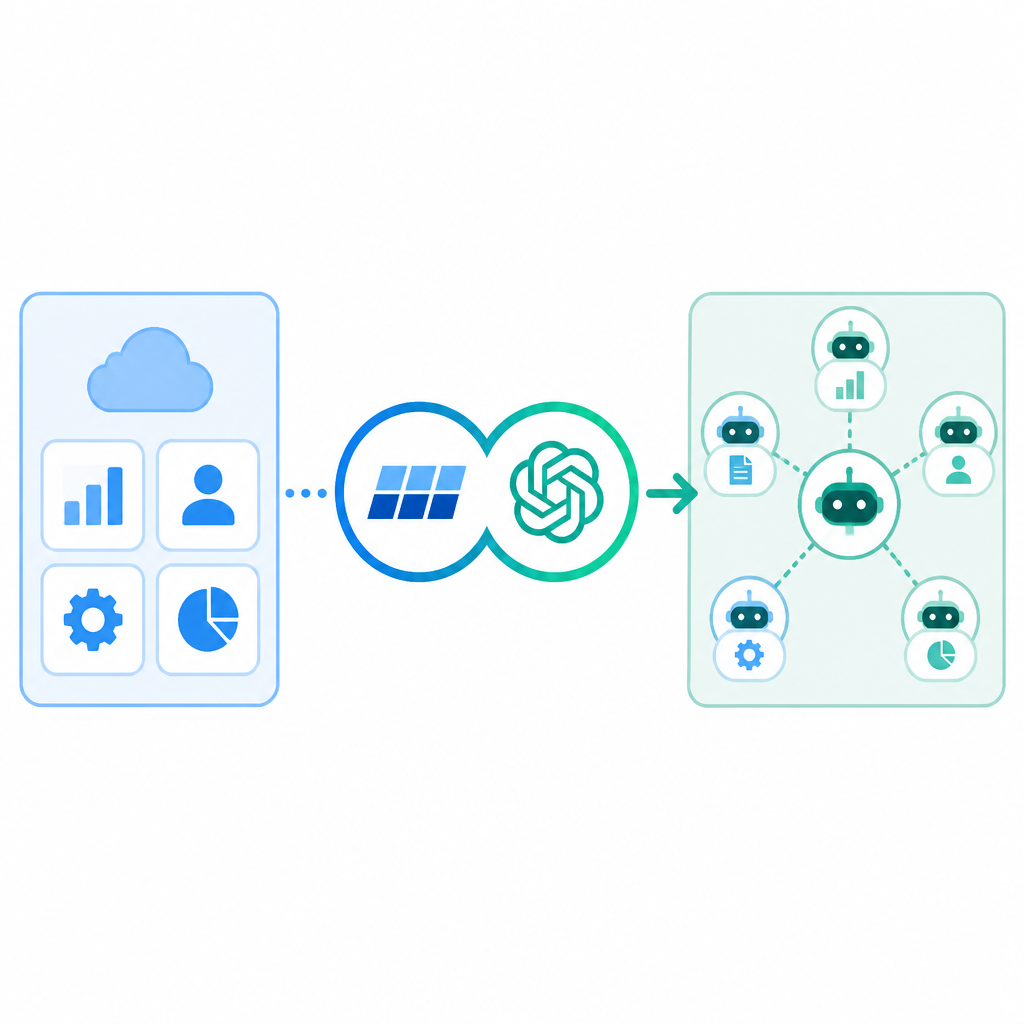
Client-zero means KPMG is testing the model on itself before pushing it into client work. That is the right instinct because it forces the ugly questions early: What breaks? What has to be standardized? Where do humans still need to step in? What data access is too broad? What processes are too messy to automate yet?
I’ve seen too many enterprises buy a transformation story before anyone has run the workflow in anger. Then the pilot works in a demo and collapses in the real world because nobody accounted for exceptions, permissions, or the fact that business operations are full of edge cases. The “works in a demo” trap is brutal.
How to apply it: before you roll AI into a department, create a client-zero lane. Use your own ops, your own approvals, your own support queues. If the workflow can’t survive your internal mess, it’s not ready for customer-facing use.
Forward-deployed engineers are the real delivery model here
KPMG says it will accelerate delivery through a forward deployed engineer model, embedding senior engineers directly alongside OpenAI teams and having KPMG FDEs go through OpenAI FDE certification. That’s one of the most practical parts of the whole announcement.
Why? Because enterprise AI doesn’t fail on model quality alone. It fails in the gap between business intent and production reality. Someone has to sit with the customer, understand the process, wire the integrations, and make the thing survive security review. That is not a generic sales role. It’s an engineering role with politics, context, and judgment attached.
I’ve been in enough enterprise rollouts to know the pattern: the smartest prototype in the room is usually the least deployable. The FDE model exists to close that gap. It’s basically saying, “We are not shipping a concept. We are shipping something that has to live in your stack.” That’s a much better standard.
- Embed engineers with the business team, not just the platform team.
- Make production constraints part of discovery, not the final surprise.
- Train for the integration reality: permissions, audit logs, fallback paths, and human override.
How to apply it: if you’re building AI into enterprise workflows, assign one person to own the workflow and one person to own the system boundaries. If those jobs are merged, you’ll either ship something fragile or something nobody can use.
Public sector modernization needs fewer portals, not more
KPMG says the alliance will modernize its public sector portfolio of SaaS tools, including KRIS Connected, to help agencies move from siloed legacy systems to connected case management, service delivery, and decision support. That’s the part I’d watch closely because public sector software has been stuck in a particularly annoying pattern for years.
Government teams do not need another layer of forms pretending to be innovation. They need systems that reduce the number of places a citizen, caseworker, or administrator has to bounce between. If AI can help triage cases, summarize histories, flag missing information, and route work faster, that’s real value. If it just adds a chat box to a broken process, nobody wins.
The announcement also says these AI-powered solutions can help agencies modernize incrementally, reduce risk, and accelerate time to value. Incremental is the key word. Big-bang rewrites are how public sector projects go to die.
I’ve seen agencies get burned by giant platform swaps that promised a clean slate and delivered a year of chaos. The better move is usually to wrap intelligence around the mess, then replace pieces one by one. Boring? Yes. Effective? Also yes.
How to apply it: pick the highest-friction public workflow first, like intake, triage, or status lookup. Use AI to cut the handoffs. Keep the record system intact until the new workflow proves itself.
Cyber defense is where AI actually earns its keep
KPMG also ties the alliance to the OpenAI Daybreak Cyber Partner Program, saying it wants to strengthen threat detection, security operations, and AI-powered cybersecurity solutions. This is one of the few places where “AI in the flow of work” stops sounding abstract and starts sounding useful.
Security teams already live in a world of alerts, summaries, and triage. They need faster pattern recognition, better prioritization, and less time wasted on low-signal noise. If AI can help with that while staying inside trusted boundaries, that’s not fluff. That’s work.
But I’m still cautious. Security is where people love to overpromise and underdeliver. If the model can’t explain why it flagged something, or if the workflow makes analysts slower instead of faster, the tool becomes another thing to babysit. That’s the opposite of what teams need.
How to apply it: use AI first for summarization, correlation, and prioritization. Don’t start by letting it take actions on its own. Build confidence in the analyst workflow before you automate response.
What I’d steal from this announcement
The best thing in this KPMG and OpenAI setup is not the partnership headline. It’s the architecture language. AI as the system of engagement. Applications as the system of record. Client-zero. Forward-deployed engineers. Incremental modernization. Those are all practical signals that someone is thinking about deployment, not just demos.
If I were building an enterprise AI program tomorrow, I’d steal the shape of this and ignore the marketing gloss. I’d define the old records layer, redesign the engagement layer, staff engineers close to the workflow, and test everything on internal operations before I touched customers or citizens.
That’s the part people keep skipping. They start with the model and work backward. I’d rather start with the workflow and ask which model belongs there. Much less glamorous. Much more likely to ship.
The template you can copy
# AI-native enterprise workflow template

## 1) Define the split
- System of record: authoritative data stores, audit logs, approvals, compliance controls
- System of engagement: AI layer that interprets intent, routes work, summarizes context, and drafts next actions

## 2) Pick one workflow
Choose a workflow with:
- repeated steps
- clear exceptions
- measurable delay
- human review at the end

Examples:
- case intake
- finance request routing
- incident triage
- employee support
- vendor onboarding

## 3) Map the current pain
List:
- where users click too much
- where they copy data between systems
- where approvals stall
- where context gets lost
- where the process breaks on exceptions

## 4) Design the AI engagement layer
The AI layer should:
- understand user intent
- fetch context from systems of record
- summarize what matters
- propose next steps
- draft actions for human review
- log every step

It should not:
- become the source of truth
- silently change critical records
- skip approval rules
- hide confidence or uncertainty

## 5) Run client-zero
Before external rollout:
- use your own internal operations
- test real exceptions, not demo cases
- include security, legal, and ops reviewers
- measure time saved and failure modes

## 6) Staff the delivery model
Assign:
- one workflow owner
- one systems owner
- one security reviewer
- one engineer embedded with the business team

## 7) Start with assist, not autonomy
Phase 1:
- summarize
- classify
- route
- draft

Phase 2:
- recommend
- prefill
- validate

Phase 3:
- limited automated actions with human override

## 8) Measure what matters
Track:
- time to complete
- number of handoffs
- error rate
- exception rate
- user satisfaction
- analyst or agent workload

## 9) Roll out incrementally
Replace one step at a time.
Do not rewrite the whole workflow at once.

## 10) Keep the record layer boring
If the AI layer fails, the system of record must still work.
If the record layer fails, stop and fix that first.
That template is the part I’d actually keep. Everything else is just the wrapper around it.
Source attribution: I based this breakdown on KPMG’s July 21, 2026 announcement at kpmg.com/us/en/media/news/kpmg-openai-strategic-alliance.html. The interpretation, workflow framing, and template above are mine.
// Related Articles
- [IND]
WAIC 2026 turns AI hype into real work
- [IND]
Trump adviser accuses Moonshot AI of stealing Anthropic
- [IND]
Vector databases will reshape financial search, not replace core syst…
- [IND]
Milvus 3.0 adds lake-native vector search
- [IND]
Google’s Q2 2026 results prove AI spend is now the story
- [IND]
AI regulation in India is now a business risk