NVIDIA’s $30,000 grant targets USC health AI
USC is advertising NVIDIA’s $30,000 academic grant for health and AI research, with June 30, 2026 applications due.

USC is advertising NVIDIA’s $30,000 academic grant for health and AI research.
Keck School of Medicine of USC posted a funding notice on June 3, 2026 for the NVIDIA Academic Grant Program. The offer is pretty specific: $30,000 in NVIDIA H100 GB hours, a one-year project period, and a June 30, 2026 deadline.
| Field | Value |
|---|---|
| Posted by | Keck School of Medicine of USC |
| Sponsor | NVIDIA |
| Application due | June 30, 2026 |
| Amount | $30,000 in NVIDIA H100 GB hours |
| Project period | One year |
| Research areas | Health, Artificial Intelligence |
What the grant actually pays for
Get the latest AI news in your inbox
Weekly picks of model releases, tools, and deep dives — no spam, unsubscribe anytime.
No spam. Unsubscribe at any time.
This is not a cash award for general lab spending. The USC notice says NVIDIA grants provide H100 GB hours for work in simulation and modeling, AI training and model development, or AI inference, agents, and systems software. That matters because the award is tied to compute access, which is often the expensive part of AI research.

For researchers, the practical value depends on how much GPU time the project needs. A team training a model on medical imaging data will care about throughput and memory, while a group building an agent pipeline will care about inference costs and iteration speed. The grant is built for those workloads, not for broad overhead.
- $30,000 is the stated award value
- One year is the project window
- June 30, 2026 is the application deadline
- Only one proposal is allowed per faculty member or research group each quarter
Why USC researchers should pay attention
USC’s Keck School sits in a sweet spot for this kind of program: clinical researchers want compute for imaging, genomics, and model development, while AI teams want real-world health data and evaluation settings. A grant like this can speed up projects that would otherwise wait for internal cluster time or outside funding.
The notice also makes the eligibility rule clear. One proposal per faculty or research group, per quarter, means teams need to coordinate internally before they submit. If several people in the same department are planning to apply, they cannot treat this like an open-ended call with unlimited entries.
“The AI revolution in medicine is not coming to a hospital near you; it’s already here.” — Jensen Huang
That quote fits the logic of this grant even if it comes from NVIDIA’s broader pitch, because the funding is aimed at exactly the kind of projects that turn medical AI from demos into usable systems. The company is effectively betting that researchers need more compute, not more slide decks.
How this compares with other research funding
Compared with a traditional seed grant, this award is narrower and more operational. It does not read like a broad fellowship or a multi-year R01-style package. It reads like a compute voucher with a research wrapper, which is useful for teams already deep into model work.
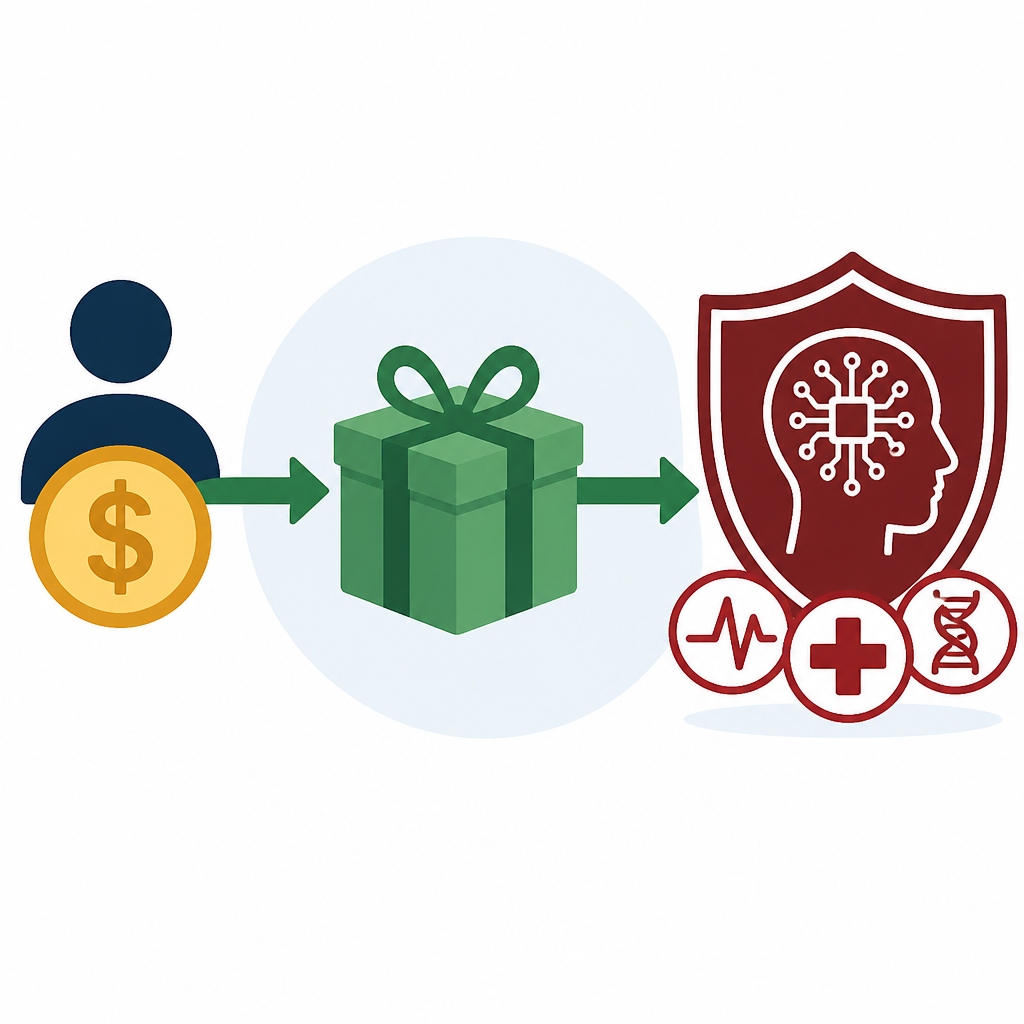
That makes the award attractive in a few common cases:
- Medical imaging groups running large training jobs
- Researchers testing agent workflows for clinical support tools
- Teams simulating complex biological or systems-level behavior
- Labs that need short-term access to high-end GPU capacity
It also creates a filter. If your project is mostly about writing, coordination, or data collection, this is probably not the right fit. If your bottleneck is GPU time, the offer is much more relevant.
For context, NVIDIA’s official academic grant page is where the company frames the program for higher education and research teams. USC is simply surfacing one instance of that broader program for its own faculty and researchers.
What applicants should do next
USC directs interested applicants to contact Karineh Petrossian at the Keck School before moving ahead. That extra step suggests the school wants a human review of fit and timing before proposals are sent through.
If you are a USC faculty member or part of a research group, the smart move is to map your compute needs against the one-year window and the quarterly submission limit. If your project can use H100 hours efficiently, this is worth pursuing now rather than waiting for a later cycle.
The bigger question is whether more schools will package NVIDIA’s academic compute grants the same way USC has. If they do, the real competition in health AI funding may shift from who has the boldest idea to who can turn GPU time into publishable results fastest.
// Related Articles
- [RSCH]
Measuring when LLM behavior actually переносится
- [RSCH]
Prompt injection is now an AI security problem
- [RSCH]
Solver choice changes which Nash equilibrium wins
- [RSCH]
Proper positive-only learning gets a full characterization
- [RSCH]
DexCompose Reuses Dexterous Policies Across Tasks
- [RSCH]
HaWoR turns hand motion into MANO params