Ollama is becoming the default local AI layer
Ollama is no longer just a local model runner; it is turning into the default AI layer for apps and agents.

Ollama is turning into the default AI layer for local models, apps, and coding agents.
Ollama should be understood as infrastructure, not a convenience app. Its real significance is that it has moved from “run a model on my laptop” to a practical control plane for local inference, hosted models, and agent workflows, which is exactly where developer demand is heading.
First argument: Ollama won by making local AI usable
Get the latest AI news in your inbox
Weekly picks of model releases, tools, and deep dives — no spam, unsubscribe anytime.
No spam. Unsubscribe at any time.
Local models were always attractive in theory. In practice, they were a mess of CUDA friction, backend mismatches, and hand-rolled setup. Ollama reduced that to a command line, a GUI, a REST API, and a model library. That combination matters because it collapses the distance between curiosity and first successful prompt. When a tool gives a developer a working endpoint on port 11434 and a clean way to pull and run models by name, adoption stops being aspirational and becomes routine.
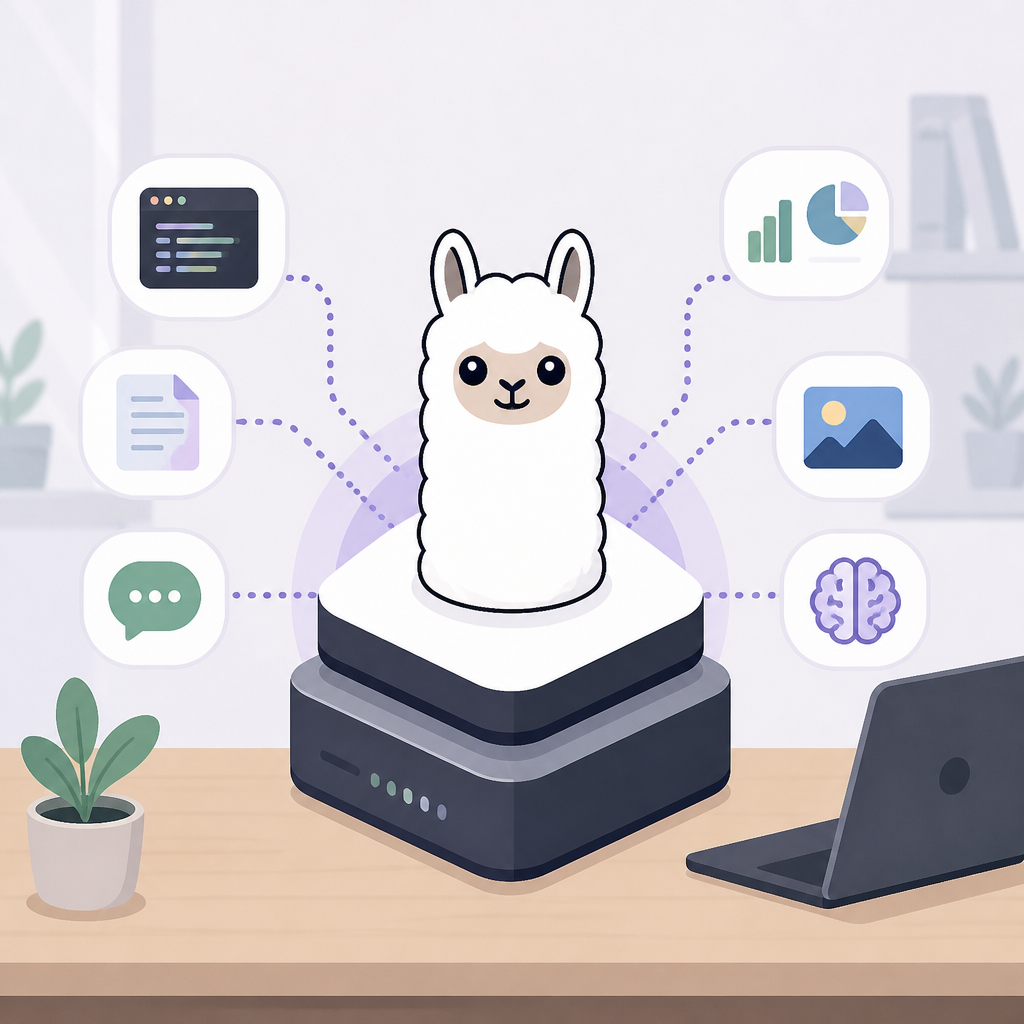
The evidence is in the model ecosystem around it. Ollama became the easiest on-ramp for running Llama, Gemma, Mistral, Qwen, gpt-oss, and DeepSeek variants locally, which turned local inference from a niche hobby into a repeatable workflow. That is not a minor ergonomic win. It is a distribution advantage. The tools that win developer mindshare are the ones that make the first working path obvious, and Ollama did that better than the alternatives.
Second argument: Ollama is expanding into the agent layer
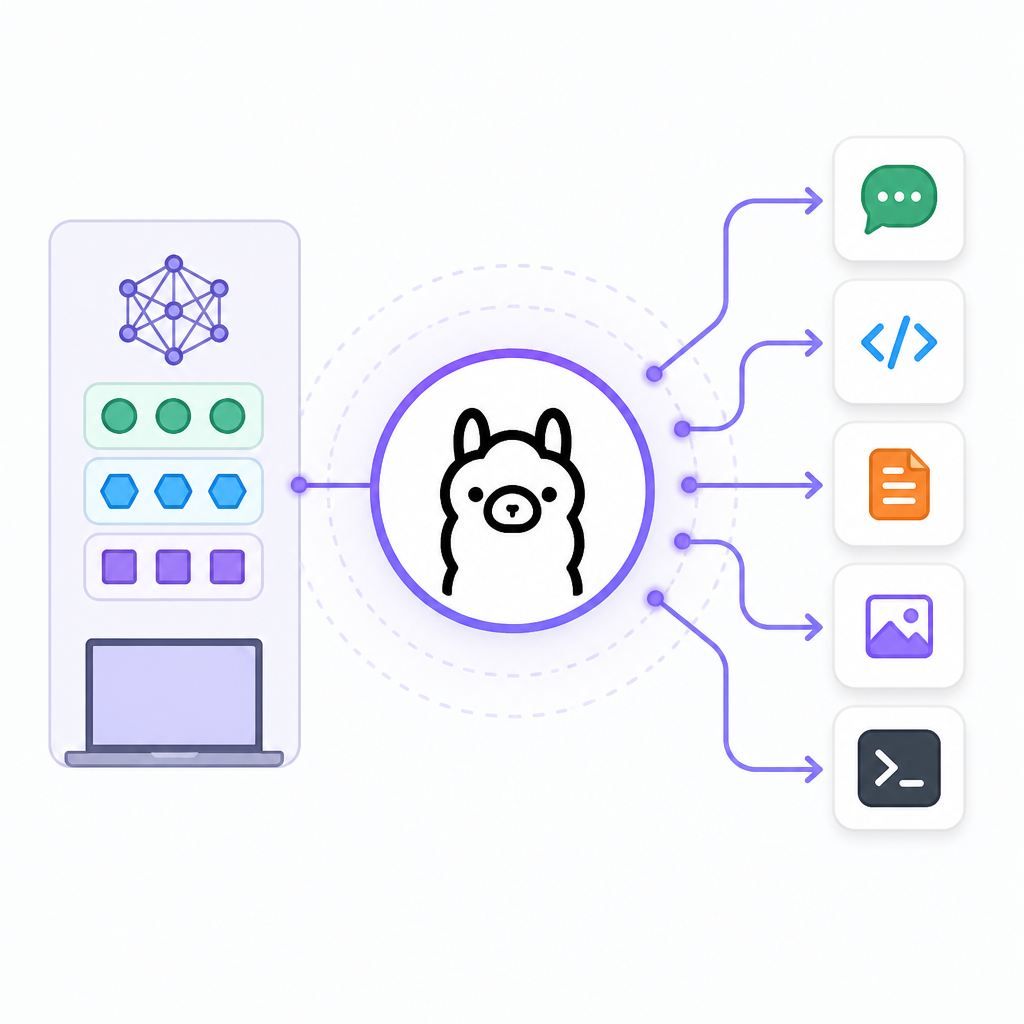
The important shift in 2025 and 2026 is that Ollama stopped being only a runtime and started acting like an integration surface. Hosted cloud models, web search support, tool use, and coding-agent integrations with Claude Code, Codex, OpenCode, Copilot CLI, and OpenClaw push it into the place where modern AI work actually happens: inside tools, not beside them.
That matters because the center of gravity in AI has moved from chat to action. Developers do not want a model silo; they want a layer that can serve local inference when privacy or cost demands it, then plug into agentic workflows when automation matters. Ollama’s support for Apple silicon MLX preview, Docker distribution, and client libraries for Python and JavaScript shows the same pattern. It is building connective tissue, and that is how a runtime becomes a platform.
The counter-argument
The strongest objection is that Ollama is still not the best answer for serious production workloads. Cloud-hosted frontier models remain faster to deploy at scale, easier to monitor centrally, and more predictable when teams need high throughput or strict governance. Local-first tooling also introduces fragmentation: hardware variance, model-size limits, and security mistakes that create exposed servers. The 2026 reports of many Ollama instances bound to 0.0.0.0 are a real warning, not a footnote.
That critique is valid, but it does not defeat the thesis. Ollama is not trying to replace centralized model platforms for every enterprise workload. Its value is that it makes local and hybrid AI the default for a large class of developers, internal tools, and agent workflows. The security risk is a deployment problem, not a product flaw, and the performance ceiling is a tradeoff users knowingly accept when they choose local control.
What to do with this
If you are an engineer, treat Ollama as your local AI harness: use it to prototype with open-weight models, wire up agent tools early, and design for portability between local and cloud backends. If you are a PM or founder, stop framing local AI as a side feature. Build for the workflow around the model, because Ollama’s rise shows that the winning product is the one that makes AI easy to run, easy to integrate, and easy to trust.
// Related Articles
- [TOOLS]
Rust vs Go: 2026 latency gap, decoded
- [TOOLS]
10 identity protocols let KYC stay private
- [TOOLS]
Use Consensus AI for faster literature scouting
- [TOOLS]
15 Perplexity prompts for better research decisions
- [TOOLS]
Mistral AI Models 2026 for Builders
- [TOOLS]
RustRover 2026.2 turns Rust setup into one file