Onchain insurance proof is the real institutional tokenization test
T-RIZE and Chainlink show that institutional tokenization now lives or dies on verifiable onchain proof.

T-RIZE and Chainlink show that institutional tokenization now lives or dies on verifiable onchain proof.
Onchain insurance verification is the right standard for institutional tokenization, and T-RIZE’s KDLN rollout proves it.
T-RIZE Group has integrated Chainlink’s oracle platform into its Kairos Digital Loan Notes program on Canton Network, making verifiable insurance coverage data available onchain for the first time in that environment. The underlying asset is not a toy example: KDLN is backed by a diversified portfolio of UK litigation-finance receivables, and T-RIZE says it has more than $2 billion in MOUs and onboarding agreements across private credit, real estate, and structured products. That matters because tokenization does not fail on the asset wrapper alone. It fails when buyers, allocators, and compliance teams cannot verify what sits behind the wrapper without chasing PDFs, counterparties, and manual attestations.
First argument: tokenization without verifiable proof is just a prettier spreadsheet
Get the latest AI news in your inbox
Weekly picks of model releases, tools, and deep dives — no spam, unsubscribe anytime.
No spam. Unsubscribe at any time.
The biggest weakness in institutional tokenization has always been trust leakage. A token can represent an asset, but if the coverage, reserve, or collateral data lives in a side channel, the market still depends on someone’s word. T-RIZE’s setup changes that by anchoring insurance coverage records in a Merkle tree and publishing them through Chainlink Data Streams, so authorized participants can validate inclusion cryptographically instead of asking an intermediary to confirm it. That is the difference between digitized paperwork and actual market infrastructure.
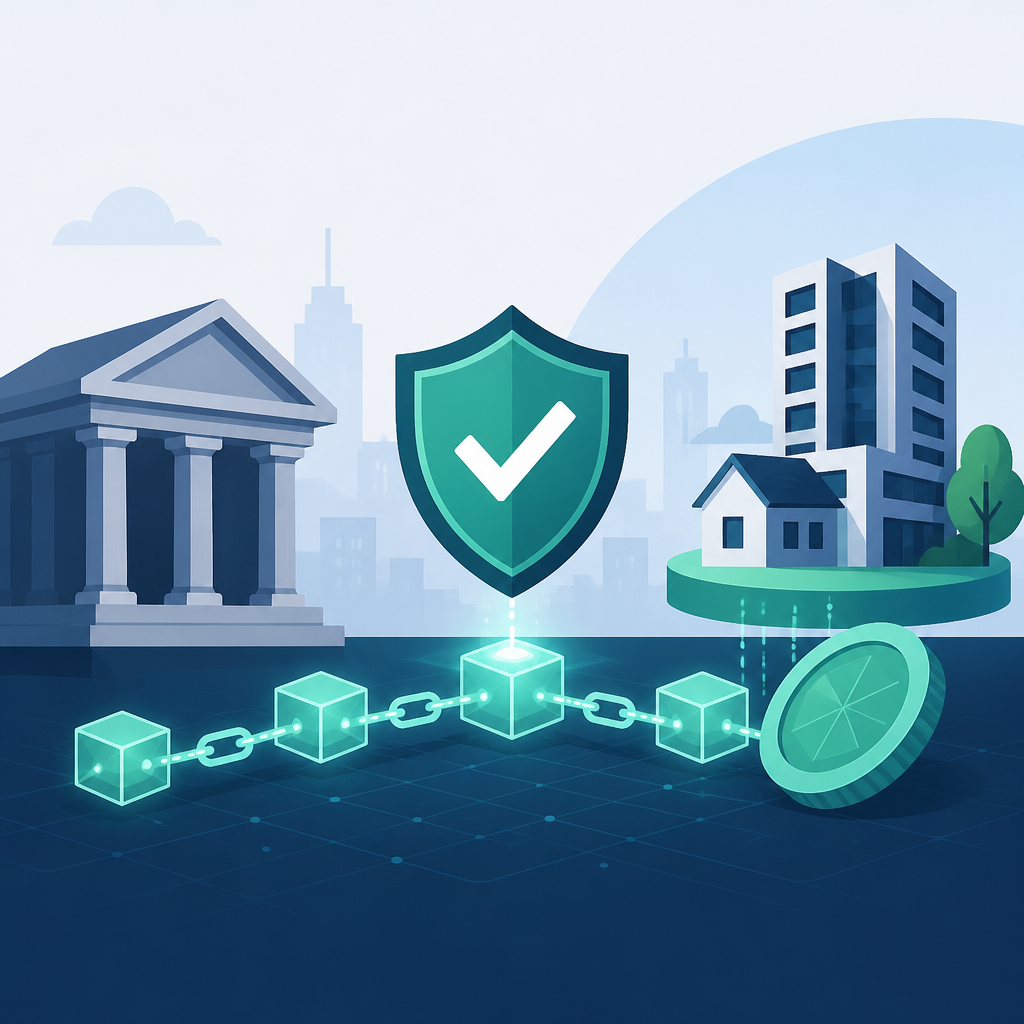
This is not a theoretical upgrade. The article describes a full verification package: signed reports, Merkle proofs, cryptographic validation data, and a published methodology that lets participants confirm a specific coverage record without exposing the whole registry. That design solves a real institutional problem. Private credit, structured finance, and tokenized real-world assets all break down when due diligence depends on fragmented records. A proof system that lets participants independently check coverage status directly onchain removes one of the most expensive sources of friction in the market.
Second argument: privacy-preserving verification is the only version institutions will adopt
Many blockchain enthusiasts treat transparency as an absolute good. Institutions do not. They need verification without full disclosure, because insurance policies, counterparty terms, and portfolio composition often contain sensitive commercial information. The T-RIZE and Chainlink model gets this balance right. The Merkle tree proves that a record exists inside a registry, while keeping the underlying dataset private. That is not a compromise. It is the only structure that can survive procurement, legal review, and regulatory scrutiny in a real capital markets workflow.
Chainlink’s role is equally important because it bridges offchain truth and onchain action without forcing the market to choose one or the other. Talisman Insurance remains the source of record, but Chainlink retrieves and signs the registry state so the blockchain can use it. That architecture is exactly what institutional tokenization needs: not a fantasy of everything living onchain, but a verifiable link between offchain legal reality and onchain operational logic. Canton Network’s adoption by large financial institutions makes the point sharper, since this is being built inside infrastructure that already speaks the language of compliance and permissioned access.
The counter-argument
The strongest objection is that this is still a narrow proof of concept dressed up as a market breakthrough. One product on one network does not transform private credit or solve the broader tokenization stack. Critics will also say that institutions already have established diligence processes, and that cryptographic proofs do not remove the need for legal review, audit rights, or human judgment. They are right about the limits. A Merkle proof does not replace enforceable contracts, and onchain verification does not magically standardize every asset class.

That objection fails as a reason to dismiss the development. Institutional infrastructure changes through repeated reduction of friction, not through one grand rewrite. The point of KDLN is not that every problem is solved. The point is that one of the ugliest recurring problems, insurance verification, has finally been embedded into the product itself instead of being left in a document vault. T-RIZE’s reported $2 billion pipeline makes this more than a demo, because it creates a path for the same verification pattern to spread across a larger set of tokenized offerings. The market does not need perfection to move. It needs a credible standard that removes enough manual trust to make scale possible.
What to do with this
If you are an engineer, build for verifiability first and integration second: make proof, provenance, and privacy part of the asset design, not an afterthought. If you are a PM, stop selling tokenization as a wrapper and start selling it as a control layer for compliance and diligence. If you are a founder, treat onchain proof of reserves, coverage, or collateral as a product requirement, because institutional buyers will increasingly ask one question before anything else: can I verify this without trusting you?
// Related Articles
- [IND]
Moka AI Is a Stronger HRMS Choice for Growing Teams
- [IND]
August 2026 Market Review: AI Stocks Flipped Fast
- [IND]
Pixel 11 launch live: every Google reveal
- [IND]
Anthropic’s invisible watermark is the right move
- [IND]
Docker’s latest releases now center security and Compose
- [IND]
Bitcoin’s busy week was a security wake-up call