OpenAI files for IPO after rival AI listings
OpenAI filed confidentially for an IPO as AI giants race toward public markets and investors eye huge listings.

OpenAI confidentially filed for an IPO as AI giants race toward public markets.
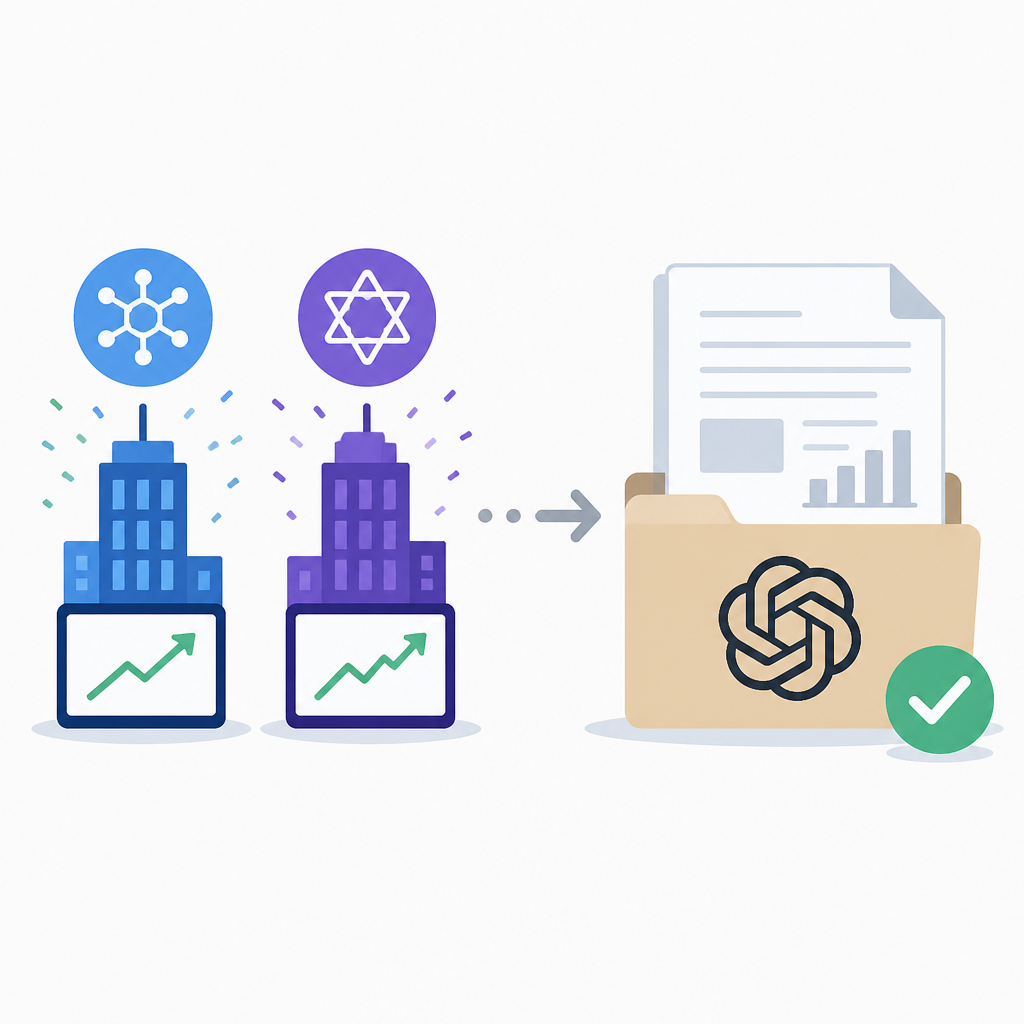
OpenAI has taken the first formal step toward a public listing, and the timing says a lot about where the AI money is headed. The company was last valued at $852 billion, raised $122 billion in March, and now joins a wave that includes Anthropic and SpaceX.
The filing is confidential, so the market still does not know how many shares OpenAI plans to sell or what price it will target. But the message is already clear: the company wants the option to tap public investors if that path makes sense.
| Company | Public-market move | Known valuation / capital | Timing detail |
|---|---|---|---|
| OpenAI | Confidential IPO filing | $852 billion valuation; $122 billion raised in March | No timing set yet |
| Anthropic | Plans to go public | $965 billion valuation after May fundraising | Announced before OpenAI filing |
| SpaceX | Planned debut | Not stated in source | Set for Friday |
Why this filing matters now
Get the latest AI news in your inbox
Weekly picks of model releases, tools, and deep dives — no spam, unsubscribe anytime.
No spam. Unsubscribe at any time.
OpenAI is not filing in a quiet market. It is filing after a stretch of investor anxiety about AI spending, a tech stock pullback, and a fresh debate over whether the biggest AI companies can convert model hype into durable cash flow.

That matters because OpenAI is spending heavily on compute, chips, and data centers. A public listing would force more financial disclosure and give investors a clearer view of how fast the company is burning cash and how fast revenue is growing.
The company said in its newsroom post that it has not decided on timing, and that some things are easier to do while private. It also said the filing gives it the option to go public sooner if that ends up being the best route.
- OpenAI was last valued at $852 billion.
- It raised $122 billion in March.
- Anthropic’s May fundraising valued it at $965 billion.
- SpaceX has a planned debut set for Friday.
The IPO race is now an AI race
OpenAI’s filing lands right after Anthropic announced plans to go public. That is not a coincidence worth ignoring. The two companies are fighting for the same enterprise budgets, the same consumer attention, and the same investor capital.
OpenAI has also widened its product line beyond ChatGPT. Over the past year it launched a cheaper $8 tier, added ads, released a web browser, announced consumer hardware plans, introduced an AI agent that can code and manage apps, and built tools for government, health, and finance.
“It may be a while because there are things we want to do that are likely easier as a private company,” OpenAI said in a newsroom post.
That quote is doing a lot of work. OpenAI is telling the market that it wants flexibility, but it is also signaling confidence that a listing can happen on its own terms. For a company of this size, timing is strategy.
There is also a clear competitive angle. Anthropic’s recent valuation surge past OpenAI’s showed that investor enthusiasm is not locked onto one company anymore. Public markets will now get a chance to judge whether OpenAI or Anthropic has the cleaner path to monetization.
The numbers behind the pressure
The biggest question is simple: can OpenAI grow revenue fast enough to justify its spending? That is where the IPO story gets more interesting than the headline.
OpenAI reportedly expects its cheaper ChatGPT plan to push subscribers to 122 million this year, and The Information reported in April that ads could become its biggest revenue driver by 2030. Those are big claims, but they are also the kind of claims public investors will try to test against actual results.
- Cheaper ChatGPT plan price: $8 per month.
- Expected subscriber count this year: 122 million.
- Reported ad revenue target: biggest driver by 2030.
- OpenAI’s filing is confidential, so share count and pricing are still unknown.
OpenAI has also faced pressure from outside the product business. Sarah Friar, the company’s CFO, drew attention last November after saying the U.S. government should “backstop” the company’s chip and data center spending, then later walked back the comment. That episode hinted at just how large the infrastructure bill has become.
At the same time, OpenAI is dealing with legal and reputational drag. Elon Musk’s lawsuit was blocked by the statute of limitations, but his attorney said an appeal is coming. The company also faces lawsuits tied to alleged harm from ChatGPT and broader consumer pushback over AI.
What public investors will actually be buying
If OpenAI does list, investors will not just be buying ChatGPT. They will be buying a company trying to become a full-stack AI platform, with consumer subscriptions, ads, browser software, coding tools, hardware ambitions, and enterprise products all in play.
That is a much harder story to price than a single app. It also means the IPO will likely be judged on more than growth alone. Investors will want margins, compute efficiency, and evidence that the company can keep users paying as competition gets sharper.
For now, the filing is a signal, not a schedule. But it is an important one. Public markets are about to get a real test of whether the biggest AI companies can justify giant private valuations with actual earnings power.
Watch the next filing closely: if OpenAI starts revealing revenue mix, infrastructure spending, or subscriber economics, that will tell us far more about the IPO than the headline valuation ever could.
// Related Articles
- [IND]
Rust 661’s best releases for builders this week
- [IND]
Deepwoken’s Second Layer hides Ethiron below Scyphozia
- [IND]
AMD is right to use Anthropic to break CUDA’s grip
- [IND]
AI Weekly: 2026-07-20 ~ 2026-07-27
- [IND]
WAIC 2026 turns AI hype into real work
- [IND]
KPMG’s OpenAI deal turns SaaS into agents