OpenAI sells compute reservations to big customers
OpenAI launched Guaranteed Capacity, a multi-year compute reservation program for customers that need reserved AI infrastructure.
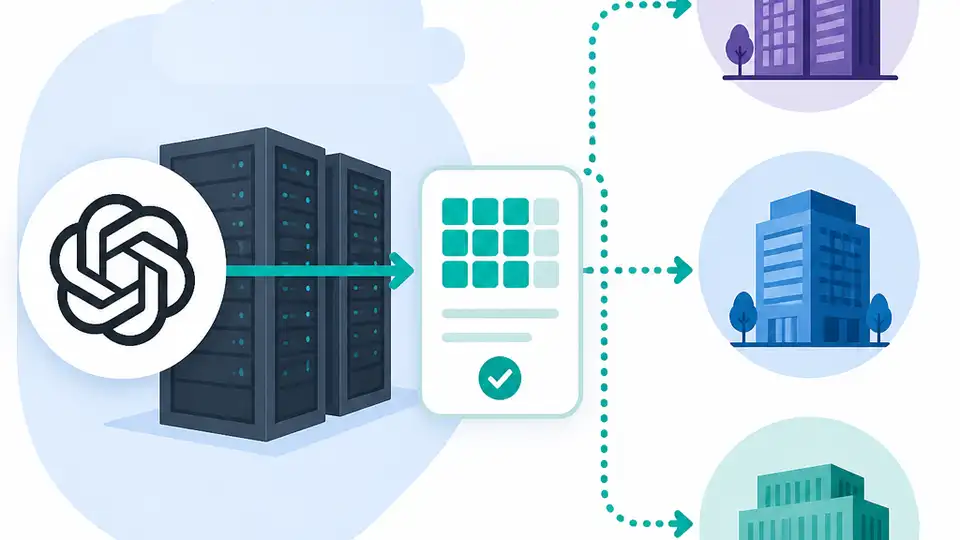
OpenAI launched Guaranteed Capacity so customers can reserve long-term access to compute.
OpenAI has started selling something that used to be hard to buy in AI: certainty. On Tuesday, the company announced OpenAI Guaranteed Capacity, a program that lets customers lock in long-term access to compute for AI products, agents, and internal workflows.
The pitch is simple. Customers choose a one-, two-, or three-year commitment, and the discount gets better as the term gets longer. Sam Altman said on X that customers are asking for “certainty on capacity,” and that OpenAI expects the world to stay capacity-constrained for a while.
| Item | Detail |
|---|---|
| Program | Guaranteed Capacity |
| Commitment terms | 1, 2, or 3 years |
| OpenAI compute target by 2030 | About $600 billion |
| Private valuation | More than $850 billion |
| Current status | Available until the existing allocation sells out |
Why OpenAI is selling capacity now
Get the latest AI news in your inbox
Weekly picks of model releases, tools, and deep dives — no spam, unsubscribe anytime.
No spam. Unsubscribe at any time.
This is partly a product move and partly a finance move. OpenAI is trying to make its infrastructure demand more predictable while it keeps building models that need more compute to train and run. That matters because compute is the bottleneck behind modern AI systems, and it is expensive to buy, power, and scale.
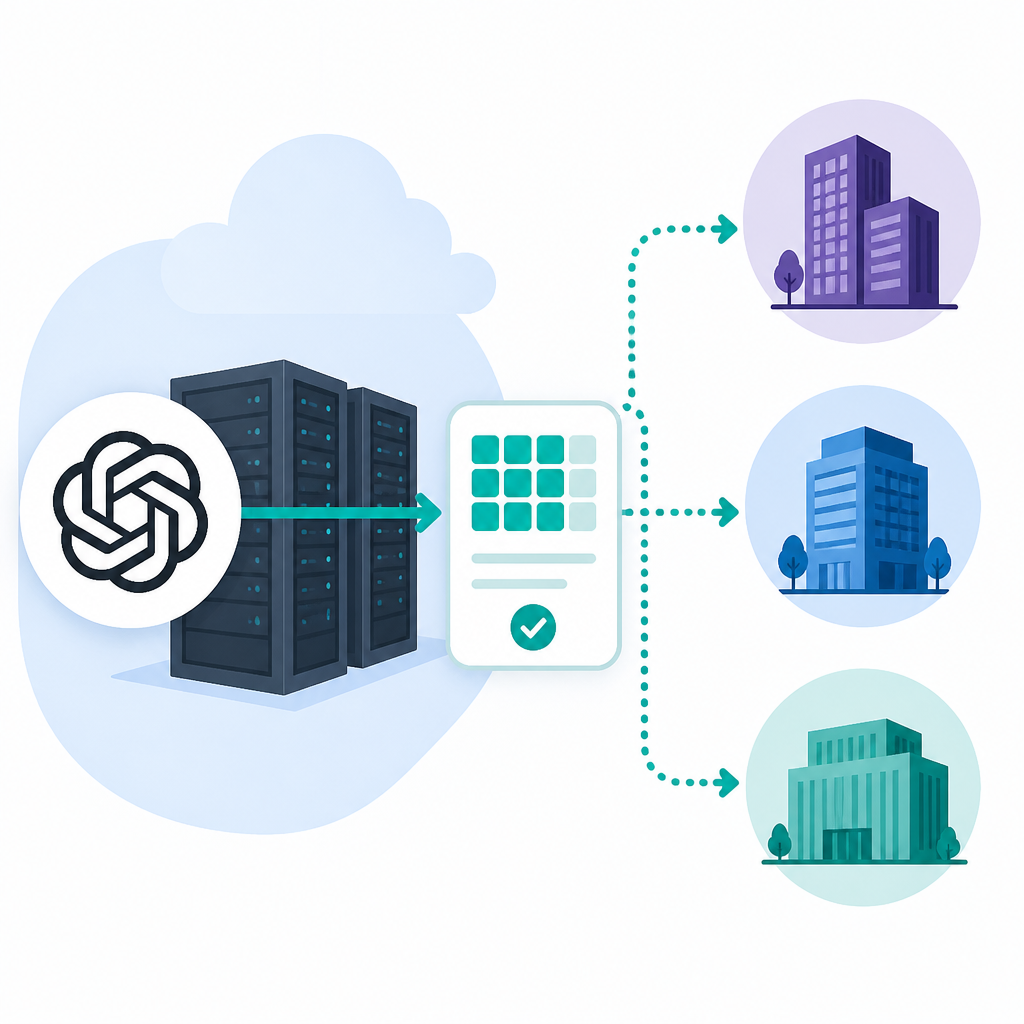
Altman’s framing makes the strategy clear. In his post on X, he said the company will make sure enough capacity remains available for ChatGPT and Codex, even as it sells reserved access to customers who want guaranteed infrastructure for their own tools.
- Customers get reserved access for AI products, agents, and workflows
- Contracts run for 1, 2, or 3 years
- Discounts rise with longer commitments
- OpenAI says the offer will return in the future after this allocation sells out
The money behind the offer
The size of the number attached to OpenAI’s infrastructure plans explains why this matters. CNBC reported that OpenAI has told investors it is targeting roughly $600 billion in total compute spend by 2030. That is an enormous figure for any company, and it suggests OpenAI wants to treat compute less like a spot purchase and more like a long-term supply chain.
That also fits the company’s broader business reality. OpenAI is privately valued at more than $850 billion, and it has been under pressure to show that its growth can keep pace with its spending. Multi-billion-dollar compute deals signed late last year raised questions on Wall Street about how all of that infrastructure would be paid for.
“Customers are increasingly asking us for certainty on capacity. As models get better, we expect that the world will be capacity-constrained for some time,” Sam Altman wrote on X.
The new program gives OpenAI another way to turn demand into revenue before the company reaches a public market test. If it can sell compute reservations the way cloud vendors sell reserved instances, it may be building a cleaner model for how AI infrastructure gets monetized.
How this compares with the rest of the AI stack
OpenAI is not the only company trying to turn infrastructure into a product, but its position is unusual because it sits on both sides of the market. It sells the models, and it also has to secure the compute behind them. That creates a very different incentive structure from a pure software company.
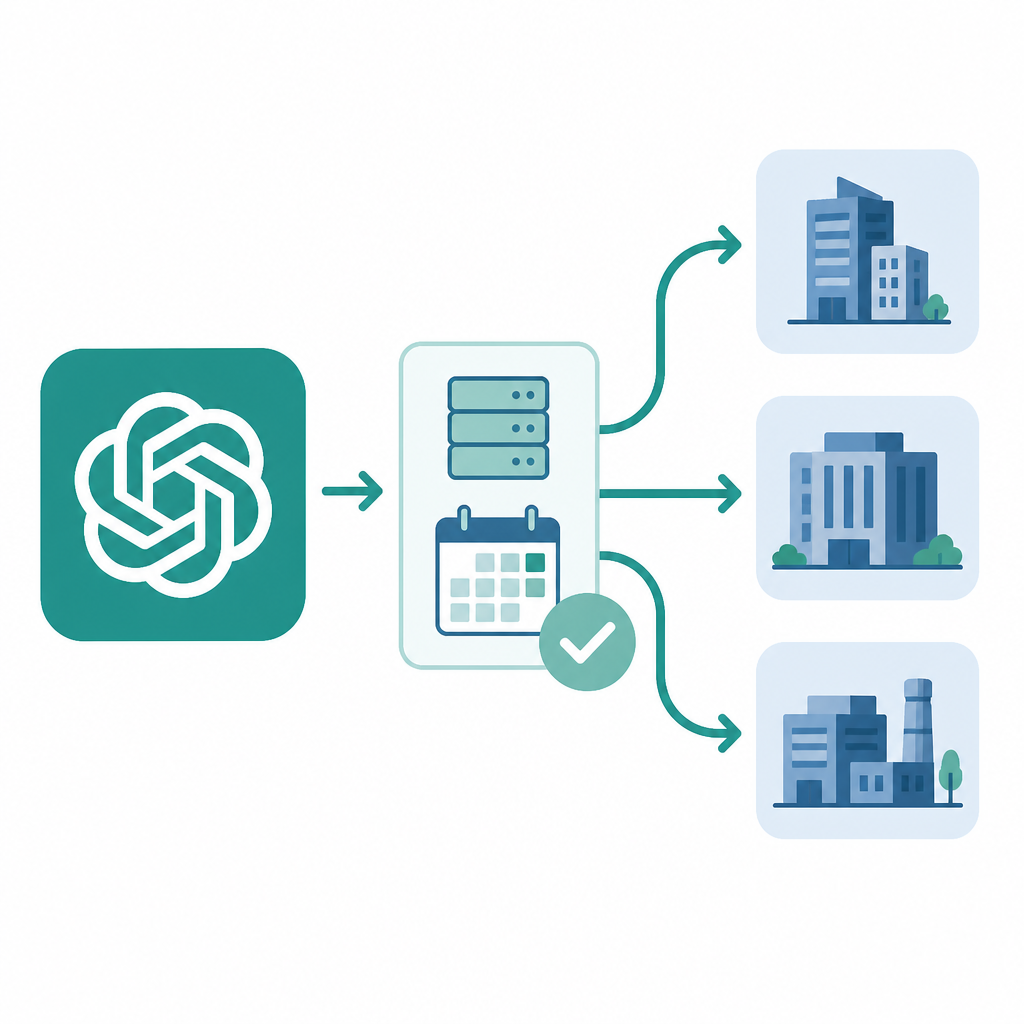
Here is the practical comparison:
- OpenAI is selling reserved access to its own compute allocation
- Microsoft and AWS already sell reserved cloud capacity, but for general-purpose infrastructure
- Anthropic and other model labs still depend on massive external compute contracts to scale training and inference
- OpenAI says it will keep capacity available for its own flagship products, which means this is an allocation problem as much as a sales program
The important detail is that this is not just about bigger customers wanting better service. It is about the AI industry maturing into a world where compute gets booked in advance, priced by commitment length, and treated like a strategic asset rather than an open-ended utility.
What to watch next
The immediate question is whether Guaranteed Capacity sells through quickly enough to become a recurring part of OpenAI’s business. If it does, the company may have found a way to turn infrastructure scarcity into predictable revenue while keeping enough headroom for ChatGPT and Codex.
The bigger question is whether other major model makers copy the idea. If they do, AI buyers may soon face the same kind of planning discipline that large companies already accept in cloud contracts. For anyone building on top of OpenAI, the takeaway is straightforward: compute access is becoming something you may need to reserve months or years ahead, not something you assume will always be there on demand.
If you want a broader read on the economics behind AI infrastructure, see our coverage of AI infrastructure spending in 2026.
// Related Articles
- [IND]
pgvector is enough for small datasets, not your default
- [IND]
OpenAI’s Astra pause shows safety now shapes model releases
- [IND]
Anthropic is building custom AI chips for Claude
- [IND]
Moka AI Is a Stronger HRMS Choice for Growing Teams
- [IND]
August 2026 Market Review: AI Stocks Flipped Fast
- [IND]
Pixel 11 launch live: every Google reveal