OpenAI’s Jalapeño chip points to faster LLM inference
1 chip, 1 partnership, and 1 new compute platform aimed at making LLM inference faster, more reliable, and more available.

Get the latest AI news in your inbox
Weekly picks of model releases, tools, and deep dives — no spam, unsubscribe anytime.
No spam. Unsubscribe at any time.
OpenAI says Jalapeño is its first Intelligence Processor, built around a very specific goal: make large language model inference faster and more reliable. The chip is not being pitched as a general-purpose GPU replacement, but as an accelerator shaped by OpenAI’s own needs for serving advanced AI at scale.

This matters because inference is where models answer users in real time, and that is where latency, cost, and reliability all show up. OpenAI and Broadcom say Jalapeño is the first AI accelerator in a multi-generation compute platform, which suggests this is the start of a longer hardware program rather than a one-off launch.
- Company: OpenAI
- Partner: Broadcom
- Purpose: LLM inference acceleration
- Status: first Intelligence Processor from OpenAI
2. Intelligence Processor
The phrase “Intelligence Processor” signals a chip designed around model-serving workloads instead of broad compute. That usually means closer attention to memory movement, throughput, power use, and the kinds of operations that dominate transformer inference.
OpenAI’s framing also points to a tighter link between model design and hardware design. When the same team thinks about the model and the chip together, the result can be hardware that fits the workload better than a more generic accelerator.
- Built for: AI inference, not training-first positioning
- Optimization target: serving latency and reliability
- Design approach: model-aware accelerator architecture
3. Multi-generation compute platform
OpenAI and Broadcom say Jalapeño is the first AI accelerator in a multi-generation compute platform they are building together. That wording matters because it implies a roadmap, not just a single chip tape-out or a short-term supply deal.
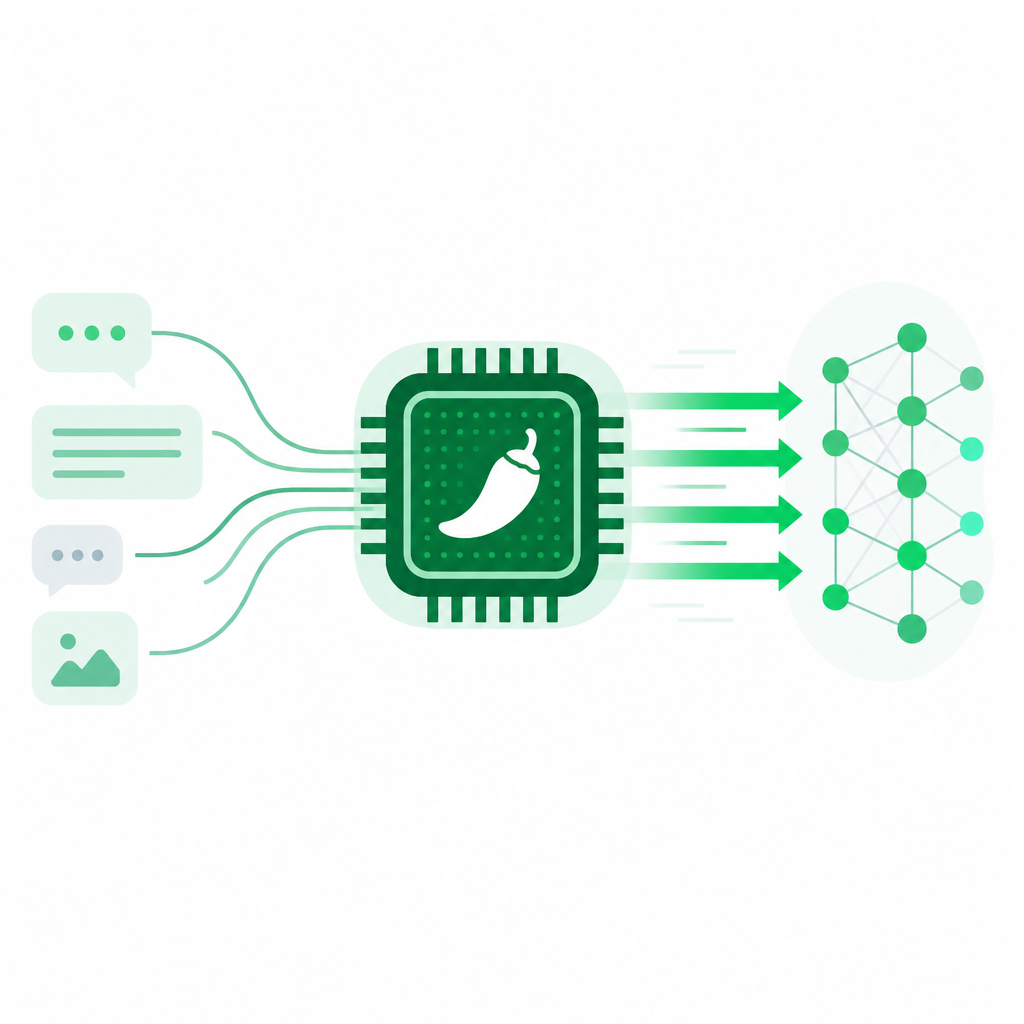
For buyers and developers, a platform approach can mean steadier capacity planning over time. It can also mean future chips may evolve with lessons from the first one, which is useful if the goal is to keep inference cheaper and more dependable as demand grows.
Jalapeño → next-generation accelerators → broader compute platform
4. OpenAI and Broadcom partnership
Broadcom brings the semiconductor execution side, while OpenAI brings the model and product requirements. That mix is common in custom silicon efforts, where one company defines the workload and the other helps turn it into real hardware.
The announcement also places Broadcom in a more visible role in AI infrastructure. For OpenAI, the partnership is a way to shape the hardware stack behind its models instead of relying only on off-the-shelf accelerators.
- OpenAI: workload definition and product goals
- Broadcom: chip design and manufacturing ecosystem support
- Shared aim: faster, more reliable, more accessible AI
5. Faster, more reliable, more accessible AI
The company’s stated payoff is simple: make advanced AI faster, more reliable, and more accessible to more people. That is the business case for custom inference silicon, since better hardware can lower serving costs and improve response times.
There are no public benchmark numbers in the announcement, so the main signal here is strategic rather than technical. Still, the direction is clear: OpenAI wants more control over the economics and performance of the systems that answer user prompts every day.
- Faster: lower response latency
- More reliable: steadier production serving
- More accessible: better cost structure for wider use
How to decide
If you follow AI infrastructure, Jalapeño is the item to watch for signs of where OpenAI’s inference stack is headed. If you care more about platform strategy, the partnership with Broadcom is the bigger story, because it shows OpenAI is building custom hardware around its own workload needs.
If you are tracking the business of AI, the useful takeaway is that inference economics are now a first-order product issue. This announcement is less about a single chip spec sheet and more about OpenAI trying to shape the next phase of how its models are served.
// Related Articles
- [IND]
Moka AI Is a Stronger HRMS Choice for Growing Teams
- [IND]
August 2026 Market Review: AI Stocks Flipped Fast
- [IND]
Pixel 11 launch live: every Google reveal
- [IND]
Anthropic’s invisible watermark is the right move
- [IND]
Docker’s latest releases now center security and Compose
- [IND]
Bitcoin’s busy week was a security wake-up call