OpenAI’s public wealth fund pitch could reshape AI gains
OpenAI is discussing a Public Wealth Fund that could give every American a slice of AI-driven returns.

OpenAI is discussing a Public Wealth Fund that could give every American a slice of AI-driven returns.
OpenAI is in talks with the Trump administration about a Public Wealth Fund, and the number on the table is real: a possible equity donation of 1% to 5% from OpenAI to help seed it. The pitch would turn AI growth into a public asset, with returns distributed to all US citizens, including people who own no stocks at all.
| Item | Number | What it means |
|---|---|---|
| Possible OpenAI equity donation | 1% to 5% | Seed capital for the proposed fund |
| Policy paper date | April 6, 2026 | OpenAI’s formal proposal date |
| Talks with the Trump administration | Early June 2026 | Proposal moved from paper to political discussion |
| Bernie Sanders alternative | 50% stock tax | A much more aggressive redistribution model |
What OpenAI is actually proposing
Get the latest AI news in your inbox
Weekly picks of model releases, tools, and deep dives — no spam, unsubscribe anytime.
No spam. Unsubscribe at any time.
The idea comes from OpenAI’s April 6 policy paper, Industrial Policy for the Intelligence Age: Ideas to Keep People First. The core argument is simple: AI will create a huge amount of wealth, but that wealth will concentrate unless public policy pushes some of it back out to ordinary people.
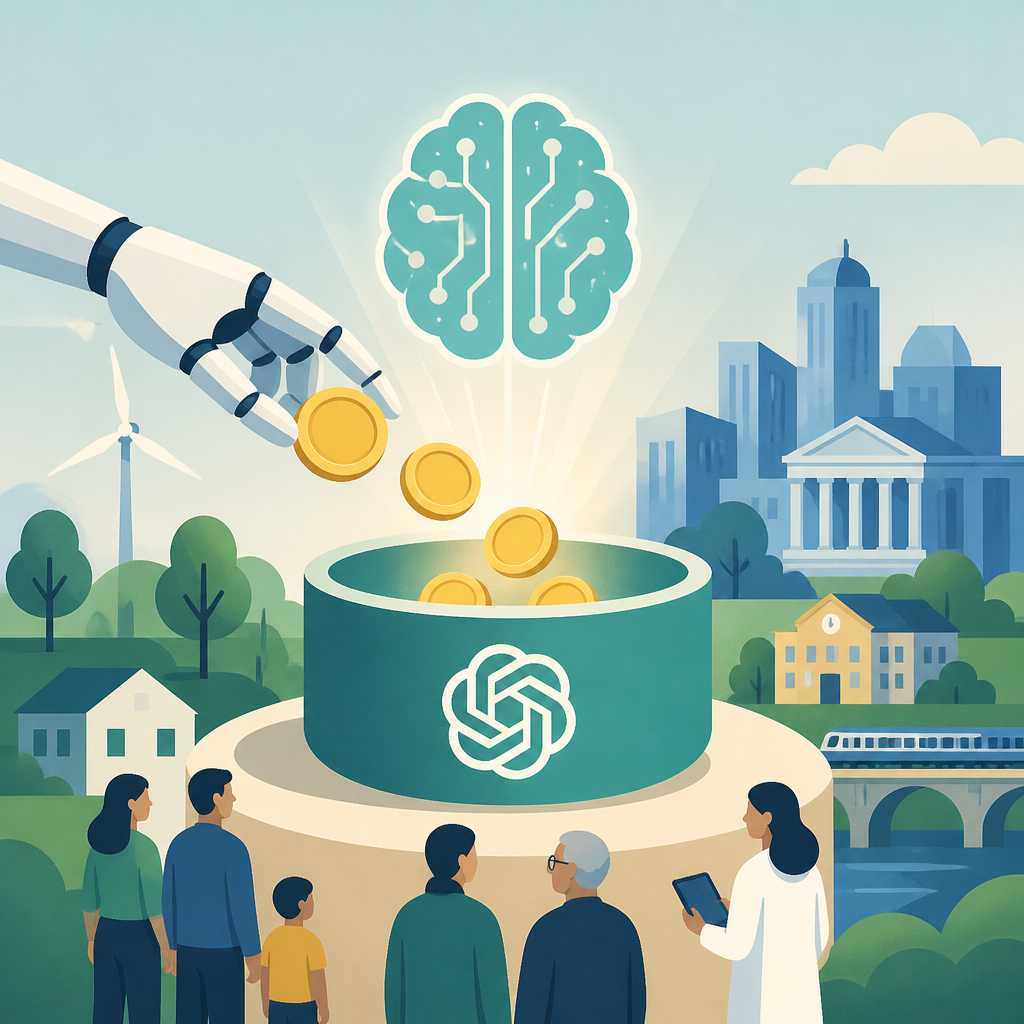
OpenAI’s answer is a fund that would invest in AI firms and related businesses, then distribute returns to US citizens. That model borrows from sovereign wealth funds and public dividend systems, but it is aimed at the AI economy rather than oil, gas, or mineral royalties.
The company is also talking about a broader investment base than just model builders. The fund would target companies adopting AI tools too, which matters because the biggest gains from AI may come from businesses using the tech well, not just the labs building it.
- OpenAI wants the fund tied to AI-driven growth.
- The fund could own equity in AI companies and AI adopters.
- Returns would go to all US citizens, not just investors.
- The proposal is already in talks with the Trump administration.
Why this idea is getting political traction
President Trump has publicly liked the concept, framing Americans as “partners” in AI progress. That matters because this is not just a corporate white paper anymore; it is entering actual policy debate.
There is a reason the idea has legs. AI is already producing outsized profits for a small set of firms, and policymakers know that productivity gains do not automatically show up as broader household wealth. A public fund is one way to make the upside visible outside the cap table.
“We should have a public wealth fund that gives every American a stake in the growth of our economy.”
— Senator Cory Booker, U.S. Senate speech, February 2019
That quote is useful because it captures the logic behind the OpenAI proposal even though the politics around it are different. The basic argument is that if a new technology wave creates concentrated wealth, the public should get a direct claim on some of it.
The policy paper also goes beyond the fund itself. OpenAI suggests tax changes and stronger safety nets to prepare for the disruption that advanced AI could bring. That is a much broader economic message than the usual “build faster” pitch from Silicon Valley.
The real policy fight is about who gets the upside
OpenAI’s plan is mild compared with what Senator Bernie Sanders has proposed. Sanders has pushed a one-time 50% stock tax on leading AI companies, which would redirect half of their value to public benefit. OpenAI’s version is voluntary and far smaller in scale.
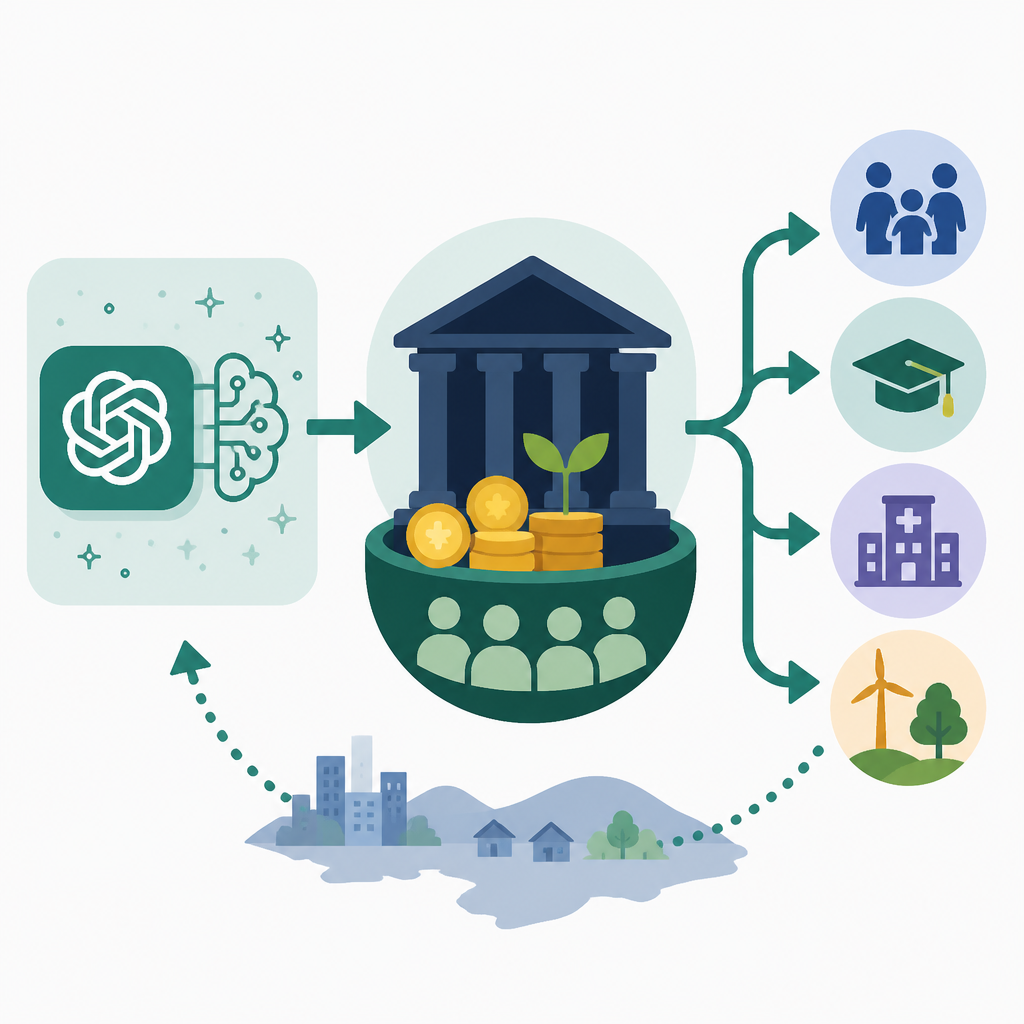
That contrast matters because it shows the range of ideas now on the table. One side wants a negotiated equity contribution. The other wants direct taxation. Both assume the same thing: AI will generate enough value that the fight is really about distribution, not growth.
- OpenAI proposal: 1% to 5% equity donation.
- Sanders proposal: 50% one-time stock tax.
- OpenAI approach: fund-based, long-term, and market linked.
- Sanders approach: direct redistribution through taxation.
For investors, the distinction is more than political theater. Even a small equity donation can affect dilution, governance, and how future AI companies think about public obligations. If the idea spreads, investors may start pricing in public-policy contributions as part of the cost of doing business in AI.
That is especially relevant for companies whose valuations depend on future dominance rather than current profits. If public wealth funds become a standard talking point, the market may start asking a new question: how much of the AI upside stays with shareholders, and how much gets routed back to the public?
What this means for investors and for crypto
The most interesting omission in the proposal is crypto. The fund, as described, would focus on traditional equity investments, not tokens or onchain assets. That keeps the whole idea inside the familiar world of stocks, funds, and policy.
For crypto markets, that matters because this is another sign that governments still prefer equity structures when they think about broad-based wealth distribution. If AI becomes the next major public-policy asset class, the first instinct is likely to be stock ownership, not tokenization.
There is also a useful historical comparison here. Norway’s Government Pension Fund Global turned oil revenue into a multi-trillion-dollar sovereign portfolio, while Alaska’s Permanent Fund Dividend sends annual checks to state residents. Those are not perfect analogies, but they prove the basic structure can work when the politics line up.
The key difference is timing. Norway and Alaska built their systems after the resource base was already obvious. OpenAI is trying to shape the rules before AI wealth fully hardens into a few giant winners. That is a much harder political sell, but it is also the reason the proposal is getting attention now.
For a related read on how AI policy is colliding with markets, see our coverage of AI policy and market power.
The next move will tell us how serious this is
If the White House keeps talking about the fund and OpenAI keeps floating specific numbers, this could move from a policy concept into a real framework for AI taxation, equity donations, or both. If that happens, public wealth funds may become part of every major AI company’s strategic planning.
The practical question is whether other AI firms would follow OpenAI’s lead or resist it. A 1% to 5% donation sounds modest, but once one major player accepts the logic, the pressure on rivals gets a lot stronger. The next few months should show whether this is a one-off political idea or the first draft of a broader system for sharing AI wealth.
Either way, the debate has already changed. AI is no longer being discussed only as a productivity tool or a stock-market story. It is becoming a test of who gets paid when machines start producing a lot more value than people used to expect.
// Related Articles
- [IND]
Immich Docker Compose setup that avoids common errors
- [IND]
Millions Raised for Zhipu-style Social World Model
- [IND]
Anthropic’s Book Scanning Strategy Could Set a Pattern
- [IND]
Huang’s open-letter playbook for open-weight AI
- [IND]
32 firms back open-weight AI in DC letter
- [IND]
Huang usa il suo primo post su X per difendere l’IA aperta