OpenClaw shows the agent control layer matters more than the model
OpenClaw and Hermes prove agents need a control layer, not just a model.

OpenClaw and Hermes show that agent systems live or die on their control layer.
The important story in OpenClaw and Hermes is not that both sides agree an agent is an LLM plus a harness; it is that the harness is now the real product surface. OpenClaw, an open-source harness released only months earlier, already runs natively on Windows inside Microsoft’s execution containers, which tells you where the competition has moved: away from raw model quality and toward the machinery that constrains, verifies, and routes model behavior. In agent land, control is the moat.
The harness is the product, not the model
Get the latest AI news in your inbox
Weekly picks of model releases, tools, and deep dives — no spam, unsubscribe anytime.
No spam. Unsubscribe at any time.
Once a model can talk, reason, and call tools, the differentiator is no longer whether it can produce a plausible answer. It is whether the system around it can keep that answer inside a bounded workflow. OpenClaw’s value is that it turns an abstract “agent” into something operational: a runtime with rules, state, and execution boundaries. That is the layer enterprises actually buy, because enterprises do not deploy clever text generation. They deploy systems that need to finish work without breaking policy, cost limits, or security constraints.

The evidence is already visible in the market. Microsoft’s execution containers are not a vanity feature; they are a sign that agent execution now belongs inside a managed runtime, not loose in a prompt loop. When OpenClaw can run there natively, it proves the harness has crossed from hobby framework to infrastructure component. That matters because the buyer is no longer asking, “Which model is smartest?” The buyer is asking, “Which control plane can I trust to run this agent at scale?”
Open source wins when it standardizes the control plane
Open source has an advantage in agent infrastructure because the hardest problems are integration problems. A harness has to connect identity, observability, policy, tool access, retries, logging, and rollback. Those are the kinds of systems companies do not want locked behind a black box. OpenClaw’s open-source status gives teams a shared foundation for those controls, which is exactly how infrastructure layers become standards: not by being the most glamorous, but by being the most inspectable.
We have seen this pattern before. Kubernetes did not win because it was the best application runtime in a narrow sense. It won because it became the common control surface for scheduling, isolation, and operations. Agent harnesses are following the same arc. If OpenClaw becomes the place where developers define what an agent may do, how it fails, and how it is audited, then the model becomes swappable. That is the strategic prize. The model is consumable; the harness is sticky.
Verification is the real test of agent maturity
Agentic software is only useful when its behavior can be checked after the fact and constrained before the fact. That is why verification has become the defining problem. A harness is not just an orchestration layer. It is the mechanism that makes outcomes legible. If an agent can browse, write, trigger jobs, and modify state, then the system needs a record of every step and a way to stop the next step when the previous one goes wrong. Without that, “agent” is just a nicer word for uncontrolled automation.
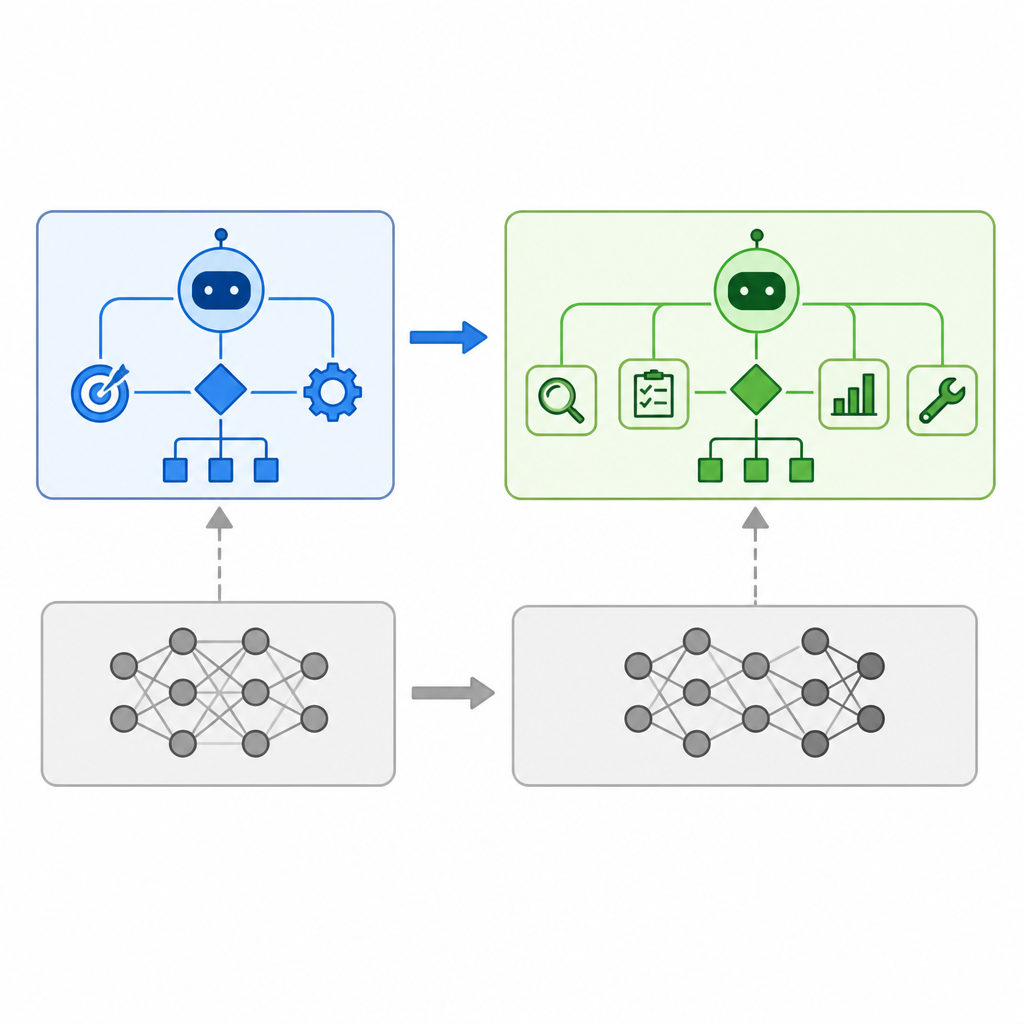
This is where the OpenClaw-Hermes framing lands hard. If both sides agree on what an agent is, then the argument has already shifted to governance: who sets the rules, where the rules run, and who can inspect them. In practice, that means the control layer defines the trust boundary. A company can swap models every quarter, but it cannot swap its security model that often. The harness has to absorb that stability requirement, and the teams that understand this will ship agents that survive contact with production.
The counter-argument
The strongest objection is simple: model quality still matters most. A weak model with a perfect harness is still a weak agent. Better reasoning, better tool use, and better long-horizon planning come from the model, not the wrapper. On this view, the harness is plumbing, and plumbing never wins the market on its own. The real value accrues to whoever delivers the best base model, because that is what users experience first.
That argument is right about one thing: harnesses cannot rescue a model that cannot reason well enough to use tools responsibly. But it is wrong about where durable value accumulates. Once models reach a usable threshold, differentiation shifts to reliability, governance, and integration. The reason is specific: enterprises do not pay for isolated intelligence, they pay for controlled execution. A harness that can enforce permissions, constrain tool calls, log decisions, and run inside a managed container creates switching costs that a better model alone does not. The model may win the demo; the harness wins the deployment.
What to do with this
If you are an engineer, treat the harness as a first-class system and design it like production infrastructure: define tool boundaries, add audit logs, enforce retries and fallbacks, and make model replacement a configuration change rather than a rewrite. If you are a PM or founder, stop selling “agent intelligence” as the product and sell controlled outcomes instead. The market will reward the team that can prove an agent is safe, observable, and portable across models, because that is the layer where trust is built and where the real platform lock-in begins.
// Related Articles
- [AGENT]
Agent Plugins 1.0.0 turns skills into folders
- [AGENT]
FaithEyes lets you train tool-faithful vision agents
- [AGENT]
Connect Qwen 3.8 Max to CLI Agents
- [AGENT]
Fine-tune a small LLM for legal labeling
- [AGENT]
SALA Boosts Long Context on Edge AI
- [AGENT]
Anthropic’s breach proves AI agents need hard security limits