SALA Boosts Long Context on Edge AI
A mixed attention design lets edge models handle longer context with lower compute cost.

Before, long-context models relied on heavier attention; now SALA mixes linear and sparse attention to cut compute.
This guide is for developers who want to understand the architecture shift behind longer context windows in edge AI models and apply the same design ideas in their own systems. After following the steps, you will have a clear mental model of SALA, a practical way to evaluate mixed attention, and a checklist for building longer-context inference without pushing compute costs too high.
Before you start
Get the latest AI news in your inbox
Weekly picks of model releases, tools, and deep dives — no spam, unsubscribe anytime.
No spam. Unsubscribe at any time.
- A working Python 3.10+ environment
- PyTorch 2.1+ or a compatible deep learning runtime
- Access to model documentation for the attention stack you plan to modify
- Basic familiarity with linear attention, sparse attention, and transformer blocks
- A GPU or edge device for profiling, even if only for small test runs
Step 1: Map the attention bottleneck
Your first goal is to identify where long prompts become expensive in your current model. In most transformer pipelines, full attention grows costly as sequence length increases, so you need a baseline for memory use, latency, and token throughput before changing the architecture.
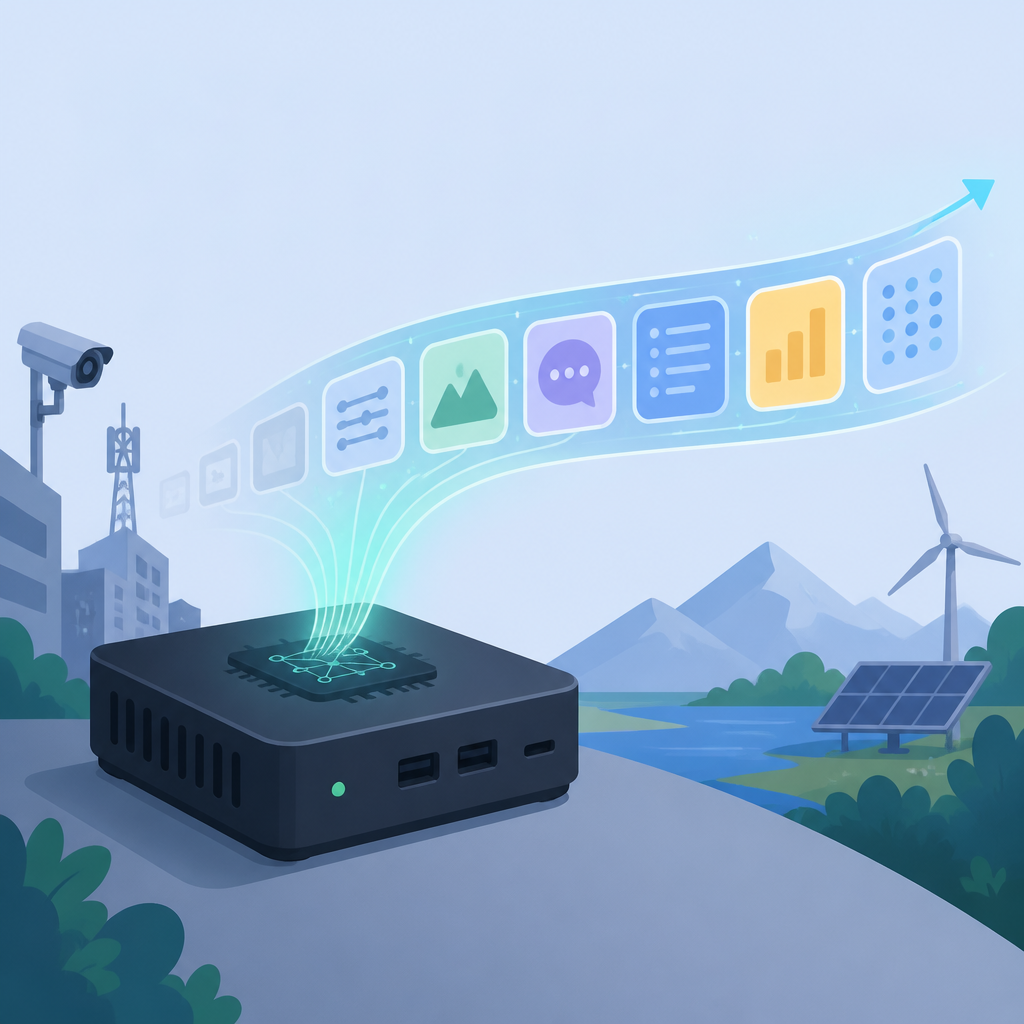
Start by measuring a short context and a long context with the same batch size, then compare peak memory and step time. If your model already has a profiling hook, use it; otherwise, record wall-clock latency and GPU memory manually.
python profile_attention.py --model your-model --seq-len 2048 --batch-size 1You should see a clear jump in latency or memory as sequence length grows. That confirms the bottleneck is attention cost, not just embedding or decoding overhead.
Step 2: Split attention into linear and sparse paths
The goal here is to express attention as two complementary paths: one that scales efficiently with sequence length and one that preserves selective detail. SALA, the mixed architecture described in the source, combines 75% linear attention with 25% sparse attention to keep context handling efficient while retaining important token interactions.
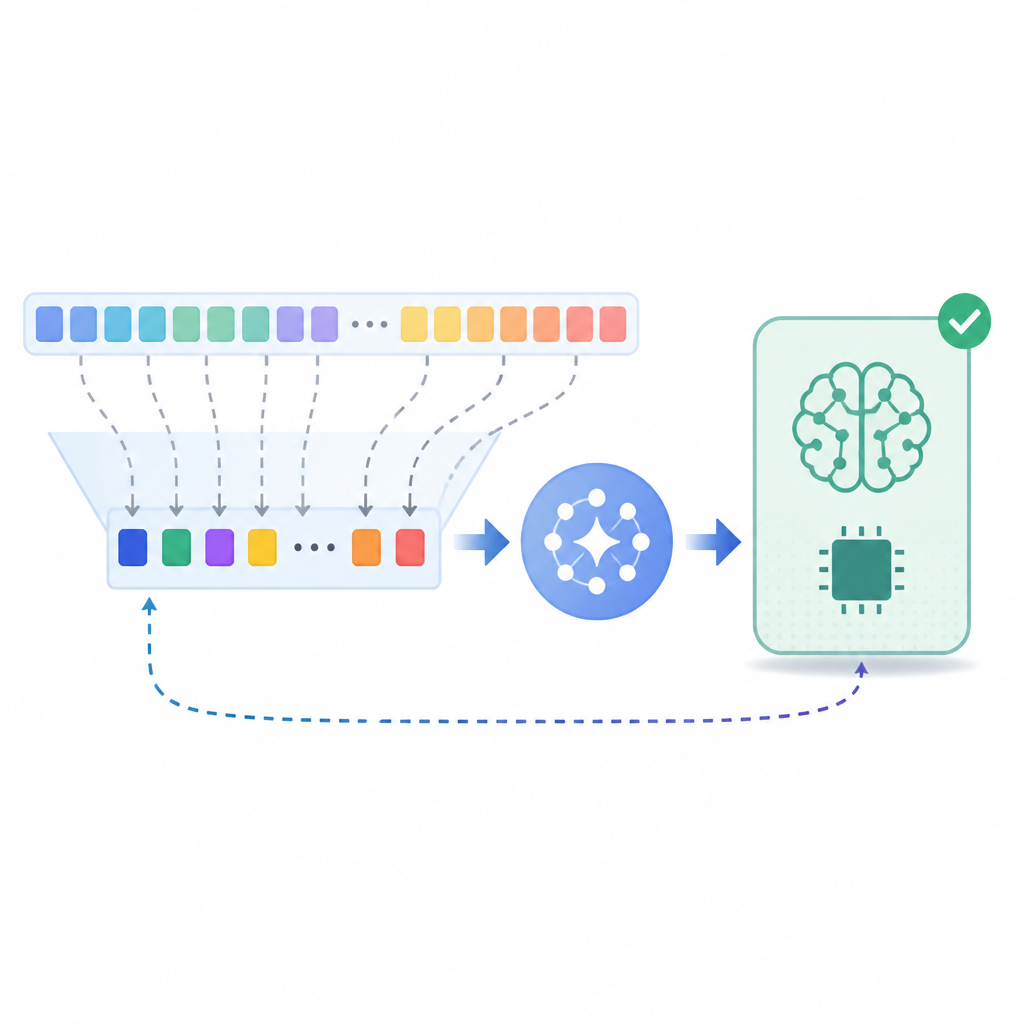
In your implementation plan, assign the linear path to broad context aggregation and the sparse path to high-salience token links. The exact ratio can vary, but the design principle is to avoid using dense attention everywhere when only part of the sequence needs precise routing.
You should see a design that reduces the number of full pairwise token comparisons while still keeping a mechanism for long-range relevance. If your architecture diagram still looks fully dense, you have not separated the paths enough.
Step 3: Tune the mix ratio for your workload
The goal is to find the best balance between efficiency and quality for your target workload. A 75/25 split is a useful reference point, but code completion, retrieval-heavy chat, and document summarization may need different proportions.
Run small ablations with several ratios, such as 80/20, 75/25, and 60/40, then compare validation loss, answer quality, and latency. Keep the same dataset and decoding settings so the comparison stays meaningful.
You should see one ratio that gives most of the efficiency gains without a sharp quality drop. If quality collapses when the sparse path is reduced, your task likely depends on precise token-to-token links more than broad aggregation.
Step 4: Verify long-context behavior with real prompts
The goal is to test whether the model actually benefits from the new attention design on long inputs, not just in synthetic benchmarks. Use prompts that exceed the model's original comfort zone, such as long documents, multi-turn histories, or codebases with repeated references.
Measure whether the model preserves facts from earlier sections, stays stable over longer histories, and avoids obvious degradation as the prompt grows. For edge AI, also check whether the runtime remains usable on the target device.
You should see better retention of early-context details and a smaller performance drop as sequence length increases. If the model answers well only on short inputs, the architecture change is not yet helping where it matters.
Step 5: Package the design for edge deployment
The goal is to make the new attention design practical on constrained hardware. Once the mixed attention approach is validated, fold it into your deployment plan with quantization, memory budgeting, and device-specific profiling.
Document the expected sequence-length range, the latency target, and the memory ceiling for the device class you are serving. That makes it easier for engineers to choose whether to keep the 75/25-style split or adapt it for a smaller runtime.
You should see a deployment profile that fits the device without forcing aggressive prompt truncation. If the model still needs heavy trimming, revisit the attention mix and the size of the sparse routing set.
Common mistakes
- Using linear attention everywhere. Fix: keep a sparse branch for high-value token links so the model does not lose important details.
- Changing the attention ratio without a baseline. Fix: compare latency, memory, and quality against the original model before and after each change.
- Testing only on short prompts. Fix: include long documents and long chat histories, since the benefit appears most clearly at higher sequence lengths.
What's next
Once you have a working mixed-attention baseline, the next step is to study related long-context methods such as sparse routing, memory tokens, and retrieval-augmented inference, then compare them against your SALA-style design on the same workloads.
// Related Articles
- [AGENT]
Anthropic’s breach proves AI agents need hard security limits
- [AGENT]
GenAI.mil turns a scary prompt into a report
- [AGENT]
EPAM’s OpenAI deal turns pilots into production
- [AGENT]
Prompt engineering is overrated for Claude Code
- [AGENT]
Grok Build adds live previews and rewind fixes
- [AGENT]
Kimi K3 Benchmark Evaluation Guide for Coding Agents