OpenClaw turns chat apps into a persistent AI
OpenClaw’s gist shows how a Telegram-first bot grows into a persistent assistant with memory, tools, and a custom identity.

OpenClaw is a persistent AI assistant built from messaging, memory, tools, and a custom system prompt.
OpenClaw’s June 20, 2026 gist walks through how to build a personal assistant that lives inside Telegram, remembers past chats, and can act on your computer. The post frames the project as a step-by-step path from a bare-bones bot to a multi-channel agent with shared memory and tool use.
What changed
Get the latest AI news in your inbox
Weekly picks of model releases, tools, and deep dives — no spam, unsubscribe anytime.
No spam. Unsubscribe at any time.
The gist starts with a minimal Telegram bot that sends each user message to Anthropic and returns the reply. From there, it adds session storage in JSONL files so each user gets a durable transcript instead of a stateless chat.

That memory layer is paired with a markdown-based personality file, SOUL.md, which defines the agent’s name, tone, and boundaries. The post then adds structured tools so the model can run commands, read and write files, and search the web.
- Telegram bot as the first interface
- JSONL session files for append-only memory
SOUL.mdfor identity and behavior rules- Tool calls for shell, file, and web actions
The architecture also points to a model loop: the assistant chooses a tool, the host app executes it, and the result goes back into the conversation. The gist says OpenClaw stores sessions under ~/.openclaw/agents/.../sessions/ and loads the workspace prompt from ~/.openclaw/workspace/SOUL.md.
Why it matters
For developers, the value is not the bot code itself but the pattern: persistent memory, explicit identity, and tool execution are enough to move an LLM from chat toy to usable assistant. The post makes that stack concrete with code, file paths, and a loop you can copy into your own app.
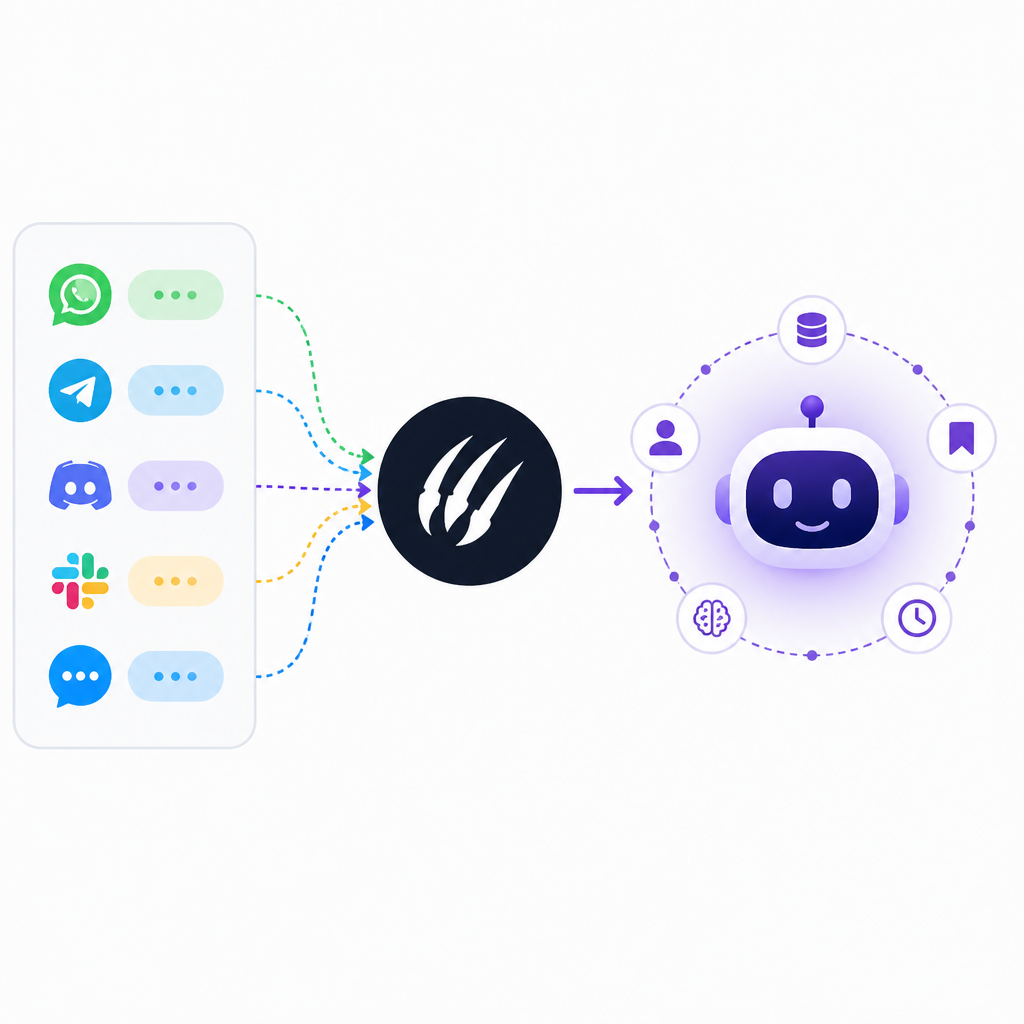
For the market, it signals where personal AI is heading: not one more web tab, but an agent that can live across WhatsApp, Telegram, Slack, and local machines while keeping one identity. That matters for anyone building assistants that need context across days, not just prompts across minutes.
The sharp question is whether users want one assistant with long-lived memory across every channel, or several smaller agents with narrower jobs and less risk.
// Related Articles
- [AGENT]
Agent Plugins 1.0.0 turns skills into folders
- [AGENT]
FaithEyes lets you train tool-faithful vision agents
- [AGENT]
Connect Qwen 3.8 Max to CLI Agents
- [AGENT]
Fine-tune a small LLM for legal labeling
- [AGENT]
SALA Boosts Long Context on Edge AI
- [AGENT]
Anthropic’s breach proves AI agents need hard security limits