Pinecone, Milvus, and 3 rivals that power AI search
5 vector databases that power semantic search, RAG, and recommendations, with one research-scale example handling 200M+ papers.

Five vector databases power semantic search, RAG, and recommendations at AI scale.
These five systems show how meaning-based retrieval works, why it matters, and which option fits your stack, from startup prototypes to research-scale search over 200M+ papers.
| Item | Primary fit | Notable scale cue |
|---|---|---|
| Pinecone | Managed production search | Low-ops hosted service |
| Milvus | Open-source large deployments | Built for billion-vector workloads |
| Qdrant | Filtered semantic search | Strong metadata filtering |
| Weaviate | Hybrid search apps | Graph and vector mix |
| FAISS | Research and custom systems | Library, not full database |
1. Pinecone
Get the latest AI news in your inbox
Weekly picks of model releases, tools, and deep dives — no spam, unsubscribe anytime.
No spam. Unsubscribe at any time.
Pinecone is the easiest path to production vector search when you want a managed service instead of running infrastructure yourself. It is a common choice for teams building retrieval-augmented generation, recommendations, and semantic search with a small ops burden.

Its appeal is simple: you send embeddings, it handles indexing and retrieval, and your team spends less time tuning storage layers. That makes it a strong fit for product teams that care more about shipping than cluster management.
- Hosted, fully managed service
- Good fit for RAG pipelines
- Designed for low operational overhead
2. Milvus
Milvus is the open-source option for teams that expect serious scale and want control over deployment. It is often chosen when vector data grows fast and the system needs to stay flexible across cloud or self-hosted environments.
Compared with simpler setups, Milvus gives engineering teams more room to tune performance and architecture. That matters when the project moves from a prototype to a service that must handle large collections and steady query traffic.
- Open-source and widely adopted
- Good for large, distributed deployments
- Fits teams that want deployment control
3. Qdrant
Qdrant is known for fast similarity search with strong filtering, which makes it useful when metadata matters as much as the embedding itself. If your app needs to search by meaning and also narrow results by tenant, category, region, or permission set, Qdrant is a practical choice.
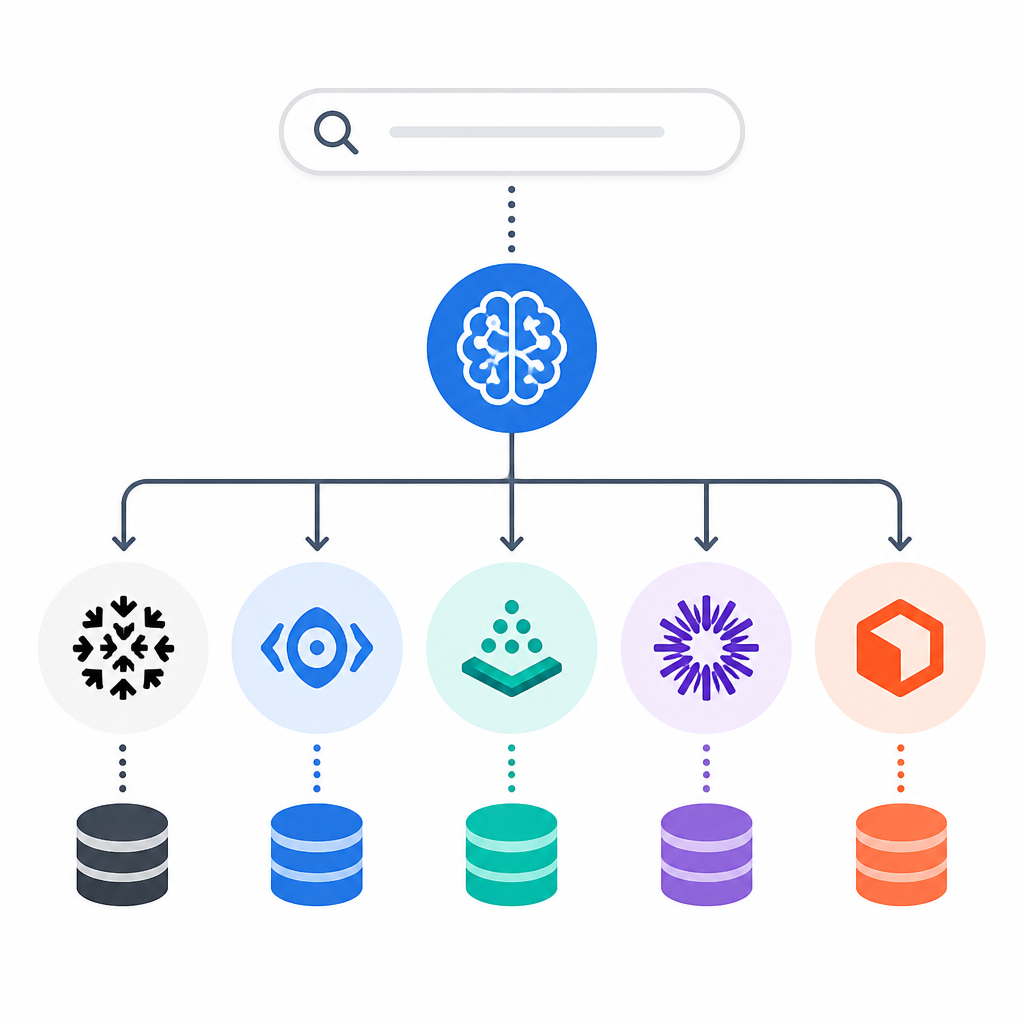
That combination is valuable in enterprise search and personalization products. You are not just asking for “similar documents,” you are asking for “similar documents from this department, for this customer tier, in this language.”
- Strong payload and metadata filters
- Useful for multi-tenant applications
- Works well in semantic search with constraints
4. Weaviate
Weaviate blends vector search with schema support and hybrid retrieval, which helps when keyword search still matters. It is a good match for teams that want semantic ranking without giving up structured fields or classic text search behavior.
That makes Weaviate useful for catalogs, knowledge bases, and discovery tools where users may search both by intent and by exact terms. It can bridge the gap between traditional search expectations and embedding-based retrieval.
Example use cases:
- Product discovery with filters
- Internal knowledge search
- Hybrid keyword plus vector ranking
5. FAISS
FAISS is the most technical option on this list because it is a library, not a full database. Researchers and engineers use it when they want fast approximate nearest neighbor search inside a custom system they control end to end.
That makes FAISS ideal for experimentation, benchmarks, and specialized pipelines where the database layer is being built around it. It is less about convenience and more about precision, speed, and direct control over retrieval behavior.
- Library for similarity search, not a hosted database
- Common in research and custom ML systems
- Best when you need direct algorithm control
How to decide
If you want the least operational work, start with Pinecone. If you need open-source scale and deployment control, Milvus is the safer bet. If filtering and metadata are central to your app, Qdrant is hard to ignore.
If your product needs hybrid search across keywords and embeddings, Weaviate is a strong middle ground. If you are building a custom research pipeline or need a retrieval library rather than a database, FAISS is the most flexible option.
// Related Articles
- [IND]
AI Weekly: 2026-06-29 ~ 2026-07-06
- [IND]
Daily HuggingFace AI Papers keeps research moving
- [IND]
AI Companion Rules and App Rollbacks Explained
- [IND]
Meta’s $182.9B AI bet may need compute sales
- [IND]
DSpark vs MTP methods in one clear comparison
- [IND]
What China’s AI unicorns are saying in 2026