Ricoh’s Weaviate bet points to AI-ready enterprise data
4 takeaways from Ricoh’s Weaviate investment and what it means for turning unstructured data into AI-ready enterprise systems.

Ricoh’s investment in Weaviate shows how enterprises may turn unstructured data into AI-ready systems.
Ricoh’s move into Weaviate is a bet on a practical problem: enterprises sit on huge volumes of scanned files, PDFs, email text, and handwritten notes, but much of it is still hard for AI to use.
| Item | What Ricoh is getting | Main fit |
|---|---|---|
| Weaviate | AI-native vector database for unstructured data | Context-aware AI apps |
| RICOH Innovation Fund | Corporate venture capital backing | B2B startup partnerships |
| Ricoh data capture tech | Scanners, document workflows, capture systems | Enterprise data ingestion |
1. Weaviate’s database is built for unstructured data
Get the latest AI news in your inbox
Weekly picks of model releases, tools, and deep dives — no spam, unsubscribe anytime.
No spam. Unsubscribe at any time.
Weaviate is not being backed as a general software bet. Ricoh is investing in a vector database company that is built to organize unstructured information for AI use, which matters because business knowledge rarely arrives as clean rows and columns.

The release points to scanned documents, PDFs, email text, and handwritten notes as the core problem set. Those formats are common inside enterprises, but they are difficult to query with older data systems, especially when teams want AI to retrieve context instead of just matching keywords.
- Open-source foundation
- Developer-focused integrations
- Designed for reliable AI applications
- Built around context retrieval, not only storage
2. Ricoh wants to connect capture tools to AI systems
Ricoh has spent decades building capture and workplace technologies, so the strategic logic here is clear: take information from the physical and document-heavy world, then make it usable by AI systems. The company says it will explore combining its data capture technology with Weaviate’s context-aware database.
That pairing matters because many enterprise AI projects fail before the model even starts. If the source material is scattered across scans, forms, and inboxes, the system needs a way to structure that material for search, retrieval, and long-term use. Ricoh is trying to own more of that pipeline.
- Document capture to AI-ready data flow
- Potential use in cross-functional knowledge sharing
- Better access to enterprise information held in silos
3. The investment targets agentic AI, not just search
Ricoh and Weaviate are framing the deal around the next stage of enterprise AI: systems that remember context over time. Weaviate says its memory layer helps AI agents retain and use context, which moves it beyond stateless retrieval and closer to persistent business workflows.
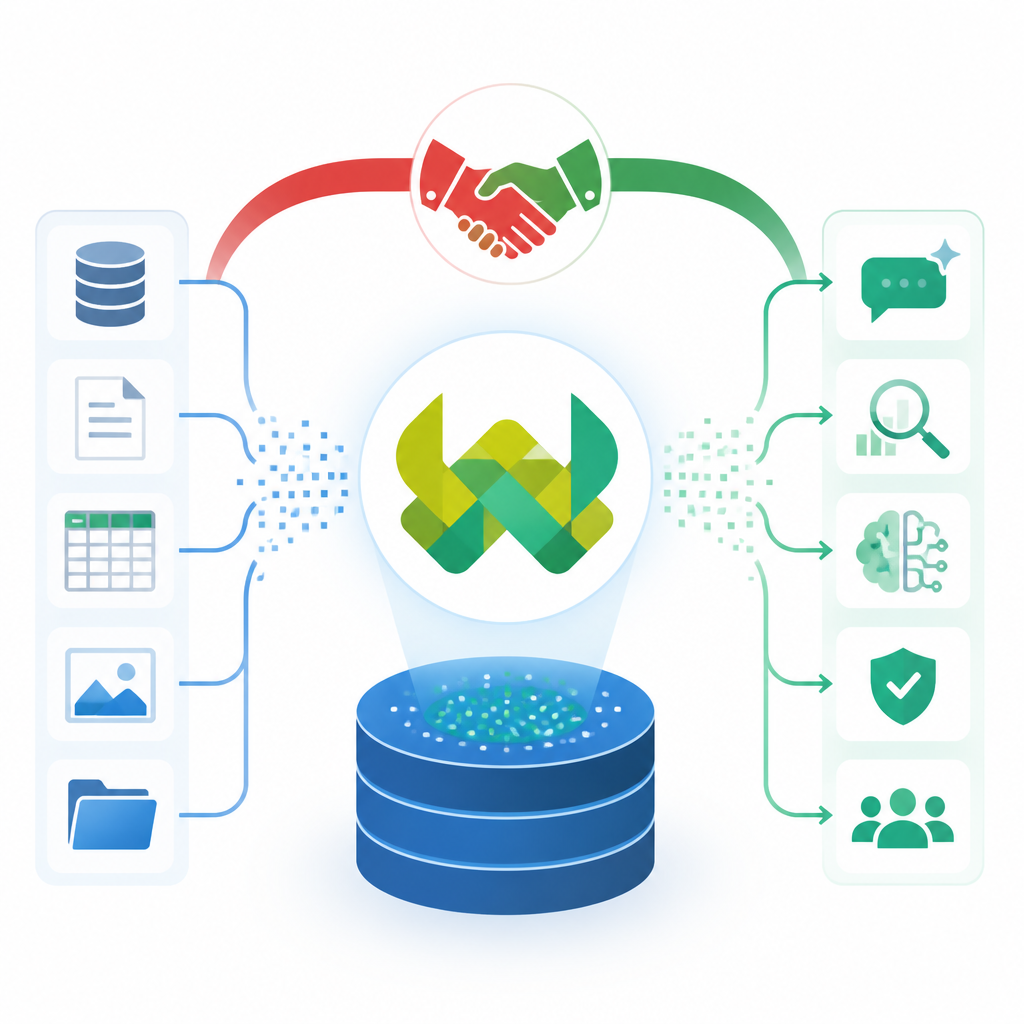
That distinction is important. Search tools can answer a question, but agentic systems need to recall prior interactions, connect related documents, and support longer reasoning chains. For companies trying to automate decisions or support employees with AI assistants, that extra memory is often the difference between a demo and a usable product.
Example workflow:
1. Ingest scanned contract
2. Extract clauses and metadata
3. Store context in vector database
4. Let AI agent reference prior documents
5. Return answers with supporting history
4. The RICOH Innovation Fund is a broader startup strategy
This investment also says something about Ricoh’s corporate venture approach. The company launched the RICOH Innovation Fund in November 2023 to support B2B startups and speed its shift toward digital services. Weaviate is one of the clearest examples yet of that strategy in action.
Rather than trying to build every AI component alone, Ricoh is using the fund to find partners that can extend its core strengths. The release makes that explicit: open innovation, collaboration, and new solutions that can be commercialized for enterprise customers. That is a more practical path than waiting for every capability to be built in-house.
- Fund launched in November 2023
- Focus on B2B startups
- Aims to support Ricoh’s digital services shift
- Designed to create partner-led solutions
5. Weaviate gets a stronger route into Japan and enterprise buyers
For Weaviate, the upside is market access as much as capital. CEO Bob van Luijt said adoption and community engagement are already growing in Japan, and the partnership gives that momentum a larger corporate channel. Ricoh’s brand and customer base can help turn developer interest into enterprise deployment.
The company also gets validation around its open-source model and developer ecosystem. That matters in AI infrastructure, where trust, integration, and community adoption can matter as much as raw technical features. Ricoh is signaling that Weaviate is not just a database vendor, but part of a larger enterprise AI stack.
- Stronger visibility in Japan
- Enterprise distribution through Ricoh relationships
- Validation for open-source AI infrastructure
How to decide
If you are tracking enterprise AI infrastructure, this deal is most relevant if you care about document-heavy workflows, knowledge retrieval, or AI agents that need memory. It is less about a single product launch and more about how physical-world data becomes usable by software.
Choose Ricoh as the company to watch if you want to see how a legacy hardware and workplace-services firm moves into AI services. Watch Weaviate if you want a read on where vector databases fit in the next wave of enterprise AI adoption.
// Related Articles
- [IND]
80% of Q1 2026 VC Went to AI, But Blockchain Is Next
- [IND]
Seed’s anti-distillation rule turns open models into policy
- [IND]
Windows Codex and Claude Code fixes that work
- [IND]
Rust 1.97.1 fixes a compiler bug stable users felt
- [IND]
OpenAI Astra turns math proofs into a workflow
- [IND]
OpenCode Go makes open coding models affordable