RISC-V hobbyists are proving open hardware still rewards obsession
Yuri Zaporozhets shows that open hardware still advances fastest through stubborn, end-to-end hobbyist engineering.

Yuri Zaporozhets shows that open hardware still advances fastest through stubborn, end-to-end hobbyist engineering.
Yuri Zaporozhets is not just building toys for retro-computing nostalgists; he is demonstrating that open hardware still rewards people who are willing to own the whole stack.
His GateMate Personal Computer runs a 25 MHz RISC-V core on a €50 FPGA board, with VGA output, extra PSRAM, a BIOS, and an early OS of his own. That is not a marketing demo. It is a working machine that starts from a cheap board and ends at a usable desktop-like system, which is exactly the kind of proof open hardware needs.
End-to-end control beats narrow specialization
Get the latest AI news in your inbox
Weekly picks of model releases, tools, and deep dives — no spam, unsubscribe anytime.
No spam. Unsubscribe at any time.
The first reason Zaporozhets’ work matters is that he controls the entire path from silicon-adjacent logic to user-facing software. The GateMate PC is not a single clever component dropped into a conventional machine. It combines a soft RISC-V CPU, custom video logic, additional memory, and a homegrown operating system. That matters because the most interesting systems problems live in the seams between those layers, and those seams disappear when one person can change them all.

The same pattern shows up in his miniature mainframe, the System/359. It is not a museum piece and not a compatibility stunt. It borrows the channel I/O model, instruction style, and PSW concepts from IBM’s mainframe lineage while modernizing the rest. That is the real lesson: when one engineer can design the architecture, the assembler, the runtime, and the I/O model, the result is not just a clone. It is a coherent opinion about how a machine should behave.
Old code becomes useful when someone is willing to rewrite it
The second reason is that Zaporozhets treats legacy code as raw material, not sacred text. His QNX 6.4 port to RISC-V began as a direct transplant, then became QRV, a ground-up reworking of the 32-bit codebase into a 64-bit LP64 system. That is the kind of transformation most teams avoid because it is slow, risky, and unglamorous. Yet it is also the only way to make old ideas live on a new architecture without dragging their old constraints along for the ride.
He did not stop at making it boot. QRV reached multi-user login, then a final release after the stated goals were met. That sequence matters more than the novelty of the port itself. Plenty of projects can compile. Far fewer can cross the line into a system that behaves like an OS instead of a lab artifact. Zaporozhets proved that patience plus repeated rewrites can turn obsolete source into a platform for new work.
RISC-V is winning because it invites this kind of experimentation
RISC-V is not just another ISA on the market. It is the first mainstream architecture in decades that actively encourages people to build weird things without asking permission. Zaporozhets’ projects make that visible. A homebrew PC, an FPGA mainframe tribute, and a QNX-derived microkernel port all fit naturally around RISC-V because the ecosystem does not punish experimentation with licensing traps or vendor gatekeeping.
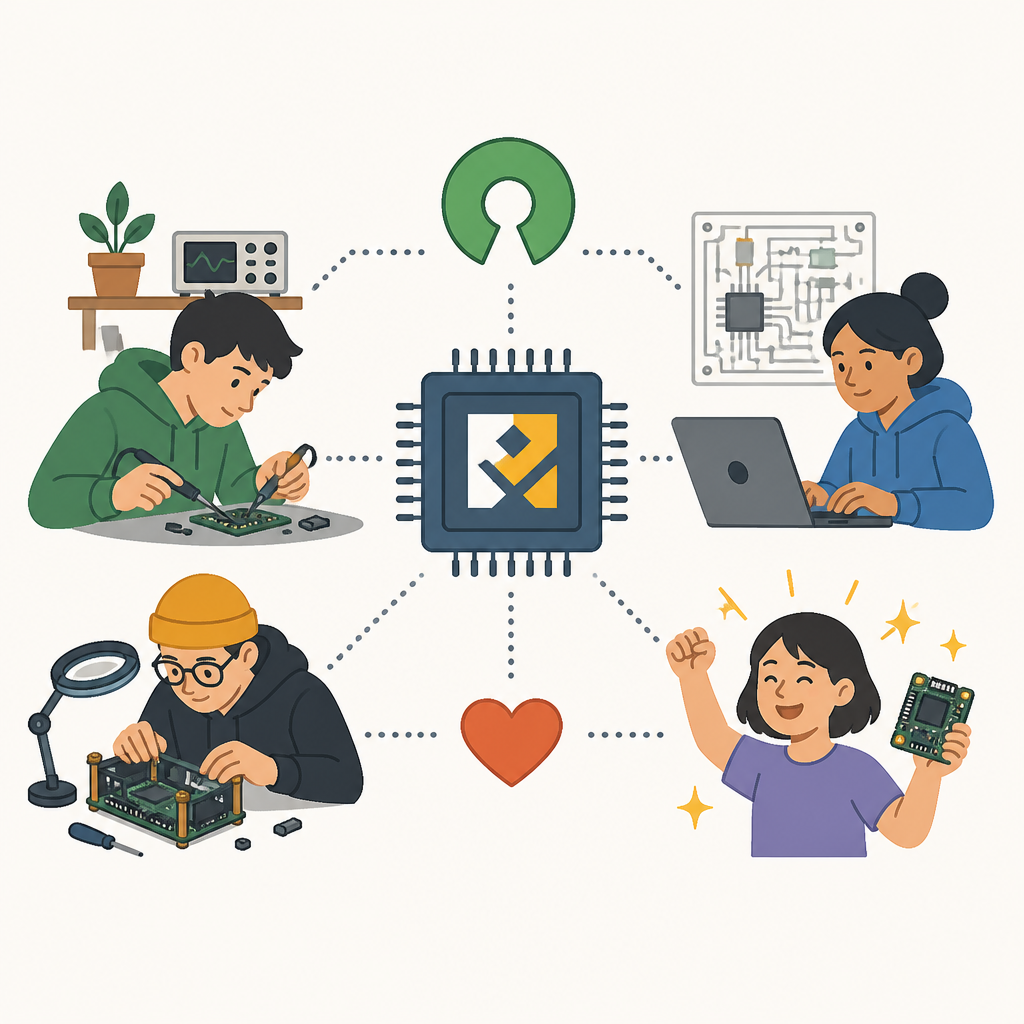
That openness is why his newer QSOE project matters. It ships in two variants, one on a scratch-built microkernel called Skimmer and one on seL4, with a shared userspace and build system. That design is not a gimmick. It shows that once the architecture is open, the operating system can become a place for comparison, substitution, and architectural argument. The point is not that every project should fork itself in two. The point is that RISC-V makes that kind of choice feel normal instead of reckless.
The counter-argument
The strongest objection is that this is all hobbyist theater. Most engineers do not need a custom FPGA PC, a miniature mainframe, or a microkernel fork. They need stable tools, predictable support, and software that ships on time. From that angle, the value of Zaporozhets’ work looks tiny: brilliant, but isolated, with no obvious path to mass adoption.
There is also a fair critique of the process. Zaporozhets uses Claude to help, and his projects span years. That makes the work look less like a clean engineering methodology and more like a personal obsession with a lot of automation assistance. If the output depends on one unusually driven person, then it is hard to claim the result is a repeatable model for the industry.
That criticism is real, but it misses the point. This is not a template for every team. It is evidence that open hardware and open systems still advance through deep curiosity and unusually wide technical ownership. The value is not mass adoption today. The value is that projects like these expand what becomes possible tomorrow. The limitation is scale, not legitimacy.
What to do with this
If you are an engineer, stop treating the hardware, kernel, and toolchain as separate worlds when you evaluate a platform. If you are a PM, prioritize systems that let your team inspect, modify, and replace layers without vendor permission. If you are a founder, back open architectures that reward integration work, because the next durable platform advantage will come from people who can still build the whole machine, not just rent one.
// Related Articles
- [IND]
WorkBuddy Skills: 5 picks that fit real office work
- [IND]
GLM-5.3’s coding gains came from post-training
- [IND]
Anthropic’s data center push now has big capital backing
- [IND]
DailyArxiv turns arXiv keywords into a daily paper feed
- [IND]
Claude vs ChatGPT (2026): Is Claude Better?
- [IND]
CBDC Governance: Standards and Stakeholder Roles