EPAM’s OpenAI deal turns pilots into production
I break down EPAM’s OpenAI partner move and give you a copy-ready template for enterprise AI rollout planning.
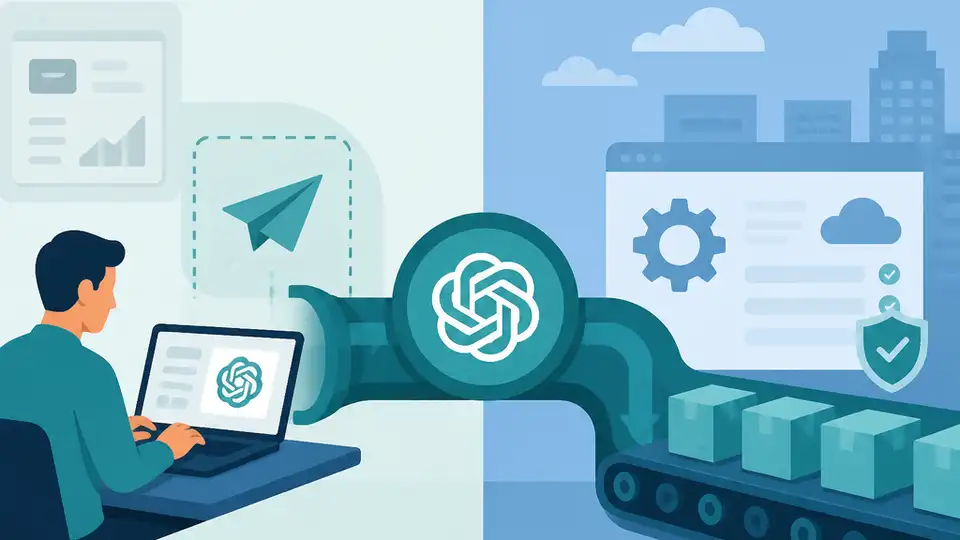
EPAM’s OpenAI partnership shifts enterprise AI from pilots to production.
I’ve been around enough enterprise AI rollouts to know when the pitch sounds nice but the delivery path is fuzzy. You get the demo, the enthusiasm, the “we can absolutely do this,” and then the whole thing stalls in security review, integration hell, and a dozen teams arguing about who owns the data. That’s been the annoying part for me: not the model quality, not even the budget. It’s the gap between “cool prototype” and “something the business can actually run on Monday morning.”
So when I read EPAM’s announcement on PR Newswire, I paid attention for one reason: this is not framed as “look, we have AI.” It’s framed as “we know how to get AI into the messiest parts of enterprise software without blowing up governance, security, or operations.” That’s the real problem. EPAM says it has joined the OpenAI Partner Network as an OpenAI Advanced Partner, and the pitch is very specific: forward-deployed engineers, secure integrations, compliance, and production-ready deployment. That’s the kind of language I trust more than glossy AI theater.
What EPAM is actually selling here
Get the latest AI news in your inbox
Weekly picks of model releases, tools, and deep dives — no spam, unsubscribe anytime.
No spam. Unsubscribe at any time.
“For most organizations, the challenge is no longer identifying where AI can create value but deploying and scaling it securely to deliver business results.”
That line is the whole story. I’ve seen plenty of teams spend months proving AI can help. Nobody doubts that anymore. The pain is getting it into live systems where customer data, audit logs, permissions, and operational dependencies all matter.
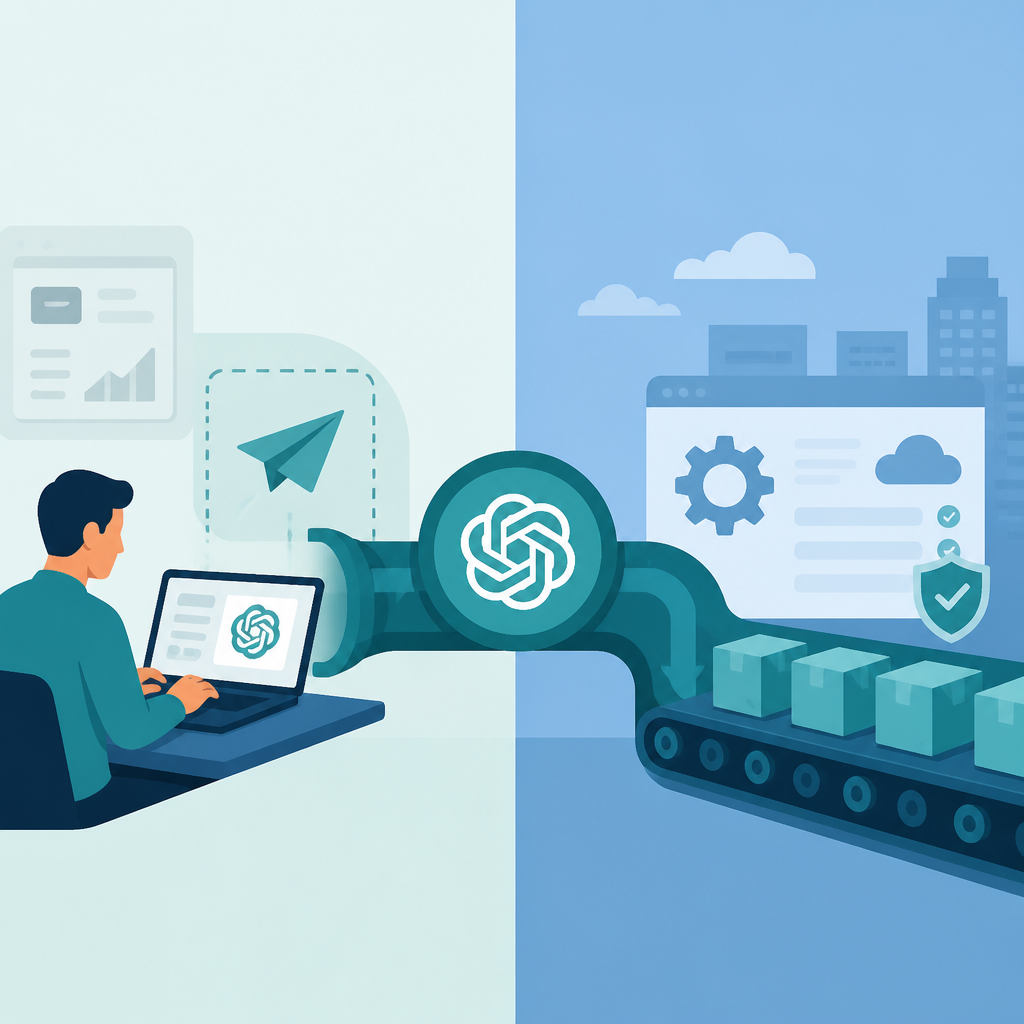
What this actually means is EPAM is not positioning itself as a model vendor. It’s positioning itself as the team that wires OpenAI into real enterprise workflows. That includes applications, internal data, customer service flows, and the governance around all of it. In plain English: they want to be the group that turns “we should use AI” into “here is the thing running in production with guardrails.”
I’ve seen this exact failure mode too many times. A team builds a chatbot, gets a few happy demos, and then legal asks about data retention, security asks about access control, and operations asks who gets paged when the thing goes sideways. Suddenly the prototype is a side project with no owner. EPAM is trying to sell the missing middle: the engineering muscle between promise and rollout.
How to apply it: if you’re evaluating a partner or building this yourself, stop asking first about model choice. Ask where the model will sit, what systems it touches, who can see prompts and outputs, and what happens when the model is wrong. If those answers are vague, you don’t have an AI plan. You have a slide deck.
Forward-deployed engineers are the real product
EPAM keeps coming back to “forward-deployed engineering,” and that phrase matters more than the model name. Forward-deployed engineers are the people who sit close to the business problem, not in some abstract platform team room. They’re the ones who translate “make support faster” into routing logic, retrieval layers, approval steps, and fallback paths.
EPAM says its engineers will integrate OpenAI models into new and existing operations and address industry-specific compliance and security requirements. That’s not a minor detail. That’s the work. If you’ve ever tried to move an AI proof of concept into a regulated environment, you know the actual blockers are boring and relentless: identity, logging, data boundaries, retention, escalation, and change management.
I ran into this when a team wanted an internal assistant for customer operations. The demo worked fine. The model answered policy questions, summarized cases, and suggested next steps. Then we hit the real world: half the answers needed current account context, some data was restricted by region, and the compliance team wanted a trail for every suggestion. The model was never the issue. The integration was.
EPAM’s angle is that it already has the engineering discipline around secure enterprise deployment and AI-native SDLCs. If that’s true in practice, it’s valuable because enterprises don’t need more AI enthusiasm. They need someone who can ship under constraints without pretending the constraints are optional.
- Map the business process first, not the model.
- Assign one owner for security, one for data, and one for operations.
- Build logging and fallback behavior before launch.
How to apply it: if you’re staffing an AI project, don’t just hire prompt people. Bring in engineers who can own integration, observability, access control, and rollout. If a vendor can’t explain how they work with your existing systems, they’re not ready for enterprise work. They’re still in demo mode.
Security and governance are not afterthoughts
The announcement says EPAM will help organizations connect OpenAI models to applications, data, and workflows while meeting security, governance, and regulatory requirements. That’s the sentence I’d underline if I were reviewing this for an enterprise client. It’s the difference between “we tried AI” and “we can defend this in a review meeting.”
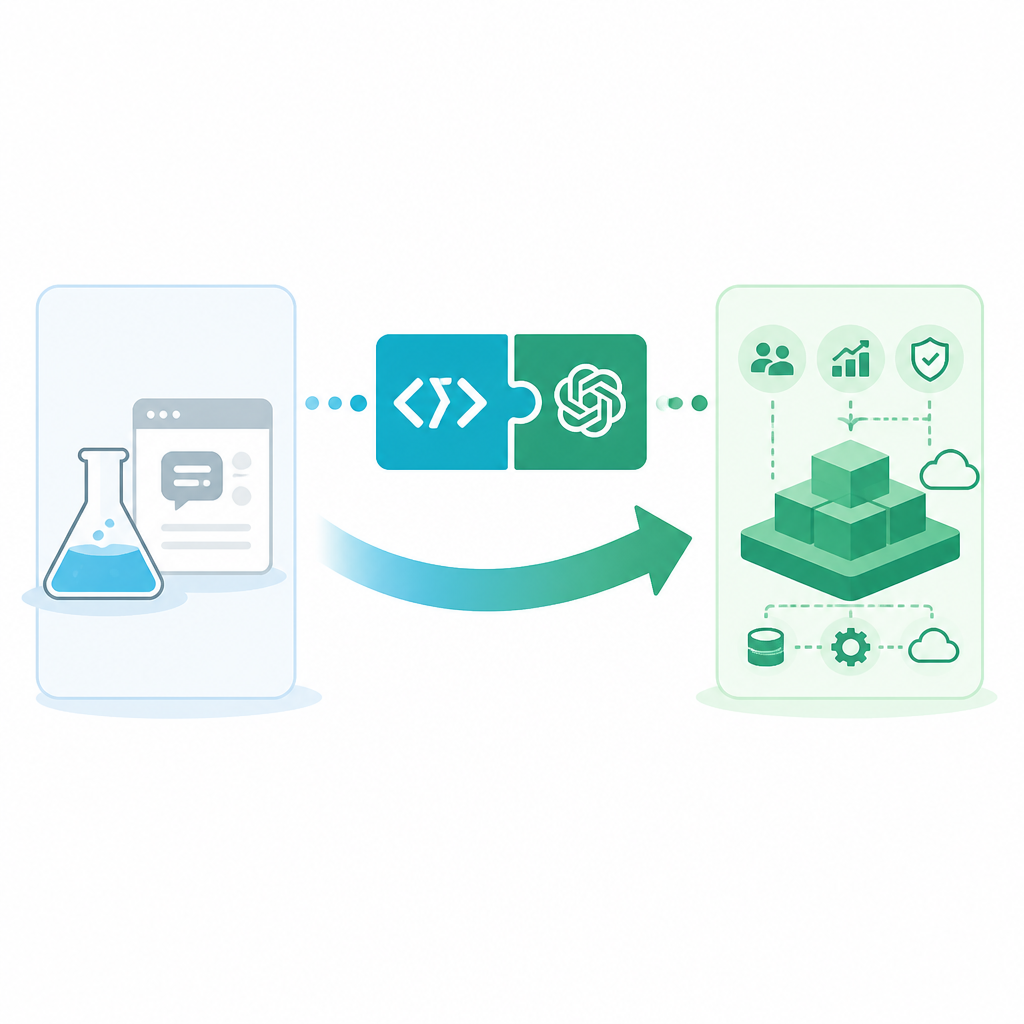
OpenAI itself is pushing the partner network as a way to help enterprises move from pilots to measurable business impact. That makes sense, because most pilots die in the handoff from innovation team to production team. The innovation team wants speed. The production team wants control. If nobody bridges that gap, the project just sits there, polished and useless.
What this actually means is you need a deployment pattern that assumes failure modes from the start. Not because AI is uniquely broken, but because enterprise software always has failure modes. The model can hallucinate, sure. But the bigger risk is usually operational: wrong access scope, missing auditability, stale knowledge, or an integration that leaks context into the wrong place.
I’ve had more than one security review where the AI discussion got weirdly abstract. People argued about whether the model was “trustworthy” while nobody could answer basic questions like where prompts were stored or whether output was tied to a user identity. That’s the stuff that matters. Security teams don’t want metaphors. They want controls.
How to apply it: write your AI governance checklist before you write your prompt library. Include data classification, prompt retention, output review, access boundaries, human escalation, and incident response. If you can’t explain those in one page, your deployment is too vague for production.
- Define what data the model can see.
- Define what the model can never see.
- Define who approves model changes.
- Define what gets logged and for how long.
The 5,000-consultant claim is about scale, not bragging
EPAM says it will certify more than 5,000 consultants with 10,000+ credentials in the first year. I’m not interested in the number as a vanity metric. I’m interested in what it signals: they want distributed delivery capacity, not a tiny elite AI team that gets booked solid for six months and becomes a bottleneck.
That matters because enterprise AI work doesn’t scale through one genius team. It scales through repeatable patterns and enough trained people to execute them. If you only have three specialists who understand the stack, every project becomes a custom snowflake. And custom snowflakes are how budgets disappear.
What this actually means is EPAM is trying to industrialize implementation. The certifications are a way to make sure more people can do the same type of work with the same guardrails. That’s boring, and it’s also exactly what enterprises need. I’d rather have a thousand competent engineers working from a playbook than a dozen AI celebrities making heroic saves.
I’ve seen organizations fail here when they treat AI as a center-of-excellence problem only. The CoE becomes a priesthood. Every request has to go through them. The business gets impatient, builds shadow tools, and then you have governance theater instead of governance. If EPAM can actually spread the skill set through its delivery network, that’s a practical advantage.
How to apply it: build a training path that covers architecture, data handling, prompt design, evaluation, and release management. Don’t stop at “how to use the model.” Train people on how to ship a service that uses the model without creating a support nightmare.
The 1&1 example is the part I trust most
EPAM points to 1&1, a telecommunications provider, as proof that it can move from strategy to production. The company says the platform now handles a considerable share of customer calls per week through 20+ intelligent AI agents, with the first production deployment completed in under three months.
That is the kind of detail I look for. Not because every enterprise should copy the telecom setup, but because it shows a path from concept to live traffic. A lot of AI vendors talk about “transformation” and never mention a real system that took real load. Here, the story is customer service, agent orchestration, production deployment, and speed.
What this actually means is the partnership is being used as a proof point for operational AI, not just experimentation. If you’re in enterprise software, that’s the bar. Can it handle actual demand? Can it reduce manual work? Can it be maintained by the people who already own the business process?
I’ve worked on customer support systems long enough to know how ugly these launches can get. Call routing is messy. Knowledge is fragmented. Edge cases are endless. If you can get an AI layer to help there, you’ve done real work. If you can do it in under three months, that tells me your delivery model is disciplined, not improvised.
How to apply it: when you evaluate an AI partner, ask for one production example with timelines, traffic type, and operational ownership. If they only show demos, ask harder questions. Production is where the truth lives.
What I’d copy from this partnership, and what I wouldn’t
I’d copy the focus on integration, governance, and deployment discipline. I would not copy the habit of talking about “higher value” without being specific about the business process. That phrase is fine for a press release, but in real work I want to know exactly what gets faster, cheaper, safer, or better.
The useful pattern here is simple: pair model access with engineering ownership. If you have the model but no delivery muscle, you get experiments. If you have delivery muscle but no model access, you get a consulting deck. EPAM is trying to sit in the middle and make the whole thing operational.
That’s also why this announcement matters to developers. It’s not about whether OpenAI is good or whether EPAM is big. It’s about a repeatable enterprise pattern: connect frontier models to existing systems, wrap them in controls, and make them useful in production. That’s the job.
How to apply it: use this announcement as a checklist for your own rollout. If your current AI plan doesn’t include workflow integration, security review, governance, training, and production ownership, it’s incomplete. You don’t need more excitement. You need a shipping plan.
The template you can copy
# Enterprise AI rollout template inspired by EPAM + OpenAI

## 1) Business outcome
- Problem to solve:
- Team owning the workflow:
- Current process pain:
- Target improvement:

## 2) System scope
- Application(s):
- Data sources:
- User roles:
- Regions / regulatory constraints:

## 3) Model usage
- Model provider:
- Model tasks:
- Inputs allowed:
- Inputs blocked:
- Output types:

## 4) Security and governance
- Identity and access control:
- Prompt/output retention policy:
- Audit logging requirements:
- Human approval steps:
- Escalation path for bad outputs:

## 5) Integration plan
- APIs / services to connect:
- Workflow entry point:
- Fallback behavior if model fails:
- Rate limits / cost guardrails:

## 6) Delivery model
- Forward-deployed engineer owner:
- Product owner:
- Security owner:
- Data owner:
- Operations owner:

## 7) Pilot to production
- Pilot scope:
- Success metrics:
- Production readiness checklist:
- Rollout phases:
- Support model after launch:

## 8) Training plan
- Roles to certify:
- Skills to cover:
- Internal docs to produce:
- Review cadence:

## 9) Production proof
- One real workload:
- Traffic volume:
- Time to first release:
- Operational lessons learned:

## 10) Decision gate
If the system cannot explain:
- what data it can see,
- who owns it,
- how it is audited,
- and how it fails safely,
then it is not ready for production.
That template is the part I’d actually use. It forces the conversation out of “AI strategy” land and into the things that decide whether the thing ships. If you fill that out honestly, you’ll find out fast whether your project is real or just well-branded.
Source attribution: I based this breakdown on EPAM’s press release on PR Newswire and EPAM’s own partnership framing. The interpretation, structure, and template above are mine, not copied from the release.
Original source: https://www.prnewswire.com/news-releases/epam-and-openai-partner-to-help-enterprises-unlock-higher-value-through-applied-ai-302835746.html. Related references: OpenAI Partner Network, EPAM, and 1&1.
// Related Articles
- [AGENT]
Prompt engineering is overrated for Claude Code
- [AGENT]
Grok Build adds live previews and rewind fixes
- [AGENT]
Kimi K3 Benchmark Evaluation Guide for Coding Agents
- [AGENT]
Meta’s first paid model proves AI coding is now a price war
- [AGENT]
Claude Code turns chat into terminal work
- [AGENT]
Decentralized AI compliance should be built into agent rails, not bol…