SDLC explained: the 7 phases and key models
IBM breaks down SDLC into seven phases, from planning to maintenance, and shows why testing discipline affects cost and quality.

SDLC is the seven-phase process teams use to plan, build, test, deploy, and maintain software.
Software testing can account for almost 33% of system development costs, which is why teams care so much about when and how they test. IBM’s guide on the software development lifecycle argues that the right process saves money twice: once during delivery, and again after launch when bugs are harder to fix.
| SDLC fact | Value | Why it matters |
|---|---|---|
| Testing share of development cost | Almost 33% | Testing policy has a direct budget impact |
| Core SDLC phases | 7 | Teams use them to structure delivery |
| Deployment style in some models | Continuous | DevOps treats release as an ongoing flow |
| Early release option | Beta before GA | Teams can validate software with limited users first |
SDLC is a process for reducing guesswork
Get the latest AI news in your inbox
Weekly picks of model releases, tools, and deep dives — no spam, unsubscribe anytime.
No spam. Unsubscribe at any time.
At its core, SDLC is a structured and iterative method for building software that people can actually use. The point is not to create paperwork for its own sake. It is to turn a messy idea into a series of decisions that developers, product managers, testers, and business stakeholders can all inspect.
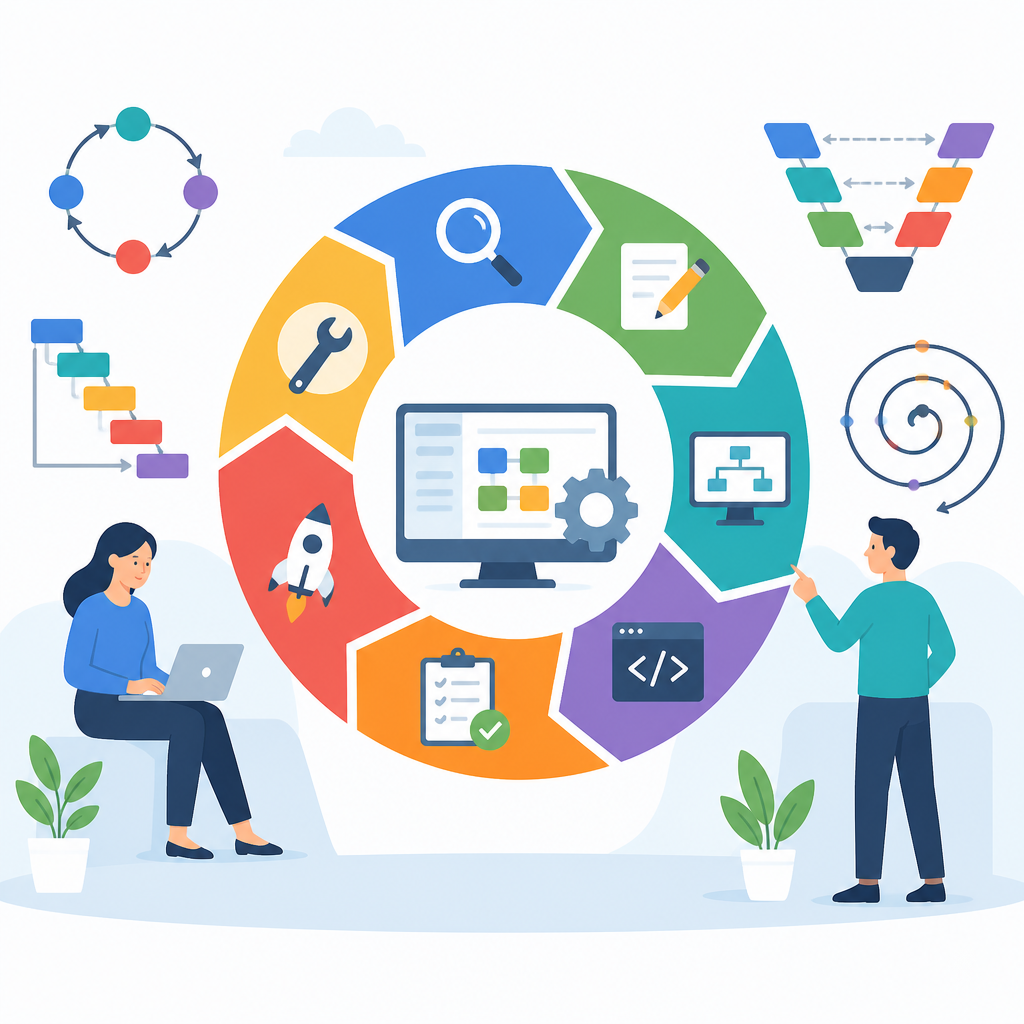
IBM’s framing is practical: each phase has a job, each job produces a deliverable, and each deliverable feeds the next step. That matters because software projects fail for boring reasons more often than dramatic ones. Requirements drift. Dependencies get missed. Testing gets squeezed. Documentation disappears. SDLC gives teams a way to notice those problems before they turn into expensive rework.
That structure also helps with planning. If a team knows what it is building, who will use it, and how it fits into the rest of the organization’s systems, it can estimate cost and timing with less hand-waving. It can also spot risk earlier, which is where a lot of money gets saved.
- Planning defines scope and goals before code starts piling up.
- Analysis turns business needs into technical requirements.
- Design maps the architecture, interfaces, and dependencies.
- Coding, testing, deployment, and maintenance turn the plan into a real product.
The seven phases are simple on paper and messy in practice
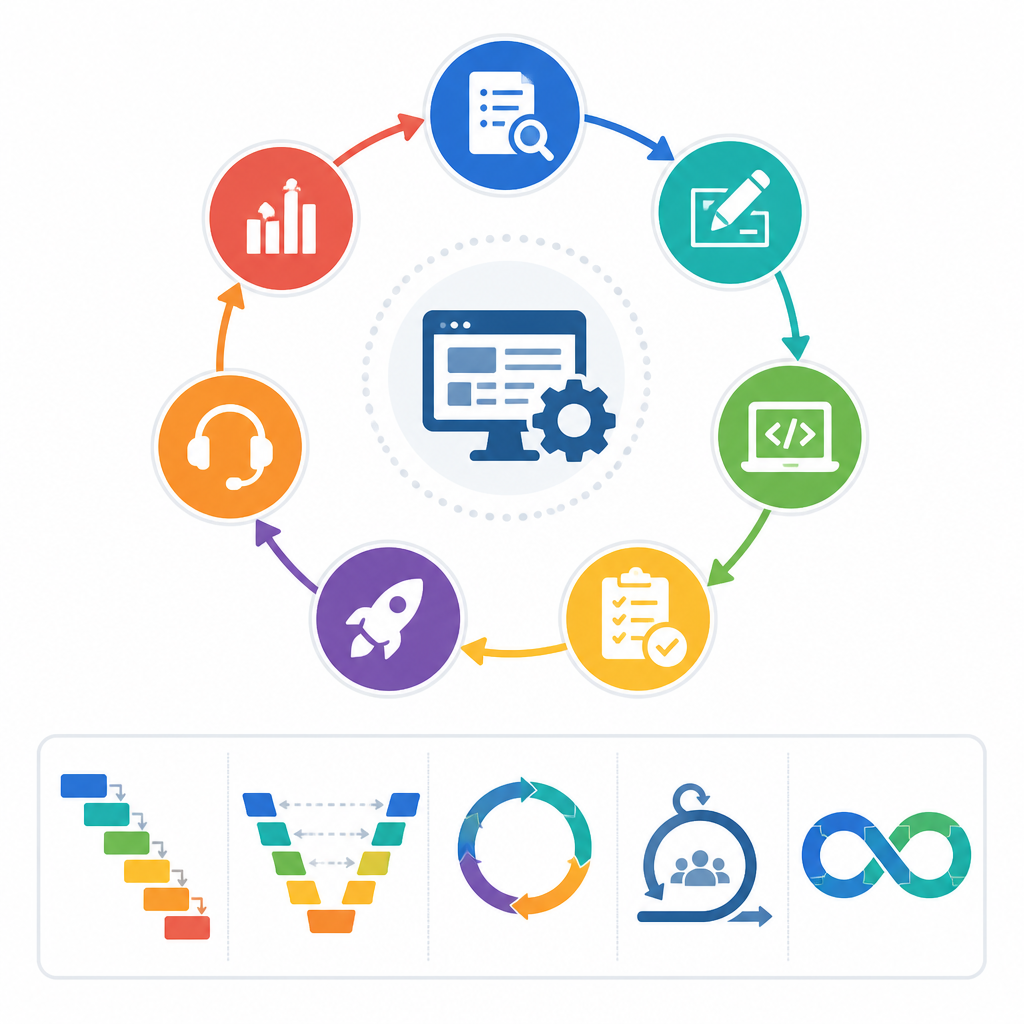
IBM groups SDLC into seven phases: planning, analysis, design, coding, testing, deployment, and maintenance. That sounds tidy, but real teams rarely move through them like a school diagram. Some work happens in parallel, some gets revisited, and some changes after users see a prototype.
Planning starts with the problem statement. Analysis pulls in requirements, data, feasibility checks, and constraints. Design translates those inputs into architecture, user flows, databases, and security decisions. Coding builds the working software. Testing looks for defects and security issues. Deployment puts the product in front of users. Maintenance keeps it alive after release.
The important thing is not memorizing the labels. It is understanding the handoff between phases. A weak planning phase creates vague requirements. Weak analysis creates scope creep. Weak design creates brittle systems. Weak testing creates support tickets. Weak maintenance creates software that slowly falls apart.
IBM also points out that developers may use generative AI during planning, analysis, design, coding, and testing. That is where the process gets more interesting, because AI can speed up drafting, prototyping, test generation, and pattern detection, but it does not remove the need for judgment. In practice, it shifts where humans spend time.
“The software development lifecycle is a structured and iterative methodology used by development teams to build, deliver and maintain high-quality and cost-effective software systems.” — IBM
Testing is where budgets and reality collide
The article’s most useful warning is about testing. Teams often try to save time by testing less, then pay for it later when users find bugs, performance issues, or security holes. The opposite mistake is just as common: overtesting before launch and slowing delivery without adding much value.
IBM says many teams use unit testing, integration testing, system testing, and acceptance testing to check that software works inside the wider IT environment. That is a good reminder that software rarely lives alone. It has APIs, databases, identity systems, compliance rules, and operational constraints around it.
Continuous testing changes the rhythm. Instead of waiting until the end, teams test throughout development. In DevOps setups, code can be continuously integrated, continuously tested, and continuously deployed. That shortens feedback loops, which is usually where the real quality gains come from.
- Unit testing checks small pieces of code in isolation.
- Integration testing checks how parts work together.
- System testing checks the whole product in context.
- Acceptance testing checks whether the software meets user and business needs.
Model choice changes how the phases behave
SDLC is not one method. It is a framework that can be expressed through different models. IBM lists waterfall, V-model, agile, lean, iterative, spiral, big bang, and rapid application development (RAD). That variety matters because each model changes the order, speed, and level of feedback in the process.
Waterfall is linear: one stage ends before the next begins. Agile is more iterative, with phases that can overlap. DevOps pushes even further by treating development and operations as one continuous loop. If requirements are stable and the project is well understood, a more sequential model may work. If the product is still being discovered, an iterative model usually gives the team more room to learn.
The deciding factors are usually boring but decisive: how clear the requirements are, how complex the project is, how experienced the team is, and how much change the organization can tolerate. Those questions matter more than model branding. A team that picks the wrong process often blames the tooling, when the real issue is that the process did not match the problem.
- Waterfall fits projects with fixed requirements and clear handoffs.
- Agile fits work that needs frequent feedback and change.
- DevOps fits teams that want development and operations to move together.
- RAD fits teams that need fast prototypes and quick user feedback.
What SDLC means for teams shipping software now
The strongest part of IBM’s explanation is that SDLC is less about theory and more about discipline. Teams that treat the process as a checklist usually get the weakest results. Teams that treat it as a living system for making tradeoffs tend to ship better software with fewer surprises.
That is especially true now that AI tools are entering planning, coding, and testing. They can draft requirements, generate code snippets, and propose test cases, but they also make it easier to move too fast and miss context. The teams that win will be the ones that keep the phases visible and the feedback loops short.
If you are choosing an SDLC model today, the practical question is simple: do you need predictability, or do you need room to learn? If you answer that honestly, the rest of the process gets much easier to design.
For readers comparing delivery methods, our breakdown of waterfall vs. agile is the next useful step.
// Related Articles
- [IND]
GLM-5.3’s coding gains came from post-training
- [IND]
Anthropic’s data center push now has big capital backing
- [IND]
DailyArxiv turns arXiv keywords into a daily paper feed
- [IND]
Claude vs ChatGPT (2026): Is Claude Better?
- [IND]
CBDC Governance: Standards and Stakeholder Roles
- [IND]
Invisible AI watermarks are the right move for Claude