The SEC Crypto Rule Proposal Will Clean Up Crypto, Not Kill It
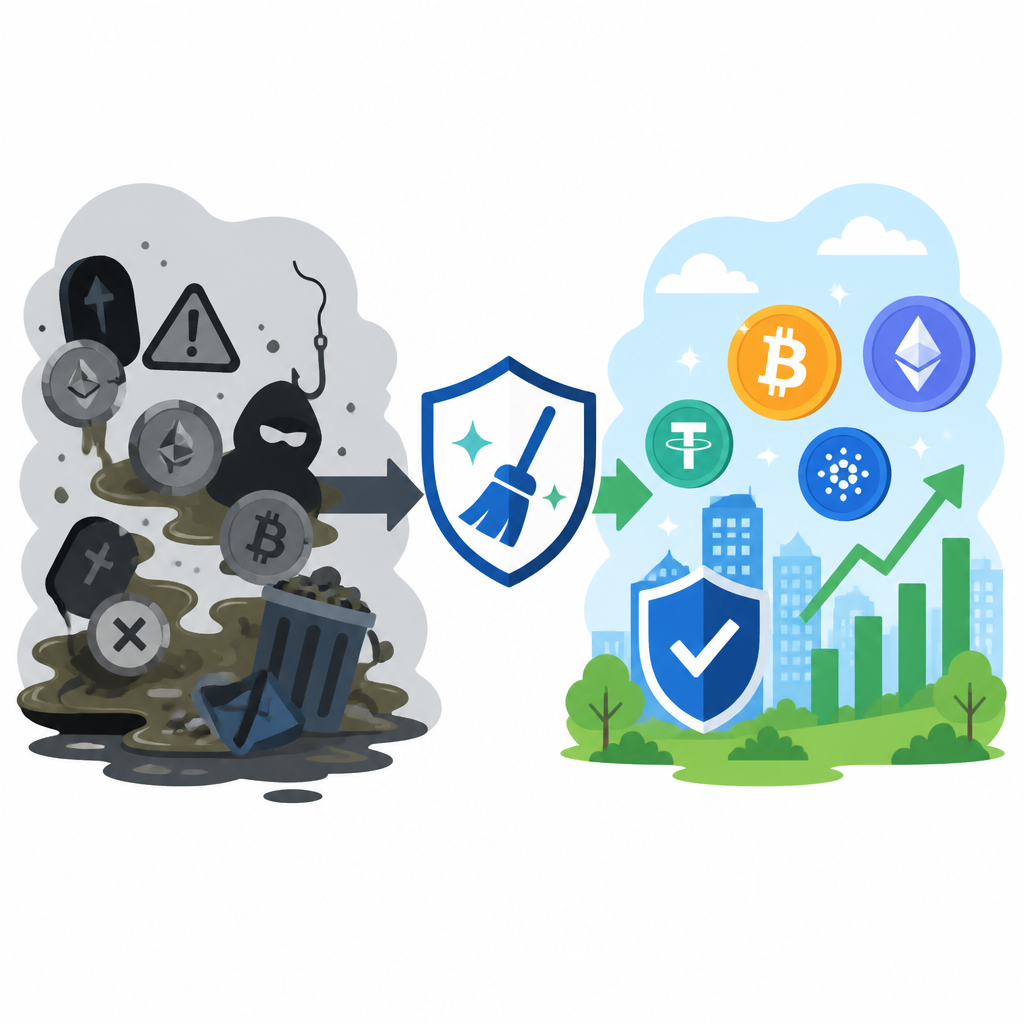
The SEC crypto rule proposal will tighten the market, and that is the right outcome for crypto in 2026.

2026 SEC rulemaking will force crypto firms to register, disclose, and custody like real financial businesses.
That is the right move. The SEC crypto rule proposal is not a symbolic memo or a press release with legal theater attached; it is a push to drag crypto closer to the rules that already govern brokers, exchanges, custodians, and issuers in every other serious market. If a platform holds customer assets, lists tradable instruments, or sells exposure to a token with fundraising claims, it should answer basic questions about control, disclosure, segregation, and risk. The industry has spent years treating those questions as optional. The proposal makes them mandatory.
First argument: crypto has earned the scrutiny
Get the latest AI news in your inbox
Weekly picks of model releases, tools, and deep dives — no spam, unsubscribe anytime.
No spam. Unsubscribe at any time.
Crypto did not become a trillion-dollar asset class by staying small and experimental. It became systemically relevant while operating in a patchwork of enforcement actions, state licenses, offshore entities, and creative legal labels. That is not a stable regulatory model. When a retail user deposits assets into an exchange, the user is relying on custody, solvency, internal controls, and market integrity, whether the platform calls itself a broker, venue, or app. The SEC is responding to a real market structure, not inventing one.

The clearest proof is the repeated collapse pattern. From exchange failures to token treasury misuse to opaque lending products, the industry has produced enough damage to justify a rulebook that starts with investor protection instead of after-the-fact litigation. A market that can route billions through a handful of intermediaries cannot be governed by vibes and white papers. If crypto wants mainstream capital, it must accept mainstream supervision.
Second argument: clarity helps the good actors
The strongest crypto companies are already spending heavily on compliance because institutional customers demand it. They know that custody standards, audit trails, listing policies, and disclosure controls are not bureaucratic decoration. They are sales infrastructure. The SEC proposal gives those firms a cleaner path to compete on trust rather than on how well they can exploit ambiguity. That matters because ambiguity rewards the worst operators, not the best builders.
Look at how traditional finance works. A broker-dealer does not get to improvise asset segregation rules because it believes innovation should be exempt from paperwork. A custodian cannot casually mix client assets and promise to sort it out later. Crypto has asked to be treated as financial infrastructure, and financial infrastructure comes with obligations. If the proposal forces exchanges and token issuers to narrow their business models, that is not a loss of innovation. It is the removal of hidden leverage and hidden risk.
The counter-argument
The best objection is that the SEC is trying to force a software-native market into a securities framework built for stocks, bonds, and intermediaries. DeFi protocols do not always have a clear operator. Some tokens are closer to commodities, collectibles, or network fuel than to investment contracts. If the SEC overextends, it will push development offshore, chill open-source work, and leave U.S. users with fewer choices while activity migrates to less transparent venues.
That concern is real, and it is strongest where the proposal tries to reach pure protocol behavior with no meaningful controlling party. A smart contract that runs without a promoter, custodian, or centralized fee collector is not the same thing as a brokerage desk. But that limit does not defeat the proposal. It defines it. The SEC should regulate the human and corporate chokepoints where customer harm actually happens: listings, custody, disclosures, fundraising, and front-end control. That is enough to improve the market without pretending every line of code is a securities firm.
What to do with this
If you are an engineer, PM, or founder, stop designing as if regulatory ambiguity is a permanent feature. Map every product flow to a control point: who holds assets, who can change rules, who benefits from fees, who makes disclosures, and who can freeze or redirect funds. If you cannot answer those questions cleanly, the SEC proposal is already your problem. Build for registration, auditability, and segregation now, because the firms that survive this shift will be the ones that treat compliance as architecture, not cleanup.
// Related Articles
- [CHAIN]
Web3 platforms need fee discipline, not token theatrics, to make money
- [CHAIN]
Riyadh’s blockchain show proves Web3 is now infrastructure
- [CHAIN]
Web3 game developers turn stacks into ecosystems
- [CHAIN]
Layer 2 is changing blockchain payments for banks
- [CHAIN]
Ethereum.org’s app list turns discovery into a map
- [CHAIN]
Celestia’s Fibre push targets 1 Tb/s blockspace