SGLang is winning because inference is the product
SGLang’s rise shows LLM serving has become the product layer that decides model economics.

400,000 GPUs now run SGLang because inference economics decide who ships.
SGLang is not just another serving framework; it is the clearest proof that inference infrastructure has become the real battleground in AI.
First argument: throughput now defines competitive advantage
Get the latest AI news in your inbox
Weekly picks of model releases, tools, and deep dives — no spam, unsubscribe anytime.
No spam. Unsubscribe at any time.
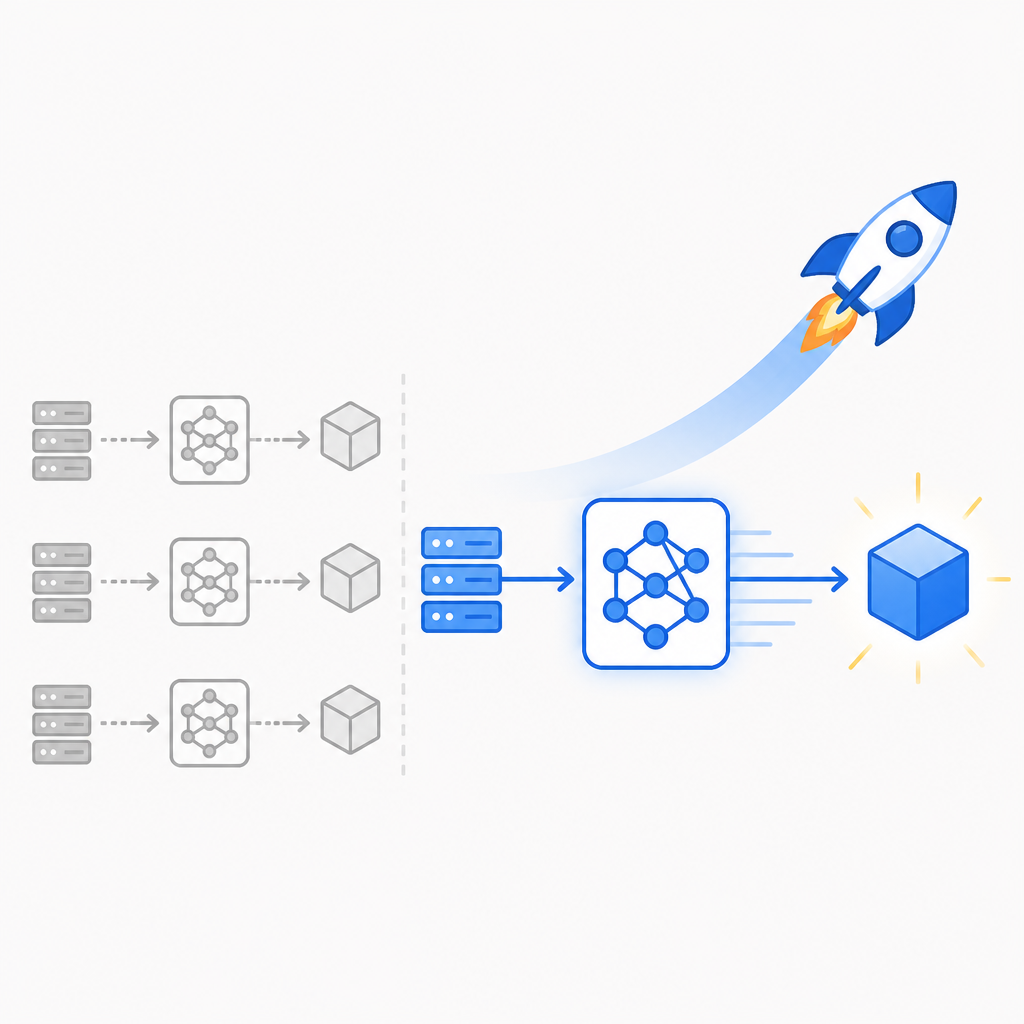
The headline numbers are impossible to ignore. SGLang says it powers trillions of tokens per day in production, and that scale only exists when a serving stack is fast enough to turn model demand into reliable revenue. In practice, a framework that can shave latency and raise decode throughput is not an optimization layer, it is the difference between a model that is economically usable and one that is not.

The release history backs that up. SGLang has repeatedly shipped features aimed at the same bottleneck: RadixAttention, zero-overhead batch scheduling, prefill-decode disaggregation, speculative decoding, and chunked prefill. Those are not cosmetic additions. They are a direct response to the fact that every extra millisecond in the serving path compounds across millions of requests, and every extra token per second lowers the cost floor for the business.
Second argument: breadth of hardware support is now a strategic moat
One of SGLang’s strongest signals is that it runs across NVIDIA GPUs, AMD GPUs, Intel Xeon CPUs, Google TPUs, and Ascend NPUs. That matters because the market no longer rewards single-vendor purity. Enterprises want leverage over procurement, cloud choice, and deployment risk, and a framework that spans those environments becomes infrastructure rather than a niche runtime.
The adoption list shows why that breadth matters. SGLang is used by xAI, AMD, NVIDIA, Intel, LinkedIn, Oracle Cloud, Google Cloud, Microsoft Azure, AWS, and others, which means the framework is not surviving on a single ecosystem’s momentum. It is being pulled into production by organizations that have different hardware stacks, different compliance constraints, and different cost curves. That is the kind of distribution that turns a tool into a standard.
The counter-argument
The obvious objection is that serving frameworks are interchangeable plumbing. Model quality, not inference engines, still decides user value, and the fastest runtime in the world cannot rescue a weak model. There is truth in that view. If the model is bad, no amount of scheduler magic will make users stay.
There is also a valid concern that the field is fragmenting. vLLM, TensorRT-LLM, and other stacks already cover much of the same territory, while vendors keep adding proprietary optimizations that can erode the importance of a general-purpose open-source layer.
That counter-argument stops short of the real market dynamic. Model quality gets attention, but serving efficiency sets the economics of deployment, and economics decide which models reach scale. SGLang’s adoption across frontier labs, cloud providers, and hardware vendors shows that teams are choosing the stack that makes high-volume inference practical, not merely possible. Interchangeable plumbing does not attract this much production traffic or this many ecosystem bets.
What to do with this
If you are an engineer, treat inference as a first-class product surface and benchmark serving stacks with your real traffic, not synthetic demos. If you are a PM or founder, stop thinking of model selection as the whole decision and start measuring cost per token, latency under load, and hardware flexibility as core business metrics. The winners in AI will be the teams that can ship models cheaply, quickly, and on whatever hardware the market gives them.
// Related Articles
- [TOOLS]
Databricks lets you query foundation models
- [TOOLS]
Redmi Note 17 turns mid-range into battery bulk
- [TOOLS]
GitHub Copilot SDK lets apps run agents
- [TOOLS]
Foundry lets you ship agents without rewrites
- [TOOLS]
Kimi K2.6 turns a prompt into brand sites
- [TOOLS]
Cloudflare One partner program speeds AI security rollout