Stablecoin Payments Are Faster, But Fees Lag
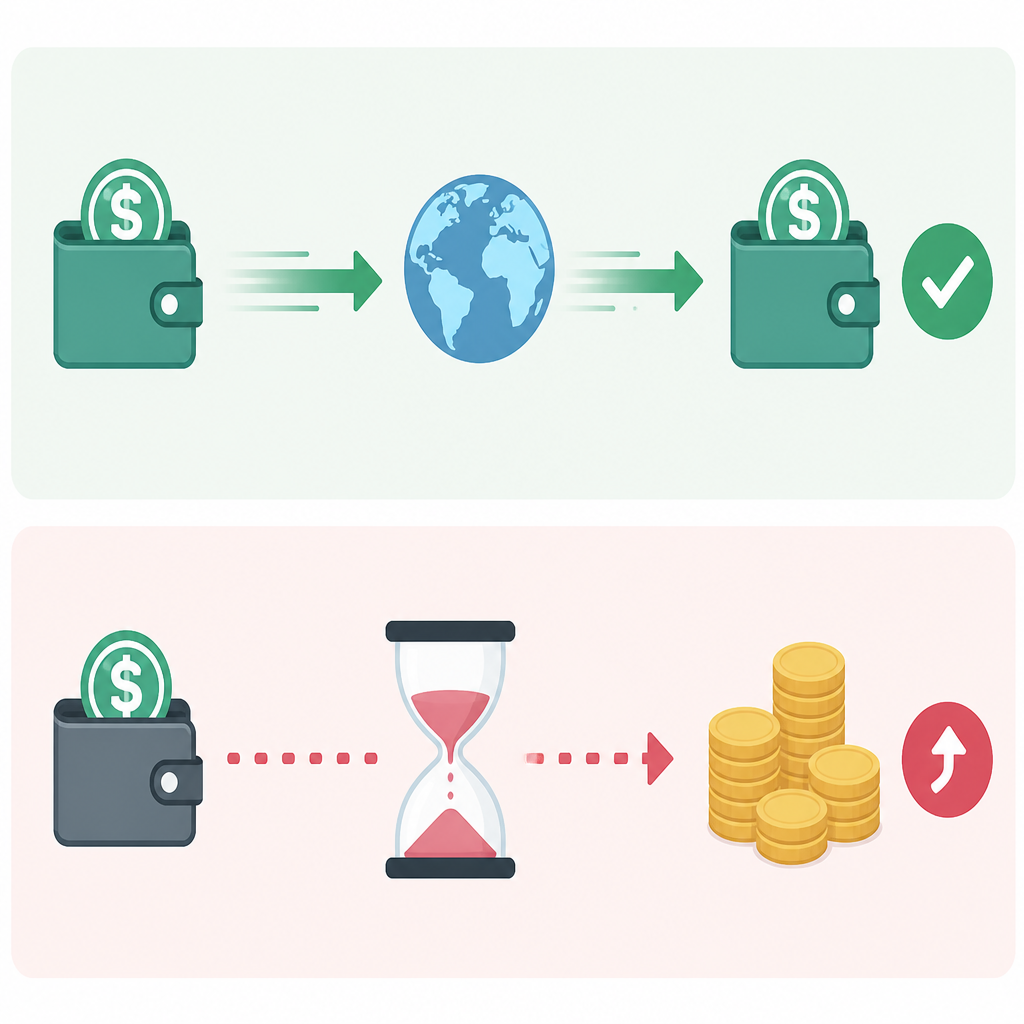
Stablecoins can move cross-border payments faster, but deep liquidity is still missing, so big fee savings are not fully there yet.

Stablecoins can speed up cross-border payments, but the cheapest pricing is still limited by thin liquidity.
Stablecoin rails can cut the time it takes to move money across borders, but the economics are not fully there yet. FX brokers often charge 60 to 70 basis points on cross-border supplier payments, while stablecoin advocates point to a target range of 2 to 5 basis points.
The catch is simple: price compression only works when markets are deep enough to absorb large flows without slippage. That is the part the industry has not built at scale, even as Circle, Tether, and payment-focused crypto firms keep pushing stablecoins into real business workflows.
The cost gap is real, but the plumbing is missing
Get the latest AI news in your inbox
Weekly picks of model releases, tools, and deep dives — no spam, unsubscribe anytime.
No spam. Unsubscribe at any time.
For a supplier payment business, a move from 60 to 70 basis points down to 2 to 5 basis points sounds dramatic because it is. On a $100,000 transfer, 70 basis points means $700 in fees, while 5 basis points means $50. That is a real savings story.

But fee quotes are not the whole bill. Cross-border transfers also pick up spread, slippage, off-ramp fees, compliance costs, and the operational cost of holding inventory in multiple currencies. Stablecoins can reduce some of those line items, yet they do not erase them.
- FX broker fee range in the source: 60 to 70 basis points
- Stablecoin fee target in the source: 2 to 5 basis points
- Example savings on a $100,000 payment: about $650 at the midpoint
The missing ingredient is deep liquidity. Liquidity pools have to be large enough that a buyer can swap size without pushing the price around. Without that depth, the headline fee looks low while the effective cost rises once spreads widen.
Speed is where stablecoins already win
This is where stablecoins have an easier story to tell. A transfer on a blockchain rail can settle in minutes instead of days, which matters for supplier payments, treasury operations, and markets where timing affects working capital. That speed is already useful even when fee savings are partial.
Companies like PayPal and Stripe have both moved toward stablecoin support in different ways, which tells you the payment industry sees demand. The question is whether that demand turns into enough daily volume to create the liquidity that cheaper pricing needs.
"The future of money is digital currency" — Brian Armstrong, CEO of Coinbase
Armstrong said that on stage in 2018, and the line still fits the stablecoin pitch today. Digital transfer rails are faster than correspondent banking, but the market still has to prove it can handle large, routine business payments at low cost.
What the numbers say about adoption
The stablecoin market has already grown past the hobby stage. DefiLlama tracks a market cap measured in the hundreds of billions of dollars across major issuers, and that size matters because liquidity usually follows volume. Even so, the market is still concentrated in a few tokens and a few trading venues.
That concentration creates a practical bottleneck. If most settlement demand sits in USDT and USDC, then liquidity is strong in some corridors and thin in others. The result is uneven pricing, which is exactly what large suppliers and treasury teams try to avoid.
| Metric | Source detail | Why it matters |
|---|---|---|
| FX broker fee | 60 to 70 bps | Current benchmark for cross-border supplier payments |
| Stablecoin fee target | 2 to 5 bps | Potential cost floor if liquidity deepens |
| Example payment | $100,000 | Shows the dollar value of the spread |
That table is the whole story in miniature. Stablecoins already improve speed and can cut costs, but the market still needs deeper liquidity, more settlement routes, and better fiat on-ramps before those savings become routine.
What has to happen next
The next phase is less about hype and more about market structure. Payment firms need better market-making, more exchange connectivity, and cleaner compliance workflows. Banks and fintechs also need to decide whether they want to route more treasury traffic through stablecoin rails or keep treating them as a niche tool.
If the industry solves liquidity, stablecoins could become a standard option for supplier payments, remittances, and treasury transfers. If it does not, they will stay faster than legacy rails but only modestly cheaper in the places that matter most.
For developers and finance teams, the practical takeaway is to watch where stablecoin spreads stay tight during real volume spikes, not just quiet trading hours. That is the signal that the cost promise is turning into an operational reality.
// Related Articles
- [IND]
DailyArxiv turns arXiv keywords into a daily paper feed
- [IND]
Claude vs ChatGPT (2026): Is Claude Better?
- [IND]
CBDC Governance: Standards and Stakeholder Roles
- [IND]
Invisible AI watermarks are the right move for Claude
- [IND]
pgvector is enough for small datasets, not your default
- [IND]
OpenAI’s Astra pause shows safety now shapes model releases