Steelers’ 2026 camp schedule turns chaos into a plan
I break down the Steelers’ 2026 camp schedule and turn it into a copy-ready planning template.
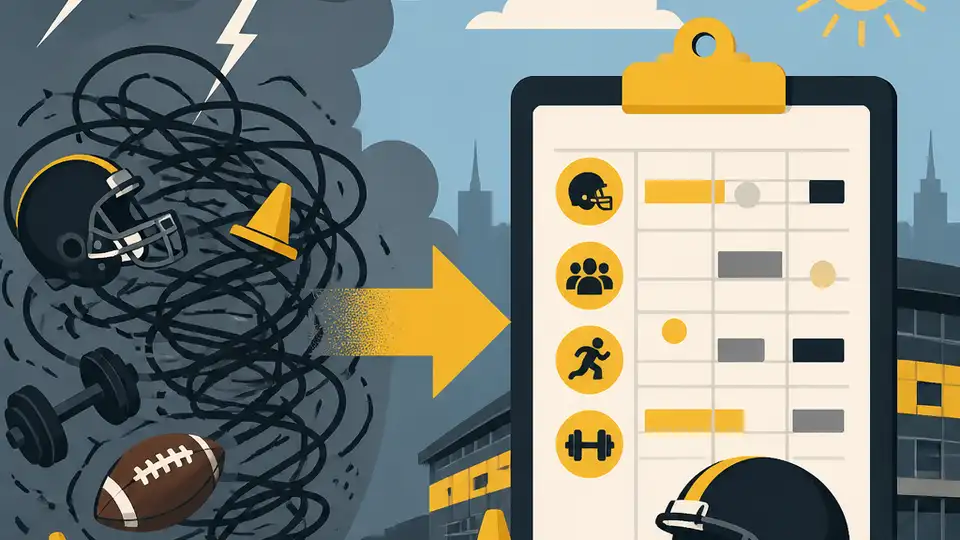
I turn the Steelers’ 2026 camp schedule into a copy-ready planning template.
I’ve been using team schedule posts like this for years, and they always annoy me a little. Not because the dates are bad. It’s the opposite. They’re usually so clean that they hide the real work. You get a neat announcement, a few dates, a return to Saint Vincent College, and everybody acts like the planning problem is solved. It isn’t. If you actually have to use the schedule, whether you’re a beat writer, a local business, a fan trying to build a trip, or someone wiring this into a content calendar, the raw announcement is barely enough. It tells you when players report, but not how to turn that into an actual plan.
The article from Erie News Now is the trigger here. It says the Steelers have released their full 2026 training camp schedule and that this is their 59th consecutive year at Saint Vincent College in Latrobe, Pennsylvania. The article gives the key anchor date: players report on Tuesday, July 28. That’s enough to orient yourself, but not enough to operationalize anything. So I’m going to do what I always do: strip the announcement down to the parts that matter, then rebuild it into something you can actually copy.
Stop reading this like a press release
Get the latest AI news in your inbox
Weekly picks of model releases, tools, and deep dives — no spam, unsubscribe anytime.
No spam. Unsubscribe at any time.
The Pittsburgh Steelers have officially released their full 2026 training camp schedule, marking the team’s return to Saint Vincent College in Latrobe, Pennsylvania, for the 59th consecutive year. Players are set to report on Tuesday, July 28.
What this actually means is simple: the schedule is not the story, the planning surface is. The article is doing two jobs at once. It’s announcing a date and it’s reminding everyone that Saint Vincent College is still the center of the Steelers’ summer routine. That matters because camp is not just football practice. It drives travel, local coverage, photography, fan traffic, hotel demand, and a bunch of small operational decisions that get messy fast if you wait until the last minute.
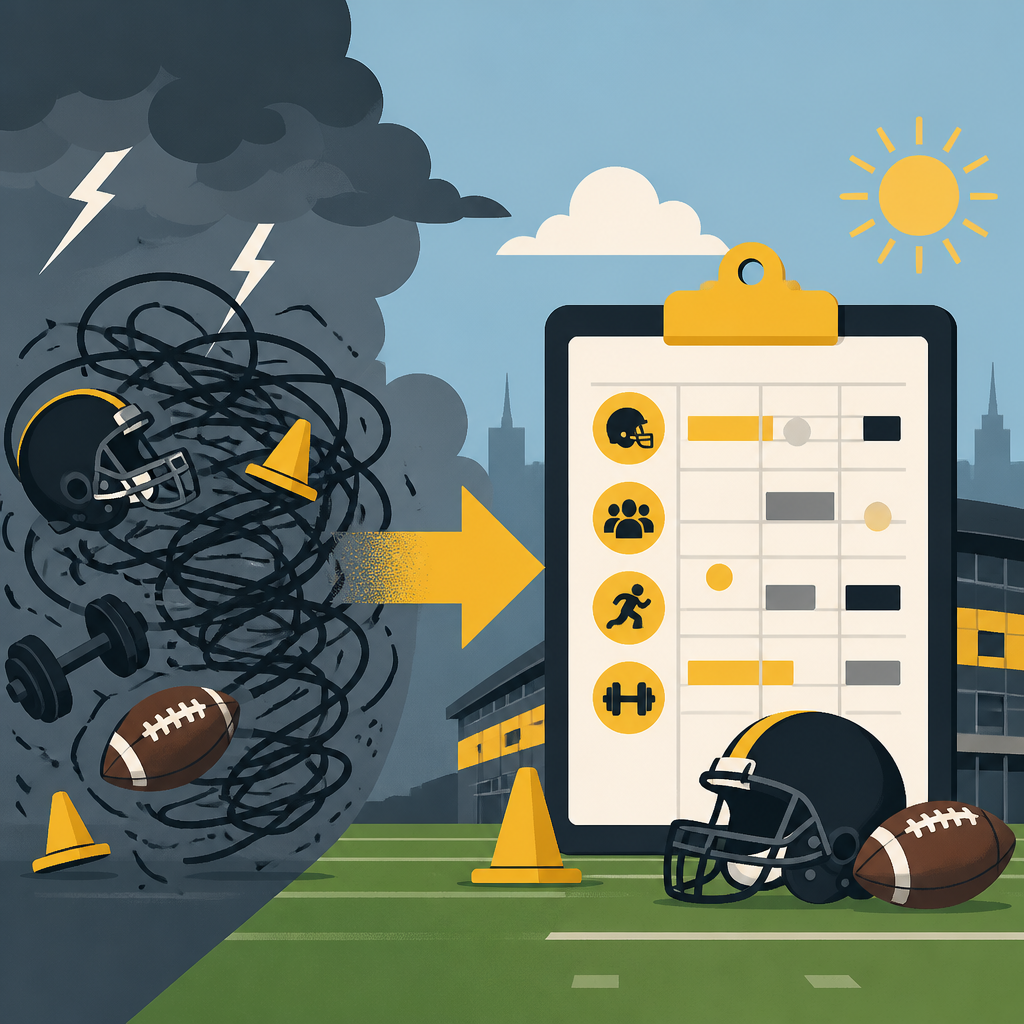
I’ve seen people treat these posts like trivia. That’s a mistake. A camp schedule is a coordination document. It creates deadlines, it creates content windows, and it creates a predictable rhythm for everyone around the team. If I’m planning coverage, I want the report date first. If I’m planning a visit, I want the travel window first. If I’m planning a workflow, I want a reusable structure first.
How to apply it: when you read a schedule announcement, pull out only three things at the start: the first date, the location, and the recurring pattern. Everything else comes later. If you can’t reduce the article to those three items, you’re probably still thinking like a reader instead of an operator.
The report date is the real anchor
The one date we actually have in the source body is Tuesday, July 28. That’s the date that matters most because it starts the clock. Once players report, everything else becomes a countdown: first practice, first public session, media access, fan logistics, and the usual wave of local attention that follows camp opening.
I’ve run into this when building editorial calendars. One clean anchor date is more valuable than a pile of vague “late July” language. It lets you back-plan the pieces that depend on it. If you’re writing preview content, you know when to start. If you’re organizing a trip, you know when to book. If you’re doing social scheduling, you know what week needs the most attention.
What this actually means is that the report date is the spine of the whole schedule. Everything else hangs off it. That’s why I never start with the “full schedule” framing. I start with the first hard commitment and work outward.
- Set a reminder for the report date itself.
- Back up one week for preview content or logistics.
- Back up two weeks if you need travel or production time.
How to apply it: take the report date and build a simple three-step timeline. Step one is the anchor date. Step two is the prep window before it. Step three is the follow-up window after it. That’s enough to turn a sports announcement into an actual plan.
The Saint Vincent College detail is doing more work than it looks like
The article says the Steelers are returning to Saint Vincent College in Latrobe for the 59th consecutive year. That number tells me this is not a one-off venue note. It’s part of the team’s identity. The location is stable, familiar, and baked into the summer routine.
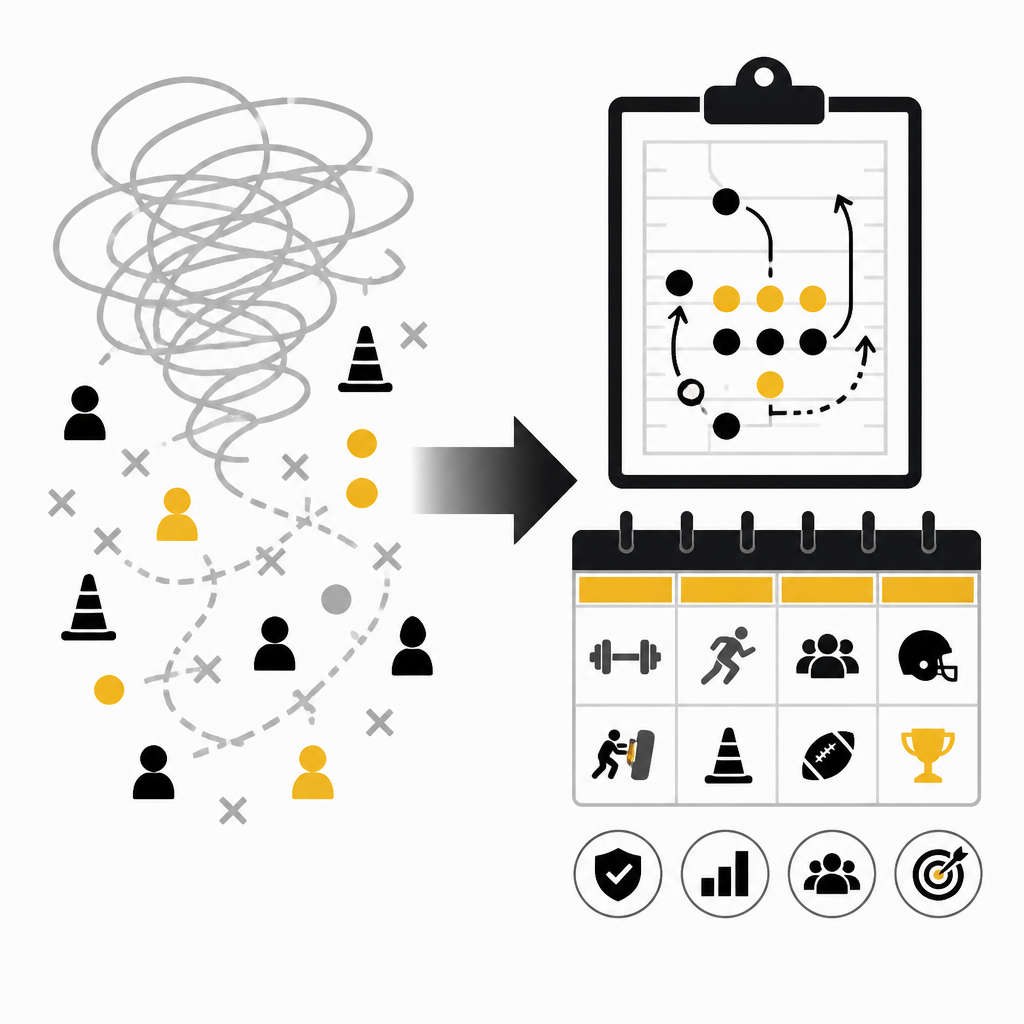
I like details like this because they tell you where the friction is already solved. A recurring venue means the team, the school, local media, and the surrounding area already know the drill. That doesn’t mean there’s no work. It means the work is predictable. Predictable is good. Predictable is what lets you build templates instead of panic notes.
What this actually means is that the location is part of the operational design, not just the backdrop. If you’re covering camp, you can assume the geography matters: where people park, where access points are, where the crowd gathers, and where photos tend to work best. If you’re a fan, you can assume the trip has a rhythm and should be planned that way.
I’ve made the mistake of treating venue mentions as filler. They’re not filler. They’re the reason the schedule works in the first place. A recurring camp site gives you continuity, and continuity is what makes planning templates reliable.
- Use the venue to estimate travel time and parking constraints.
- Use the recurring location to reuse past notes, maps, and contacts.
- Use the continuity to build a standard checklist instead of starting over.
How to apply it: when a team returns to the same camp site every year, create a venue profile once and reuse it. Include address, parking, access notes, nearby lodging, and past coverage links. That becomes your base layer for every future camp announcement.
“Full schedule” usually means you need a cleaner breakdown
The source says the Steelers released their full 2026 training camp schedule, but the body we have here only gives the core opening details. That’s normal. News posts often compress a lot of information into a short update, which is fine for readers and annoying for anyone trying to use the data.
What this actually means is that you should never trust the headline to do the work of the body. “Full schedule” sounds complete, but in practice it usually means there are multiple dates, sessions, and maybe access rules buried further down the article or linked elsewhere. If you’re building anything useful from it, you need a structure that can absorb more details later.
I’ve had this happen with event calendars all the time. The first post gives you the framework, then the real details arrive in fragments. If your workflow assumes the first post is final, you’ll end up rewriting everything twice. I’d rather build a shell that can handle additions than pretend the announcement is the whole plan.
How to apply it: make your template modular. Put the report date in one field, the venue in another, and the rest of the schedule in a table or bullet list you can expand later. That way, when the team adds practice dates, fan days, or media availability, you are not rebuilding from scratch.
Here’s the practical move: store the announcement in a format that can grow. A short note is fine for your brain, but your system should be ready for a fuller schedule.
Why this matters for local coverage and fan planning
The Steelers are a regional institution, and that means a camp announcement isn’t just for football diehards. It affects local coverage, traffic, hospitality, and the small businesses that get pulled into the summer surge. That’s why I pay attention to these schedule posts even when they look boring.
I’ve seen local teams underestimate the ripple effect of a camp schedule. Then the dates land, and everyone scrambles. Writers need story angles. Photographers need access windows. Fans need lodging. Local shops need to know when foot traffic will spike. The schedule isn’t glamorous, but it’s a coordination signal.
What this actually means is that a clean announcement can become a planning tool for a lot of different people, but only if it’s translated into their language. A fan wants “when can I go?” A writer wants “when is the first media day?” A business owner wants “when does the crowd arrive?” Same source, different use.
How to apply it: make one master note and then split it into audience-specific versions. Do not force everyone to read the same raw article. That’s how important details get missed.
- Fan version: dates, location, travel notes.
- Media version: report date, access windows, content deadlines.
- Business version: expected traffic window, nearby venue notes, staffing assumptions.
That division saves time and keeps you from overcomplicating a simple announcement.
Build the schedule like a system, not a headline
This is where I get a little opinionated. Most people stop at the headline because it feels complete. It isn’t. A good schedule announcement should be treated like input data. You read it, extract the useful pieces, and push those pieces into a system you can reuse.
What this actually means is that the best response to a sports schedule post is not “interesting.” It’s “where does this go in my workflow?” That might be a calendar, a content tracker, a travel checklist, or a notes doc. If it doesn’t enter a system, you’ll be back at the article later trying to remember the same date again.
I’ve done this enough times to know the pattern. First read is for orientation. Second read is for extraction. Third step is for action. If you skip the extraction step, you end up with a vague memory and a tab you’ll never close.
How to apply it: use a repeatable intake format for every schedule post you care about. Capture the date, venue, source link, and next action. That’s it. Don’t turn a simple announcement into a research project unless you actually need more detail.
And yes, if the full schedule later includes more dates, you can slot them in. That’s the point. The system should absorb updates without drama.
The template you can copy
# Training camp schedule intake template

Source:
- Title:
- URL:
- Publisher:
- Date published:

Core facts:
- Team:
- Event:
- Report date:
- Venue:
- Recurring venue note:

What this means:
- Planning impact:
- Coverage impact:
- Fan travel impact:
- Business / local impact:

Action checklist:
- [ ] Add report date to calendar
- [ ] Add venue to location notes
- [ ] Back-plan preview content or travel
- [ ] Check for full schedule updates
- [ ] Save source link for follow-up

Audience-specific version:
- Fans:
  - When to go:
  - Where to go:
  - What to bring:
- Media:
  - What to watch:
  - What to file:
  - When to publish:
- Local businesses:
  - Expected traffic window:
  - Staffing note:
  - Inventory note:

Reusable venue profile:
- Address:
- Parking:
- Access notes:
- Nearby lodging:
- Past coverage links:
- Weather backup plan:

Update log:
- [date] Added initial announcement
- [date] Added full schedule details
- [date] Added access or practice notes
This is the part I’d actually copy into a notes app, a project tracker, or a content calendar. It’s boring on purpose. Boring templates are useful templates. The minute you make this fancy, people stop using it.
If you want to adapt it, keep the same bones. Source, core facts, impact, action, audience versions, venue profile, update log. That structure works whether the event is a football camp, a conference, or a product launch. I’m not trying to make sports coverage sound like software. I’m trying to make the workflow reusable.
One last thing: if you’re building this for a team, keep the source URL at the top and the update log at the bottom. That way nobody argues about where the dates came from or which version is current.
Source attribution: the original reporting came from Erie News Now at this article. My breakdown is original analysis built from that report, plus workflow framing and the copy-ready template above.
// Related Articles
- [IND]
Why GitHub Is Right to Kill Classroom and Hand It to Partners
- [IND]
5 GitHub Copilot plan changes for users
- [IND]
49th CES trains for deployment at Holloman
- [IND]
Why motorcycle training days matter more than scenic rides
- [IND]
U2U and HyperSui turn Sui into a DeFi rail
- [IND]
Why Alphabet’s Anthropic Deal Matters More Than the Hype