Why GitHub Is Right to Kill Classroom and Hand It to Partners
GitHub should move Classroom to partners because education tooling needs sustained specialization, not maintenance mode.

GitHub should move Classroom to partners because education tooling needs sustained specialization, not maintenance mode.
GitHub is right to retire Classroom and hand the workflow to partners, because a lightly maintained education product is worse than no product at all.
That is the blunt lesson in GitHub’s own announcement: Classroom had been in maintenance mode for 18 months, new users were already being blocked, and the platform will be decommissioned on August 28, 2026. For educators, that is not a roadmap, it is an expiry date. GitHub also spelled out that classroom data will be accessible only through a short retention window before final deletion in September, which makes the decision feel less like a pivot and more like a managed shutdown.
The first argument: education software is a specialty business, not a side quest
Get the latest AI news in your inbox
Weekly picks of model releases, tools, and deep dives — no spam, unsubscribe anytime.
No spam. Unsubscribe at any time.
GitHub Classroom was always more than a wrapper around repositories. It had to support assignment distribution, autograding, roster management, LMS integration, and the messy reality of classroom workflows. GitHub’s announcement admits the product could not keep pace and says partner tools will offer “core Classroom workflows” plus capabilities GitHub itself was not able to build. That is the key fact. If a platform cannot sustain the feature depth required for teaching, it should stop pretending it can.

Codio and Classroom 50 are not random replacements. Codio brings browser-based coding environments, grade passback, and plagiarism detection. Classroom 50 leans into GitHub-native workflows with GitHub Actions and both CLI and web interfaces. Those are not cosmetic additions. They are signs that education tooling succeeds when it is built by teams whose whole business is the classroom, not by a general-purpose developer platform trying to keep one education product alive on the margins.
The second argument: the migration is painful, but the old model was already failing
The strongest objection is obvious: this creates disruption in the middle of an academic cycle. GitHub itself says the timeline is tight and acknowledges that many educators are preparing fall coursework over the summer. That is a real cost. But the existence of a painful transition does not prove the status quo was viable. It proves the opposite: GitHub let the product drift until the only responsible move was a deadline-driven exit.
The data in the thread makes the case. New users are blocked immediately, existing users can continue only until August 28, and some data types, including submissions and historical test runs, will eventually be deleted. That is not the behavior of a platform investing in a future. It is the behavior of a platform winding down a product that no longer fits its operating model. In that context, partner migration is not abandonment; it is the least bad way to preserve teaching workflows without pretending GitHub will suddenly become an education company.
The counter-argument
The best case against GitHub’s move is that Classroom was one of the few free, familiar, GitHub-native tools educators could depend on. It lowered friction for instructors, matched how software teams already work, and gave students a direct bridge from coursework to real-world repositories. For many teachers, especially solo instructors and small departments, switching to Codio or Classroom 50 means retraining, new support channels, and uncertainty around pricing or institutional approval. That matters. A platform can lose trust fast when it removes a tool that people built their courses around.
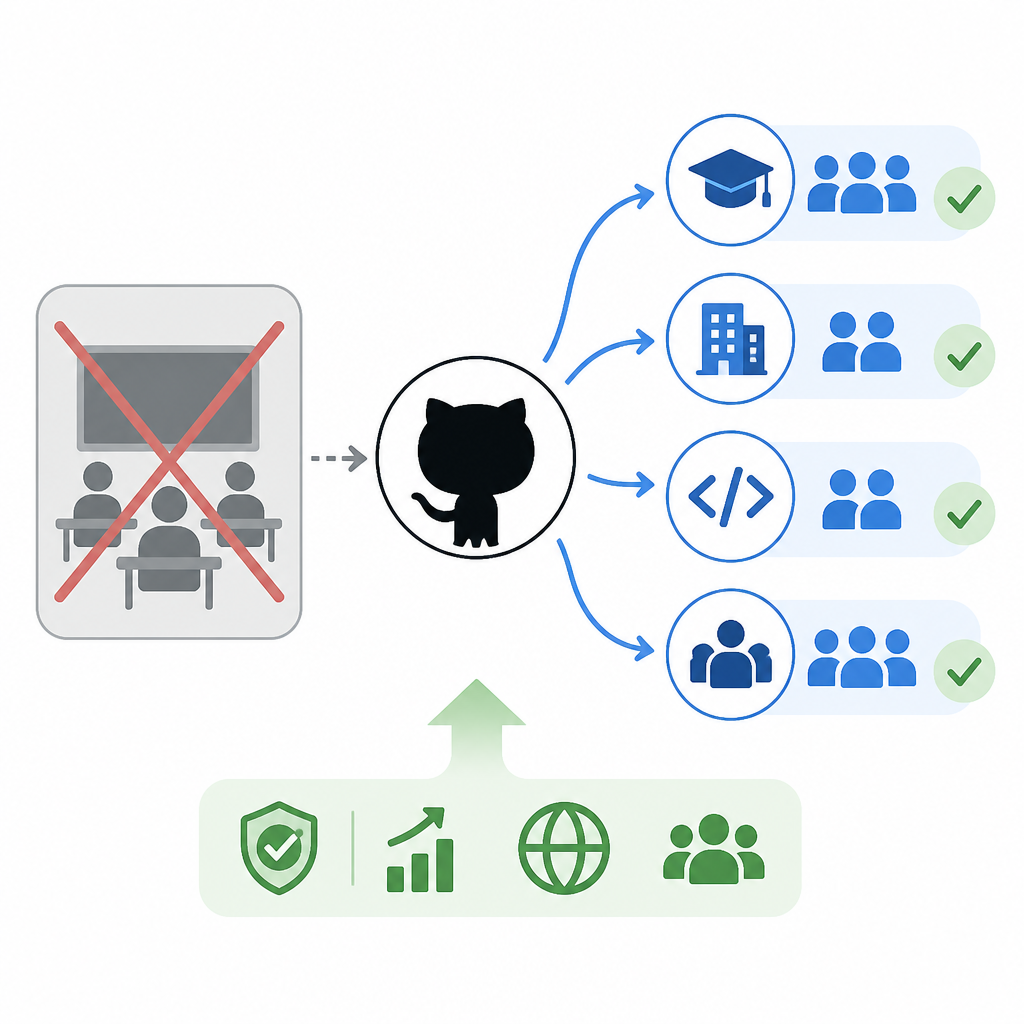
There is also a broader ecosystem concern. GitHub Education benefits, especially Codespaces allowances, were tied to Classroom workflows. Once Classroom goes away, educators worry that the rest of the education stack will weaken too. That fear is rational. When a company deprecates a central workflow, users assume adjacent benefits are next. GitHub’s own thread shows that anxiety clearly, and the silence around some questions only deepened it.
Still, the counter-argument fails on the central point: familiarity is not the same as sustainability. A free tool that sits in maintenance mode for 18 months is not a stable foundation for teaching. It is a trap. Educators deserve platforms with active investment, clear support, and domain-specific features. GitHub’s mistake was not choosing partners; it was waiting too long to admit that Classroom no longer had a future inside GitHub. The painful part is real, but the decision is correct.
What to do with this
If you are an engineer, PM, or founder building for education, treat this as a warning: do not ship a classroom workflow unless you are willing to fund it like a real product. If you are an educator, start migration planning now, export your data before the retention deadline, and test the partner path with one course before you bet a full semester on it. If you are a founder, the lesson is even sharper: niche workflows need a dedicated business model, not a feature buried inside a broader platform that can decide to sunset it when priorities change.
// Related Articles
- [IND]
Anthropic's IPO rumor turns into a market watch
- [IND]
Anthropic should not become dependent on Meta for compute
- [IND]
Mistral's robotics model cuts indoor navigation costs
- [IND]
Mistral missile: France’s short-range air defense workhorse
- [IND]
Apple Reclaims No. 1 by Market Cap as AI Costs Spike
- [IND]
Kimi K3 could pressure the middle tier of AI models