Tesla’s Model Y L proves the family EV premium is still real
Tesla’s Model Y L is a useful three-row EV, but its $61,990 launch price makes the premium segment look expensive again.

$61,990 puts the Model Y L in premium territory, not mass-market family EV territory.
Tesla has launched the Model Y L in the US as a six-seat, three-row SUV with 325 miles of range, but the $61,990 Launch Series price makes one thing clear: this is not a democratized family EV, it is a premium one.
The price tells the real story
Get the latest AI news in your inbox
Weekly picks of model releases, tools, and deep dives — no spam, unsubscribe anytime.
No spam. Unsubscribe at any time.
On paper, the Model Y L is exactly what Tesla shoppers asked for. It stretches the wheelbase by 150 mm, adds a proper 2+2+2 seating layout, and brings useful third-row space instead of the cramped jump seats Tesla has offered before. That matters because families do not buy seat counts, they buy usable seats.
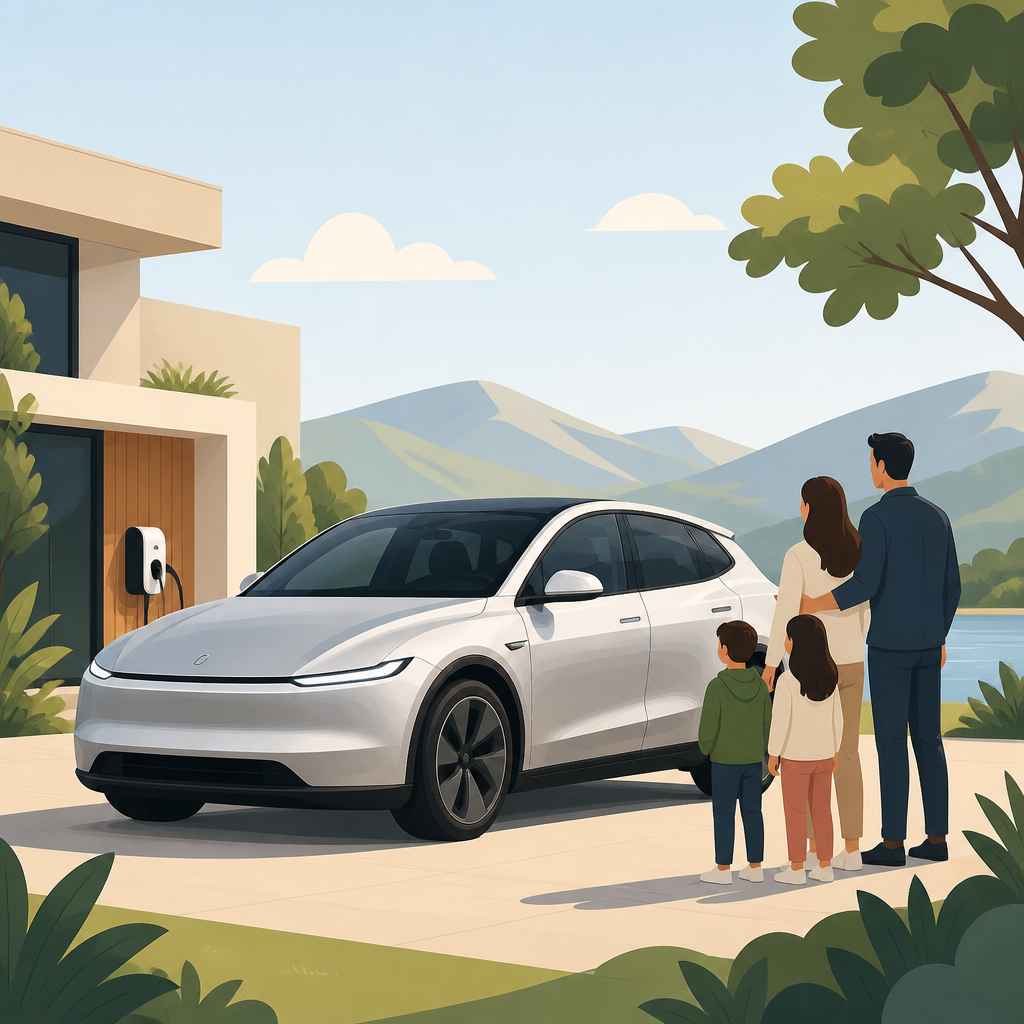
But Tesla chose to open orders with a loaded Launch Series that costs more than the Model Y Performance and more than the starting prices of the Kia EV9 and Hyundai Ioniq 9. That is not a small premium for a badge. It is a signal that Tesla believes the market will pay extra for the name, the charging network, and the instant familiarity of the Model Y shape.
Range and packaging are the only numbers that matter here
The Model Y L’s strongest argument is the spec sheet. Tesla says it will do 0-60 mph in 4.4 seconds and deliver 325 miles of EPA-estimated range, which is a sharp combination for a three-row EV. The segment has long forced buyers to choose between space, speed, and range. The Y L tries to keep all three.
That is a real differentiator, especially against rivals that undercut it on price but do not beat it cleanly on every metric. The Kia EV9 starts at $54,900 and the Hyundai Ioniq 9 at $58,955, yet neither matches Tesla’s acceleration. Tesla is not selling the cheapest family EV here. It is selling the one that makes the cleanest compromise for buyers who still care about performance.
Launch Series pricing is a tax on eagerness
Tesla has used this playbook before: debut a new model or variant with a fully loaded trim, then later widen the lineup if demand holds. That strategy works because early buyers are not shopping for value. They are shopping for first access. Tesla knows that the people most desperate for a six-seat Model Y will pay to get one now.
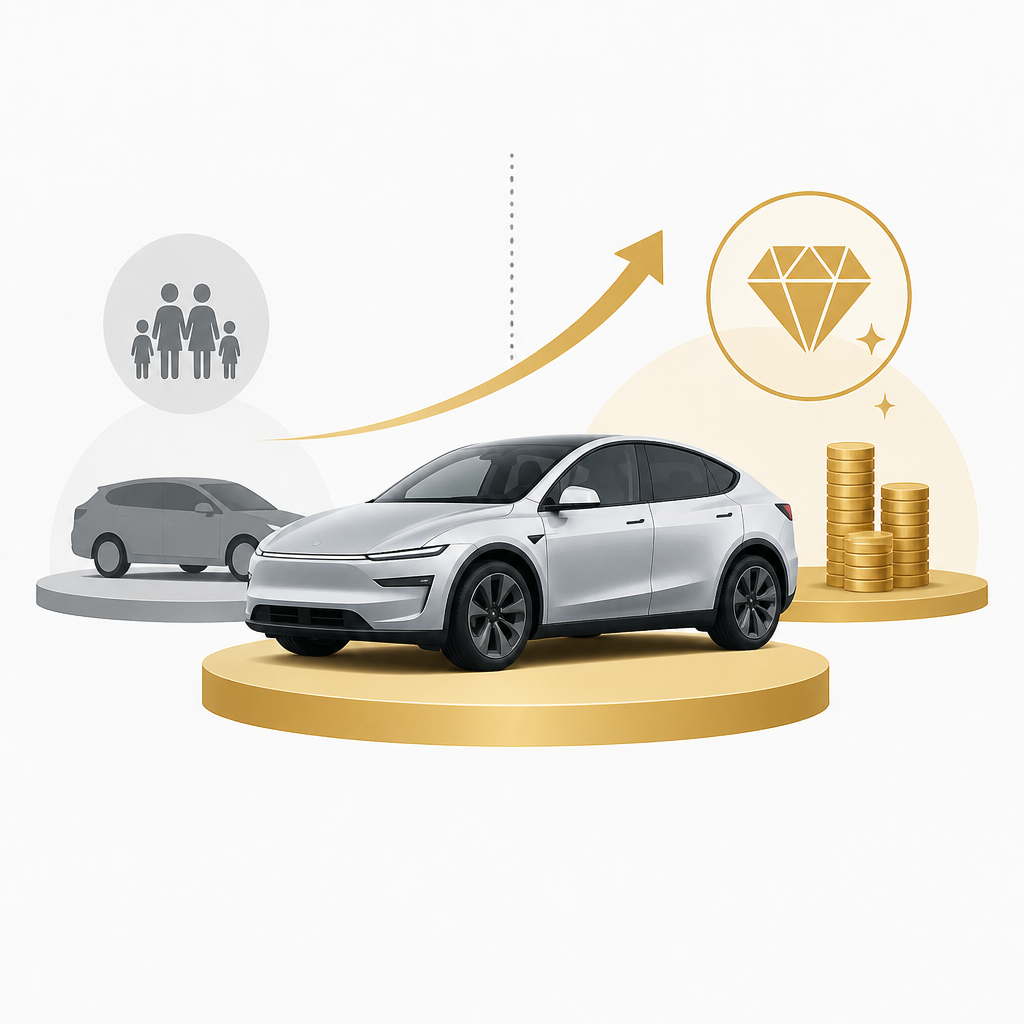
The problem is that this tactic distorts the conversation around affordability. A $61,990 Launch Series encourages headlines about the Model Y L being expensive, when the more important question is what the regular trim will cost once Tesla stops skimming the top of the market. If a lower-priced version lands near the roughly $54,000 analysts expected, the story changes. If it does not, Tesla has simply created a luxury family SUV with a mass-market badge.
The counter-argument
Supporters will say the Model Y L does not need to be cheap to matter. The standard Model Y already dominates Tesla’s sales, and this version finally gives the company a credible answer for buyers who need six usable seats without moving to a much larger vehicle. For those shoppers, the value is not in the sticker price. It is in avoiding the compromises of a minivan or a bulkier SUV.
They are right about the product gap. Tesla’s earlier third-row efforts were too cramped to count, and the Y L’s captain’s chairs, heated third row, and extra cargo space solve a real problem. They are also right that Tesla’s charging ecosystem still reduces the ownership friction that many rivals cannot match.
That still does not make the launch pricing competitive. The reason this matters is simple: Tesla is entering a segment where Hyundai and Kia are proving that a three-row EV can be priced below $60,000 without feeling like a penalty box. The Model Y L may be the better Tesla, but at Launch Series pricing it is not the better value. Tesla is asking buyers to pay extra for convenience, and that premium is only justified if the company follows with a cheaper trim fast.
What to do with this
If you are a founder, PM, or engineer building in EVs, read the Model Y L as a warning and an opportunity: usability wins only when pricing makes the product feel attainable. If you are shipping a family vehicle, do not assume feature parity is enough. Tesla just showed that a genuinely useful third row can still be trapped behind a premium launch price, and the market will punish anyone who copies the spec sheet without solving the affordability problem.
// Related Articles
- [IND]
OpenAI's gov partnerships turn access into policy
- [IND]
Kubernetes sets rules for AI-assisted maintainership
- [IND]
BYOA is the only path for vibe coding apps
- [IND]
AI models are eating the software stack, and app-layer companies are …
- [IND]
This ML project index covers every skill level
- [IND]
Entire’s agent Git network fixes AI code trust