Tesla should prioritize the Model Y L over the Model X
Tesla should make the Model Y L its family flagship and stop pretending the Model X still matters.

$61,990 makes the Model Y L Tesla’s real family flagship in the U.S.
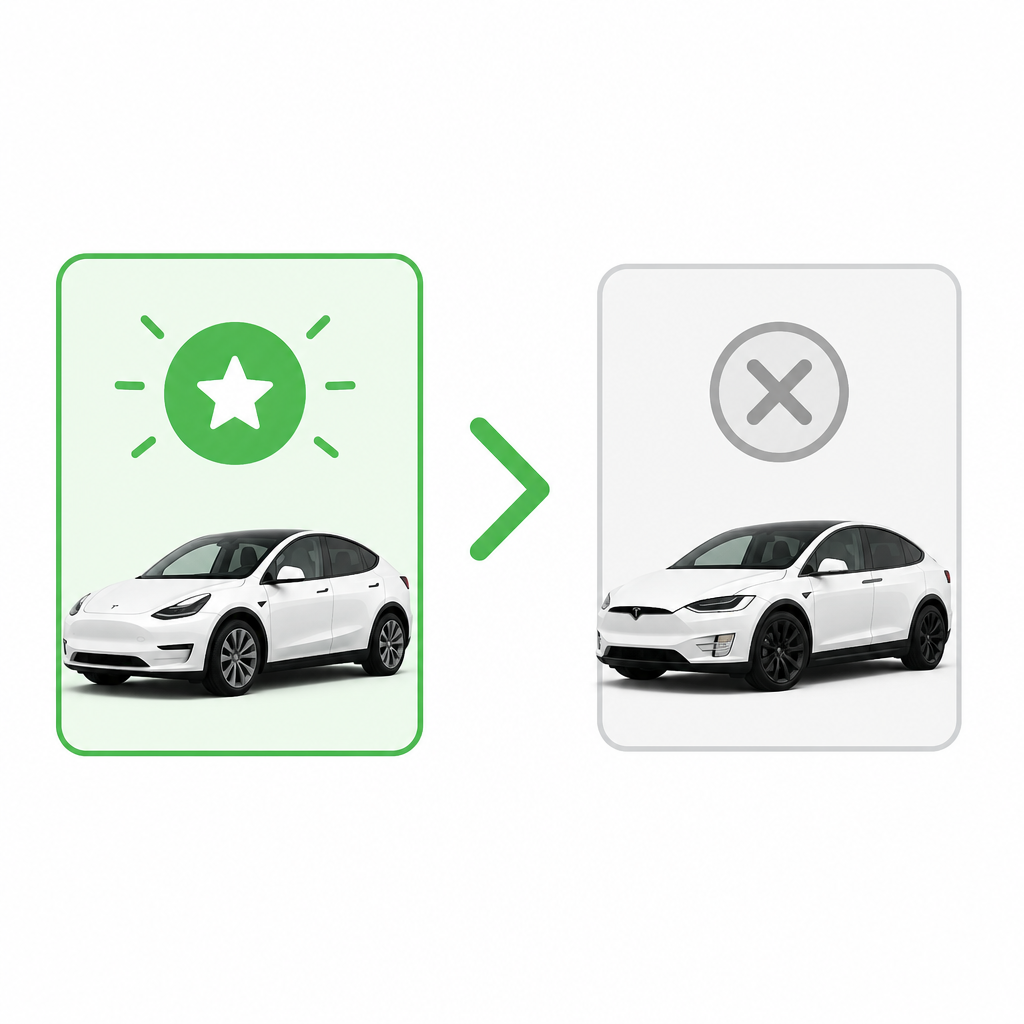
Tesla should treat the Model Y L, not the Model X, as its U.S. answer to three-row family demand. The numbers tell the story immediately: Tesla priced the Launch Series at $61,990, gave it 325 miles of range, 4.4-second 0-60 acceleration, six seats, and a long list of comfort upgrades that push it beyond a stretched crossover. That is not a niche trim. It is a deliberate replacement for the kind of large, premium EV SUV Tesla no longer builds in volume, and it arrives right after the company phased out the only pure SUV in its lineup.
The Model Y L solves Tesla’s biggest U.S. product gap
Get the latest AI news in your inbox
Weekly picks of model releases, tools, and deep dives — no spam, unsubscribe anytime.
No spam. Unsubscribe at any time.
Tesla has spent years selling the idea that one platform can cover the market, but the U.S. lineup still lacked a serious three-row option with real packaging value. The Model Y L closes that gap in a way the standard Model Y never could. A longer wheelbase, captain’s chairs, heated and ventilated second-row seats, and 89 cubic feet of trunk space turn the vehicle into something families can actually use for road trips, carpools, and airport runs without immediately feeling like they compromised.
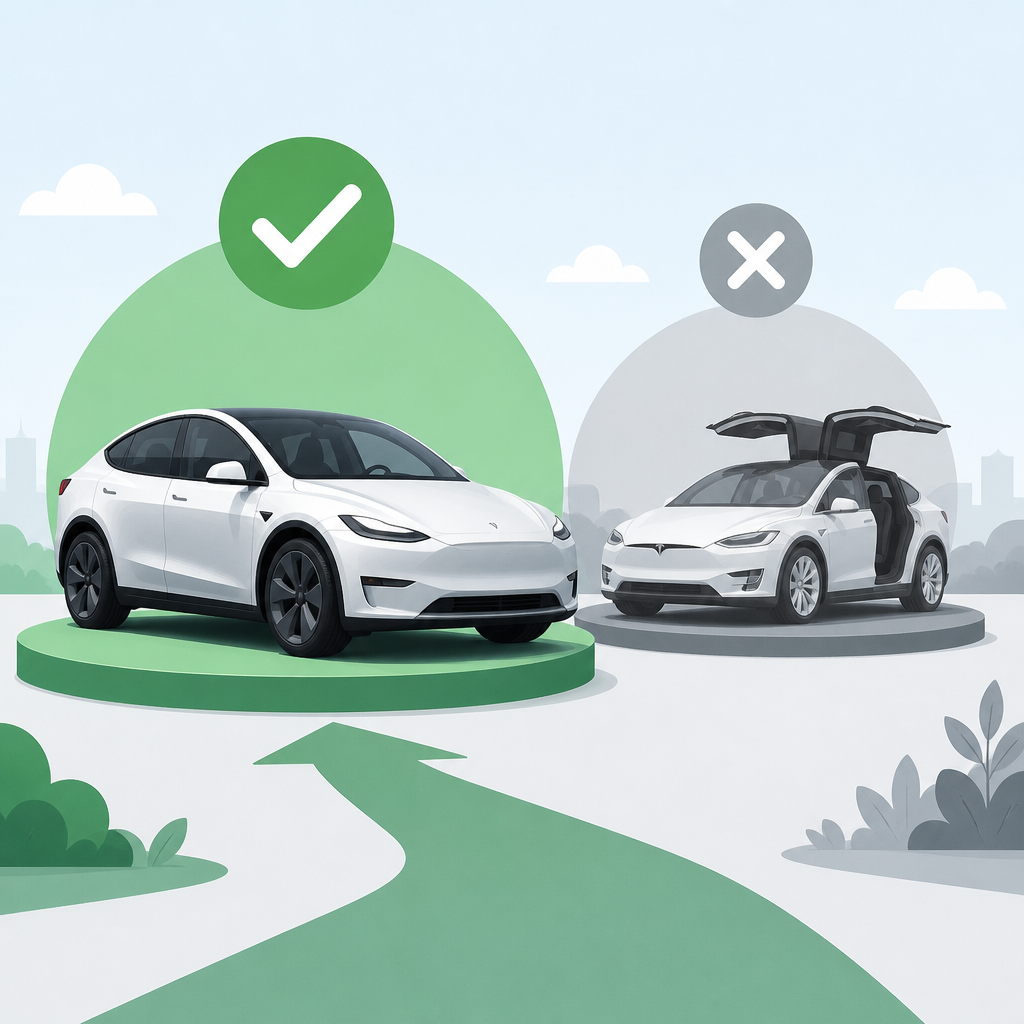
The bigger point is that Tesla did not merely add seats; it added a premium use case that sits above the mainstream Model Y without jumping all the way to Model X pricing. At $61,990, the Launch Series lands in a zone where buyers compare it with Rivian’s three-row offerings, higher-trim Kia and Hyundai EVs, and luxury crossovers from legacy brands. That matters because Tesla needs a product that can win on utility and software, not just on price cuts to the same old shape.
It is a better business move than clinging to the Model X
Model X has always been Tesla’s halo SUV, but halos do not scale like volume products. The Model Y L is built on the company’s highest-volume architecture, which means Tesla can use existing manufacturing logic, parts commonality, and service familiarity to move more units with less friction. That is the difference between a prestige vehicle and a business line that can meaningfully affect delivery totals.
This is especially important because Tesla’s delivery narrative has become more sensitive to product cadence than to raw brand heat. A new three-row variant gives the company a fresh reason for buyers to place orders without waiting for an entirely new platform. If Tesla can ship the Launch Series in September or October as planned, the Model Y L can become a quarter-to-quarter lever, not just a press release with extra seats.
The feature set shows Tesla finally understands what premium buyers want
For once, Tesla’s feature list reads like it was written by someone who has actually sat in the second row of a family SUV. Heated and ventilated captain’s chairs, power recline in the third row, acoustic glass, adaptive damping, larger windows, and improved rear visibility all target the pain points that matter in a long-wheelbase vehicle. The 19-speaker audio system and cooled wireless charging pads are nice, but the real win is that Tesla appears to have invested in ride quality and cabin calm instead of treating them as afterthoughts.
The inclusion of FSD Supervised and integrated Grok AI also reinforces Tesla’s usual advantage: software as a differentiator inside an otherwise crowded category. A three-row EV can be copied on dimensions, battery size, and even price band. It cannot easily be copied on the combination of driver-assist stack, app integration, and Tesla’s ecosystem pull. That is why the Model Y L matters more than a simple stretch job. It is Tesla using software to make a practical vehicle feel like a category leader.
The counter-argument
The strongest case against this move is simple: $61,990 is too much for a Model Y. Buyers who want a family hauler at that price can shop the Lucid Gravity, Rivian R1S, or used Model X inventory, and some of them will prefer those vehicles because they look and feel more distinct. There is also a risk that Tesla muddies the Model Y brand by pushing it into near-luxury territory while the standard Model Y remains the volume choice.
That critique is valid only if Tesla were trying to make the Model Y L a mass-market trim. It is not. Tesla is creating a premium, low-volume, high-margin family variant that fills a hole in the lineup and keeps shoppers inside the brand. The company does not need the Model Y L to be cheap. It needs it to be compelling enough that buyers who would have left for a Model X-sized competitor stay with Tesla instead.
What to do with this
If you are a founder or product leader, the lesson is to stop treating your best-selling platform as finished. Tesla is showing that a mature nameplate can still absorb a premium variant that opens a new customer segment without requiring a clean-sheet redesign. If you are an engineer or PM, focus on the details that make a stretched product feel intentional: seat comfort, cabin noise, visibility, ride tuning, and software integration. That is where a line extension becomes a real product, not just a longer body.
// Related Articles
- [IND]
OpenAI's gov partnerships turn access into policy
- [IND]
Kubernetes sets rules for AI-assisted maintainership
- [IND]
BYOA is the only path for vibe coding apps
- [IND]
AI models are eating the software stack, and app-layer companies are …
- [IND]
This ML project index covers every skill level
- [IND]
Entire’s agent Git network fixes AI code trust