Visa brings secure payments into ChatGPT shopping
Visa will power secure checkout inside ChatGPT through a new partnership with OpenAI.

Visa will power secure checkout inside ChatGPT through a new partnership with OpenAI.
Visa is moving payments into ChatGPT, giving shoppers a way to pay inside the chat experience through a new collaboration with OpenAI. The deal puts one of the world’s biggest card networks inside one of the fastest-growing consumer AI products.
The announcement matters because it points to a simple shift: chatbots are starting to handle more of the shopping flow, from product discovery to checkout. For Visa, that means payments can happen where the conversation already is, instead of forcing users to jump to a separate website or app.
| Company | Role | What it means |
|---|---|---|
| Visa | Payment provider | Will secure payments for shopping inside ChatGPT |
| OpenAI | AI platform | Brings shopping and checkout into ChatGPT |
| ChatGPT | Consumer AI product | Becomes a place where users can browse and pay |
What Visa is actually adding
Get the latest AI news in your inbox
Weekly picks of model releases, tools, and deep dives — no spam, unsubscribe anytime.
No spam. Unsubscribe at any time.
Visa’s role is payment security, which is the part that makes in-chat shopping usable at scale. A chatbot can recommend a product in seconds, but payment still has to deal with card verification, fraud checks, authorization, and the handoff to merchants.
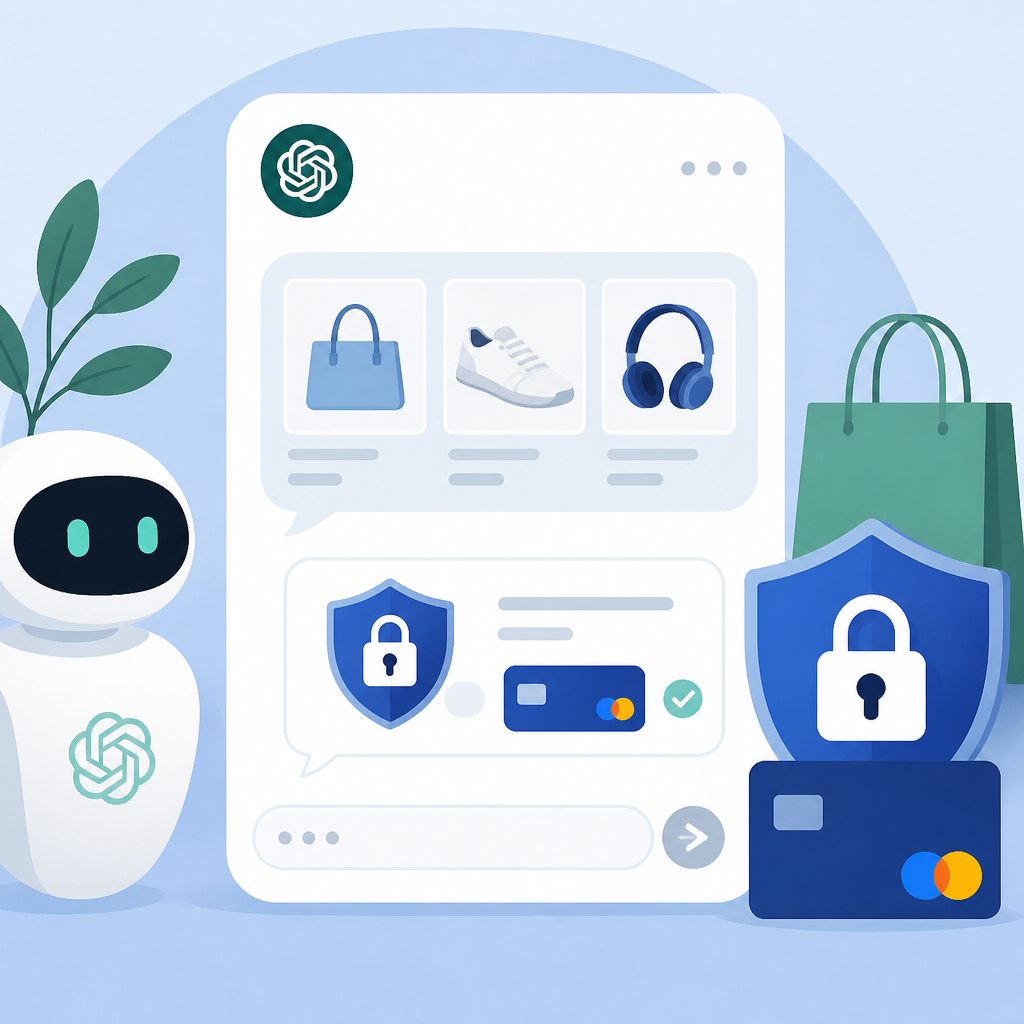
That is where Visa matters. The company already processes billions of transactions across cards, debit, and digital payment products, and its brand is tied to trust in card payments. Putting that infrastructure into ChatGPT gives OpenAI a path to make shopping feel less like a demo and more like a real transaction flow.
The exact product details were thin in the source, but the direction is clear: OpenAI wants ChatGPT to do more than answer questions, and Visa wants to be part of that transaction layer. If the rollout expands, the chatbot could become a place where product discovery and payment happen in one thread.
Why this is bigger than a checkout feature
Shopping inside a chatbot changes the economics of AI assistants. When a user asks for a product recommendation, the assistant can influence the purchase without sending the user elsewhere. That creates a direct line from conversation to conversion, which is valuable for both the AI platform and the payment provider.
It also puts pressure on retailers and payment companies to think about transaction design inside AI interfaces. A shopper may no longer start with a search engine or a marketplace homepage. They may ask a model what to buy, compare a few options in chat, and complete the purchase without leaving the conversation.
“It’s the next step in the evolution of commerce,” said Michelle Gass, then chief executive of Kohl’s, in 2021 while discussing retail’s move toward digital shopping experiences.
That quote fits this moment because the channel is changing again. The interface is no longer a storefront or a mobile app alone; it is also a chat window. Visa’s move suggests the payment stack has to follow the user into that space.
How it compares with other commerce moves in AI
Visa is not the first company to think about payments in digital assistants, but the scale matters. ChatGPT has hundreds of millions of users, and even a small checkout conversion rate could become meaningful. For OpenAI, the opportunity is to turn intent into action faster than a traditional search-and-click shopping flow.

Compared with standard e-commerce, the AI path removes steps. A shopper may normally search, open several tabs, compare prices, and then pay. In ChatGPT, the assistant can compress that process into a single interaction, which changes how merchants think about product placement and how payment firms think about authentication.
- Visa brings card-network trust into the chat interface.
- OpenAI gets a path toward commerce inside its most visible product.
- ChatGPT becomes a shopping surface, not just an answer engine.
- Retailers may gain a shorter path from recommendation to purchase.
There is also a competitive angle. If ChatGPT can support shopping with secure payments, other AI assistants will face pressure to add similar flows. That could pull payment providers, banks, and merchants into a race to define how trust works inside conversational commerce.
What to watch next
The important question is not whether chat-based shopping will exist. It already does in small forms across assistants and commerce tools. The real question is which payment rails, identity checks, and merchant integrations become standard when the flow scales beyond a pilot.
If Visa and OpenAI roll this out widely, the most useful signal will be whether users actually complete purchases inside ChatGPT instead of dropping off before checkout. If that happens, the chat window becomes a serious commerce channel, and payment infrastructure will have to keep up with it.
For now, the partnership shows where AI products are heading: toward transactions, not just answers. The next test is whether shoppers trust the experience enough to pay without leaving the conversation.
// Related Articles
- [IND]
LATAM Is Already the Best Place to Hire Stablecoin Engineers
- [IND]
Anthropic policy page backs $50B AI buildout
- [IND]
MLOps vs ML Engineer Self-Taught Career Guide
- [IND]
LiveRamp turns ChatGPT ads into sales proof
- [IND]
Midjourney should stay software-first, not chase hardware theater
- [IND]
Anthropic and TCS expand Claude enterprise deployments