Vortex 3.0 turns RISC-V compute into a 3D GPU
Vortex 3.0 adds a 3D pipeline, Vulkan, and HIP support to Georgia Tech’s open-source RISC-V GPU stack.

Vortex 3.0 adds a 3D pipeline, Vulkan, and HIP support to an open RISC-V GPU stack.
I've been watching open GPU projects for a while, and most of them hit the same wall: they start as “compute first” demos, then spend years trying to become something a real developer can actually point tools at. I’ve seen that pattern enough times to be suspicious. A simulator here, an RTL model there, maybe an OpenCL story if you’re patient. Then the project stalls because the stack is half hardware, half promise, and nobody wants to build on top of a science fair board.
That’s why Vortex 3.0 caught my attention. Not because it’s flashy, but because it finally reads like a project that knows compute alone is not enough. If I want to test graphics, run kernels, wire up tooling, and see whether the thing can survive real software pressure, I need more than a toy backend. I need a graphics path, a command processor, async synchronization, and a way to plug into existing ecosystems without writing a whole new universe from scratch. That’s the part most open GPU efforts keep dodging.
What changed here is not just “more features.” It’s a shift in what Vortex thinks it is. The project is still an open-source RISC-V GPGPU implementation from Georgia Tech’s College of Computing, but now it’s trying to act like a fuller stack instead of a compute-only research artifact. That matters if you care about where open hardware actually becomes usable.
I’m using the Phoronix write-up from Michael Larabel as the trigger for this breakdown, based on his June 9, 2026 post, “Vortex 3.0 Released As Full-Stack, Open-Source RISC-V GPU Now With 3D Pipeline”. The source points back to Georgia Tech’s project site and GitHub repo, and that’s where the real detail lives. Phoronix doesn’t give us star counts or view numbers here, so I’m not inventing any.
Vortex stopped pretending compute was enough
Get the latest AI news in your inbox
Weekly picks of model releases, tools, and deep dives — no spam, unsubscribe anytime.
No spam. Unsubscribe at any time.
“With Vortex 3.0 they have introduced a fixed-function graphics stack complete with a rasterizer and texture units and more in providing a 3D pipeline for expanding their scope beyond just GPGPU compute.”
What this actually means is simple: Vortex is no longer just a “run kernels and hope” project. It now has the plumbing you’d expect if someone wants to render something, not just crunch numbers. Rasterization and texture units are not side quests. They’re the boring, necessary machinery that turns a compute engine into something that can participate in graphics workloads.
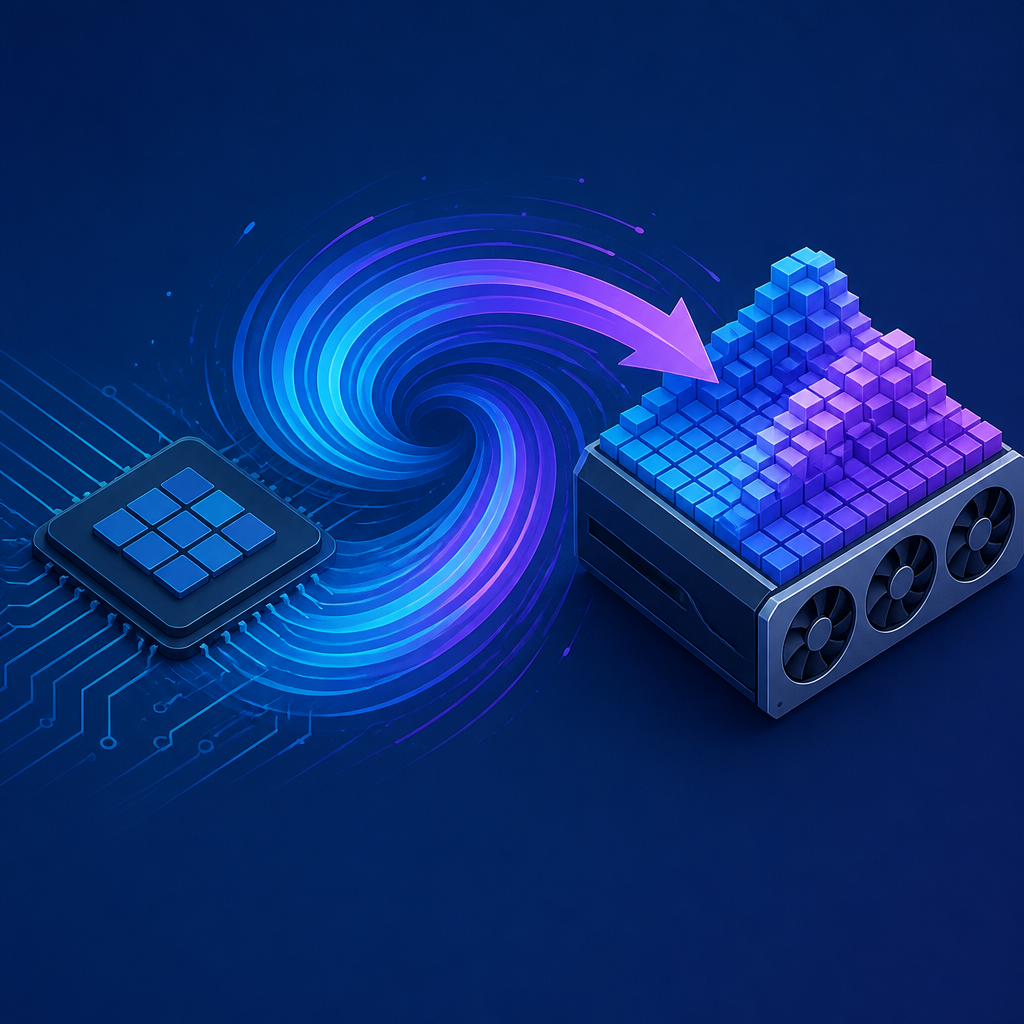
I’ve run into this exact problem when people build accelerators and then ask why software teams don’t flock to them. Because software teams don’t want a promise. They want a path. If the hardware can only do compute, every graphics-adjacent experiment turns into a custom port, a one-off backend, or a pile of glue code nobody wants to maintain.
Vortex 3.0 is telling me the maintainers understand that. A 3D pipeline doesn’t magically make the project production-ready, but it does make the project legible to a broader set of developers. That’s a real step. It means the project can be discussed in the same breath as graphics stacks, not only academic GPGPU papers.
How to apply it: if you’re building an accelerator project, stop asking “can it run kernels?” as your only bar. Ask what software class you want to unlock next. If the answer is graphics, you need fixed-function pieces. If the answer is general developer adoption, you need a pipeline, not a demo.
- Define the next workload before you add another feature.
- Map the missing fixed-function blocks early.
- Make the hardware story match the software story.
The simulator-first approach is not a cop-out
“Vortex continues to consist of an open-source simulator or RTL simulator and can also be used with either AMD-Xilinx or Altera FPGAs too for this RISC-V GPU design.”
This is the part I actually respect. People love to sneer at simulators like they’re lesser than “real hardware.” That’s nonsense. If the stack is complicated, a simulator is how you keep the project movable while the hardware catches up. It’s also how you make the thing testable without needing a rack of boards and a prayer.
What this actually means is that Vortex is still trying to be practical about iteration. The project can live in simulation, and it can also target FPGA platforms from AMD-Xilinx and Altera. That gives developers a way to validate behavior before they ever touch a board. For open hardware, that’s not a nice-to-have. It’s how you avoid turning every change into a hardware lottery.
I’ve seen teams skip this and pay for it later. They wire everything to a board too early, then spend weeks debugging clocking, synthesis quirks, and toolchain weirdness instead of the architecture itself. By the time they find the real bug, everyone is annoyed and the project has three “temporary” branches nobody trusts.
How to apply it: if you’re working on hardware-adjacent software, build your validation path first. Give yourself one mode that is fast and inspectable, and another that is close to the target silicon. That split saves you from guessing in the dark.
- Keep a simulator as the default development target.
- Use FPGA runs for integration checks, not daily guessing.
- Document what behavior is verified in each environment.
The new command path is the real architecture change
“Vortex 3.0 also adds ... a new hardware kernel scheduler, a command processor architecture, async barriers...”
This is where the release starts to feel like an actual platform change instead of a feature dump. A kernel scheduler and command processor are not decorative. They decide how work enters the GPU, how it gets ordered, and how much pain software has to absorb to keep the machine busy.
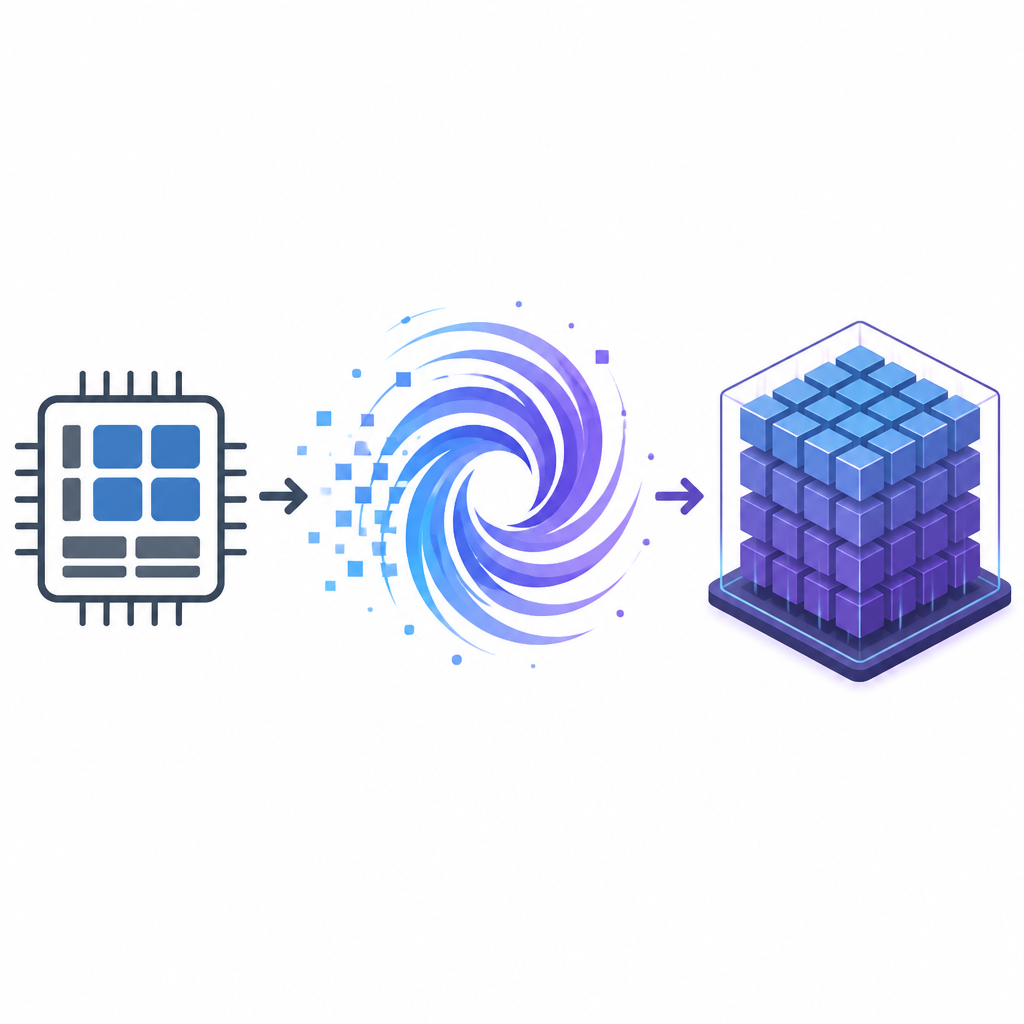
What this actually means is that Vortex is moving toward a more complete execution model. If the scheduler is weak, the hardware sits idle. If the command processor is awkward, the driver layer turns into a mess. If async barriers are missing, everything becomes a synchronization tax and performance goes downhill fast.
I’ve had enough experience with GPU-adjacent systems to know that this is where projects either become usable or become a lab curiosity. You can have decent execution units, but if the command path is clumsy, nobody will enjoy writing against it. The driver becomes the product. That’s usually a bad sign.
How to apply it: when you design a compute or graphics accelerator, treat the command path as first-class architecture. Don’t leave it to “later, in software.” Define work submission, ordering, and synchronization as early as you define the datapath.
Tensor tricks matter because they widen the use case
“Vortex 3.0 also adds tensor core structured sparsity, warp group-level matrix multiplication...”
These are the kinds of features that sound like marketing until you remember what modern workloads actually look like. Matrix math matters. Sparse math matters. If you want a GPU story that reaches beyond graphics or toy compute, you need acceleration that maps to the real workloads developers run today.
What this actually means is that Vortex is trying to speak both graphics and AI-ish compute without pretending those worlds are identical. Structured sparsity helps when the math has predictable zeros. Warp-group matrix operations help when you want throughput without burning cycles on scalar handling that a GPU should not be wasting time on anyway.
I like this direction because it makes the project less brittle. If a platform can only do one narrow kind of kernel, it becomes easy to ignore. But if the same stack can support graphics concepts, OpenCL-style compute, and tensor-oriented work, you get more reasons to care about the architecture.
How to apply it: don’t bolt on accelerator features just because they’re fashionable. Add them when they widen the number of real workloads your stack can run. That’s the difference between a demo and a platform.
Vulkan and HIP support are the bridge, not the destination
“Vortex 3.0 also adds a Mesa/Lavapipe Vulkan back-end as well as HIP support via chipStar. The new Mesa driver is called vortexpipe.”
This is the most important software-facing part of the release, because it tells me the project wants to meet developers where they already are. Vulkan via Mesa/Lavapipe and HIP via chipStar are both signals that the team understands adoption is mostly a tooling problem.
What this actually means is that Vortex is not asking developers to learn a weird one-off interface just to test the hardware. It’s trying to slot into known APIs and translation layers. That matters because the fastest way to kill interest in an open GPU project is to make every experiment require a bespoke programming model.
I’ve seen too many projects assume that if the hardware is cool enough, the ecosystem will magically appear. It never does. Tooling is the ecosystem. Drivers are the ecosystem. Compatibility layers are the ecosystem. If you don’t build those, you get a nice architecture diagram and no users.
How to apply it: if you’re building hardware, budget for the translation layer as part of the product. If your target users already know Vulkan, OpenCL, or HIP, don’t make them relearn your internal vocabulary just to say hello to the device.
- Use existing APIs as adoption ramps.
- Keep backend naming boring and obvious.
- Make driver work part of the release plan, not a side task.
Why open RISC-V GPU work needs boring discipline
“The open-source developers at Georgia Tech working on Vortex as an OpenCL-compatible RISC-V GPGPU implementation are out with their next major release for this open-source GPU design.”
That sentence sounds straightforward, but it hides the hard part: open hardware only becomes useful when the project keeps shipping coherent layers together. Not just RTL. Not just a simulator. Not just a driver. The stack has to line up, or the whole thing falls apart into interesting fragments.
What this actually means is that Vortex 3.0 is more valuable as a systems story than as a feature checklist. It’s showing the usual open hardware pain points: execution, scheduling, graphics, APIs, and board support all have to move together. If one layer races ahead, the rest become excuses.
I’m not pretending this makes Vortex ready for every workload. It doesn’t. But I do think it makes the project more honest. It now reads like a team trying to build an actual GPU stack, not just a paper artifact with a GitHub repo attached.
How to apply it: if you’re building an open-source hardware project, ship in layers, but ship them in sync. A new datapath without a driver is a lab note. A driver without workload coverage is a dead end. Keep the stack aligned.
The template you can copy
# Open-source GPU release note template

## What changed
- Added a fixed-function graphics path with rasterization and texture support
- Kept simulator and FPGA workflows available for development and validation
- Added command submission, scheduling, and async synchronization support
- Exposed the stack through existing APIs and backends where possible

## Why it matters
This release moves the project from compute-only experimentation toward a fuller GPU stack that developers can actually target.

## What to highlight
- Hardware blocks added
- Driver/backend support added
- Simulation and FPGA validation paths
- New workload classes now possible

## How to evaluate it
- Can the stack run in simulation?
- Can it map to FPGA targets?
- Does the command path support real workload submission?
- Are existing APIs used to reduce adoption friction?

## Copy-ready release summary
Project X 3.0 adds a graphics pipeline, command processor, async barriers, and API backends that make the stack usable for more than one kind of workload.

## Copy-ready checklist for your own project
- [ ] State whether the project is compute-only or graphics-capable
- [ ] Name the validation targets: simulator, FPGA, silicon
- [ ] List the driver/backend paths explicitly
- [ ] Call out scheduler and synchronization changes
- [ ] Explain which real workloads are now possible

## Short version for a README
Project X now includes graphics support, improved scheduling, async synchronization, and API backends for broader developer use.
I pulled that template from the shape of Vortex 3.0, but the wording is mine. If you’re writing up your own hardware or framework release, this is the structure I’d use when I want readers to understand the shift without wading through a pile of jargon.
Source attribution: the original report is Michael Larabel’s Phoronix article at phoronix.com/news/Vortex-3.0-RISC-V-GPGPU. The interpretation, framing, and copy-ready template here are my own derivative breakdown of that source and the linked Georgia Tech project materials.
// Related Articles
- [TOOLS]
Mistral AI Models 2026 for Builders
- [TOOLS]
RustRover 2026.2 turns Rust setup into one file
- [TOOLS]
Geekbench 7 setup for realistic CPU and GPU tests
- [TOOLS]
Spark 4.2 turns AI search into SQL
- [TOOLS]
OpenAI's HF breach story turns into a security template
- [TOOLS]
SAP Design System adds AI and cross-platform UI kits