WGU’s Anthropic deal points to AI-native credentials
4 ways WGU and Anthropic are reshaping skills, credentials, and career paths with Claude for Enterprise and AI-native design.

What does WGU’s Anthropic partnership mean for AI-native credentialing?
WGU and Anthropic are building AI-native systems for skills, credentials, and career paths.
| Item | Main focus | Support from Anthropic | WGU role |
|---|---|---|---|
| Skills identification | Find skills needed for emerging jobs | Engineering support, platform resources, model credits | Co-develop the system |
| Personalized learning | Adapt learning to a learner’s starting point | Claude for Enterprise deployment | Apply it across programs |
| Digital credentials | Verify skills through credentials | Strategic collaboration | Use competency-based model |
| Career connection | Link learners to opportunities | AI capability and guidance | Align learning with mobility |
1. Skills identification for emerging jobs
Get the latest AI news in your inbox
Weekly picks of model releases, tools, and deep dives — no spam, unsubscribe anytime.
No spam. Unsubscribe at any time.
The first piece of the partnership is a system that can spot the skills employers will need next. That matters because WGU President Scott Pulsipher cited the World Economic Forum’s estimate that 40% of core skills used at work today will change by 2030.

Instead of treating job preparation as a one-time event, the model aims to scan for shifting skill demand and translate that into learning goals. In practice, that could help an online university keep pace with fast-moving roles in fields shaped by AI, automation, and new digital workflows.
- Inputs: labor market signals, employer needs, job families
- Output: a clearer map of skills learners should build
- Goal: make training track real job demand, not old program lists
2. Personalized learning around each learner’s starting point
WGU and Anthropic also want learning to adjust to where a student begins, not where a syllabus assumes they are. That fits WGU’s competency-based model, where progress is based on demonstrated skill rather than time spent in class.
Anthropic will support this work with Claude for Enterprise, model credits, and engineering help. The promise is a system that can shape pacing, content, and support around an individual’s needs, which is especially useful for working adults balancing study with jobs and family responsibilities.
- Claude for Enterprise across WGU
- Personalized pathways built from skill gaps
- Support for students who need faster or slower pacing
3. Skills-based digital credentials
Another core function is verification. The partnership is designed to turn newly learned skills into digital credentials that can be checked and understood by employers. That gives learners a way to show what they can do, not just what courses they completed.
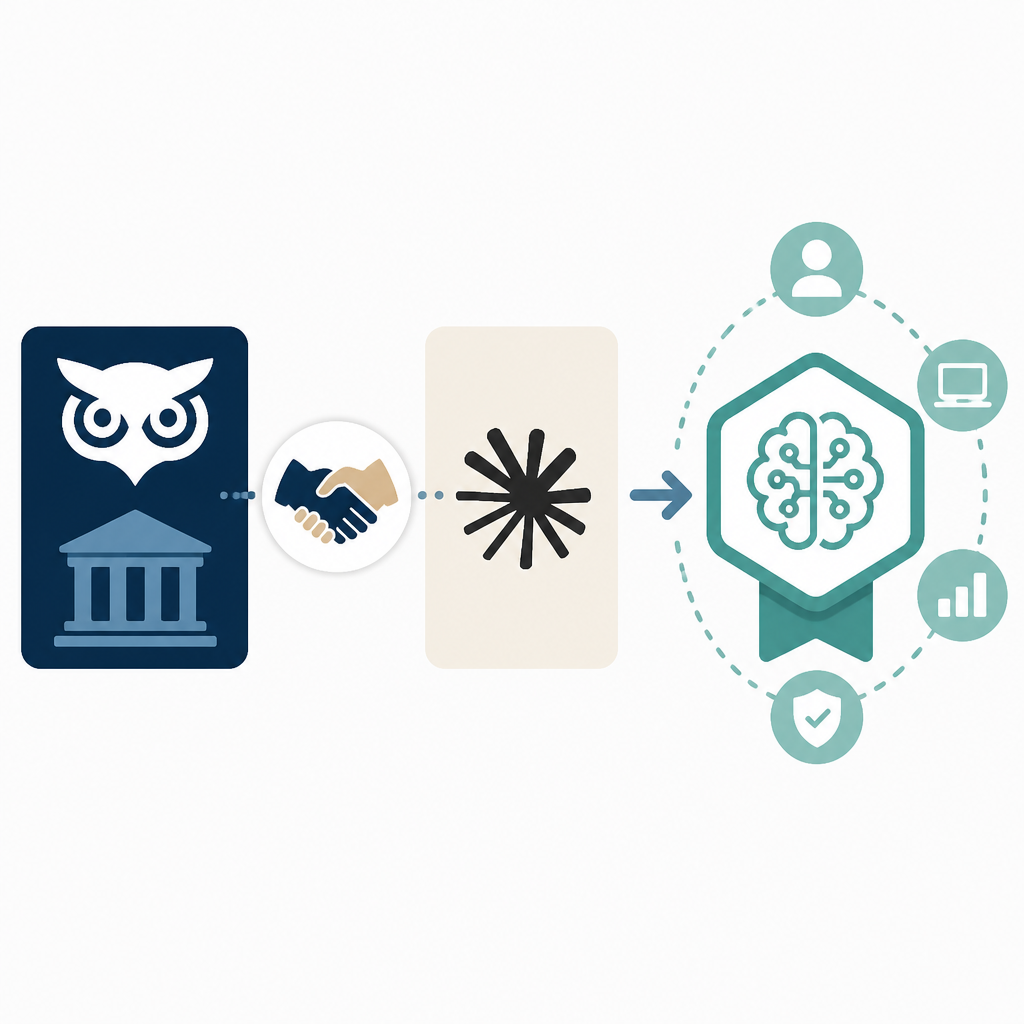
This is a natural fit for Western Governors University, which already uses competency-based education. If the new model works as planned, credentials could become more precise, more portable, and more tied to actual work tasks.
Example credential flow:
identify skill need -> learn skill -> verify competency -> issue digital credential
4. Career connection and economic mobility
The partnership does not stop at learning and certification. WGU says the system should also connect learners with career opportunities, linking education to employment more directly. Pulsipher framed that as part of a broader mission around access, completion, and economic mobility.
He argued that AI should do more than improve efficiency. In his view, it should help more people move into better jobs by making learning more responsive to labor market change. That is why the collaboration is being positioned as an institutional redesign effort, not a classroom pilot.
- Connect credentials to hiring pathways
- Support workers moving into new fields
- Align education with upward mobility goals
5. AI-native operations inside the university
The partnership also gives WGU a chance to redesign internal processes around AI. Anthropic will provide engineering support, platform resources, model credits, and strategic collaboration, while WGU deploys Claude for Enterprise across the organization.
That means the work is not limited to student-facing tools. It also includes new ways to build operational capacity, create workflows from the ground up, and test what an AI-native university can look like when technology is part of the design rather than an add-on.
- Engineering support from Anthropic
- Platform resources and model credits
- Organization-wide use of Claude for Enterprise
How to decide
If you care about workforce training, the most interesting part of this story is the shift from course delivery to skill verification and job connection. If you work in higher ed, the WGU model shows how competency-based education can pair with AI to support adults at scale.
If you follow enterprise AI, the deal is also a test case for how a university can use Claude for Enterprise beyond simple productivity gains. The real question is whether AI can help institutions identify skills, personalize learning, issue credentials, and connect people to work in one system.
// Related Articles
- [IND]
Mistral's robotics model cuts indoor navigation costs
- [IND]
Mistral missile: France’s short-range air defense workhorse
- [IND]
Apple Reclaims No. 1 by Market Cap as AI Costs Spike
- [IND]
Kimi K3 could pressure the middle tier of AI models
- [IND]
AI Weekly: 2026-07-13 ~ 2026-07-20
- [IND]
$1.7B Bloom Energy deal backs Nebius AI power