Why Jensen Huang’s keynote is bigger than Nvidia
Jensen Huang’s Computex keynote argues that AI compute is still a profit engine, and the winners extend beyond Nvidia.
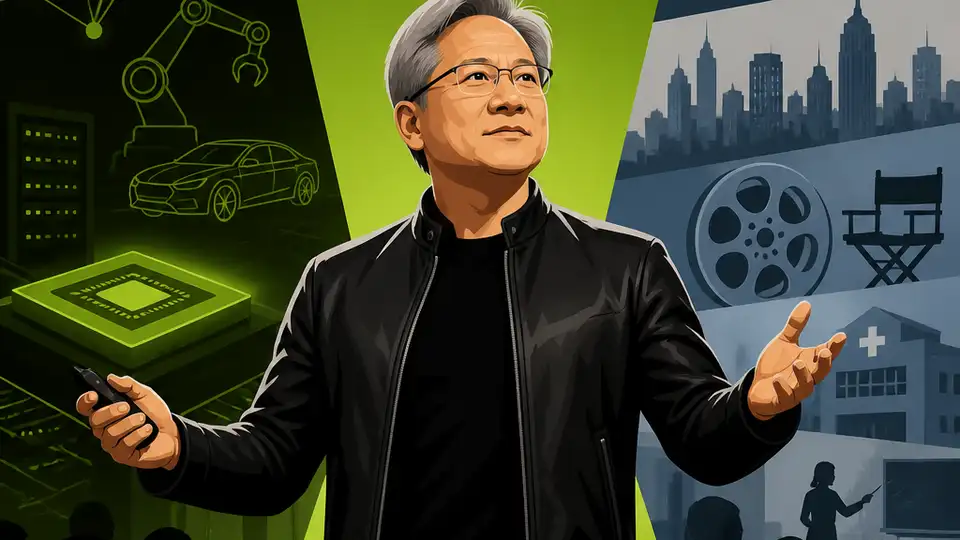
Jensen Huang’s Computex keynote says AI compute still drives profits and lifts more than Nvidia.
Jim Cramer got this one right: Jensen Huang’s Computex keynote was not just a victory lap for Nvidia, it was a fresh bull case for the entire AI infrastructure stack. Huang’s message was blunt and market-moving, and the reaction was immediate. Nvidia rose 6% on the day, while Oracle, Nebius, and CoreWeave surged 9.9%, 14.5%, and 14% after Huang leaned hard on the idea that compute is revenue. That is the real story here. The keynote did not merely defend AI spending against bubble fears; it reframed the spending as a profit engine.
The first argument: AI infrastructure is still where the money flows
Get the latest AI news in your inbox
Weekly picks of model releases, tools, and deep dives — no spam, unsubscribe anytime.
No spam. Unsubscribe at any time.
The strongest case for Huang’s speech is that it directly answered the market’s biggest concern: whether the data center boom can justify itself. Cramer said he had been hearing more skepticism about the data center as a concept, not just as a profit center, and Huang met that doubt head-on with a simple thesis: compute creates revenue. That matters because the AI trade has moved past the easy phase of enthusiasm and into the harder phase of return-on-capital scrutiny.
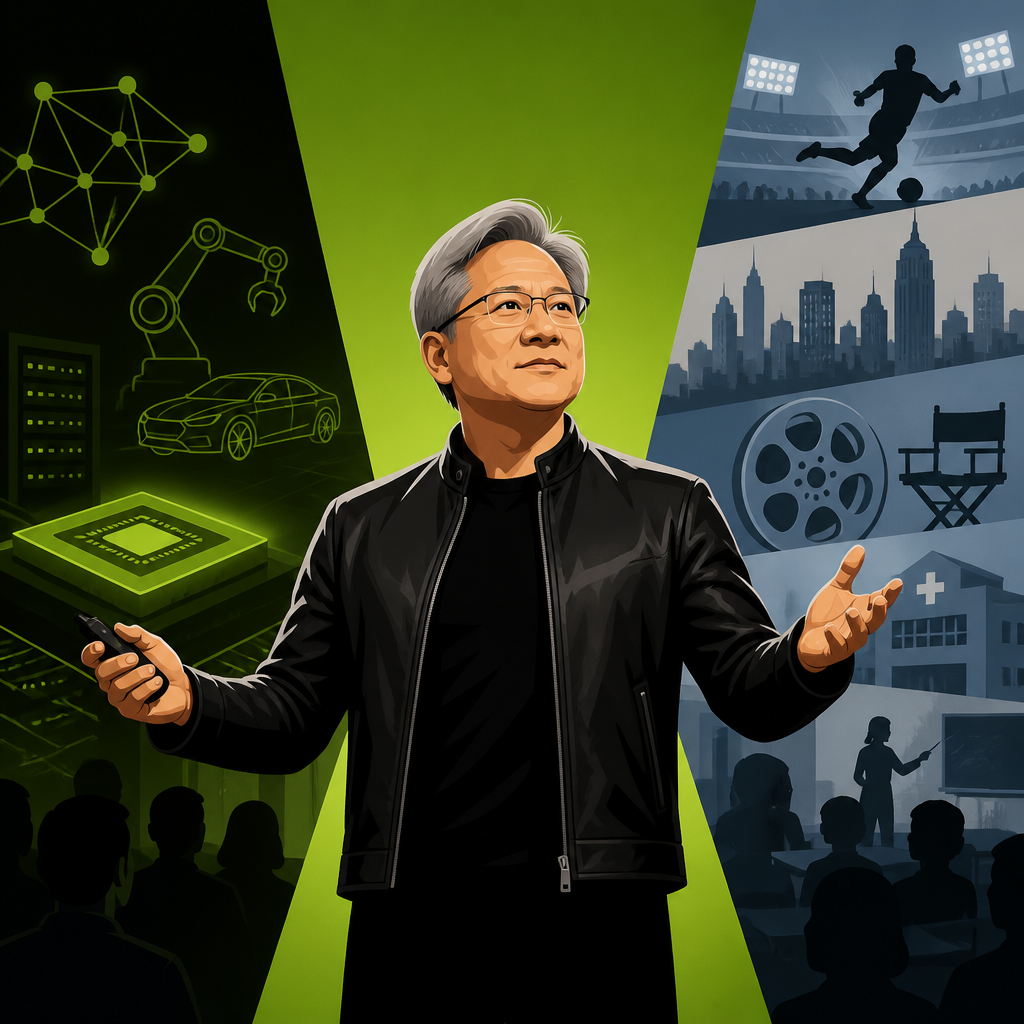
The stock action backed him up. In one session, Nvidia and several infrastructure-linked names moved higher even as oil prices spiked and U.S.-Iran peace talks stumbled, which is exactly the kind of tape that should punish risk assets if the AI narrative were hollow. Instead, the market rewarded the companies closest to the buildout. That tells you investors are still willing to pay for the picks-and-shovels layer when the pitch is tied to monetization rather than abstract promise.
The second argument: the winners are spreading beyond the chipmaker
Huang’s keynote also widened the circle of beneficiaries, and that is why it landed. Cramer highlighted Arm Holdings, Oracle, Nebius, and CoreWeave as names that stand to gain from the AI boom, and those are not random examples. They represent different layers of the stack: chip architecture, cloud infrastructure, GPU leasing, and data center capacity. When the market starts rewarding those layers together, it signals that AI spending is no longer being viewed as a single-stock story.
Oracle and CoreWeave are especially telling. Both have faced investor questions about whether their aggressive AI investment and debt-fueled expansion can pay off. Huang’s keynote gave them a cleaner narrative: if compute is the product, then infrastructure is not dead weight, it is the business model. That is why Cramer argued investors should own Nvidia alongside hyperscalers Amazon and Alphabet, even though those companies are building custom chips that compete with Nvidia. The point is not purity. The point is exposure to the full demand curve.
The counter-argument
The bear case is not weak. Skeptics are right that hundreds of billions of dollars are being poured into AI infrastructure with no guarantee that the returns will match the capex. They are also right to worry that custom silicon from hyperscalers will slowly compress Nvidia’s pricing power, especially as large buyers get more sophisticated about diversifying suppliers and building in-house alternatives. Bubble talk exists because the numbers are large enough to invite it.
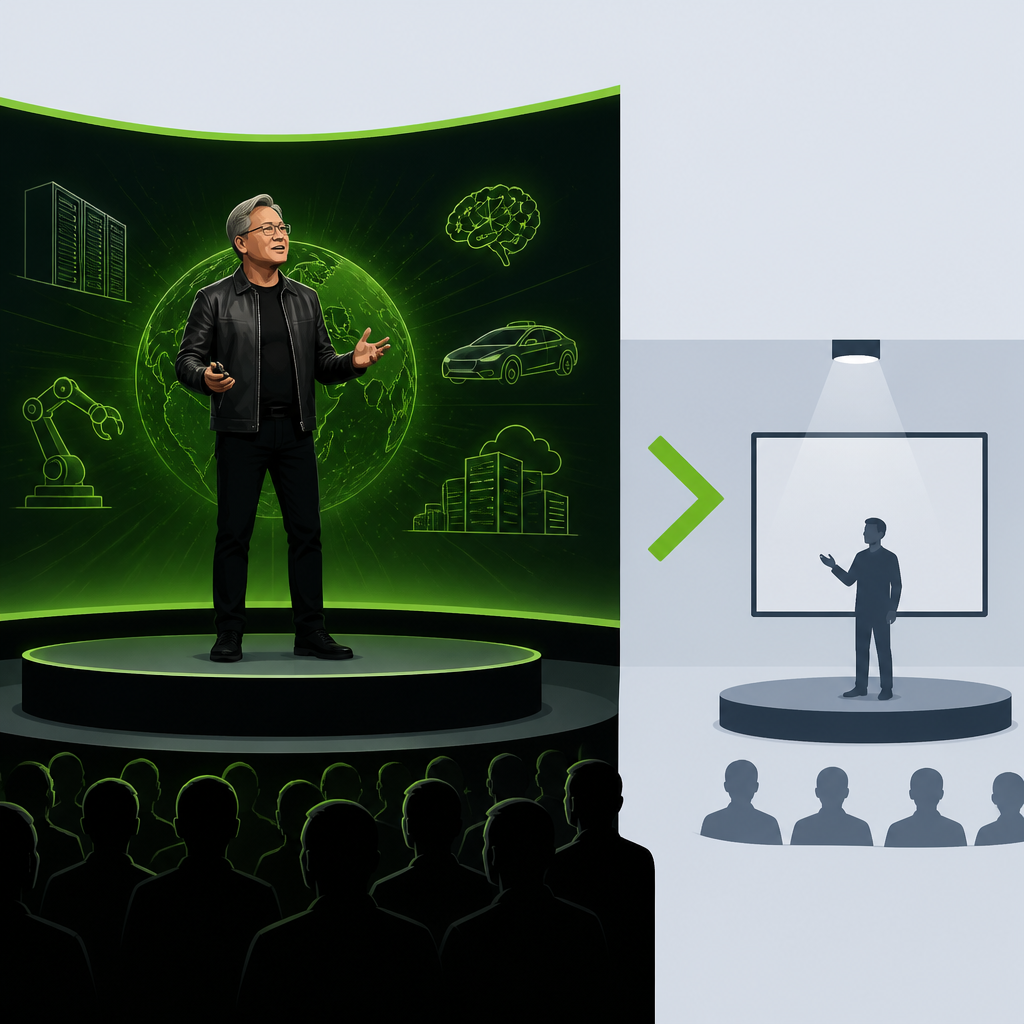
That said, the counter-argument misses the current market structure. The near-term winners in AI do not need perfect long-term visibility to justify their valuations; they only need sustained demand for compute and enough pricing power to keep cash flowing. Huang’s keynote mattered because it shifted the debate away from abstract fear and toward observable revenue generation. I accept the limit: not every infrastructure bet will work, and some balance sheets will crack. But the idea that AI compute is already becoming a monetizable utility is not speculation anymore. Monday’s price action showed investors are still paying for that reality.
What to do with this
If you are an engineer, PM, or founder building in AI, stop treating infrastructure as a cost center and start treating it as a product constraint that shapes revenue. Design for workload efficiency, latency, and deployment economics from day one, because the market is now rewarding teams that can turn compute into margin. If you are investing, think in stacks, not slogans: Nvidia is still central, but the smarter exposure includes the operators, cloud providers, and infrastructure names that turn chips into cash flow. Huang’s keynote was a reminder that the AI boom is not just about model quality. It is about who can monetize the machine behind it.
// Related Articles
- [IND]
Mistral's robotics model cuts indoor navigation costs
- [IND]
Mistral missile: France’s short-range air defense workhorse
- [IND]
Apple Reclaims No. 1 by Market Cap as AI Costs Spike
- [IND]
Kimi K3 could pressure the middle tier of AI models
- [IND]
AI Weekly: 2026-07-13 ~ 2026-07-20
- [IND]
$1.7B Bloom Energy deal backs Nebius AI power