Distributed finance now powers U.S. payments and trading
FedNow, T+1 settlement, and CAT data pipes show how distributed systems now run core U.S. finance.

Distributed systems now run payments, settlement, market data, and risk in U.S. finance.
When Robinhood saw order intake spike to roughly 30 times normal during the 2021 retail frenzy, its back end had to keep up or fail loudly. That pressure test still matters in 2026, because the same architecture now powers real-time payments, faster settlement, and regulatory data pipelines across American finance.
What changed is not just traffic volume. The industry moved from batch-heavy processing toward always-on systems that have to survive spikes, outages, and compliance checks at the same time.
| Metric | Figure | Why it matters |
|---|---|---|
| FedNow participating institutions | 1,300+ | Shows how quickly real-time payments spread |
| SEC settlement cycle | T+1 since May 28, 2024 | Forces faster reconciliation and affirmation |
| CAT daily record volume | 500 billion+ | Shows the scale of regulatory data plumbing |
| Multi-region bank adoption | 85% | Signals how common distributed resilience has become |
Where U.S. finance actually uses distributed systems
Get the latest AI news in your inbox
Weekly picks of model releases, tools, and deep dives — no spam, unsubscribe anytime.
No spam. Unsubscribe at any time.
Four jobs eat most of the engineering budget: payments, settlement, market data, and risk. Each one has different latency and consistency demands, but all four depend on distributed infrastructure because no single server, data center, or region can absorb modern finance traffic on its own.
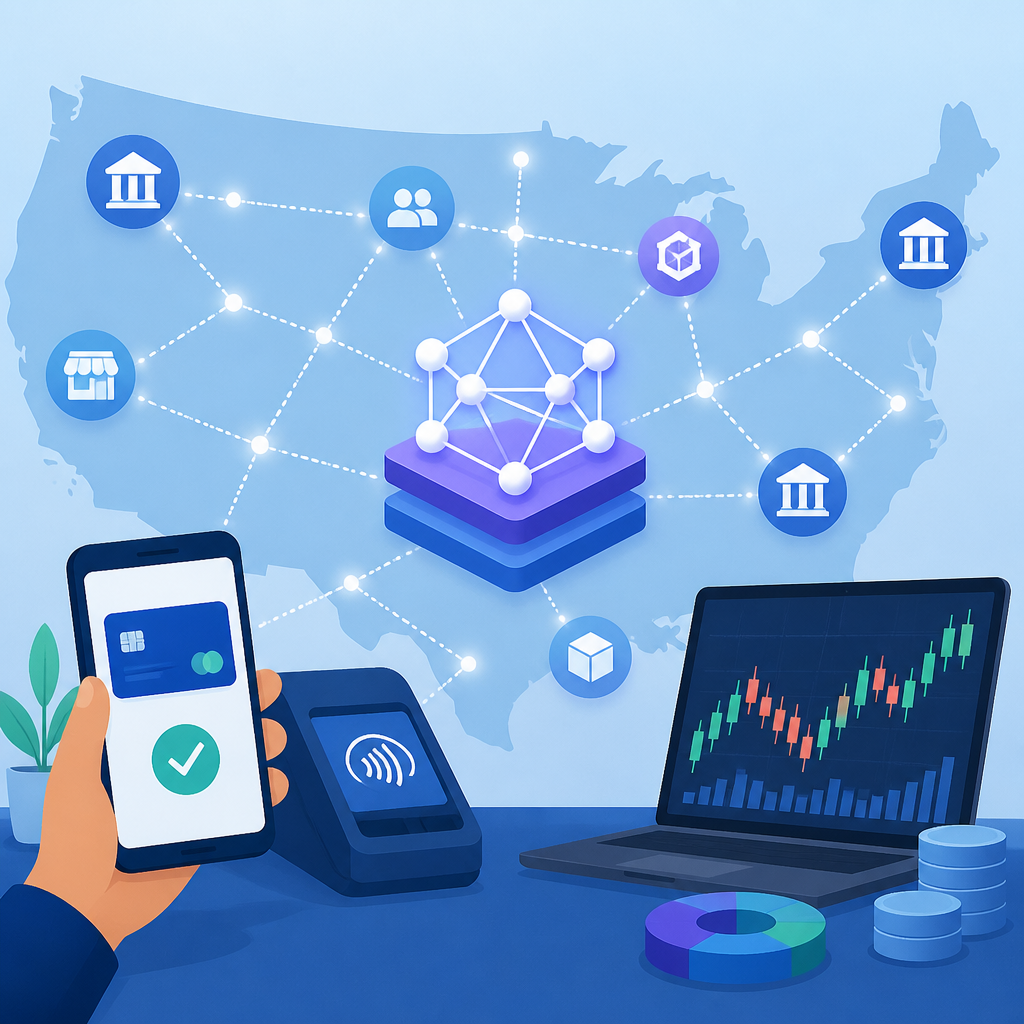
Real-time payments are the clearest example. The Federal Reserve’s FedNow service and The Clearing House’s RTP network both move money in seconds, and FedNow reported more than 1,300 participating institutions in early 2026.
- Payments rails must stay live across regions and maintenance windows.
- Brokerages need continuous reconciliation after T+1 settlement shortened the back office clock.
- Exchanges push market data to thousands of subscribers with microsecond timing discipline.
- Clearing houses and asset managers run intraday risk checks across large clusters, not overnight batches.
Securities settlement changed sharply after the SEC’s T+1 rule took effect on May 28, 2024. The tighter cycle pushed brokerages, custodians, and the DTCC into a more distributed reconciliation rhythm, with affirmation services running through the trading day instead of waiting for night processing.
Market data is the next pressure point. U.S. equity, options, and futures venues feed order book updates to thousands of subscribers, and the systems that stitch those feeds together have to preserve order and timing across many venues. If one venue drifts, professional traders notice fast.
Why firms keep paying for this architecture
The first payoff is availability. A distributed payments system can lose one site and keep settling, which is exactly what banks want when a regulator asks whether the payment log stayed intact through an outage.
The second payoff is scale under stress. During the GameStop trading spike, brokers with horizontally scaled order systems and stateless API layers handled the surge better than firms still tied to vertically scaled legacy stacks. That lesson now shapes new broker and custodian designs.
"The world is now in a state where the internet is the first line of defense against the next crisis." — Jane Fraser, Citi CEO, speaking at the Bloomberg New Economy Forum in 2020.
The third payoff is regional resilience. Deloitte’s 2025 financial services outlook says 85 percent of large U.S. banks now run multi-region architectures for critical payment paths. That does not eliminate outages, but it does make a single cloud failure less likely to stop the business.
- One region can fail out while another keeps serving traffic.
- Failover can happen without exposing the customer to the switch.
- Regulators still see a single audit trail if the logging layer is designed correctly.
- Multi-region setups also reduce the chance that one data center becomes a single point of failure.
That said, distributed systems do not remove risk. They move it around, and sometimes they make it harder to see until something breaks.
The failure modes that keep CTOs awake
Split-brain is the classic problem. If two regions both think they are the leader, they can accept conflicting writes, and settlement data becomes hard to repair without manual intervention. Modern consensus protocols reduce the odds, but bad failover testing still causes real incidents.
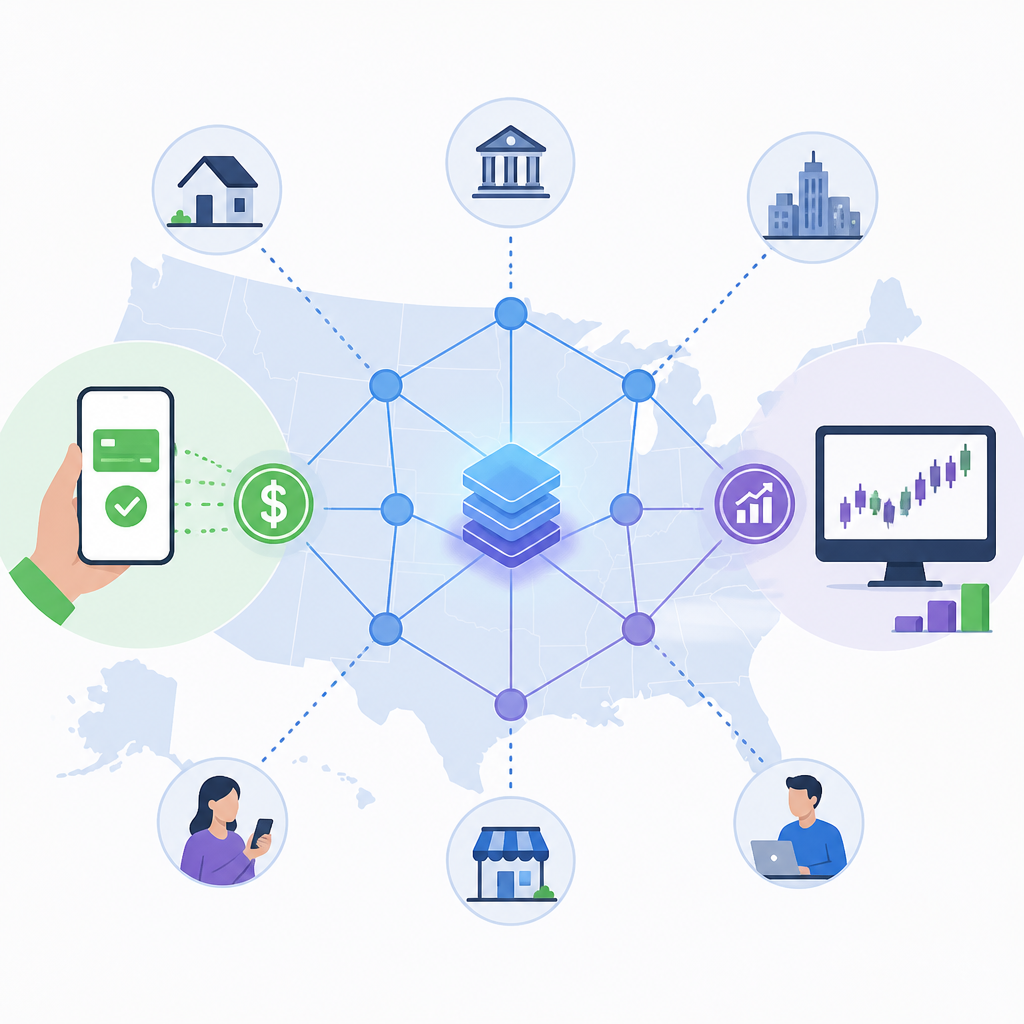
Regulatory reporting creates another headache. A ledger spread across several regions still has to produce one consistent view for examiners. That usually means snapshot layers, frozen reads, and extra reporting infrastructure, all of which add cost and complexity.
The 2024 CrowdStrike outage made a different point. A bad endpoint security update took down Windows machines at airlines, banks, and brokers worldwide on July 19, 2024. Finance recovered faster than aviation because of better rehearsed failover, but the outage showed that a distributed system can still fall over because of one shared vendor.
Since then, U.S. CTOs have started asking harder questions about rollout discipline, dependency maps, and staged deployment. The architecture is only as strong as the least careful external supplier in the chain.
The next phase is programmable money, not just faster pipes
Distributed systems already support stablecoins, tokenized funds, and cross-border payment rails. Circle, PayPal, BlackRock, and Franklin Templeton all have products that rely on distributed ledgers or distributed payment plumbing in some form.
Cross-border settlement is already moving in that direction too. SWIFT GPI, Visa B2B Connect, and stablecoin rails all cut transfer times from days to minutes in the right conditions, while banks add compliance and FX logic on top.
The bigger opportunity is institutional. If tokenized collateral and settlement rules line up, the same distributed back ends that clear today’s trades can support programmable money with fewer manual handoffs. The technical question is manageable. The legal question is slower.
- T+0 settlement would compress reconciliation and free up intraday liquidity.
- Tokenized collateral could reduce friction in repo and margin workflows.
- Continuous risk engines would need tighter controls than most firms use today.
- Any move toward atomic settlement raises the bar for operations, not just software.
The next 24 months will tell the story. If FedNow volume keeps climbing, T+1 incidents stay low, and tokenized collateral pilots keep advancing, U.S. finance will keep pushing distributed systems deeper into the parts of the market that still behave like paper. If not, firms will keep the architecture where it already works and stop short of full T+0 settlement.
For more on the mechanics behind these rails, see OraCore’s coverage of microservices in U.S. financial systems and payment operations management in 2026.
// Related Articles
- [IND]
Moka AI Is a Stronger HRMS Choice for Growing Teams
- [IND]
August 2026 Market Review: AI Stocks Flipped Fast
- [IND]
Pixel 11 launch live: every Google reveal
- [IND]
Anthropic’s invisible watermark is the right move
- [IND]
Docker’s latest releases now center security and Compose
- [IND]
Bitcoin’s busy week was a security wake-up call