China’s Open-Source AI Play Is Pressuring U.S. Labs
Tiezhen Wang says Chinese open-source AI is lowering costs, speeding adoption, and forcing U.S. labs to rethink their closed model.

Chinese open-source AI is lowering costs and pressuring U.S. labs to adapt.
China’s AI labs are pushing open models hard while U.S. leaders like OpenAI and Anthropic keep their best systems closed. In a recent Rest of World interview, former Hugging Face executive Tiezhen Wang argued that this split is already shaping who gets cheaper inference, faster adoption, and more control over AI infrastructure.
Wang’s case is blunt: open source is not charity, and it is not a side project. It is a distribution strategy, a talent signal, and a way to turn model releases into market power. That matters because the AI race is no longer only about who has the best model weights. It is also about who can get developers, startups, and big enterprises to build on top of them.
| Data point | What Wang said |
|---|---|
| May 2026 | Wang left Hugging Face |
| 10x | Growth cited for China’s Zhipu stock price |
| 4 months | Uber reportedly burned a full year’s token budget |
| 1-2 years | Wang expects major AI adoption gains in China |
Open models are becoming a strategic export
Get the latest AI news in your inbox
Weekly picks of model releases, tools, and deep dives — no spam, unsubscribe anytime.
No spam. Unsubscribe at any time.
Wang says Chinese labs are helping U.S. teams as much as they are competing with them. He pointed to DeepSeek as an example, saying its reinforcement learning training approach is becoming a default choice in some U.S. research circles. He also noted that many Chinese open-source weights already run on U.S. hardware, which creates a strange kind of interdependence between the two countries.
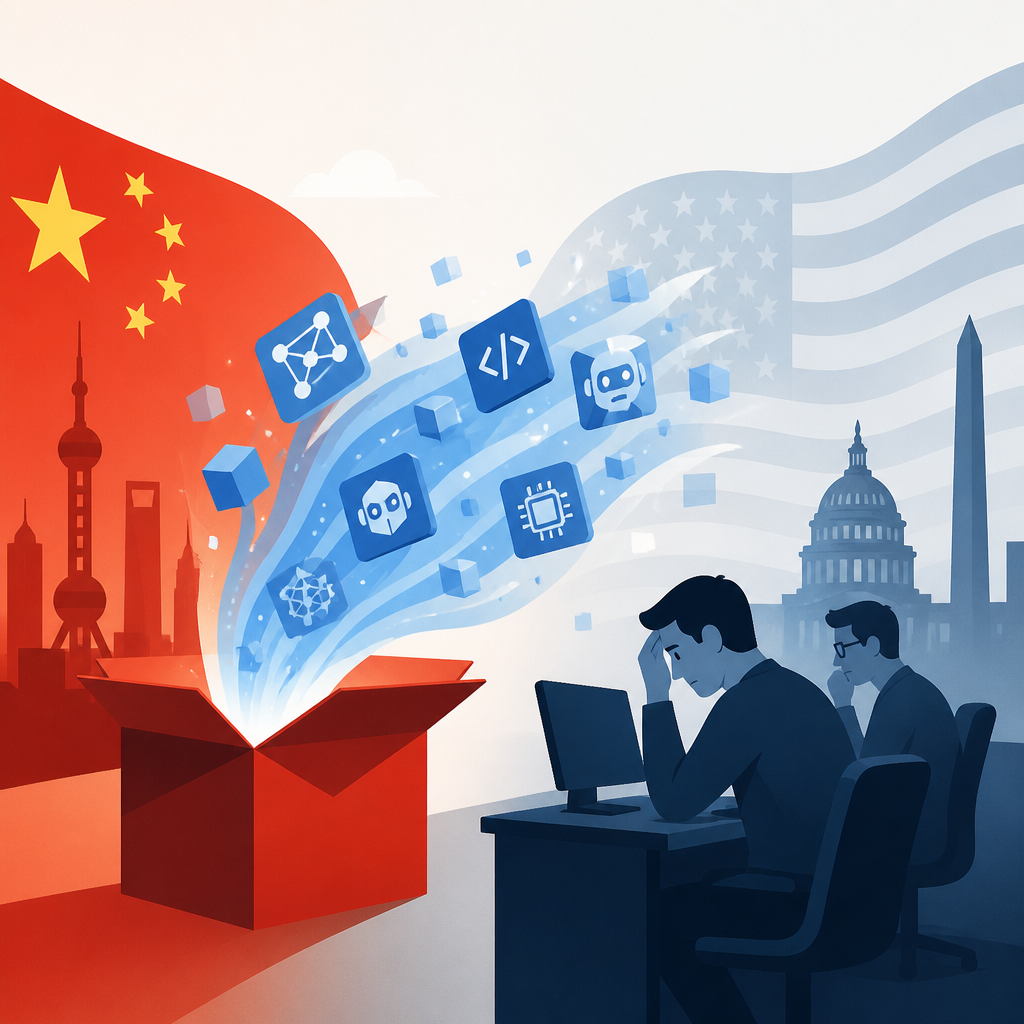
That is the part many AI debates miss. Open source is often framed as a moral choice, but in practice it is a deployment channel. If developers can inspect the code, fine-tune the model, and run it on their own machines, the model spreads faster than a product locked behind a hosted interface. Chinese labs have noticed.
Wang’s view is that this spread is not zero-sum. If more teams can build on the same base models, the whole market gets bigger. That claim may sound idealistic, but it fits what we are already seeing in open-source software: the most widely used tools often win by becoming infrastructure, not by charging for every interaction.
- Chinese labs release weights that developers can download and modify.
- U.S. labs keep model code behind APIs and paid products.
- Open releases can become the default starting point for startups and research teams.
- Chinese models can still run on American chips and servers.
Distillation, licensing, and the money question
The sharpest part of Wang’s interview was his take on distillation. He treats it as a normal research practice, not a moral scandal. In his view, it is simply one model learning from another, the same way a person summarizes a book for someone else. He also pushed back on the idea that only Chinese firms do this, pointing to public admissions from xAI and the broader reality that model training often depends on large-scale web crawling.
“Distillation is a neutral word in the research world,” Wang said in the Rest of World interview.
That position is controversial, but it explains why licensing is getting tighter. Wang said some Chinese labs are changing terms so cloud providers cannot resell an open model for free and pocket the margin. He cited MiniMax as an example of a lab that changed its license to require payment in commercial settings.
He framed that shift as a practical compromise. Individual users can still use the model for free, but companies running the model at scale need to pay. That is a different model from the pure permissive open-source ideal, but it may be the only way labs keep releasing weights without bleeding value to infrastructure providers.
- Free use for individuals keeps adoption wide.
- Commercial cloud use creates a path to revenue.
- License changes try to stop free riders.
- Labs can keep base models private while releasing smaller fine-tuned versions.
China is using open source to cut token costs
Wang’s most practical argument is about cost. In the U.S., he said, token usage is expensive enough that even large companies are feeling the pinch. He cited Uber burning through a year’s token budget in four months and Microsoft saying token costs were higher than expected. Whether those numbers are exact or directional, the point is clear: hosted AI is still expensive enough to shape product decisions.
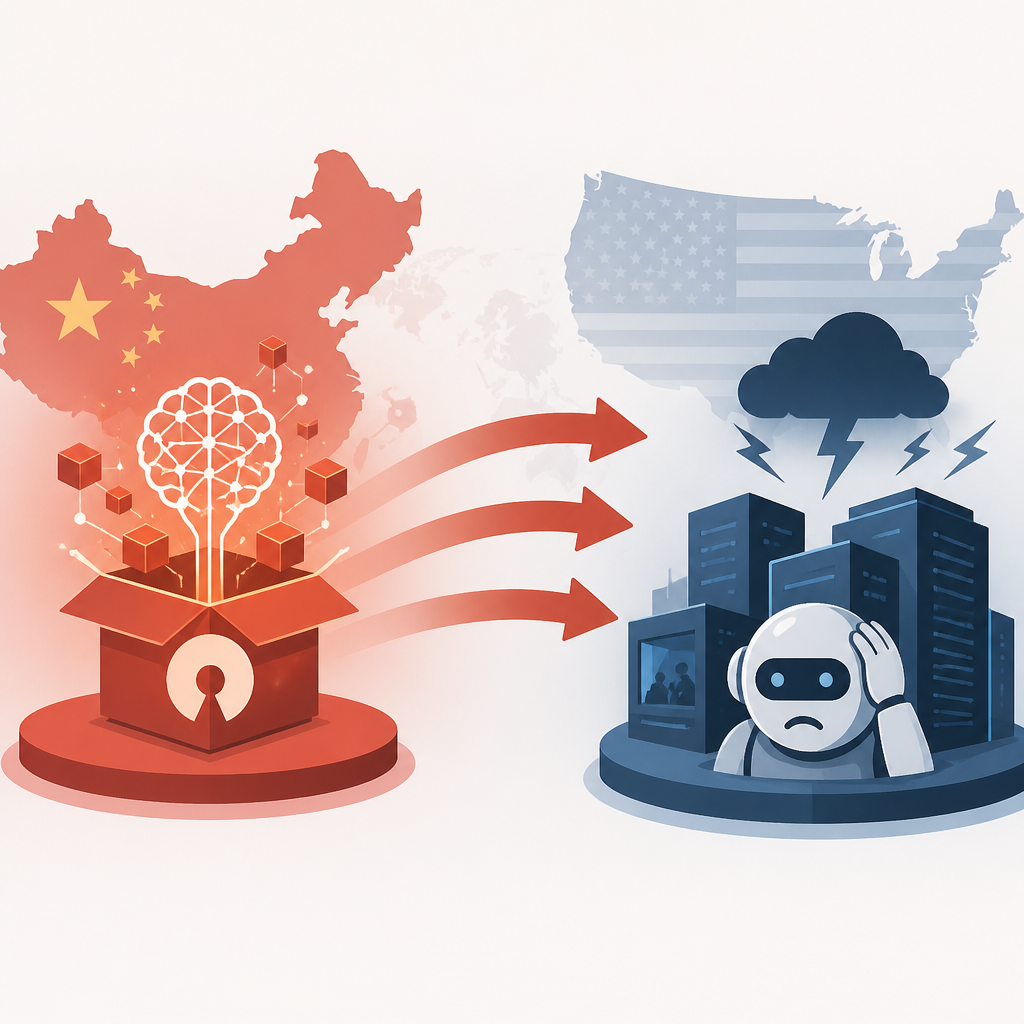
China’s open-source ecosystem changes that math. If a model is good enough and cheap enough, companies can use it more aggressively, experiment faster, and push AI into internal workflows without waiting for a vendor contract to catch up. Wang said Chinese internet firms are already giving employees unlimited tokens to see what they can do, and some are pushing workers to become AI-native by default.
That kind of internal pressure matters. Companies rarely adopt new tools just because the tools exist. They adopt when leadership makes the behavior unavoidable. If Chinese firms are normalizing AI use inside daily work, they may get more real-world feedback in months than slower adopters get in a year.
Wang also pointed to the market response. He said China’s Zhipu has seen its stock price grow by about 10 times, which should help the company buy compute, talent, and data. That is the loop open-source firms want: release models, build brand, attract talent, raise capital, then release better models.
What this means for startups and the next year
For startups, Wang’s advice is pragmatic rather than ideological. Pick the model with the best product-market fit first, even if it is closed. Get users, collect product data, and only then think about swapping parts of the stack for open-source alternatives. That sequence matters because the first problem for most startups is not model ideology. It is finding something people will actually use.
Still, the open-source option becomes attractive fast once usage grows. Wang said companies can eventually save “maybe a hundred times” on tokens by moving to open models. That is a huge number, and even if the real savings vary a lot by workload, the direction is obvious: inference costs can become a competitive moat, and open-source models can shrink that moat.
The bigger takeaway is that China’s AI strategy is not only about beating U.S. labs head-on. It is about making AI cheap enough and open enough that adoption spreads faster inside companies, startups, and research groups. If that keeps happening, the next year may show a wider gap in real usage than in benchmark headlines.
For developers, the practical question is simple: do you want the model with the best demo, or the model you can afford to run every day? In 2026, that choice is becoming a business decision, not a technical preference.
// Related Articles
- [IND]
Claude’s security test became a real breach
- [IND]
X posts let execs shape the AI story
- [IND]
Jensen Huang’s AGI definition lowers the bar
- [IND]
Claude’s 2026 limit changes are a capacity story, not a product story
- [IND]
SSI's $5 Billion Backing Proves AI Safety Is a Product Strategy
- [IND]
A rogue AI agent slipped into a real cyberattack